AI Unlocks Holistic Cellular Insights for Enhanced Disease Understanding and Experimental Design
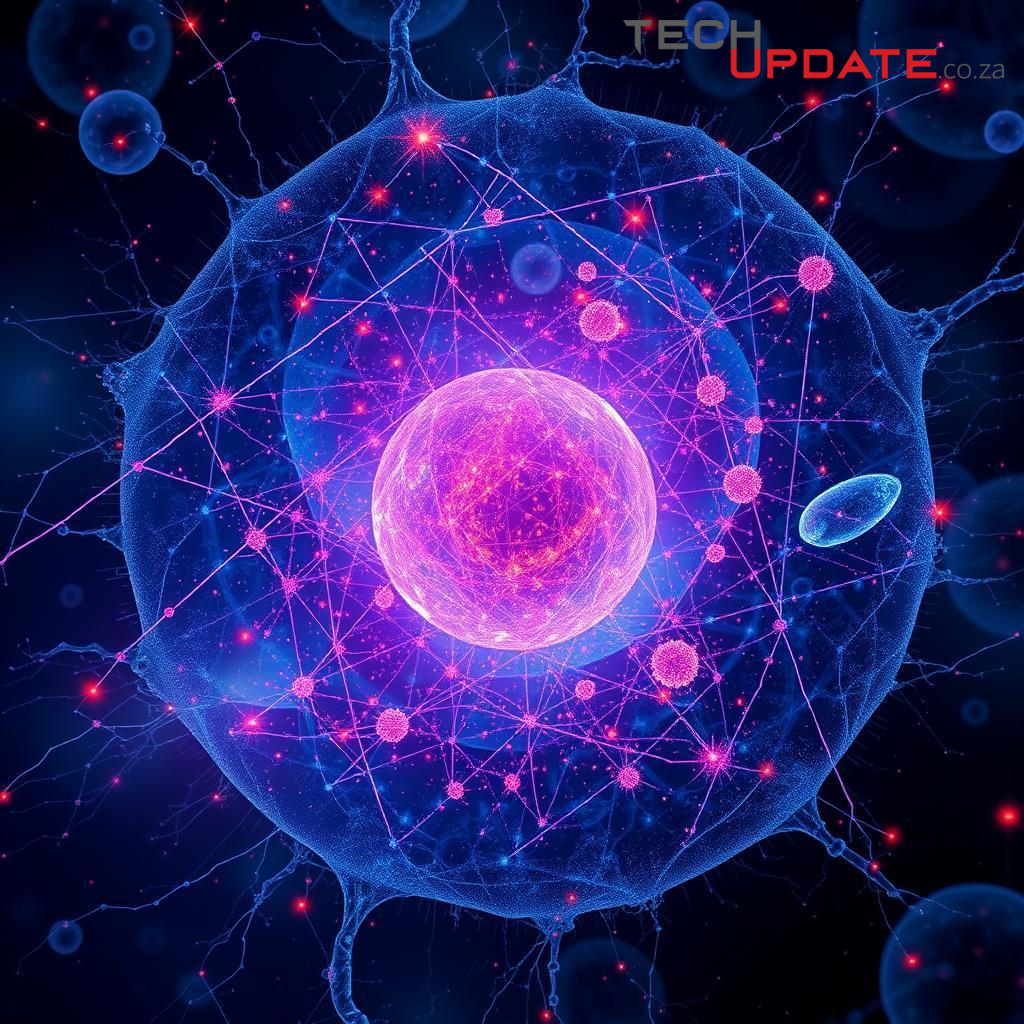
Revolutionizing Cell Biology Through Artificial Intelligence
The intricate world of cellular biology, a cornerstone of understanding human health and disease, is poised for a significant transformation with the advent of advanced Artificial Intelligence (AI). Traditional research often involves dissecting cellular components or focusing on individual markers, leading to fragmented insights. However, a new paradigm is emerging where AI-driven methodologies are providing a holistic view of the cell, promising to fundamentally alter how scientists comprehend disease mechanisms and strategize experimental approaches.
From Fragments to a Full Picture: AI's Holistic View
Current cellular analysis techniques, while powerful, often provide data in isolation. Researchers might analyze gene expression, protein localization, or morphological changes independently. The challenge lies in integrating these disparate data points into a coherent, comprehensive understanding of a cell's state and function within its complex environment. This is where AI excels. By leveraging sophisticated algorithms, AI can process vast datasets from various sources – including genomics, proteomics, imaging, and metabolomics – to construct a multi-dimensional, integrated profile of individual cells.
This holistic perspective allows scientists to identify subtle patterns, correlations, and causal relationships that would be imperceptible through conventional methods. For instance, AI can correlate specific gene expression patterns with spatial arrangements of proteins, or link morphological changes to metabolic shifts, thereby painting a more complete picture of cellular phenotypes and behaviors.
Deciphering Disease Mechanisms with Unprecedented Clarity
The ability of AI to provide a holistic cellular snapshot has profound implications for understanding disease. Many diseases, from cancer to neurodegenerative disorders, arise from complex dysregulations at the cellular level. By analyzing diseased cells in their entirety, AI can pinpoint precise deviations from healthy states, revealing early indicators of pathology or identifying key molecular drivers that contribute to disease progression. This comprehensive insight can lead to a deeper understanding of the underlying mechanisms, moving beyond symptomatic observations to address root causes.
For example, in cancer research, AI can analyze single-cell transcriptomics alongside spatial proteomics to identify how tumor cells interact with their microenvironment, revealing novel therapeutic targets or resistance mechanisms. In neurological disorders, AI can connect subtle structural changes in neurons with alterations in their functional networks, offering new avenues for early diagnosis and intervention.
Optimizing Experimental Design and Drug Discovery
Beyond elucidating disease mechanisms, AI's holistic cellular understanding significantly enhances experimental planning and drug discovery. With a more complete picture of cellular responses and disease states, researchers can design more targeted and efficient experiments. AI can predict optimal experimental conditions, identify crucial variables to investigate, and even suggest novel hypotheses based on integrated data analysis, thereby reducing trial-and-error and accelerating research cycles.
In drug development, AI can screen potential compounds against holistic cellular profiles, predicting their efficacy and potential side effects with greater accuracy than traditional high-throughput screening methods. By understanding how a compound affects the entire cellular machinery, not just a single pathway, researchers can develop more effective and safer therapeutics. This integrated approach also helps in stratifying patient populations for personalized medicine by identifying unique cellular signatures that respond best to specific treatments.
Summary
The integration of artificial intelligence into cell biology is ushering in an era of unprecedented insight. By moving beyond isolated observations to provide a holistic view of cellular states and functions, AI is fundamentally changing our understanding of disease mechanisms. This comprehensive approach empowers scientists to design more intelligent experiments, identify novel therapeutic targets, and ultimately accelerate the journey toward more effective diagnostics and treatments. As AI technologies continue to advance, their role in unraveling the mysteries of the cell will only grow, promising a future of more precise and impactful biological research.
Resources
Details
Author
Top articles



 }})
You can now watch HBO Max for $10
Latest articles




You can now watch HBO Max for $10
Revolutionizing Cell Biology Through Artificial Intelligence
The intricate world of cellular biology, a cornerstone of understanding human health and disease, is poised for a significant transformation with the advent of advanced Artificial Intelligence (AI). Traditional research often involves dissecting cellular components or focusing on individual markers, leading to fragmented insights. However, a new paradigm is emerging where AI-driven methodologies are providing a holistic view of the cell, promising to fundamentally alter how scientists comprehend disease mechanisms and strategize experimental approaches.
From Fragments to a Full Picture: AI's Holistic View
Current cellular analysis techniques, while powerful, often provide data in isolation. Researchers might analyze gene expression, protein localization, or morphological changes independently. The challenge lies in integrating these disparate data points into a coherent, comprehensive understanding of a cell's state and function within its complex environment. This is where AI excels. By leveraging sophisticated algorithms, AI can process vast datasets from various sources – including genomics, proteomics, imaging, and metabolomics – to construct a multi-dimensional, integrated profile of individual cells.
This holistic perspective allows scientists to identify subtle patterns, correlations, and causal relationships that would be imperceptible through conventional methods. For instance, AI can correlate specific gene expression patterns with spatial arrangements of proteins, or link morphological changes to metabolic shifts, thereby painting a more complete picture of cellular phenotypes and behaviors.
Deciphering Disease Mechanisms with Unprecedented Clarity
The ability of AI to provide a holistic cellular snapshot has profound implications for understanding disease. Many diseases, from cancer to neurodegenerative disorders, arise from complex dysregulations at the cellular level. By analyzing diseased cells in their entirety, AI can pinpoint precise deviations from healthy states, revealing early indicators of pathology or identifying key molecular drivers that contribute to disease progression. This comprehensive insight can lead to a deeper understanding of the underlying mechanisms, moving beyond symptomatic observations to address root causes.
For example, in cancer research, AI can analyze single-cell transcriptomics alongside spatial proteomics to identify how tumor cells interact with their microenvironment, revealing novel therapeutic targets or resistance mechanisms. In neurological disorders, AI can connect subtle structural changes in neurons with alterations in their functional networks, offering new avenues for early diagnosis and intervention.
Optimizing Experimental Design and Drug Discovery
Beyond elucidating disease mechanisms, AI's holistic cellular understanding significantly enhances experimental planning and drug discovery. With a more complete picture of cellular responses and disease states, researchers can design more targeted and efficient experiments. AI can predict optimal experimental conditions, identify crucial variables to investigate, and even suggest novel hypotheses based on integrated data analysis, thereby reducing trial-and-error and accelerating research cycles.
In drug development, AI can screen potential compounds against holistic cellular profiles, predicting their efficacy and potential side effects with greater accuracy than traditional high-throughput screening methods. By understanding how a compound affects the entire cellular machinery, not just a single pathway, researchers can develop more effective and safer therapeutics. This integrated approach also helps in stratifying patient populations for personalized medicine by identifying unique cellular signatures that respond best to specific treatments.
Summary
The integration of artificial intelligence into cell biology is ushering in an era of unprecedented insight. By moving beyond isolated observations to provide a holistic view of cellular states and functions, AI is fundamentally changing our understanding of disease mechanisms. This comprehensive approach empowers scientists to design more intelligent experiments, identify novel therapeutic targets, and ultimately accelerate the journey toward more effective diagnostics and treatments. As AI technologies continue to advance, their role in unraveling the mysteries of the cell will only grow, promising a future of more precise and impactful biological research.
Resources
Top articles
You can now watch HBO Max for $10
Latest articles
You can now watch HBO Max for $10
Similar posts




This is a page that only logged-in people can visit. Don't you feel special? Try clicking on a button below to do some things you can't do when you're logged out.
Example modal
At your leisure, please peruse this excerpt from a whale of a tale.
Chapter 1: Loomings.
Call me Ishmael. Some years ago—never mind how long precisely—having little or no money in my purse, and nothing particular to interest me on shore, I thought I would sail about a little and see the watery part of the world. It is a way I have of driving off the spleen and regulating the circulation. Whenever I find myself growing grim about the mouth; whenever it is a damp, drizzly November in my soul; whenever I find myself involuntarily pausing before coffin warehouses, and bringing up the rear of every funeral I meet; and especially whenever my hypos get such an upper hand of me, that it requires a strong moral principle to prevent me from deliberately stepping into the street, and methodically knocking people's hats off—then, I account it high time to get to sea as soon as I can. This is my substitute for pistol and ball. With a philosophical flourish Cato throws himself upon his sword; I quietly take to the ship. There is nothing surprising in this. If they but knew it, almost all men in their degree, some time or other, cherish very nearly the same feelings towards the ocean with me.
Comment