Anthropic Explores Custom AI Chip with Samsung Amidst Industry Hardware Push
Anthropic Eyes Custom Silicon: A Strategic Move
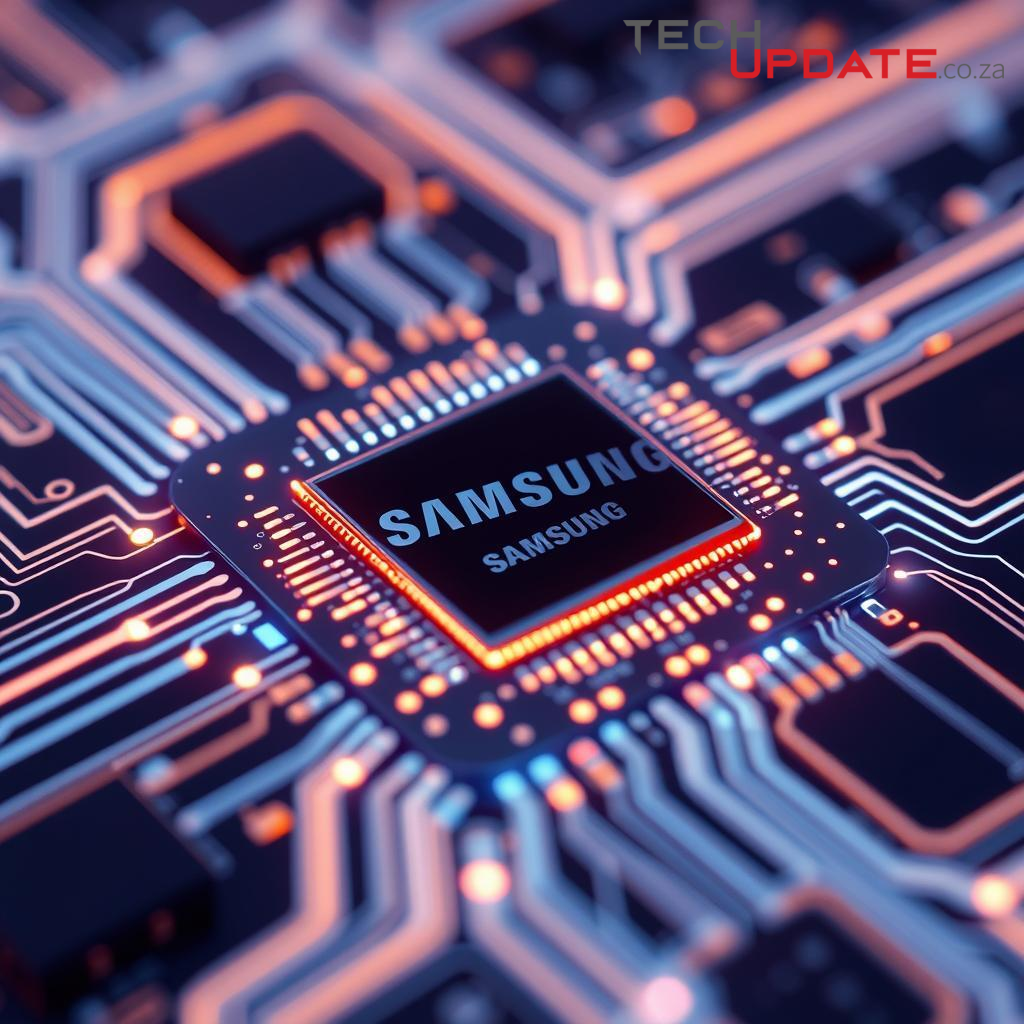
In a significant development within the fiercely competitive artificial intelligence landscape, reports indicate that AI research company Anthropic is actively engaged in discussions with Samsung regarding the development of a custom AI chip. This strategic exploration by Anthropic underscores a broader industry trend among leading AI developers to secure and optimize their foundational hardware infrastructure, moving towards bespoke silicon solutions.
The news emerges approximately one week after OpenAI, another prominent player in the generative AI space, publicly announced its own initiative to develop a custom AI chip in collaboration with semiconductor giant Broadcom. These parallel efforts by two of the most influential AI firms signal a critical juncture in the sector, where the reliance on off-the-shelf, general-purpose GPUs, predominantly from Nvidia, is being challenged by the pursuit of specialized, application-specific integrated circuits (ASICs).
The Imperative for Custom AI Hardware
The motivation behind Anthropic's potential partnership with Samsung, mirroring OpenAI's move with Broadcom, is multi-faceted. Training and running sophisticated large language models (LLMs) like Anthropic's Claude demands immense computational power and energy efficiency. Custom chips can be engineered to precisely fit the unique architectural demands of a specific AI model, potentially offering significant advantages in performance, power consumption, and cost reduction over the long term. This optimization is crucial for scaling AI services and reducing operational expenses associated with cloud computing resources.
For semiconductor manufacturers like Samsung, collaborating with leading AI innovators presents an opportunity to solidify their position in the rapidly expanding AI hardware market. Samsung Foundry, known for its advanced manufacturing capabilities, could leverage such a partnership to showcase its technological prowess and capture a substantial share of the burgeoning custom AI chip segment.
The AI Chip Arms Race Heats Up
The discussions between Anthropic and Samsung highlight an accelerating "AI chip arms race" within the tech industry. As AI models grow larger and more complex, the demand for specialized processing units is skyrocketing. Companies are increasingly recognizing that control over the underlying hardware can be a decisive competitive advantage, enabling faster innovation cycles and proprietary optimizations that are difficult for competitors to replicate.
This shift also represents a strategic diversification away from a concentrated supply chain, which has seen Nvidia dominate the market for high-performance AI accelerators. By fostering relationships directly with foundries and designing their own chips, AI companies aim to mitigate supply chain risks, exert greater control over their product roadmaps, and potentially unlock new levels of efficiency not achievable with general-purpose hardware.
Potential Impact and Future Outlook
Should a partnership between Anthropic and Samsung materialize, it could profoundly impact the development trajectory of Anthropic's AI models, potentially leading to more powerful, efficient, and cost-effective solutions. Furthermore, it would strengthen Samsung's standing as a key enabler in the advanced semiconductor manufacturing ecosystem for AI.
The broader implication is a further fragmentation and specialization of the AI hardware market. While Nvidia will likely retain a strong position, the rise of custom AI chips suggests a future where diverse silicon solutions, tailored for specific AI workloads and architectures, become increasingly common. This trend promises to foster innovation not only in software but also at the fundamental hardware layer, pushing the boundaries of what generative AI can achieve.
Summary
Anthropic's reported discussions with Samsung for a custom AI chip underscore a strategic industry pivot towards specialized hardware. This move, closely following OpenAI's partnership with Broadcom, reflects a concerted effort by leading AI firms to enhance computational efficiency, reduce costs, and gain a competitive edge by tailoring silicon to their unique AI models. The development signifies a heating up of the AI chip arms race, promising greater innovation and diversification in the semiconductor landscape and ultimately impacting the future capabilities of generative AI.
Resources
Details
Author
Top articles




 }})
You can now watch HBO Max for $10
Latest articles





You can now watch HBO Max for $10
Anthropic Eyes Custom Silicon: A Strategic Move
In a significant development within the fiercely competitive artificial intelligence landscape, reports indicate that AI research company Anthropic is actively engaged in discussions with Samsung regarding the development of a custom AI chip. This strategic exploration by Anthropic underscores a broader industry trend among leading AI developers to secure and optimize their foundational hardware infrastructure, moving towards bespoke silicon solutions.
The news emerges approximately one week after OpenAI, another prominent player in the generative AI space, publicly announced its own initiative to develop a custom AI chip in collaboration with semiconductor giant Broadcom. These parallel efforts by two of the most influential AI firms signal a critical juncture in the sector, where the reliance on off-the-shelf, general-purpose GPUs, predominantly from Nvidia, is being challenged by the pursuit of specialized, application-specific integrated circuits (ASICs).
The Imperative for Custom AI Hardware
The motivation behind Anthropic's potential partnership with Samsung, mirroring OpenAI's move with Broadcom, is multi-faceted. Training and running sophisticated large language models (LLMs) like Anthropic's Claude demands immense computational power and energy efficiency. Custom chips can be engineered to precisely fit the unique architectural demands of a specific AI model, potentially offering significant advantages in performance, power consumption, and cost reduction over the long term. This optimization is crucial for scaling AI services and reducing operational expenses associated with cloud computing resources.
For semiconductor manufacturers like Samsung, collaborating with leading AI innovators presents an opportunity to solidify their position in the rapidly expanding AI hardware market. Samsung Foundry, known for its advanced manufacturing capabilities, could leverage such a partnership to showcase its technological prowess and capture a substantial share of the burgeoning custom AI chip segment.
The AI Chip Arms Race Heats Up
The discussions between Anthropic and Samsung highlight an accelerating "AI chip arms race" within the tech industry. As AI models grow larger and more complex, the demand for specialized processing units is skyrocketing. Companies are increasingly recognizing that control over the underlying hardware can be a decisive competitive advantage, enabling faster innovation cycles and proprietary optimizations that are difficult for competitors to replicate.
This shift also represents a strategic diversification away from a concentrated supply chain, which has seen Nvidia dominate the market for high-performance AI accelerators. By fostering relationships directly with foundries and designing their own chips, AI companies aim to mitigate supply chain risks, exert greater control over their product roadmaps, and potentially unlock new levels of efficiency not achievable with general-purpose hardware.
Potential Impact and Future Outlook
Should a partnership between Anthropic and Samsung materialize, it could profoundly impact the development trajectory of Anthropic's AI models, potentially leading to more powerful, efficient, and cost-effective solutions. Furthermore, it would strengthen Samsung's standing as a key enabler in the advanced semiconductor manufacturing ecosystem for AI.
The broader implication is a further fragmentation and specialization of the AI hardware market. While Nvidia will likely retain a strong position, the rise of custom AI chips suggests a future where diverse silicon solutions, tailored for specific AI workloads and architectures, become increasingly common. This trend promises to foster innovation not only in software but also at the fundamental hardware layer, pushing the boundaries of what generative AI can achieve.
Summary
Anthropic's reported discussions with Samsung for a custom AI chip underscore a strategic industry pivot towards specialized hardware. This move, closely following OpenAI's partnership with Broadcom, reflects a concerted effort by leading AI firms to enhance computational efficiency, reduce costs, and gain a competitive edge by tailoring silicon to their unique AI models. The development signifies a heating up of the AI chip arms race, promising greater innovation and diversification in the semiconductor landscape and ultimately impacting the future capabilities of generative AI.
Resources
Top articles
You can now watch HBO Max for $10
Latest articles
You can now watch HBO Max for $10
Similar posts


This is a page that only logged-in people can visit. Don't you feel special? Try clicking on a button below to do some things you can't do when you're logged out.
Example modal
At your leisure, please peruse this excerpt from a whale of a tale.
Chapter 1: Loomings.
Call me Ishmael. Some years ago—never mind how long precisely—having little or no money in my purse, and nothing particular to interest me on shore, I thought I would sail about a little and see the watery part of the world. It is a way I have of driving off the spleen and regulating the circulation. Whenever I find myself growing grim about the mouth; whenever it is a damp, drizzly November in my soul; whenever I find myself involuntarily pausing before coffin warehouses, and bringing up the rear of every funeral I meet; and especially whenever my hypos get such an upper hand of me, that it requires a strong moral principle to prevent me from deliberately stepping into the street, and methodically knocking people's hats off—then, I account it high time to get to sea as soon as I can. This is my substitute for pistol and ball. With a philosophical flourish Cato throws himself upon his sword; I quietly take to the ship. There is nothing surprising in this. If they but knew it, almost all men in their degree, some time or other, cherish very nearly the same feelings towards the ocean with me.
Comment