Apple and Google Eyeing Strategic AI Alliance: Gemini Models to Potentially Power Future Apple Features
A New Era of AI Collaboration Emerges
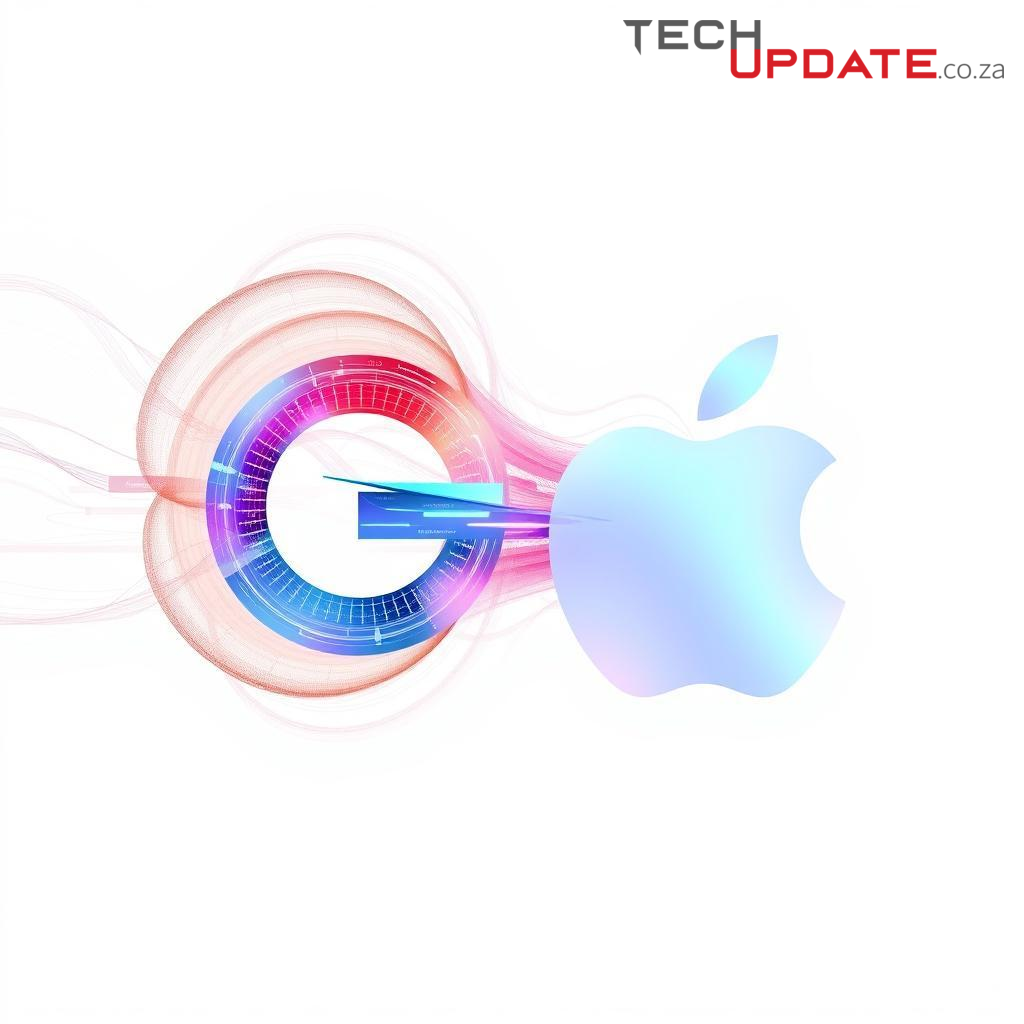
Reports from credible industry sources indicate that Apple is in discussions with Google to integrate the latter's Gemini artificial intelligence models into upcoming iPhone features, including enhancements to its virtual assistant, Siri. This potential collaboration, described as a non-exclusive, multi-year partnership, could significantly reshape the landscape of consumer AI by merging Apple's vast device ecosystem with Google's advanced generative AI capabilities.
The move would see Apple leveraging Google's sophisticated Gemini models and Google Cloud technology to power foundational AI elements within its devices. While details remain under wraps, the strategic implications are substantial. For Apple, it represents a pragmatic approach to rapidly scale its AI offerings amidst intense competition, potentially sidestepping the immense investment required to develop and deploy a full suite of state-of-the-art foundational models entirely in-house. For Google, it offers a pivotal opportunity to embed its Gemini technology into hundreds of millions of premium devices, expanding its AI footprint and validating its research and development efforts.
Strategic Motivations and Market Impact
The reported discussions come at a time when major tech companies are scrambling to integrate generative AI into their product lines. Apple has been relatively quiet about its own large language model development, leading to speculation that a partnership with an established player like Google could accelerate its AI roadmap. A non-exclusive agreement would also allow Apple the flexibility to explore other AI providers, or continue to develop its own in-house solutions for specific functions, maintaining a degree of independence.
Industry analysts suggest that such a partnership could address Apple's immediate need for powerful, on-device and cloud-based AI to rival offerings from competitors. The integration of Gemini could bring more sophisticated conversational abilities to Siri, improved content generation, and more contextual understanding across Apple's software suite. The financial terms and specific scope of the integration are yet to be disclosed, but the potential for a substantial licensing agreement is high, underscoring the value placed on cutting-edge AI technology.
Summary
The potential alliance between Apple and Google, centered on the integration of Google's Gemini AI models and Google Cloud, signifies a critical juncture in the evolution of consumer artificial intelligence. This non-exclusive, multi-year partnership could provide Apple with a rapid pathway to bolster its AI features, including Siri, by tapping into Google's advanced foundational models. For Google, it presents an unparalleled opportunity to expand the reach and influence of its Gemini technology across a massive premium user base. While specific details are pending, the strategic rationale for both tech giants is clear: accelerate AI innovation, enhance user experience, and secure competitive advantage in a rapidly evolving market.
Resources
Details
Author
Top articles




 }})
You can now watch HBO Max for $10
Latest articles




You can now watch HBO Max for $10
A New Era of AI Collaboration Emerges
Reports from credible industry sources indicate that Apple is in discussions with Google to integrate the latter's Gemini artificial intelligence models into upcoming iPhone features, including enhancements to its virtual assistant, Siri. This potential collaboration, described as a non-exclusive, multi-year partnership, could significantly reshape the landscape of consumer AI by merging Apple's vast device ecosystem with Google's advanced generative AI capabilities.
The move would see Apple leveraging Google's sophisticated Gemini models and Google Cloud technology to power foundational AI elements within its devices. While details remain under wraps, the strategic implications are substantial. For Apple, it represents a pragmatic approach to rapidly scale its AI offerings amidst intense competition, potentially sidestepping the immense investment required to develop and deploy a full suite of state-of-the-art foundational models entirely in-house. For Google, it offers a pivotal opportunity to embed its Gemini technology into hundreds of millions of premium devices, expanding its AI footprint and validating its research and development efforts.
Strategic Motivations and Market Impact
The reported discussions come at a time when major tech companies are scrambling to integrate generative AI into their product lines. Apple has been relatively quiet about its own large language model development, leading to speculation that a partnership with an established player like Google could accelerate its AI roadmap. A non-exclusive agreement would also allow Apple the flexibility to explore other AI providers, or continue to develop its own in-house solutions for specific functions, maintaining a degree of independence.
Industry analysts suggest that such a partnership could address Apple's immediate need for powerful, on-device and cloud-based AI to rival offerings from competitors. The integration of Gemini could bring more sophisticated conversational abilities to Siri, improved content generation, and more contextual understanding across Apple's software suite. The financial terms and specific scope of the integration are yet to be disclosed, but the potential for a substantial licensing agreement is high, underscoring the value placed on cutting-edge AI technology.
Summary
The potential alliance between Apple and Google, centered on the integration of Google's Gemini AI models and Google Cloud, signifies a critical juncture in the evolution of consumer artificial intelligence. This non-exclusive, multi-year partnership could provide Apple with a rapid pathway to bolster its AI features, including Siri, by tapping into Google's advanced foundational models. For Google, it presents an unparalleled opportunity to expand the reach and influence of its Gemini technology across a massive premium user base. While specific details are pending, the strategic rationale for both tech giants is clear: accelerate AI innovation, enhance user experience, and secure competitive advantage in a rapidly evolving market.
Resources
Top articles
You can now watch HBO Max for $10
Latest articles
You can now watch HBO Max for $10
Similar posts



This is a page that only logged-in people can visit. Don't you feel special? Try clicking on a button below to do some things you can't do when you're logged out.
Example modal
At your leisure, please peruse this excerpt from a whale of a tale.
Chapter 1: Loomings.
Call me Ishmael. Some years ago—never mind how long precisely—having little or no money in my purse, and nothing particular to interest me on shore, I thought I would sail about a little and see the watery part of the world. It is a way I have of driving off the spleen and regulating the circulation. Whenever I find myself growing grim about the mouth; whenever it is a damp, drizzly November in my soul; whenever I find myself involuntarily pausing before coffin warehouses, and bringing up the rear of every funeral I meet; and especially whenever my hypos get such an upper hand of me, that it requires a strong moral principle to prevent me from deliberately stepping into the street, and methodically knocking people's hats off—then, I account it high time to get to sea as soon as I can. This is my substitute for pistol and ball. With a philosophical flourish Cato throws himself upon his sword; I quietly take to the ship. There is nothing surprising in this. If they but knew it, almost all men in their degree, some time or other, cherish very nearly the same feelings towards the ocean with me.
Comment