Nvidia's $4 Billion Bet on Photonics: Powering the Next Generation of AI

Nvidia, a dominant force in artificial intelligence computing, has committed a substantial $4 billion investment in photonics technology, a strategic move aimed at sustaining its leadership in the rapidly evolving AI landscape. This significant capital injection, split equally between Lumentum and Coherent, underscores Nvidia's dedication to overcoming the escalating data transfer and energy consumption challenges inherent in modern AI data centers.
The Strategic Imperative: Beyond Silicon
The burgeoning demands of AI workloads, characterized by massive datasets and complex computational models, are pushing the limits of traditional interconnect technologies. As the volume of data exchanged between GPUs and across data centers continues to surge, the industry faces bottlenecks in speed, bandwidth, and power efficiency. Nvidia's investment directly addresses these critical pain points by backing companies at the forefront of photonics innovation.
Lumentum and Coherent: Architects of Future Interconnects
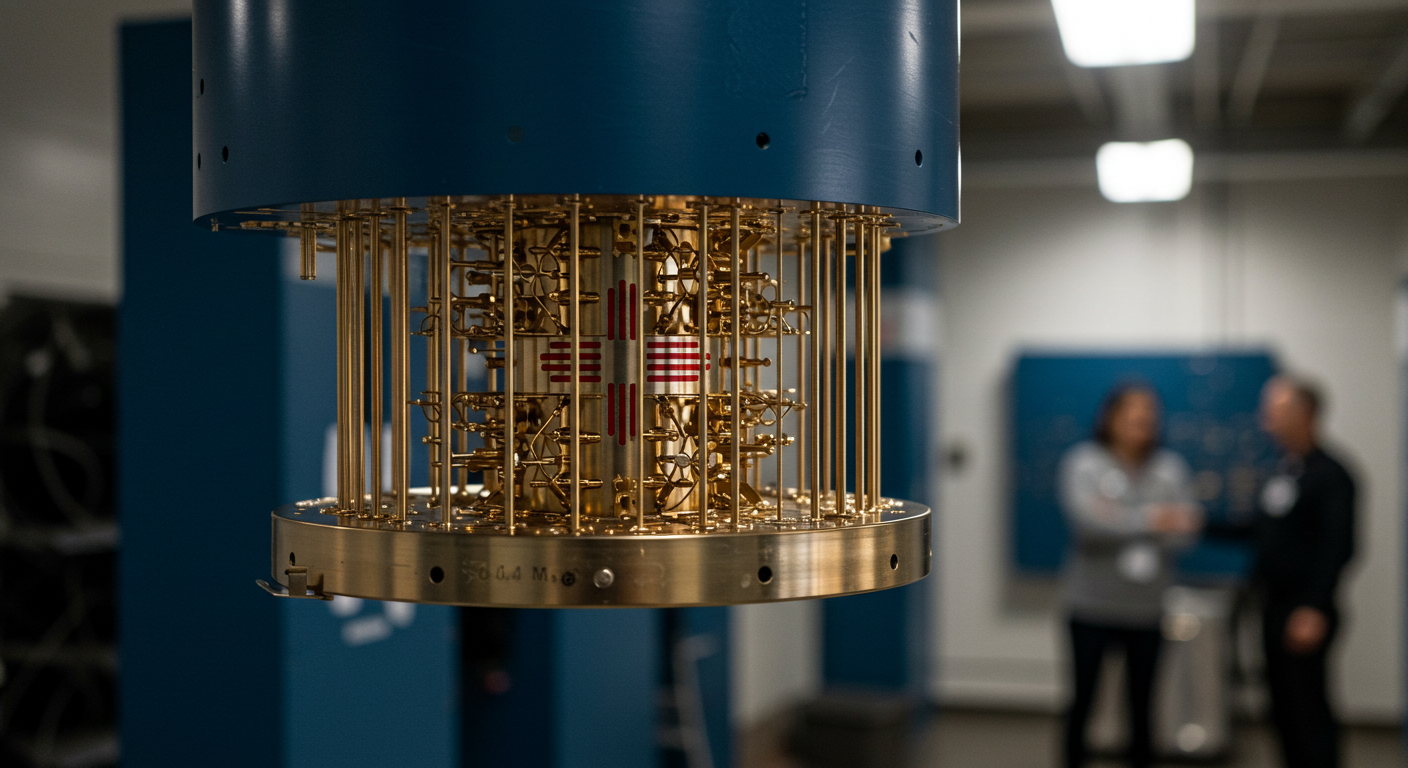
Both Lumentum and Coherent are pioneers in developing advanced photonics solutions crucial for high-speed data transfer. Their offerings include state-of-the-art optical transceivers, sophisticated circuit switches, and high-performance lasers. These technologies are instrumental in transmitting data over long distances at unprecedented speeds, utilizing light rather than electrical signals, which inherently offers greater energy efficiency and reduced latency.
For Lumentum, the announced multi-year, non-exclusive deal includes a multi-billion dollar purchase commitment from Nvidia, signifying a deep and prolonged partnership. While specific details of Coherent's agreement were less publicized initially, the equal investment indicates Nvidia's confidence in both companies' capabilities to deliver the necessary advancements.
Building on Past Success: The Mellanox Blueprint
This strategic investment mirrors Nvidia's earlier foresight with its 2020 acquisition of Mellanox, a leading provider of high-performance networking solutions. That acquisition allowed Nvidia to integrate Mellanox's InfiniBand technology directly into its ecosystem, significantly enhancing NVLink – its high-speed interconnect technology for GPUs. The result was a substantial increase in data throughput between GPUs, a critical factor in scaling AI performance.
The photonics investment represents the next logical step in this long-term strategy. By improving the foundational infrastructure for data movement within and between data centers, Nvidia aims to ensure its future AI platforms are not constrained by interconnect limitations. This proactive approach is vital as AI models continue to grow exponentially in size and complexity, demanding increasingly robust and efficient communication pathways.
Impact and Future Outlook
The integration of advanced photonics promises several transformative benefits for AI data centers:
- Enhanced Energy Efficiency: Optical data transmission consumes significantly less power than electrical signals, leading to reduced operational costs and a smaller environmental footprint for energy-intensive AI facilities.
- Increased Data Transfer Speeds: Photonics enables faster movement of data, crucial for minimizing latency and accelerating the training and inference phases of AI models.
- Expanded Bandwidth: Greater bandwidth capacity allows for the simultaneous transfer of larger volumes of data, supporting more complex AI architectures and distributed computing environments.
Nvidia's multi-billion dollar commitment to photonics solidifies its position as a holistic AI infrastructure provider, not just a chip maker. By investing in the underlying technology that connects its powerful GPUs, Nvidia is laying the groundwork for the next generation of AI supercomputing, ensuring its hardware can operate at peak performance without being hampered by network bottlenecks. This move is expected to accelerate innovation across the AI sector, pushing the boundaries of what's possible in machine learning and deep learning applications.
Summary
Nvidia's $4 billion investment in photonics through Lumentum and Coherent is a strategic play to secure its dominance in the AI hardware market. By fostering advancements in optical interconnects, the company aims to drastically improve data transfer speeds, bandwidth, and energy efficiency in AI data centers. This investment extends Nvidia's prior success with the Mellanox acquisition, reinforcing its commitment to providing end-to-end solutions for the future of AI.
Resources
- The Verge (Original announcement context)
- Bloomberg (Financial analysis and market implications)
- Lightwave Online (Technical insights into photonics and data centers)
Details
Author
Top articles




 }})
You can now watch HBO Max for $10
Latest articles




You can now watch HBO Max for $10
Nvidia, a dominant force in artificial intelligence computing, has committed a substantial $4 billion investment in photonics technology, a strategic move aimed at sustaining its leadership in the rapidly evolving AI landscape. This significant capital injection, split equally between Lumentum and Coherent, underscores Nvidia's dedication to overcoming the escalating data transfer and energy consumption challenges inherent in modern AI data centers.
The Strategic Imperative: Beyond Silicon
The burgeoning demands of AI workloads, characterized by massive datasets and complex computational models, are pushing the limits of traditional interconnect technologies. As the volume of data exchanged between GPUs and across data centers continues to surge, the industry faces bottlenecks in speed, bandwidth, and power efficiency. Nvidia's investment directly addresses these critical pain points by backing companies at the forefront of photonics innovation.
Lumentum and Coherent: Architects of Future Interconnects
Both Lumentum and Coherent are pioneers in developing advanced photonics solutions crucial for high-speed data transfer. Their offerings include state-of-the-art optical transceivers, sophisticated circuit switches, and high-performance lasers. These technologies are instrumental in transmitting data over long distances at unprecedented speeds, utilizing light rather than electrical signals, which inherently offers greater energy efficiency and reduced latency.
For Lumentum, the announced multi-year, non-exclusive deal includes a multi-billion dollar purchase commitment from Nvidia, signifying a deep and prolonged partnership. While specific details of Coherent's agreement were less publicized initially, the equal investment indicates Nvidia's confidence in both companies' capabilities to deliver the necessary advancements.
Building on Past Success: The Mellanox Blueprint
This strategic investment mirrors Nvidia's earlier foresight with its 2020 acquisition of Mellanox, a leading provider of high-performance networking solutions. That acquisition allowed Nvidia to integrate Mellanox's InfiniBand technology directly into its ecosystem, significantly enhancing NVLink – its high-speed interconnect technology for GPUs. The result was a substantial increase in data throughput between GPUs, a critical factor in scaling AI performance.
The photonics investment represents the next logical step in this long-term strategy. By improving the foundational infrastructure for data movement within and between data centers, Nvidia aims to ensure its future AI platforms are not constrained by interconnect limitations. This proactive approach is vital as AI models continue to grow exponentially in size and complexity, demanding increasingly robust and efficient communication pathways.
Impact and Future Outlook
The integration of advanced photonics promises several transformative benefits for AI data centers:
- Enhanced Energy Efficiency: Optical data transmission consumes significantly less power than electrical signals, leading to reduced operational costs and a smaller environmental footprint for energy-intensive AI facilities.
- Increased Data Transfer Speeds: Photonics enables faster movement of data, crucial for minimizing latency and accelerating the training and inference phases of AI models.
- Expanded Bandwidth: Greater bandwidth capacity allows for the simultaneous transfer of larger volumes of data, supporting more complex AI architectures and distributed computing environments.
Nvidia's multi-billion dollar commitment to photonics solidifies its position as a holistic AI infrastructure provider, not just a chip maker. By investing in the underlying technology that connects its powerful GPUs, Nvidia is laying the groundwork for the next generation of AI supercomputing, ensuring its hardware can operate at peak performance without being hampered by network bottlenecks. This move is expected to accelerate innovation across the AI sector, pushing the boundaries of what's possible in machine learning and deep learning applications.
Summary
Nvidia's $4 billion investment in photonics through Lumentum and Coherent is a strategic play to secure its dominance in the AI hardware market. By fostering advancements in optical interconnects, the company aims to drastically improve data transfer speeds, bandwidth, and energy efficiency in AI data centers. This investment extends Nvidia's prior success with the Mellanox acquisition, reinforcing its commitment to providing end-to-end solutions for the future of AI.
Resources
- The Verge (Original announcement context)
- Bloomberg (Financial analysis and market implications)
- Lightwave Online (Technical insights into photonics and data centers)
Top articles
You can now watch HBO Max for $10
Latest articles
You can now watch HBO Max for $10
Similar posts




This is a page that only logged-in people can visit. Don't you feel special? Try clicking on a button below to do some things you can't do when you're logged out.
Example modal
At your leisure, please peruse this excerpt from a whale of a tale.
Chapter 1: Loomings.
Call me Ishmael. Some years ago—never mind how long precisely—having little or no money in my purse, and nothing particular to interest me on shore, I thought I would sail about a little and see the watery part of the world. It is a way I have of driving off the spleen and regulating the circulation. Whenever I find myself growing grim about the mouth; whenever it is a damp, drizzly November in my soul; whenever I find myself involuntarily pausing before coffin warehouses, and bringing up the rear of every funeral I meet; and especially whenever my hypos get such an upper hand of me, that it requires a strong moral principle to prevent me from deliberately stepping into the street, and methodically knocking people's hats off—then, I account it high time to get to sea as soon as I can. This is my substitute for pistol and ball. With a philosophical flourish Cato throws himself upon his sword; I quietly take to the ship. There is nothing surprising in this. If they but knew it, almost all men in their degree, some time or other, cherish very nearly the same feelings towards the ocean with me.
Comment