MIT and Hasso Plattner Institute Forge New Alliance for AI and Creativity Hub
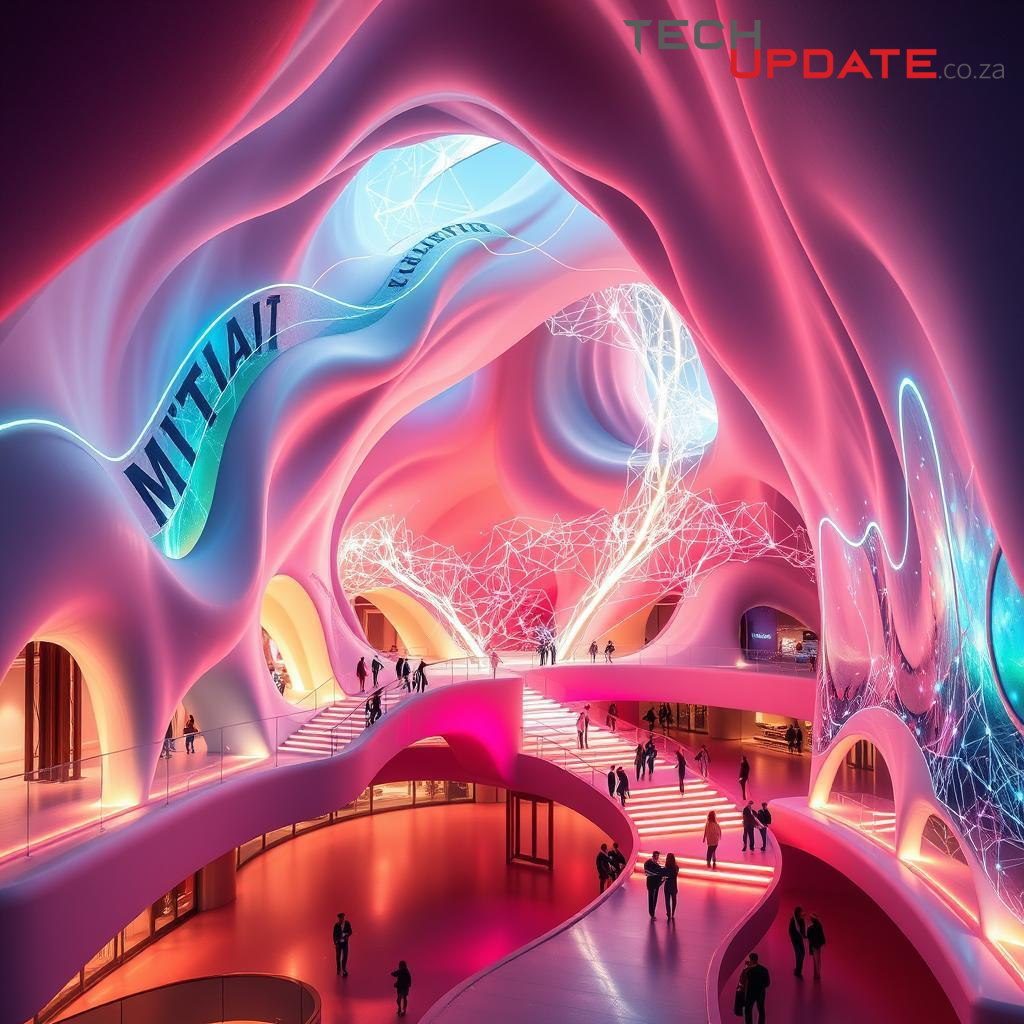
Pioneering the Future of Human-Centered AI
Cambridge, MA – A significant new collaboration has been announced between the Massachusetts Institute of Technology (MIT) and the Hasso Plattner Institute (HPI) in Potsdam, Germany. This partnership establishes a joint hub dedicated to exploring the intersection of artificial intelligence, creativity, and human-centered innovation. This initiative is set to become a focal point for interdisciplinary research and development, fostering a dynamic global community of scholars and practitioners.
The collaborative hub will be jointly spearheaded by three prominent entities: the MIT Morningside Academy for Design, the MIT Schwarzman College of Computing, and the Hasso Plattner Institute. This tripartite leadership underscores a comprehensive approach, combining MIT's strengths in design and computing with HPI's renowned expertise in IT systems engineering and design thinking. The synergy aims to push the boundaries of how AI can augment human creative endeavors and shape future technological landscapes.
A Vision for Collaborative Innovation
The core mission of this new hub is to cultivate an environment where computing prowess meets creative thought, leading to breakthroughs that prioritize human needs and experiences. Researchers and students from both institutions will engage in projects that span various disciplines, from developing new AI tools for artistic expression to designing intelligent systems that enhance problem-solving and innovation in diverse fields. This cross-cultural and cross-institutional exchange is expected to yield novel perspectives and solutions to complex societal challenges.
Initial areas of focus are anticipated to include advanced human-computer interaction, ethical AI development, computational creativity, and the application of AI in design processes. The hub will serve as a platform for workshops, seminars, and joint research initiatives, facilitating the exchange of knowledge and the co-creation of groundbreaking technologies. This strategic alliance reflects a shared commitment to responsible innovation and the belief that the most impactful technological advancements emerge from a deep understanding of human values and creative potential.
Summary
The establishment of the joint hub by MIT and the Hasso Plattner Institute marks a pivotal moment in the global discourse on AI and creativity. By bringing together leading minds from both institutions, this collaboration is poised to redefine the relationship between technology and human ingenuity, paving the way for a new generation of intelligent systems that are not only powerful but also intuitively creative and profoundly human-centered. This strategic partnership underscores the growing recognition that the future of AI lies in its ability to augment, rather than merely automate, human capabilities.
Resources
- MIT News: https://news.mit.edu/topic/design
- Hasso Plattner Institute (HPI): https://hpi.de/en/news/2024/02/mit-and-hpi-establish-collaborative-hub-for-ai-and-creativity.html
- MIT Morningside Academy for Design: https://design.mit.edu/
Details
Author
Top articles



 }})
You can now watch HBO Max for $10
Latest articles





You can now watch HBO Max for $10
Pioneering the Future of Human-Centered AI
Cambridge, MA – A significant new collaboration has been announced between the Massachusetts Institute of Technology (MIT) and the Hasso Plattner Institute (HPI) in Potsdam, Germany. This partnership establishes a joint hub dedicated to exploring the intersection of artificial intelligence, creativity, and human-centered innovation. This initiative is set to become a focal point for interdisciplinary research and development, fostering a dynamic global community of scholars and practitioners.
The collaborative hub will be jointly spearheaded by three prominent entities: the MIT Morningside Academy for Design, the MIT Schwarzman College of Computing, and the Hasso Plattner Institute. This tripartite leadership underscores a comprehensive approach, combining MIT's strengths in design and computing with HPI's renowned expertise in IT systems engineering and design thinking. The synergy aims to push the boundaries of how AI can augment human creative endeavors and shape future technological landscapes.
A Vision for Collaborative Innovation
The core mission of this new hub is to cultivate an environment where computing prowess meets creative thought, leading to breakthroughs that prioritize human needs and experiences. Researchers and students from both institutions will engage in projects that span various disciplines, from developing new AI tools for artistic expression to designing intelligent systems that enhance problem-solving and innovation in diverse fields. This cross-cultural and cross-institutional exchange is expected to yield novel perspectives and solutions to complex societal challenges.
Initial areas of focus are anticipated to include advanced human-computer interaction, ethical AI development, computational creativity, and the application of AI in design processes. The hub will serve as a platform for workshops, seminars, and joint research initiatives, facilitating the exchange of knowledge and the co-creation of groundbreaking technologies. This strategic alliance reflects a shared commitment to responsible innovation and the belief that the most impactful technological advancements emerge from a deep understanding of human values and creative potential.
Summary
The establishment of the joint hub by MIT and the Hasso Plattner Institute marks a pivotal moment in the global discourse on AI and creativity. By bringing together leading minds from both institutions, this collaboration is poised to redefine the relationship between technology and human ingenuity, paving the way for a new generation of intelligent systems that are not only powerful but also intuitively creative and profoundly human-centered. This strategic partnership underscores the growing recognition that the future of AI lies in its ability to augment, rather than merely automate, human capabilities.
Resources
- MIT News: https://news.mit.edu/topic/design
- Hasso Plattner Institute (HPI): https://hpi.de/en/news/2024/02/mit-and-hpi-establish-collaborative-hub-for-ai-and-creativity.html
- MIT Morningside Academy for Design: https://design.mit.edu/
Top articles
You can now watch HBO Max for $10
Latest articles
You can now watch HBO Max for $10
Similar posts




This is a page that only logged-in people can visit. Don't you feel special? Try clicking on a button below to do some things you can't do when you're logged out.
Example modal
At your leisure, please peruse this excerpt from a whale of a tale.
Chapter 1: Loomings.
Call me Ishmael. Some years ago—never mind how long precisely—having little or no money in my purse, and nothing particular to interest me on shore, I thought I would sail about a little and see the watery part of the world. It is a way I have of driving off the spleen and regulating the circulation. Whenever I find myself growing grim about the mouth; whenever it is a damp, drizzly November in my soul; whenever I find myself involuntarily pausing before coffin warehouses, and bringing up the rear of every funeral I meet; and especially whenever my hypos get such an upper hand of me, that it requires a strong moral principle to prevent me from deliberately stepping into the street, and methodically knocking people's hats off—then, I account it high time to get to sea as soon as I can. This is my substitute for pistol and ball. With a philosophical flourish Cato throws himself upon his sword; I quietly take to the ship. There is nothing surprising in this. If they but knew it, almost all men in their degree, some time or other, cherish very nearly the same feelings towards the ocean with me.
Comment