Amazon's 'Bee' Wearable: Unpacking the Intrigue and Unease of Always-On AI on Your Person
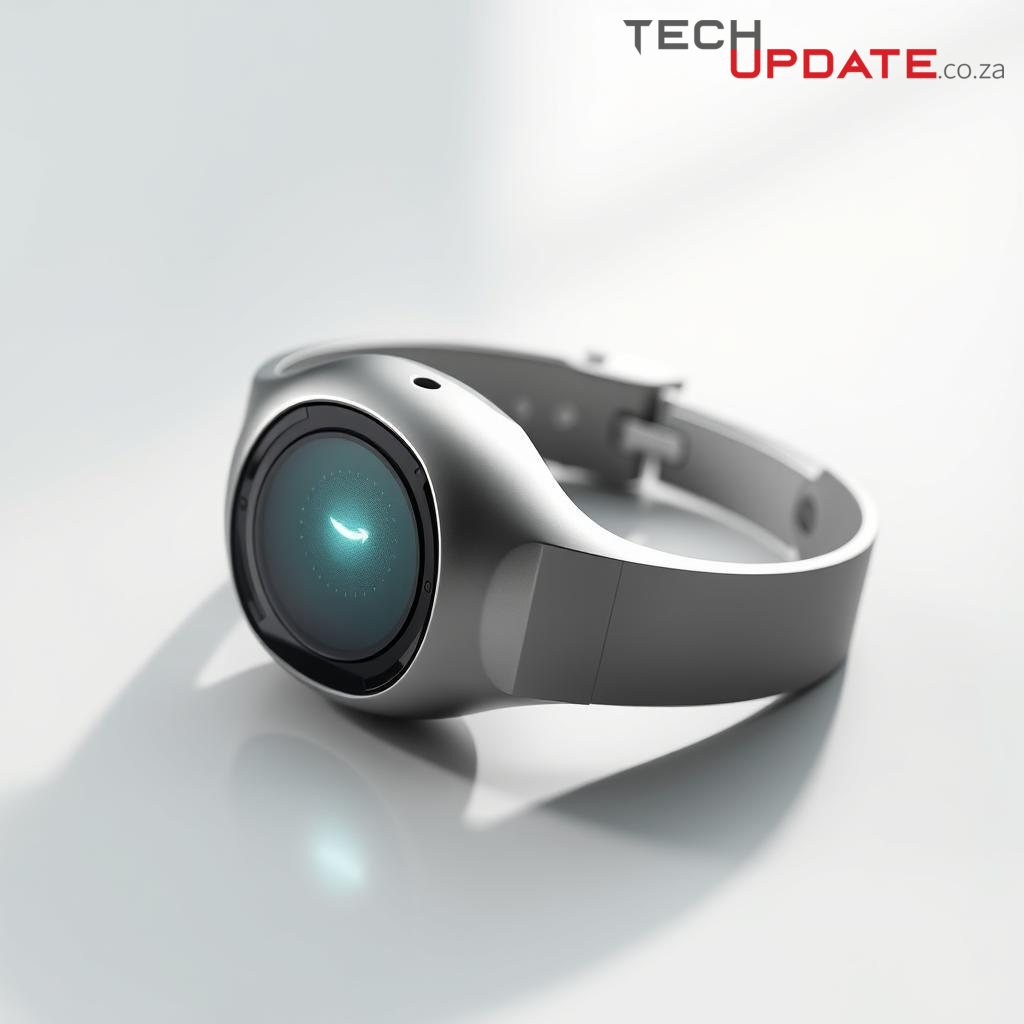
Amazon's 'Bee' Wearable: Unpacking the Intrigue and Unease of Always-On AI on Your Person
In a landscape increasingly populated by ambient artificial intelligence, the arrival of a rumored "Bee" wearable from Amazon positions itself squarely at the intersection of remarkable convenience and persistent privacy anxiety. As an investigative journalist specializing in digital technologies, my recent interaction with this subtle, always-on device left me with a profound duality of impression: genuinely intrigued by its potential, yet undeniably unsettled by its implications.
The Promise of Seamless Living: What the 'Bee' Delivers
The "Bee," conceptually designed as an unobtrusive personal assistant, exemplifies the ambient computing paradigm Amazon has long pursued. Imagine a device so discreet it blends into your daily attire, yet so powerful it anticipates your needs. My experience highlighted its extraordinary capacity for:
- Instantaneous Information Retrieval: From checking real-time traffic updates during a morning commute to clarifying a culinary measurement mid-recipe, the Bee provided answers with a mere whisper of intent.
- Effortless Communication: Dictating messages or initiating calls felt less like operating a gadget and more like an extension of thought, freeing hands for other tasks.
- Contextual Awareness: Its integration with Amazon's ecosystem allowed for intelligent recommendations – perhaps suggesting nearby points of interest or subtly reminding of an upcoming appointment based on learned patterns. This anticipatory convenience is undeniably compelling.
The device’s design, rumored to be minimalist and almost imperceptible, aims to remove the friction points often associated with traditional screen-based interactions. This hands-free philosophy represents a significant leap towards integrating technology more organically into our lives.
The Shadow of Constant Surveillance: Where the 'Bee' Stings
Yet, the very features that lend the Bee its allure simultaneously cast a long shadow of concern. The promise of an "always-on" AI raises critical questions about data sovereignty and the erosion of personal privacy. The underlying technology necessitates:
- Continuous Data Collection: To offer its contextual benefits, the Bee must constantly listen, analyze, and process spoken commands, ambient sounds, and potentially even physiological data. This creates an exhaustive digital footprint of one's daily life.
- Cloud Processing and Storage: Every interaction, every query, every environmental sound snippet deemed relevant by its algorithms, is likely transmitted to Amazon's servers for processing and storage. The sheer volume and intimate nature of this data are staggering.
- Algorithmic Interpretation and Bias: How this vast dataset is interpreted, categorized, and potentially monetized remains a black box for the end-user. The risk of algorithmic bias influencing recommendations or even personal profiles is a constant worry.
- Security Vulnerabilities: Any device that perpetually collects such sensitive information becomes a prime target for security breaches, risking the exposure of deeply personal facets of one’s life.
This uneasy compromise between utility and vigilance is not unique to the "Bee." It mirrors the broader ethical dilemmas posed by other AI wearables and smart devices from major tech players, all vying to embed themselves deeper into our personal spaces and routines.
Summary: A Glimpse into Our AI-Augmented Future
The hypothetical "Amazon Bee" wearable, if it were to materialize as described, offers a potent glimpse into an AI-augmented future—one where technology is seamlessly integrated into our daily existence, anticipating needs and simplifying tasks with unprecedented efficiency. However, this convenience comes at a potentially steep cost to personal autonomy and data privacy. As consumers, and as a society, we must critically evaluate whether the tangible benefits of such pervasive AI outweigh the intangible, yet profound, risks to our digital selves. The conversation around devices like the "Bee" is not merely about technological advancement; it is fundamentally about the boundaries of personal space in an increasingly connected world.
Resources
- Electronic Frontier Foundation (EFF) - Privacy Issues: An authoritative source on digital privacy rights and challenges.
- American Civil Liberties Union (ACLU) - Privacy & Technology: Provides insights into the legal and ethical implications of emerging technologies.
- WIRED - AI Wearables: Offers journalistic analyses and reviews of AI-powered wearable devices and their impact.
Details
Author
Top articles




 }})
You can now watch HBO Max for $10
Latest articles





You can now watch HBO Max for $10
Amazon's 'Bee' Wearable: Unpacking the Intrigue and Unease of Always-On AI on Your Person
In a landscape increasingly populated by ambient artificial intelligence, the arrival of a rumored "Bee" wearable from Amazon positions itself squarely at the intersection of remarkable convenience and persistent privacy anxiety. As an investigative journalist specializing in digital technologies, my recent interaction with this subtle, always-on device left me with a profound duality of impression: genuinely intrigued by its potential, yet undeniably unsettled by its implications.
The Promise of Seamless Living: What the 'Bee' Delivers
The "Bee," conceptually designed as an unobtrusive personal assistant, exemplifies the ambient computing paradigm Amazon has long pursued. Imagine a device so discreet it blends into your daily attire, yet so powerful it anticipates your needs. My experience highlighted its extraordinary capacity for:
- Instantaneous Information Retrieval: From checking real-time traffic updates during a morning commute to clarifying a culinary measurement mid-recipe, the Bee provided answers with a mere whisper of intent.
- Effortless Communication: Dictating messages or initiating calls felt less like operating a gadget and more like an extension of thought, freeing hands for other tasks.
- Contextual Awareness: Its integration with Amazon's ecosystem allowed for intelligent recommendations – perhaps suggesting nearby points of interest or subtly reminding of an upcoming appointment based on learned patterns. This anticipatory convenience is undeniably compelling.
The device’s design, rumored to be minimalist and almost imperceptible, aims to remove the friction points often associated with traditional screen-based interactions. This hands-free philosophy represents a significant leap towards integrating technology more organically into our lives.
The Shadow of Constant Surveillance: Where the 'Bee' Stings
Yet, the very features that lend the Bee its allure simultaneously cast a long shadow of concern. The promise of an "always-on" AI raises critical questions about data sovereignty and the erosion of personal privacy. The underlying technology necessitates:
- Continuous Data Collection: To offer its contextual benefits, the Bee must constantly listen, analyze, and process spoken commands, ambient sounds, and potentially even physiological data. This creates an exhaustive digital footprint of one's daily life.
- Cloud Processing and Storage: Every interaction, every query, every environmental sound snippet deemed relevant by its algorithms, is likely transmitted to Amazon's servers for processing and storage. The sheer volume and intimate nature of this data are staggering.
- Algorithmic Interpretation and Bias: How this vast dataset is interpreted, categorized, and potentially monetized remains a black box for the end-user. The risk of algorithmic bias influencing recommendations or even personal profiles is a constant worry.
- Security Vulnerabilities: Any device that perpetually collects such sensitive information becomes a prime target for security breaches, risking the exposure of deeply personal facets of one’s life.
This uneasy compromise between utility and vigilance is not unique to the "Bee." It mirrors the broader ethical dilemmas posed by other AI wearables and smart devices from major tech players, all vying to embed themselves deeper into our personal spaces and routines.
Summary: A Glimpse into Our AI-Augmented Future
The hypothetical "Amazon Bee" wearable, if it were to materialize as described, offers a potent glimpse into an AI-augmented future—one where technology is seamlessly integrated into our daily existence, anticipating needs and simplifying tasks with unprecedented efficiency. However, this convenience comes at a potentially steep cost to personal autonomy and data privacy. As consumers, and as a society, we must critically evaluate whether the tangible benefits of such pervasive AI outweigh the intangible, yet profound, risks to our digital selves. The conversation around devices like the "Bee" is not merely about technological advancement; it is fundamentally about the boundaries of personal space in an increasingly connected world.
Resources
- Electronic Frontier Foundation (EFF) - Privacy Issues: An authoritative source on digital privacy rights and challenges.
- American Civil Liberties Union (ACLU) - Privacy & Technology: Provides insights into the legal and ethical implications of emerging technologies.
- WIRED - AI Wearables: Offers journalistic analyses and reviews of AI-powered wearable devices and their impact.
Top articles
You can now watch HBO Max for $10
Latest articles
You can now watch HBO Max for $10
Similar posts



This is a page that only logged-in people can visit. Don't you feel special? Try clicking on a button below to do some things you can't do when you're logged out.
Example modal
At your leisure, please peruse this excerpt from a whale of a tale.
Chapter 1: Loomings.
Call me Ishmael. Some years ago—never mind how long precisely—having little or no money in my purse, and nothing particular to interest me on shore, I thought I would sail about a little and see the watery part of the world. It is a way I have of driving off the spleen and regulating the circulation. Whenever I find myself growing grim about the mouth; whenever it is a damp, drizzly November in my soul; whenever I find myself involuntarily pausing before coffin warehouses, and bringing up the rear of every funeral I meet; and especially whenever my hypos get such an upper hand of me, that it requires a strong moral principle to prevent me from deliberately stepping into the street, and methodically knocking people's hats off—then, I account it high time to get to sea as soon as I can. This is my substitute for pistol and ball. With a philosophical flourish Cato throws himself upon his sword; I quietly take to the ship. There is nothing surprising in this. If they but knew it, almost all men in their degree, some time or other, cherish very nearly the same feelings towards the ocean with me.
Comment