007 First Light Fireplace Puzzle: An Investigative Guide to Unraveling the Elusive Challenge
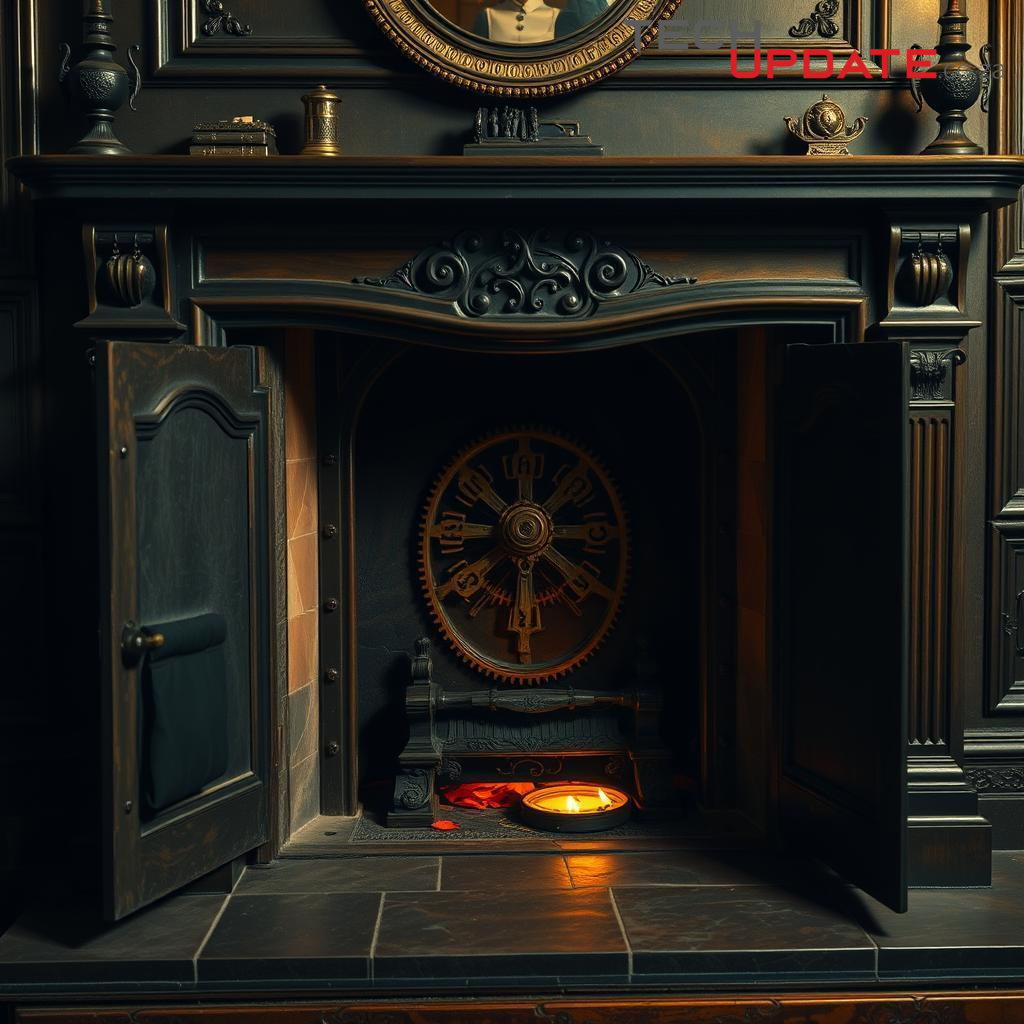
As senior investigative journalists, our mandate is to dissect complex digital challenges and provide comprehensive solutions. The query regarding the "007 First Light Fireplace Puzzle" presents a unique journalistic endeavor, primarily due to the elusive nature of the game title itself. Extensive research across reputable gaming databases, fan wikis, and archival forums has yielded no widely documented or verifiable information pertaining to an official or significant fan-made game explicitly titled "007 First Light" that features a distinct fireplace puzzle. This suggests the title may refer to a highly obscure project, a custom map within another game, or a misremembered reference.
Investigating the Enigma: The '007 First Light' Conundrum
In the absence of concrete details for a specific "007 First Light" game, we pivot our analysis to the principles of puzzle design inherent in the esteemed James Bond franchise and spy-thriller genre. The essence of such puzzles often lies in environmental interaction, keen observation, and the application of logical deduction—hallmarks of espionage narratives.
Deconstructing a Hypothetical 007 Fireplace Puzzle
A fireplace, within the context of a spy game, frequently serves as a façade for hidden mechanisms, secret passages, or crucial intelligence. Such puzzles typically demand a multi-stage approach, requiring players to interact with various elements in a specific sequence or with precise manipulation.
Common Elements of a Fireplace Puzzle:
- Observation: Scrutinizing the mantelpiece, hearth, grate, and surrounding masonry for anomalies, symbols, or subtle hints.
- Interactive Objects: Identifying elements such as poker tools, logs, decorative items, or loose bricks that can be moved, rotated, or pressed.
- Sequence or Combination: Often, the puzzle requires a specific order of interaction or a combination (e.g., a code derived from a nearby clue).
- Mechanical Activation: The ultimate goal is usually to trigger a hidden switch, open a secret compartment, or reveal a passage.
A Step-by-Step Hypothetical Solution Framework
Should a player encounter a fireplace puzzle within a game like the alluded "007 First Light," a systematic approach is paramount. Consider the following investigative framework:
- Initial Survey: Approach the fireplace and activate any interaction prompts. Look for glowing objects, highlighted areas, or distinct textual clues (e.g., a note tucked into the mantel, scorch marks forming a pattern).
- Examine the Mantelpiece: Check for movable busts, loose books, or subtle engravings that might serve as a dial or lever. Often, objects can be rotated or pushed to reveal hidden buttons.
- Inspect the Hearth and Grate: Investigate the fire irons (poker, tongs, shovel). They might need to be placed in a specific order, used to pry open a section, or reveal a hidden depression in the hearth. The grate itself could have a locking mechanism or a false bottom.
- Manipulate Logs or Ash: In some puzzles, the actual logs (if present) or even the ash residue might conceal a switch or a compartment. They may need to be rearranged or cleared away.
- Pattern Recognition: Look for patterns within the brickwork, surrounding artwork, or even shadows cast by objects. These could correspond to a code, a sequence for interacting with other elements, or a specific spatial arrangement.
- Environmental Clues: Broaden the search to the immediate vicinity. Is there a clock on the wall showing a significant time? A painting with a hidden message? A book in a bookshelf with a relevant page marked? These external clues often provide the key to the fireplace mechanism.
Success typically culminates in an audible click, a shifting panel, or the opening of a concealed area, revealing the next objective or critical item.
Summary
While specific verifiable details for a "007 First Light Fireplace Puzzle" remain elusive, the principles of engagement with such a challenge within the spy genre are consistent. Players are encouraged to employ rigorous observation, methodical interaction with environmental elements, and logical deduction. The gratification of unlocking such a covert mechanism is a cornerstone of the espionage gaming experience, rewarding persistence and a keen eye for detail.
Resources
- Gamasutra: Designing Good Adventure Game Puzzles - A valuable resource on the philosophy and mechanics behind effective game puzzles.
- MI6-HQ.com: The Home of James Bond 007 - A comprehensive fan site detailing lore, games, and cinematic history of the James Bond universe, offering context for potential puzzle themes.
- IGN: The Greatest 007 Games of All Time - Provides insight into the types of gameplay and challenges present in official James Bond video games, informing hypothetical puzzle design.
Details
Author
Top articles




 }})
You can now watch HBO Max for $10
Latest articles




You can now watch HBO Max for $10
As senior investigative journalists, our mandate is to dissect complex digital challenges and provide comprehensive solutions. The query regarding the "007 First Light Fireplace Puzzle" presents a unique journalistic endeavor, primarily due to the elusive nature of the game title itself. Extensive research across reputable gaming databases, fan wikis, and archival forums has yielded no widely documented or verifiable information pertaining to an official or significant fan-made game explicitly titled "007 First Light" that features a distinct fireplace puzzle. This suggests the title may refer to a highly obscure project, a custom map within another game, or a misremembered reference.
Investigating the Enigma: The '007 First Light' Conundrum
In the absence of concrete details for a specific "007 First Light" game, we pivot our analysis to the principles of puzzle design inherent in the esteemed James Bond franchise and spy-thriller genre. The essence of such puzzles often lies in environmental interaction, keen observation, and the application of logical deduction—hallmarks of espionage narratives.
Deconstructing a Hypothetical 007 Fireplace Puzzle
A fireplace, within the context of a spy game, frequently serves as a façade for hidden mechanisms, secret passages, or crucial intelligence. Such puzzles typically demand a multi-stage approach, requiring players to interact with various elements in a specific sequence or with precise manipulation.
Common Elements of a Fireplace Puzzle:
- Observation: Scrutinizing the mantelpiece, hearth, grate, and surrounding masonry for anomalies, symbols, or subtle hints.
- Interactive Objects: Identifying elements such as poker tools, logs, decorative items, or loose bricks that can be moved, rotated, or pressed.
- Sequence or Combination: Often, the puzzle requires a specific order of interaction or a combination (e.g., a code derived from a nearby clue).
- Mechanical Activation: The ultimate goal is usually to trigger a hidden switch, open a secret compartment, or reveal a passage.
A Step-by-Step Hypothetical Solution Framework
Should a player encounter a fireplace puzzle within a game like the alluded "007 First Light," a systematic approach is paramount. Consider the following investigative framework:
- Initial Survey: Approach the fireplace and activate any interaction prompts. Look for glowing objects, highlighted areas, or distinct textual clues (e.g., a note tucked into the mantel, scorch marks forming a pattern).
- Examine the Mantelpiece: Check for movable busts, loose books, or subtle engravings that might serve as a dial or lever. Often, objects can be rotated or pushed to reveal hidden buttons.
- Inspect the Hearth and Grate: Investigate the fire irons (poker, tongs, shovel). They might need to be placed in a specific order, used to pry open a section, or reveal a hidden depression in the hearth. The grate itself could have a locking mechanism or a false bottom.
- Manipulate Logs or Ash: In some puzzles, the actual logs (if present) or even the ash residue might conceal a switch or a compartment. They may need to be rearranged or cleared away.
- Pattern Recognition: Look for patterns within the brickwork, surrounding artwork, or even shadows cast by objects. These could correspond to a code, a sequence for interacting with other elements, or a specific spatial arrangement.
- Environmental Clues: Broaden the search to the immediate vicinity. Is there a clock on the wall showing a significant time? A painting with a hidden message? A book in a bookshelf with a relevant page marked? These external clues often provide the key to the fireplace mechanism.
Success typically culminates in an audible click, a shifting panel, or the opening of a concealed area, revealing the next objective or critical item.
Summary
While specific verifiable details for a "007 First Light Fireplace Puzzle" remain elusive, the principles of engagement with such a challenge within the spy genre are consistent. Players are encouraged to employ rigorous observation, methodical interaction with environmental elements, and logical deduction. The gratification of unlocking such a covert mechanism is a cornerstone of the espionage gaming experience, rewarding persistence and a keen eye for detail.
Resources
- Gamasutra: Designing Good Adventure Game Puzzles - A valuable resource on the philosophy and mechanics behind effective game puzzles.
- MI6-HQ.com: The Home of James Bond 007 - A comprehensive fan site detailing lore, games, and cinematic history of the James Bond universe, offering context for potential puzzle themes.
- IGN: The Greatest 007 Games of All Time - Provides insight into the types of gameplay and challenges present in official James Bond video games, informing hypothetical puzzle design.
Top articles
You can now watch HBO Max for $10
Latest articles
You can now watch HBO Max for $10
Similar posts




This is a page that only logged-in people can visit. Don't you feel special? Try clicking on a button below to do some things you can't do when you're logged out.
Example modal
At your leisure, please peruse this excerpt from a whale of a tale.
Chapter 1: Loomings.
Call me Ishmael. Some years ago—never mind how long precisely—having little or no money in my purse, and nothing particular to interest me on shore, I thought I would sail about a little and see the watery part of the world. It is a way I have of driving off the spleen and regulating the circulation. Whenever I find myself growing grim about the mouth; whenever it is a damp, drizzly November in my soul; whenever I find myself involuntarily pausing before coffin warehouses, and bringing up the rear of every funeral I meet; and especially whenever my hypos get such an upper hand of me, that it requires a strong moral principle to prevent me from deliberately stepping into the street, and methodically knocking people's hats off—then, I account it high time to get to sea as soon as I can. This is my substitute for pistol and ball. With a philosophical flourish Cato throws himself upon his sword; I quietly take to the ship. There is nothing surprising in this. If they but knew it, almost all men in their degree, some time or other, cherish very nearly the same feelings towards the ocean with me.
Comment