Unlocking the Genome: Google's AI System Predicts the Impact of Every Single-Base Change
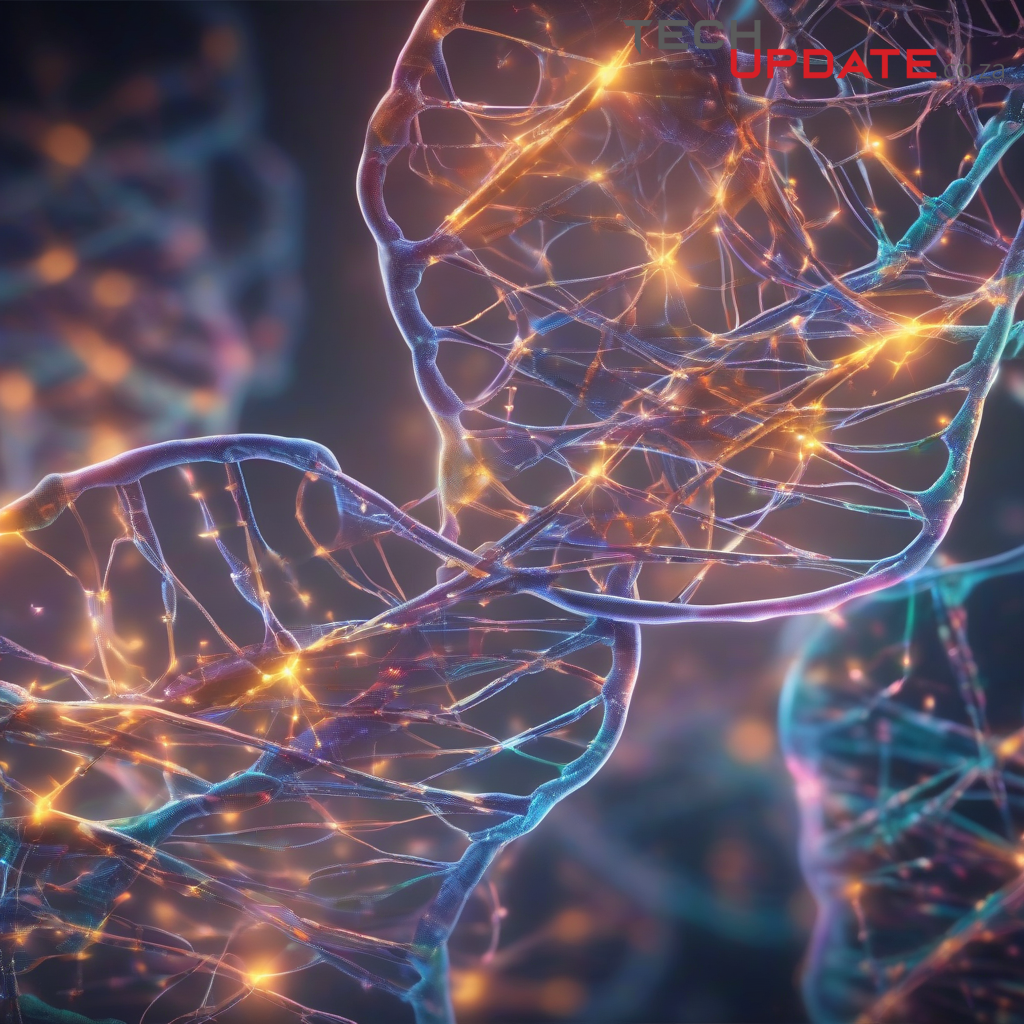
The vast expanse of the human genome, comprising over three billion base pairs, holds the complete instruction set for life. Within this intricate code, even the slightest alteration—a single-base change—can have profound implications, ranging from benign variations to the genesis of debilitating diseases. While the majority of these minute genetic shifts are inconsequential, a critical few can dramatically alter biological function. Groundbreaking advancements from Google's DeepMind are now enabling a systematic evaluation of these single-base changes, heralding a new era in genomics and precision medicine.
Understanding Single-Base Changes
A single-base change, often referred to as a point mutation or single nucleotide variant (SNV), occurs when one nucleotide in the DNA sequence is replaced by another. For instance, an 'A' might be swapped for a 'G'. The human genome is replete with millions of such variations, many of which are common polymorphisms that contribute to human diversity without causing illness. However, a specific type of SNV, known as a missense variant, changes a single amino acid in the protein sequence. These missense variants are particularly critical because they can either render a protein dysfunctional, mildly alter its activity, or have no discernible effect at all.
Distinguishing between the benign and the pathogenic among these countless possibilities has been a monumental challenge for geneticists. Traditional methods often rely on statistical association studies, family segregation analyses, and functional assays, all of which are time-consuming and resource-intensive, making it impossible to evaluate every potential variant comprehensively.
Google's AlphaMissense: A Paradigm Shift
Addressing this formidable challenge, Google DeepMind has introduced AlphaMissense, an innovative artificial intelligence system designed to predict the pathogenicity of virtually every possible single-base change in the human proteome. Leveraging a sophisticated large language model, AlphaMissense was trained on vast datasets encompassing genomic sequences, protein structures, and known variant pathogenicity information. This allowed the AI to learn the complex patterns that distinguish disease-causing mutations from harmless variations.
AlphaMissense’s profound capability lies in its ability to exhaustively evaluate approximately 71 million possible missense variants across the human genome. For each variant, the system generates a score indicating its likelihood of being benign or pathogenic. This predictive power significantly streamlines the process of variant interpretation, offering a crucial tool for researchers and clinicians alike. By providing a comprehensive map of potential impacts, AlphaMissense moves us closer to understanding the genetic underpinnings of countless conditions with unprecedented detail.
Implications for Genetic Diagnosis and Beyond
The immediate impact of AlphaMissense is poised to revolutionize genetic disease diagnosis. For patients with suspected genetic disorders, identifying the causative mutation can be a diagnostic odyssey, often complicated by the presence of numerous "variants of unknown significance" (VUS). AlphaMissense’s predictions can help reclassify many VUS, providing clearer answers for families and guiding therapeutic strategies.
Beyond diagnosis, this technology holds immense promise for pharmaceutical development. By pinpointing critical single-base changes that drive disease, researchers can gain deeper insights into molecular mechanisms, potentially leading to the identification of novel drug targets and the development of more effective, personalized treatments. Furthermore, the systematic evaluation of genetic variants opens new avenues for proactive health management and risk assessment, paving the way for truly predictive and preventive medicine.
Summary
Google DeepMind's AlphaMissense represents a significant leap forward in our understanding of the human genome. By accurately predicting the pathogenicity of millions of single-base changes, this AI system transforms the landscape of genetic diagnosis, research, and therapeutic development. It offers a powerful lens through which to decode the subtle yet profound impacts of genetic variations, accelerating the journey towards precision medicine and a more comprehensive understanding of human health and disease.
Resources
- AlphaMissense: The AI model predicting disease from genetic mutations - DeepMind Blog
- Accurate pathogenicity prediction for all possible human missense variants - Nature Journal
- Single Nucleotide Polymorphism (SNP) - National Human Genome Research Institute (NHGRI)
Details
Author
Top articles




 }})
You can now watch HBO Max for $10
Latest articles





You can now watch HBO Max for $10
The vast expanse of the human genome, comprising over three billion base pairs, holds the complete instruction set for life. Within this intricate code, even the slightest alteration—a single-base change—can have profound implications, ranging from benign variations to the genesis of debilitating diseases. While the majority of these minute genetic shifts are inconsequential, a critical few can dramatically alter biological function. Groundbreaking advancements from Google's DeepMind are now enabling a systematic evaluation of these single-base changes, heralding a new era in genomics and precision medicine.
Understanding Single-Base Changes
A single-base change, often referred to as a point mutation or single nucleotide variant (SNV), occurs when one nucleotide in the DNA sequence is replaced by another. For instance, an 'A' might be swapped for a 'G'. The human genome is replete with millions of such variations, many of which are common polymorphisms that contribute to human diversity without causing illness. However, a specific type of SNV, known as a missense variant, changes a single amino acid in the protein sequence. These missense variants are particularly critical because they can either render a protein dysfunctional, mildly alter its activity, or have no discernible effect at all.
Distinguishing between the benign and the pathogenic among these countless possibilities has been a monumental challenge for geneticists. Traditional methods often rely on statistical association studies, family segregation analyses, and functional assays, all of which are time-consuming and resource-intensive, making it impossible to evaluate every potential variant comprehensively.
Google's AlphaMissense: A Paradigm Shift
Addressing this formidable challenge, Google DeepMind has introduced AlphaMissense, an innovative artificial intelligence system designed to predict the pathogenicity of virtually every possible single-base change in the human proteome. Leveraging a sophisticated large language model, AlphaMissense was trained on vast datasets encompassing genomic sequences, protein structures, and known variant pathogenicity information. This allowed the AI to learn the complex patterns that distinguish disease-causing mutations from harmless variations.
AlphaMissense’s profound capability lies in its ability to exhaustively evaluate approximately 71 million possible missense variants across the human genome. For each variant, the system generates a score indicating its likelihood of being benign or pathogenic. This predictive power significantly streamlines the process of variant interpretation, offering a crucial tool for researchers and clinicians alike. By providing a comprehensive map of potential impacts, AlphaMissense moves us closer to understanding the genetic underpinnings of countless conditions with unprecedented detail.
Implications for Genetic Diagnosis and Beyond
The immediate impact of AlphaMissense is poised to revolutionize genetic disease diagnosis. For patients with suspected genetic disorders, identifying the causative mutation can be a diagnostic odyssey, often complicated by the presence of numerous "variants of unknown significance" (VUS). AlphaMissense’s predictions can help reclassify many VUS, providing clearer answers for families and guiding therapeutic strategies.
Beyond diagnosis, this technology holds immense promise for pharmaceutical development. By pinpointing critical single-base changes that drive disease, researchers can gain deeper insights into molecular mechanisms, potentially leading to the identification of novel drug targets and the development of more effective, personalized treatments. Furthermore, the systematic evaluation of genetic variants opens new avenues for proactive health management and risk assessment, paving the way for truly predictive and preventive medicine.
Summary
Google DeepMind's AlphaMissense represents a significant leap forward in our understanding of the human genome. By accurately predicting the pathogenicity of millions of single-base changes, this AI system transforms the landscape of genetic diagnosis, research, and therapeutic development. It offers a powerful lens through which to decode the subtle yet profound impacts of genetic variations, accelerating the journey towards precision medicine and a more comprehensive understanding of human health and disease.
Resources
- AlphaMissense: The AI model predicting disease from genetic mutations - DeepMind Blog
- Accurate pathogenicity prediction for all possible human missense variants - Nature Journal
- Single Nucleotide Polymorphism (SNP) - National Human Genome Research Institute (NHGRI)
Top articles
You can now watch HBO Max for $10
Latest articles
You can now watch HBO Max for $10
Similar posts




This is a page that only logged-in people can visit. Don't you feel special? Try clicking on a button below to do some things you can't do when you're logged out.
Example modal
At your leisure, please peruse this excerpt from a whale of a tale.
Chapter 1: Loomings.
Call me Ishmael. Some years ago—never mind how long precisely—having little or no money in my purse, and nothing particular to interest me on shore, I thought I would sail about a little and see the watery part of the world. It is a way I have of driving off the spleen and regulating the circulation. Whenever I find myself growing grim about the mouth; whenever it is a damp, drizzly November in my soul; whenever I find myself involuntarily pausing before coffin warehouses, and bringing up the rear of every funeral I meet; and especially whenever my hypos get such an upper hand of me, that it requires a strong moral principle to prevent me from deliberately stepping into the street, and methodically knocking people's hats off—then, I account it high time to get to sea as soon as I can. This is my substitute for pistol and ball. With a philosophical flourish Cato throws himself upon his sword; I quietly take to the ship. There is nothing surprising in this. If they but knew it, almost all men in their degree, some time or other, cherish very nearly the same feelings towards the ocean with me.
Comment