OpenAI Unveils "Jalapeño" AI Processor: A Strategic Leap into Custom Hardware

OpenAI's Strategic Dive into Custom Silicon with "Jalapeño"
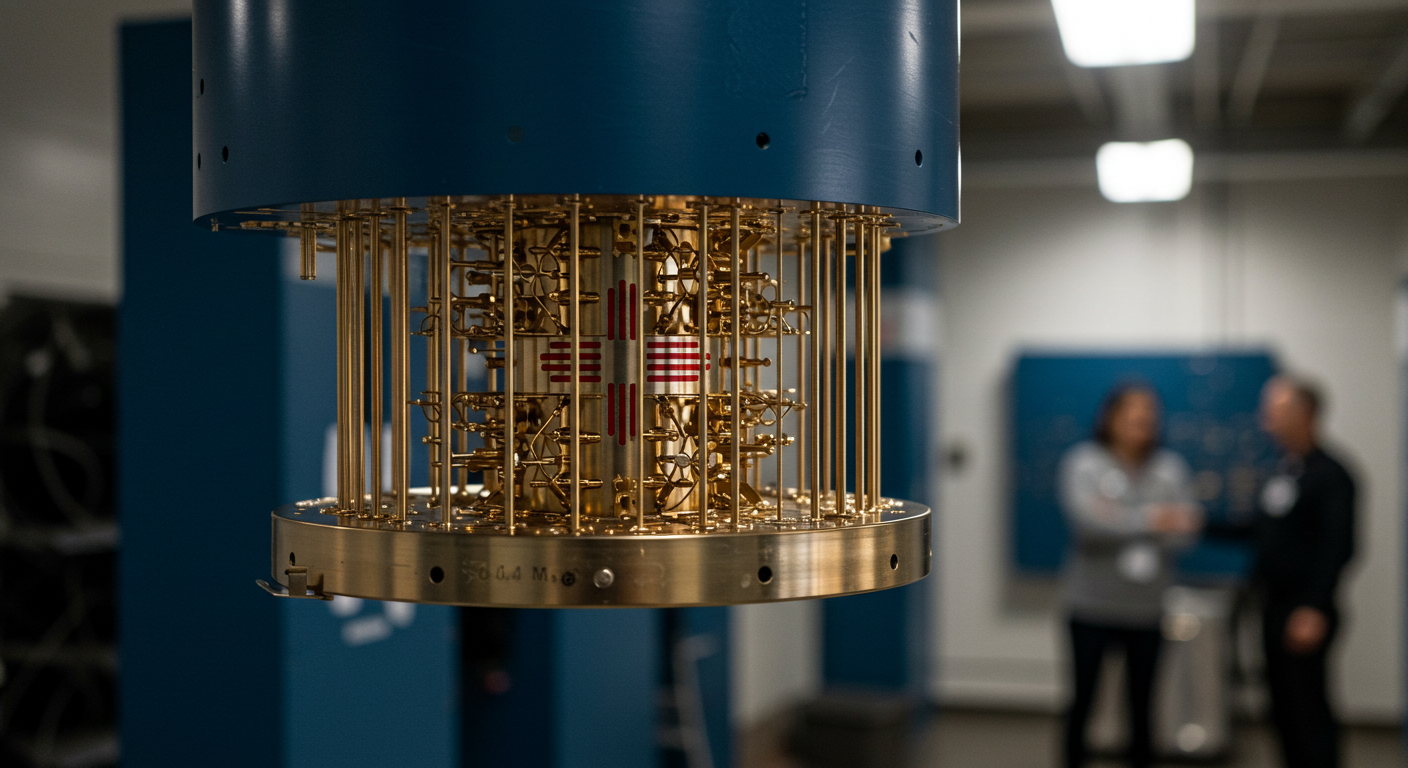
OpenAI, a leader in artificial intelligence research and deployment, has officially unveiled its first custom AI processor, dubbed "Jalapeño." Developed in a strategic partnership with semiconductor giant Broadcom, this new "intelligence processor" marks a significant shift for OpenAI as it ventures into the complex realm of hardware development. The announcement, made on Wednesday, underscores the company's ambition to control and optimize the foundational infrastructure powering its sophisticated large language models (LLMs).
Jalapeño: Engineered for AI Inference
The Jalapeño chip is an Application-Specific Integrated Circuit (ASIC), meticulously engineered for a singular, critical purpose: AI inference. In the lifecycle of an AI model, inference is the stage where the model processes user requests—such as generating responses for ChatGPT or executing commands via an agent like Codex. This contrasts sharply with AI training, an equally resource-intensive phase where models consume vast datasets to learn and refine their understanding. By focusing on inference, Jalapeño aims to enhance the speed, efficiency, and scalability of delivering AI services to end-users.
This move comes approximately nine months after OpenAI initially signaled its intent to collaborate with Broadcom on custom silicon. The rapid development and release of Jalapeño highlight the urgency within the AI industry to overcome bottlenecks associated with general-purpose hardware, particularly the high demand for specialized GPUs.
The Broader Implications for AI Infrastructure
OpenAI's investment in custom silicon through Jalapeño signifies a strategic imperative to reduce operational costs, improve performance, and secure its supply chain amidst the booming demand for AI capabilities. Developing proprietary chips allows companies like OpenAI to tailor hardware precisely to the unique computational demands of their AI models, potentially leading to significant gains in efficiency over off-the-shelf solutions. This trend mirrors similar efforts by other tech giants, indicating a growing realization that hardware innovation is as crucial as algorithmic advancements in the competitive AI landscape.
Summary
The introduction of the Jalapeño AI processor represents a pivotal moment for OpenAI, signaling its commitment to vertical integration in the AI stack. By designing its own inference chip in collaboration with Broadcom, OpenAI aims to enhance the performance, efficiency, and cost-effectiveness of its AI services, particularly for powering current and future large language models. This strategic move positions OpenAI to better control its technological destiny and sets a precedent for further hardware innovations within the AI industry.
Resources
Details
Author
Top articles




 }})
You can now watch HBO Max for $10
Latest articles





You can now watch HBO Max for $10
OpenAI's Strategic Dive into Custom Silicon with "Jalapeño"
OpenAI, a leader in artificial intelligence research and deployment, has officially unveiled its first custom AI processor, dubbed "Jalapeño." Developed in a strategic partnership with semiconductor giant Broadcom, this new "intelligence processor" marks a significant shift for OpenAI as it ventures into the complex realm of hardware development. The announcement, made on Wednesday, underscores the company's ambition to control and optimize the foundational infrastructure powering its sophisticated large language models (LLMs).
Jalapeño: Engineered for AI Inference
The Jalapeño chip is an Application-Specific Integrated Circuit (ASIC), meticulously engineered for a singular, critical purpose: AI inference. In the lifecycle of an AI model, inference is the stage where the model processes user requests—such as generating responses for ChatGPT or executing commands via an agent like Codex. This contrasts sharply with AI training, an equally resource-intensive phase where models consume vast datasets to learn and refine their understanding. By focusing on inference, Jalapeño aims to enhance the speed, efficiency, and scalability of delivering AI services to end-users.
This move comes approximately nine months after OpenAI initially signaled its intent to collaborate with Broadcom on custom silicon. The rapid development and release of Jalapeño highlight the urgency within the AI industry to overcome bottlenecks associated with general-purpose hardware, particularly the high demand for specialized GPUs.
The Broader Implications for AI Infrastructure
OpenAI's investment in custom silicon through Jalapeño signifies a strategic imperative to reduce operational costs, improve performance, and secure its supply chain amidst the booming demand for AI capabilities. Developing proprietary chips allows companies like OpenAI to tailor hardware precisely to the unique computational demands of their AI models, potentially leading to significant gains in efficiency over off-the-shelf solutions. This trend mirrors similar efforts by other tech giants, indicating a growing realization that hardware innovation is as crucial as algorithmic advancements in the competitive AI landscape.
Summary
The introduction of the Jalapeño AI processor represents a pivotal moment for OpenAI, signaling its commitment to vertical integration in the AI stack. By designing its own inference chip in collaboration with Broadcom, OpenAI aims to enhance the performance, efficiency, and cost-effectiveness of its AI services, particularly for powering current and future large language models. This strategic move positions OpenAI to better control its technological destiny and sets a precedent for further hardware innovations within the AI industry.
Resources
Top articles
You can now watch HBO Max for $10
Latest articles
You can now watch HBO Max for $10
Similar posts




This is a page that only logged-in people can visit. Don't you feel special? Try clicking on a button below to do some things you can't do when you're logged out.
Example modal
At your leisure, please peruse this excerpt from a whale of a tale.
Chapter 1: Loomings.
Call me Ishmael. Some years ago—never mind how long precisely—having little or no money in my purse, and nothing particular to interest me on shore, I thought I would sail about a little and see the watery part of the world. It is a way I have of driving off the spleen and regulating the circulation. Whenever I find myself growing grim about the mouth; whenever it is a damp, drizzly November in my soul; whenever I find myself involuntarily pausing before coffin warehouses, and bringing up the rear of every funeral I meet; and especially whenever my hypos get such an upper hand of me, that it requires a strong moral principle to prevent me from deliberately stepping into the street, and methodically knocking people's hats off—then, I account it high time to get to sea as soon as I can. This is my substitute for pistol and ball. With a philosophical flourish Cato throws himself upon his sword; I quietly take to the ship. There is nothing surprising in this. If they but knew it, almost all men in their degree, some time or other, cherish very nearly the same feelings towards the ocean with me.
Comment