Democratizing Defense Tech: How AI Chatbots Empower Non-Technical Service Members to Develop Military Applications
Introduction: The New Era of Military Software Development
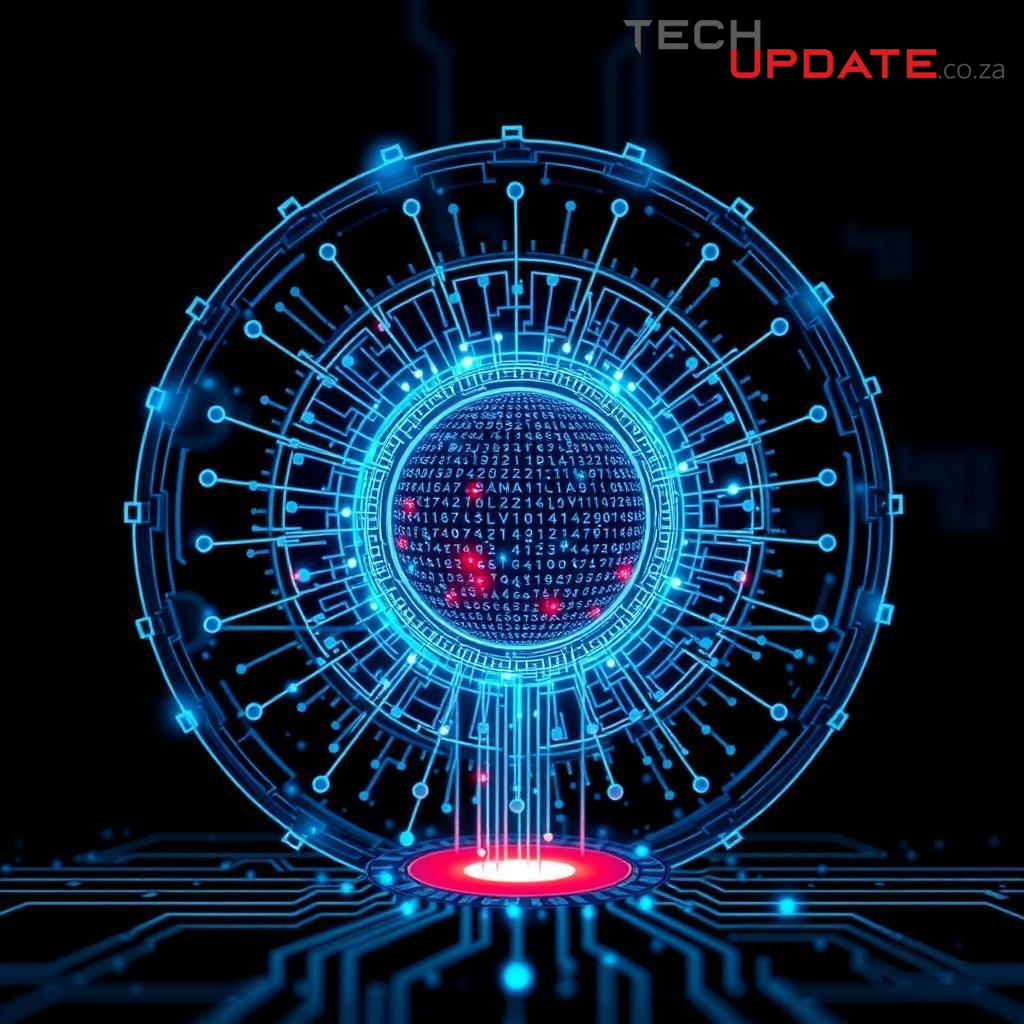
The landscape of defense technology is rapidly evolving, with a new paradigm emerging that empowers even those without extensive programming backgrounds to contribute significantly to military innovation. Recent findings by a USAF cadet and a Lincoln Laboratory researcher highlight a transformative trend: AI chatbots are proving to be invaluable tools, enabling non-technical service members to develop viable software applications tailored to their unique operational challenges.
Empowering the Non-Technical Service Member
Traditionally, software development within military contexts has been the exclusive domain of highly specialized engineers and programmers. However, the advent of sophisticated AI chatbots has begun to democratize this process. These intelligent assistants can translate natural language commands and problem descriptions into functional code, effectively bridging the gap between a service member's understanding of a tactical problem and the technical solution required to address it.
This capability is particularly potent in addressing bespoke, immediate operational needs that might otherwise be backlogged or overlooked by overburdened central development teams. A service member on the ground, witnessing a specific inefficiency or requiring a specialized tool, can now leverage AI to rapidly prototype and even deploy solutions, accelerating the pace of innovation directly at the point of need.
Case Study: USAF Cadet and Lincoln Laboratory Research
Pioneering research by figures such as USAF Cadet Christopher Miller and MIT Lincoln Laboratory's Dr. Andrew Lohn has underscored the practical utility of this approach. Their work demonstrated that large language models (LLMs) could assist individuals with minimal coding experience in creating functional applications. This includes tasks ranging from data analysis scripts to rudimentary AI agents designed for specific military scenarios, such as automating certain communication protocols or processing sensor data more efficiently. The core insight is that the ability to articulate a problem clearly to an AI, rather than possessing deep coding expertise, becomes the primary driver of successful application development.
The Mechanics of AI-Assisted Development
For a novice, the process typically involves articulating the desired function or problem to the AI chatbot using plain language. The AI then generates code snippets, offers debugging assistance, and even suggests improvements or alternative approaches. This iterative process allows users to refine their applications, learn basic coding principles on the fly, and gain a deeper understanding of software logic without extensive formal training. It transforms complex programming into an accessible dialogue, turning ideas into actionable code within hours or days rather than weeks or months.
Implications for Defense Readiness and Innovation
The implications of this shift are profound for defense readiness. By expanding the pool of potential software developers within the military, forces can become more agile, responsive, and self-sufficient in technological terms. It fosters a culture of innovation from the ground up, where service members are not just users of technology but active creators. This localized, rapid development capability can lead to tailored solutions that are often more effective because they are designed by those who intimately understand the operational environment and its challenges.
Furthermore, it reduces reliance on external contractors for every custom software need, potentially enhancing cybersecurity by keeping more development in-house and reducing the attack surface associated with third-party integrations.
Summary
The collaboration between a USAF cadet and a Lincoln Laboratory researcher has unveiled a significant pathway for non-technical service members to become creators of vital military software using AI chatbots. This paradigm shift democratizes access to software development, fostering innovation at the tactical level, enhancing defense readiness, and enabling rapid, tailored solutions to emerging operational demands. The future of military technology will increasingly be shaped by the ingenuity of its personnel, augmented by the power of artificial intelligence.
Resources
Details
Author
Top articles


 }})
You can now watch HBO Max for $10
Latest articles


You can now watch HBO Max for $10
Introduction: The New Era of Military Software Development
The landscape of defense technology is rapidly evolving, with a new paradigm emerging that empowers even those without extensive programming backgrounds to contribute significantly to military innovation. Recent findings by a USAF cadet and a Lincoln Laboratory researcher highlight a transformative trend: AI chatbots are proving to be invaluable tools, enabling non-technical service members to develop viable software applications tailored to their unique operational challenges.
Empowering the Non-Technical Service Member
Traditionally, software development within military contexts has been the exclusive domain of highly specialized engineers and programmers. However, the advent of sophisticated AI chatbots has begun to democratize this process. These intelligent assistants can translate natural language commands and problem descriptions into functional code, effectively bridging the gap between a service member's understanding of a tactical problem and the technical solution required to address it.
This capability is particularly potent in addressing bespoke, immediate operational needs that might otherwise be backlogged or overlooked by overburdened central development teams. A service member on the ground, witnessing a specific inefficiency or requiring a specialized tool, can now leverage AI to rapidly prototype and even deploy solutions, accelerating the pace of innovation directly at the point of need.
Case Study: USAF Cadet and Lincoln Laboratory Research
Pioneering research by figures such as USAF Cadet Christopher Miller and MIT Lincoln Laboratory's Dr. Andrew Lohn has underscored the practical utility of this approach. Their work demonstrated that large language models (LLMs) could assist individuals with minimal coding experience in creating functional applications. This includes tasks ranging from data analysis scripts to rudimentary AI agents designed for specific military scenarios, such as automating certain communication protocols or processing sensor data more efficiently. The core insight is that the ability to articulate a problem clearly to an AI, rather than possessing deep coding expertise, becomes the primary driver of successful application development.
The Mechanics of AI-Assisted Development
For a novice, the process typically involves articulating the desired function or problem to the AI chatbot using plain language. The AI then generates code snippets, offers debugging assistance, and even suggests improvements or alternative approaches. This iterative process allows users to refine their applications, learn basic coding principles on the fly, and gain a deeper understanding of software logic without extensive formal training. It transforms complex programming into an accessible dialogue, turning ideas into actionable code within hours or days rather than weeks or months.
Implications for Defense Readiness and Innovation
The implications of this shift are profound for defense readiness. By expanding the pool of potential software developers within the military, forces can become more agile, responsive, and self-sufficient in technological terms. It fosters a culture of innovation from the ground up, where service members are not just users of technology but active creators. This localized, rapid development capability can lead to tailored solutions that are often more effective because they are designed by those who intimately understand the operational environment and its challenges.
Furthermore, it reduces reliance on external contractors for every custom software need, potentially enhancing cybersecurity by keeping more development in-house and reducing the attack surface associated with third-party integrations.
Summary
The collaboration between a USAF cadet and a Lincoln Laboratory researcher has unveiled a significant pathway for non-technical service members to become creators of vital military software using AI chatbots. This paradigm shift democratizes access to software development, fostering innovation at the tactical level, enhancing defense readiness, and enabling rapid, tailored solutions to emerging operational demands. The future of military technology will increasingly be shaped by the ingenuity of its personnel, augmented by the power of artificial intelligence.
Resources
Top articles
You can now watch HBO Max for $10
Latest articles
You can now watch HBO Max for $10
Similar posts


This is a page that only logged-in people can visit. Don't you feel special? Try clicking on a button below to do some things you can't do when you're logged out.
Example modal
At your leisure, please peruse this excerpt from a whale of a tale.
Chapter 1: Loomings.
Call me Ishmael. Some years ago—never mind how long precisely—having little or no money in my purse, and nothing particular to interest me on shore, I thought I would sail about a little and see the watery part of the world. It is a way I have of driving off the spleen and regulating the circulation. Whenever I find myself growing grim about the mouth; whenever it is a damp, drizzly November in my soul; whenever I find myself involuntarily pausing before coffin warehouses, and bringing up the rear of every funeral I meet; and especially whenever my hypos get such an upper hand of me, that it requires a strong moral principle to prevent me from deliberately stepping into the street, and methodically knocking people's hats off—then, I account it high time to get to sea as soon as I can. This is my substitute for pistol and ball. With a philosophical flourish Cato throws himself upon his sword; I quietly take to the ship. There is nothing surprising in this. If they but knew it, almost all men in their degree, some time or other, cherish very nearly the same feelings towards the ocean with me.
Comment