Sweden's Riksbank Reinforces E-krona Imperative Amidst Stablecoin Surge and Digital Euro Projections
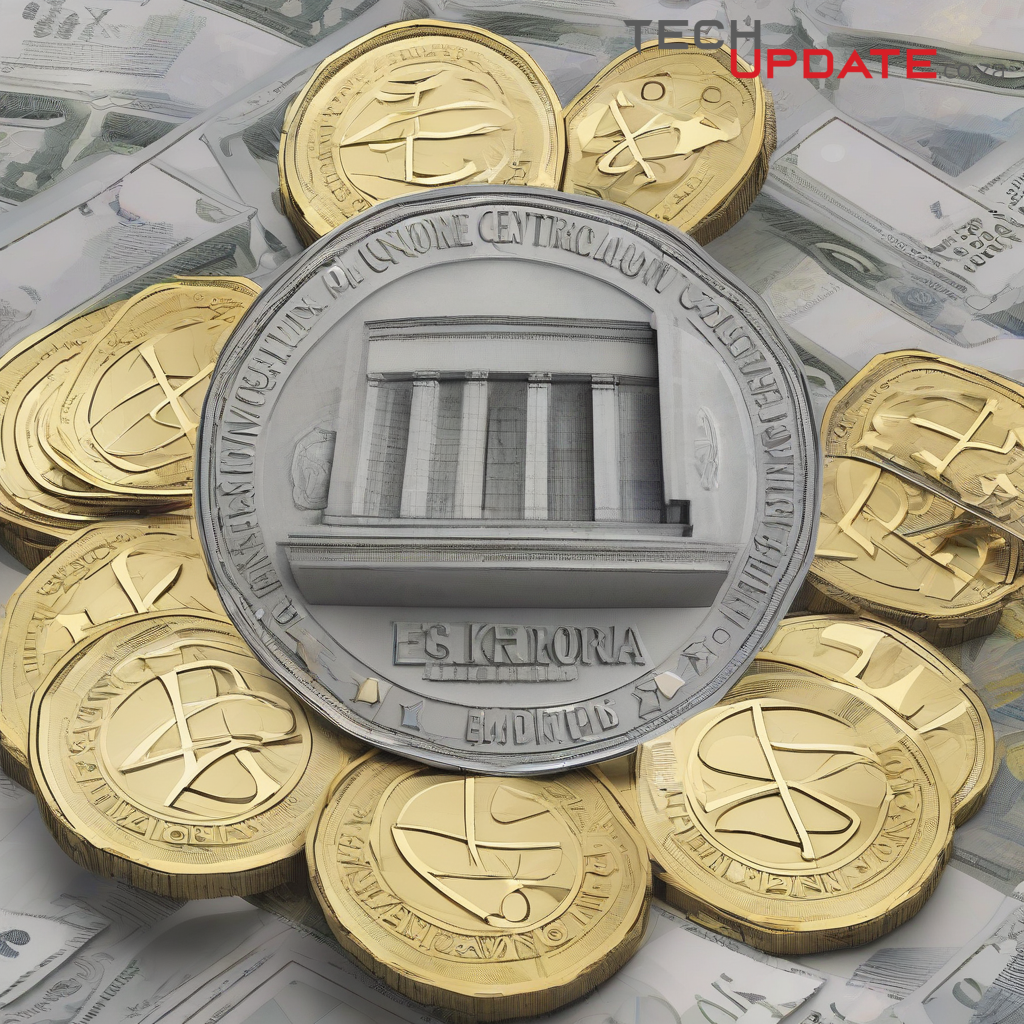
The E-krona: A National Imperative in a Digitalizing Economy
Sweden's central bank, the Riksbank, has intensified its advocacy for an e-krona, a sovereign digital currency, underscoring its pivotal role in safeguarding the nation's payment system and monetary autonomy. This renewed impetus arrives amidst a rapidly evolving global financial landscape, characterized by the proliferation of privately issued stablecoins and the European Central Bank's progressing work on a digital euro. The Riksbank's position is clear: a state-backed digital currency is no longer a theoretical exercise but a critical component for future financial resilience.
Securing National Payment Infrastructure
The dramatic decline in cash usage across Sweden has rendered the country one of the most cashless societies globally. This shift has inadvertently increased reliance on private payment solutions, raising fundamental questions about the ultimate responsibility for the national payment infrastructure. The Riksbank argues that a central bank-issued e-krona would provide a robust, resilient, and publicly controlled alternative, ensuring that essential payment services remain accessible to all citizens, independent of commercial entities or foreign influence. This public option is seen as vital for maintaining trust and stability within the financial ecosystem.
The Shadow of Stablecoins and the Digital Euro
The burgeoning market for stablecoins, digital assets pegged to the value of a fiat currency, presents a complex challenge. While offering potential efficiencies, their widespread adoption could undermine the Riksbank's ability to conduct effective monetary policy, complicate liquidity management, and introduce new systemic risks if not adequately regulated. The central bank is particularly concerned about the potential for fragmentation in the payment landscape and the erosion of its monetary control should private digital currencies gain significant traction.
Adding another layer of complexity is the ongoing development of the digital euro by the European Central Bank. As a non-eurozone EU member, Sweden must carefully consider the implications of a dominant foreign central bank digital currency (CBDC). The potential for a digital euro to be widely used within Sweden could affect its monetary sovereignty, the efficiency of its domestic payment system, and the overall effectiveness of the Riksbank's policy tools. An e-krona is therefore viewed as a defensive measure to preserve Sweden's economic independence and ensure its unique financial landscape is not unduly influenced by external digital monetary developments.
Maintaining Monetary Control and Financial Stability
At the core of the Riksbank's argument is the imperative to maintain monetary control and secure financial stability. In a future where cash is negligible, the central bank risks losing its direct link to the payment system, thereby hindering its ability to influence interest rates, manage inflation, and act as a lender of last resort during financial crises. An e-krona would re-establish this direct connection, providing a foundational digital complement to physical cash. This would empower the Riksbank to effectively implement its mandate in a fully digitized economy, ensuring predictable monetary policy transmission and robust safeguards against financial shocks.
Global Context and Sweden's Path Forward
Globally, central banks are intensely researching and piloting CBDCs, recognizing the transformative potential and challenges of digital money. Sweden, an early pioneer in this space, continues to refine its e-krona project, pushing for necessary legislative frameworks to transition from technical exploration to potential implementation. The ongoing debate within Sweden reflects a broader global discussion on the future of money, emphasizing national resilience in an increasingly interconnected and digitized world.
Summary and Conclusion
The Riksbank's persistent pursuit of an e-krona underscores a strategic vision for Sweden's financial future. By championing a state-backed digital currency, the central bank aims to buttress national payment sovereignty, mitigate risks posed by unregulated digital assets, and preserve its critical role in monetary control and financial stability. As the digital transformation of finance accelerates, the e-krona debate remains a defining struggle for national economic independence.
Resources
- Riksbank: The e-krona project
- European Central Bank: Digital Euro
- Bank for International Settlements (BIS): Annual Report 2023, Chapter III: The future of money and payments
Details
Author
Top articles




 }})
You can now watch HBO Max for $10
Latest articles




You can now watch HBO Max for $10
The E-krona: A National Imperative in a Digitalizing Economy
Sweden's central bank, the Riksbank, has intensified its advocacy for an e-krona, a sovereign digital currency, underscoring its pivotal role in safeguarding the nation's payment system and monetary autonomy. This renewed impetus arrives amidst a rapidly evolving global financial landscape, characterized by the proliferation of privately issued stablecoins and the European Central Bank's progressing work on a digital euro. The Riksbank's position is clear: a state-backed digital currency is no longer a theoretical exercise but a critical component for future financial resilience.
Securing National Payment Infrastructure
The dramatic decline in cash usage across Sweden has rendered the country one of the most cashless societies globally. This shift has inadvertently increased reliance on private payment solutions, raising fundamental questions about the ultimate responsibility for the national payment infrastructure. The Riksbank argues that a central bank-issued e-krona would provide a robust, resilient, and publicly controlled alternative, ensuring that essential payment services remain accessible to all citizens, independent of commercial entities or foreign influence. This public option is seen as vital for maintaining trust and stability within the financial ecosystem.
The Shadow of Stablecoins and the Digital Euro
The burgeoning market for stablecoins, digital assets pegged to the value of a fiat currency, presents a complex challenge. While offering potential efficiencies, their widespread adoption could undermine the Riksbank's ability to conduct effective monetary policy, complicate liquidity management, and introduce new systemic risks if not adequately regulated. The central bank is particularly concerned about the potential for fragmentation in the payment landscape and the erosion of its monetary control should private digital currencies gain significant traction.
Adding another layer of complexity is the ongoing development of the digital euro by the European Central Bank. As a non-eurozone EU member, Sweden must carefully consider the implications of a dominant foreign central bank digital currency (CBDC). The potential for a digital euro to be widely used within Sweden could affect its monetary sovereignty, the efficiency of its domestic payment system, and the overall effectiveness of the Riksbank's policy tools. An e-krona is therefore viewed as a defensive measure to preserve Sweden's economic independence and ensure its unique financial landscape is not unduly influenced by external digital monetary developments.
Maintaining Monetary Control and Financial Stability
At the core of the Riksbank's argument is the imperative to maintain monetary control and secure financial stability. In a future where cash is negligible, the central bank risks losing its direct link to the payment system, thereby hindering its ability to influence interest rates, manage inflation, and act as a lender of last resort during financial crises. An e-krona would re-establish this direct connection, providing a foundational digital complement to physical cash. This would empower the Riksbank to effectively implement its mandate in a fully digitized economy, ensuring predictable monetary policy transmission and robust safeguards against financial shocks.
Global Context and Sweden's Path Forward
Globally, central banks are intensely researching and piloting CBDCs, recognizing the transformative potential and challenges of digital money. Sweden, an early pioneer in this space, continues to refine its e-krona project, pushing for necessary legislative frameworks to transition from technical exploration to potential implementation. The ongoing debate within Sweden reflects a broader global discussion on the future of money, emphasizing national resilience in an increasingly interconnected and digitized world.
Summary and Conclusion
The Riksbank's persistent pursuit of an e-krona underscores a strategic vision for Sweden's financial future. By championing a state-backed digital currency, the central bank aims to buttress national payment sovereignty, mitigate risks posed by unregulated digital assets, and preserve its critical role in monetary control and financial stability. As the digital transformation of finance accelerates, the e-krona debate remains a defining struggle for national economic independence.
Resources
- Riksbank: The e-krona project
- European Central Bank: Digital Euro
- Bank for International Settlements (BIS): Annual Report 2023, Chapter III: The future of money and payments
Top articles
You can now watch HBO Max for $10
Latest articles
You can now watch HBO Max for $10
Similar posts



This is a page that only logged-in people can visit. Don't you feel special? Try clicking on a button below to do some things you can't do when you're logged out.
Example modal
At your leisure, please peruse this excerpt from a whale of a tale.
Chapter 1: Loomings.
Call me Ishmael. Some years ago—never mind how long precisely—having little or no money in my purse, and nothing particular to interest me on shore, I thought I would sail about a little and see the watery part of the world. It is a way I have of driving off the spleen and regulating the circulation. Whenever I find myself growing grim about the mouth; whenever it is a damp, drizzly November in my soul; whenever I find myself involuntarily pausing before coffin warehouses, and bringing up the rear of every funeral I meet; and especially whenever my hypos get such an upper hand of me, that it requires a strong moral principle to prevent me from deliberately stepping into the street, and methodically knocking people's hats off—then, I account it high time to get to sea as soon as I can. This is my substitute for pistol and ball. With a philosophical flourish Cato throws himself upon his sword; I quietly take to the ship. There is nothing surprising in this. If they but knew it, almost all men in their degree, some time or other, cherish very nearly the same feelings towards the ocean with me.
Comment