NASA Propels Commercial Orbit: The Call for Next-Gen Private Space Stations Unveiled
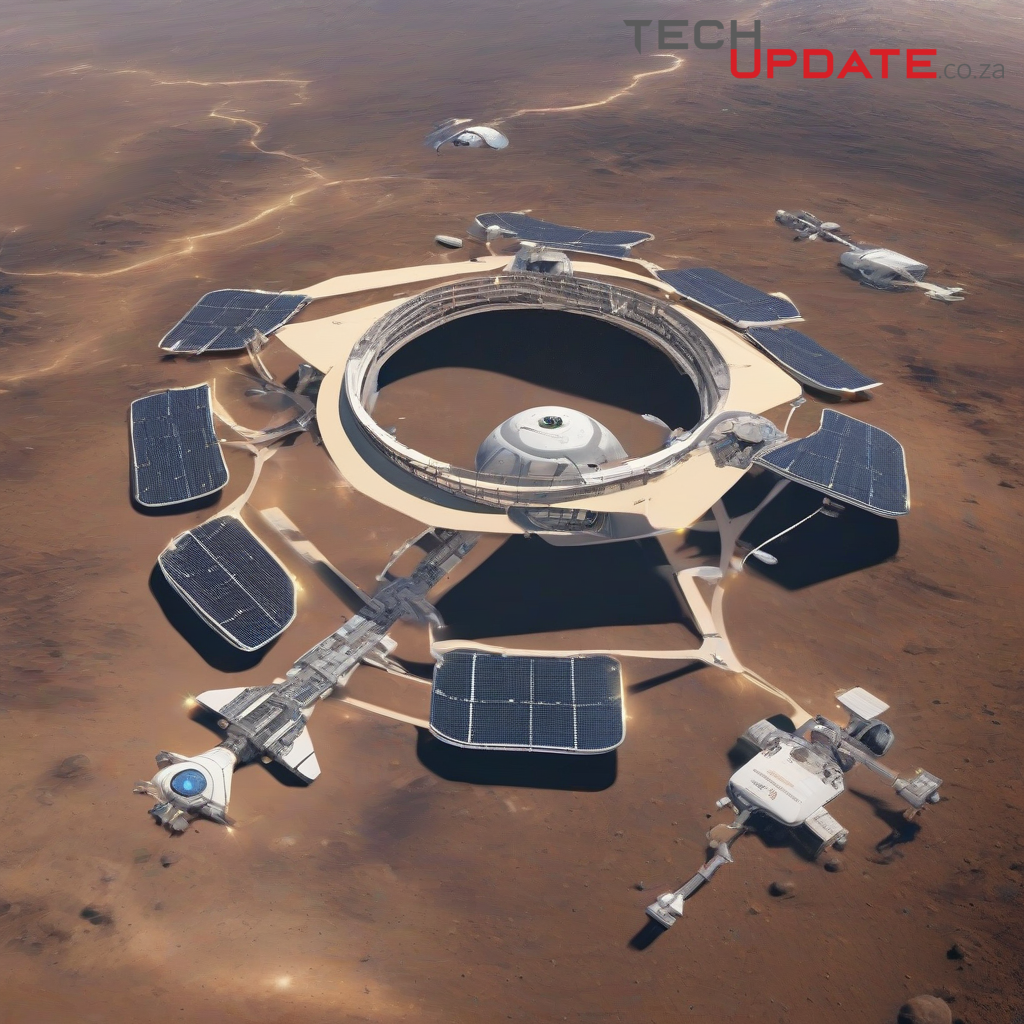
In a landmark move signaling a new era for space exploration and commerce, NASA has officially issued its long-anticipated call to industry for proposals to develop and operate private space stations. This initiative underscores the agency's unwavering commitment to maintaining a continuous human presence in low Earth orbit (LEO), a declaration reiterated by NASA officials: "We’ve made it clear that NASA will never give up its presence in low Earth orbit."
Shifting Paradigms: From ISS to Commercial LEO Destinations
For decades, the International Space Station (ISS) has served as humanity's unparalleled outpost in LEO, fostering international collaboration and groundbreaking scientific research. However, with the ISS nearing the end of its operational lifespan, NASA is strategically transitioning its LEO activities to commercial platforms. This transition is not an abdication of responsibility but a strategic pivot to foster a robust commercial space economy, allowing NASA to become a tenant rather than the sole proprietor of orbital infrastructure.
The agency’s Commercial LEO Destinations (CLD) project aims to stimulate the development of multiple, independent commercial space stations capable of supporting NASA's scientific research, technology development, and astronaut training needs, alongside private ventures and international partners. This approach is designed to reduce operational costs for the agency and free up resources for ambitious deep-space missions, such as the Artemis program's return to the Moon and subsequent journeys to Mars.
Industry's Golden Opportunity: A New Frontier for Innovation
The Request for Proposals (RFP) represents a significant opportunity for private aerospace companies to lead in the development of next-generation orbital habitats and laboratories. Companies are expected to present innovative designs that are not only cost-effective and safe but also scalable and adaptable to diverse user requirements. This includes accommodating both government and private astronauts, facilitating unique manufacturing processes, and offering unparalleled research environments.
NASA has outlined specific criteria, emphasizing the importance of robust business plans, demonstrable technical capabilities, and a clear path to achieving operational readiness by the mid-2030s, aligning with the planned decommissioning of the ISS. The agency has already provided initial funding to several companies for concept development under previous phases of the CLD program, laying the groundwork for this decisive next step.
Economic and Strategic Implications for Earth and Beyond
The burgeoning commercial LEO economy promises profound implications. Beyond providing services to NASA, these private stations are poised to open new avenues for space tourism, in-orbit manufacturing, pharmaceutical research, and media production. This expansion of access to space will likely drive down costs, accelerate innovation, and create new industries, contributing significantly to global economies.
From a strategic standpoint, a diversified portfolio of commercial space stations ensures redundancy and resilience for continuous human presence in LEO. It also strengthens the U.S. position in the global space arena by fostering a competitive and innovative domestic space industry. The move also enables international partners to continue their LEO research and development efforts without sole reliance on a single government-funded platform.
Conclusion
NASA's call for private space stations marks a pivotal moment in the history of spaceflight. It solidifies the agency's commitment to a permanent human presence in low Earth orbit while simultaneously catalyzing a vibrant commercial space ecosystem. By transitioning from owner-operator to customer, NASA is not only ensuring the continuity of vital LEO research but also empowering the private sector to lead the next chapter of orbital development, paving the way for unprecedented innovation and accessibility in space.
Resources
Details
Author
Top articles




 }})
You can now watch HBO Max for $10
Latest articles




You can now watch HBO Max for $10
In a landmark move signaling a new era for space exploration and commerce, NASA has officially issued its long-anticipated call to industry for proposals to develop and operate private space stations. This initiative underscores the agency's unwavering commitment to maintaining a continuous human presence in low Earth orbit (LEO), a declaration reiterated by NASA officials: "We’ve made it clear that NASA will never give up its presence in low Earth orbit."
Shifting Paradigms: From ISS to Commercial LEO Destinations
For decades, the International Space Station (ISS) has served as humanity's unparalleled outpost in LEO, fostering international collaboration and groundbreaking scientific research. However, with the ISS nearing the end of its operational lifespan, NASA is strategically transitioning its LEO activities to commercial platforms. This transition is not an abdication of responsibility but a strategic pivot to foster a robust commercial space economy, allowing NASA to become a tenant rather than the sole proprietor of orbital infrastructure.
The agency’s Commercial LEO Destinations (CLD) project aims to stimulate the development of multiple, independent commercial space stations capable of supporting NASA's scientific research, technology development, and astronaut training needs, alongside private ventures and international partners. This approach is designed to reduce operational costs for the agency and free up resources for ambitious deep-space missions, such as the Artemis program's return to the Moon and subsequent journeys to Mars.
Industry's Golden Opportunity: A New Frontier for Innovation
The Request for Proposals (RFP) represents a significant opportunity for private aerospace companies to lead in the development of next-generation orbital habitats and laboratories. Companies are expected to present innovative designs that are not only cost-effective and safe but also scalable and adaptable to diverse user requirements. This includes accommodating both government and private astronauts, facilitating unique manufacturing processes, and offering unparalleled research environments.
NASA has outlined specific criteria, emphasizing the importance of robust business plans, demonstrable technical capabilities, and a clear path to achieving operational readiness by the mid-2030s, aligning with the planned decommissioning of the ISS. The agency has already provided initial funding to several companies for concept development under previous phases of the CLD program, laying the groundwork for this decisive next step.
Economic and Strategic Implications for Earth and Beyond
The burgeoning commercial LEO economy promises profound implications. Beyond providing services to NASA, these private stations are poised to open new avenues for space tourism, in-orbit manufacturing, pharmaceutical research, and media production. This expansion of access to space will likely drive down costs, accelerate innovation, and create new industries, contributing significantly to global economies.
From a strategic standpoint, a diversified portfolio of commercial space stations ensures redundancy and resilience for continuous human presence in LEO. It also strengthens the U.S. position in the global space arena by fostering a competitive and innovative domestic space industry. The move also enables international partners to continue their LEO research and development efforts without sole reliance on a single government-funded platform.
Conclusion
NASA's call for private space stations marks a pivotal moment in the history of spaceflight. It solidifies the agency's commitment to a permanent human presence in low Earth orbit while simultaneously catalyzing a vibrant commercial space ecosystem. By transitioning from owner-operator to customer, NASA is not only ensuring the continuity of vital LEO research but also empowering the private sector to lead the next chapter of orbital development, paving the way for unprecedented innovation and accessibility in space.
Resources
Top articles
You can now watch HBO Max for $10
Latest articles
You can now watch HBO Max for $10
Similar posts




This is a page that only logged-in people can visit. Don't you feel special? Try clicking on a button below to do some things you can't do when you're logged out.
Example modal
At your leisure, please peruse this excerpt from a whale of a tale.
Chapter 1: Loomings.
Call me Ishmael. Some years ago—never mind how long precisely—having little or no money in my purse, and nothing particular to interest me on shore, I thought I would sail about a little and see the watery part of the world. It is a way I have of driving off the spleen and regulating the circulation. Whenever I find myself growing grim about the mouth; whenever it is a damp, drizzly November in my soul; whenever I find myself involuntarily pausing before coffin warehouses, and bringing up the rear of every funeral I meet; and especially whenever my hypos get such an upper hand of me, that it requires a strong moral principle to prevent me from deliberately stepping into the street, and methodically knocking people's hats off—then, I account it high time to get to sea as soon as I can. This is my substitute for pistol and ball. With a philosophical flourish Cato throws himself upon his sword; I quietly take to the ship. There is nothing surprising in this. If they but knew it, almost all men in their degree, some time or other, cherish very nearly the same feelings towards the ocean with me.
Comment