The Uncanny Valley of Modern Geopolitics: AI Ethics, Political Realities, and Submarine Silences
The Uncanny Valley of Modern Geopolitics: AI Ethics, Political Realities, and Submarine Silences
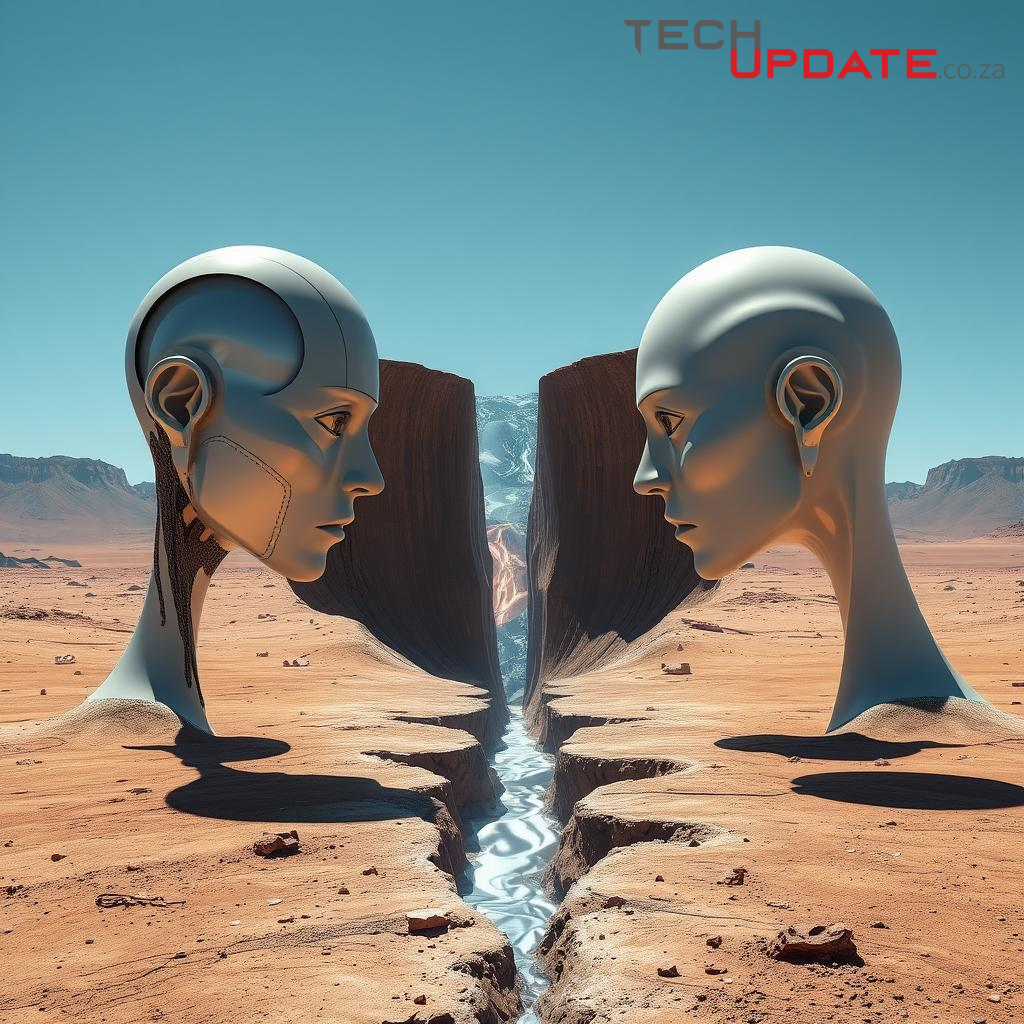
The contemporary global landscape is increasingly defined by complex intersections of technology, ethics, and political discourse, often revealing a disconcerting sense of the ‘uncanny valley.’ This psychological phenomenon, traditionally describing an unsettling feeling evoked by objects that are almost human but not quite, now resonates across our digital and political spheres. This week, we unpack three pivotal narratives that illustrate this unsettling proximity to the artificial: the friction between the Pentagon and AI developer Anthropic, the philosophical divide between agentic and mimetic artificial intelligence, and the stark political chasm separating Donald Trump's commentary from the State of the Union address. Additionally, we cast a gaze beneath the waves to consider the critical, yet often unseen, infrastructure of undersea cables, exemplified by the historic TAT-8, and their profound implications for global connectivity.
Pentagon's Pragmatism vs. Anthropic's Principles
A simmering tension has emerged between the United States Pentagon and leading AI research firm Anthropic, illustrating a fundamental conflict at the heart of advanced technology deployment. While the Pentagon seeks to leverage cutting-edge AI for defense applications, including safety testing for autonomous systems, concerns have reportedly surfaced regarding Anthropic's commitment to "Constitutional AI" principles. This approach, which hardwires AI with a set of ethical guidelines to ensure harmlessness and mitigate bias, is viewed by some defense strategists as potentially hindering operational effectiveness or introducing an overly cautious, perhaps "woke," bias into military-grade AI. This friction highlights a broader challenge: how to reconcile the imperative of national security with the foundational ethical frameworks increasingly demanded of powerful artificial intelligences. The debate centers on whether an AI designed to prioritize human safety above all else can effectively operate in high-stakes, adversarial environments, or if such ethical guardrails risk creating an AI that is unsettlingly almost useful, but ultimately constrained.
Agentic Autonomy vs. Mimetic Mimesis: The AI Dichotomy
At the core of the AI development debate lies a crucial distinction between agentic and mimetic artificial intelligence, a dichotomy that directly influences the potential for an 'uncanny valley' experience. Agentic AI refers to systems designed to act autonomously, pursue defined goals, and interact with complex environments, displaying a degree of independent decision-making. These are the systems envisioned for tasks requiring sophisticated problem-solving and proactive engagement. In contrast, mimetic AI focuses primarily on imitating existing data patterns, behaviors, or human interactions without necessarily possessing deep understanding or autonomous agency. While incredibly powerful for tasks like language generation or image recognition, mimetic AI, when it falls short of perfect imitation, can trigger the uncanny valley effect—an unsettling feeling when an AI's resemblance to human intelligence is close but fundamentally flawed. The Pentagon-Anthropic dynamic can be seen through this lens: the military may seek robustly agentic AI capable of decisive action, while Anthropic’s constitutional approach might be perceived as tempering this agency with ethical constraints, potentially pushing its output towards a more cautiously mimetic, and therefore less directly applicable, state for certain defense scenarios.
Trump's Counter-Narrative to the State of the Union
The political arena also presented its own version of the uncanny valley following President Biden's recent State of the Union address. Former President Donald Trump's immediate and subsequent reactions offered a stark counter-narrative, painting a picture fundamentally at odds with the official presentation. His commentary, often delivered through his preferred digital channels, created an alternative reality, meticulously dissecting and reframing every aspect of the address through a critical, often dismissive, lens. This divergence in narratives cultivates an unsettling political uncanny valley, where two leaders present realities that are superficially similar—both discussing the nation’s state—yet are fundamentally alienated from each other's perspective. The result is a public discourse where the familiar trappings of democratic debate are present, but the underlying consensus or shared foundational facts appear eerily absent, leaving observers with a disquieting sense of manufactured realities.
TAT-8 and the Silent Highways of Global Data
Beyond the visible conflicts and political theater, the unseen infrastructure that underpins our digital lives quietly shapes global power dynamics. The brief for this analysis mentioned TAT-8, a name that evokes a bygone era yet remains profoundly relevant. Completed in 1988, TAT-8 was the world's first transatlantic fiber optic cable, marking a monumental leap in global communication capacity and speed. Its installation revolutionized international telecommunications, laying the groundwork for the modern internet. Today, a vast network of hundreds of such undersea cables forms the true backbone of the internet, carrying over 99% of intercontinental data traffic. These silent highways of global data, though largely invisible to the public, are critical geopolitical assets and points of vulnerability. Their security, maintenance, and control are increasingly significant concerns for nations and defense strategists alike, highlighting a different kind of uncanny valley: the profound reliance of our hyper-connected world on a fragile, largely unacknowledged, physical network susceptible to natural disaster, espionage, or conflict. The critical importance of these cables, despite their hidden nature, underscores the foundational infrastructure that enables both technological progress and political discourse.
Summary
From the ethical quandaries of military AI to the fractured realities of political discourse and the silent vulnerability of global data infrastructure, the concept of the ‘uncanny valley’ provides a potent lens through which to view contemporary challenges. The tension between the Pentagon and Anthropic exemplifies the struggle to balance advanced AI capabilities with robust ethical safeguards, questioning whether truly agentic AI can ever be fully contained. The political sphere, meanwhile, showcases an unsettling divergence in perceived realities, where fundamental facts are contested, creating a disquieting sense of artificiality in public debate. Finally, the foundational role of undersea cables, originating with innovations like TAT-8, reminds us that our interconnected world rests upon a vital yet vulnerable physical layer, a hidden network that silently underpins all our digital interactions. Understanding these multifaceted ‘uncanny valleys’ is crucial for navigating an increasingly complex and technologically driven world.
Resources
Details
Author
Top articles




 }})
You can now watch HBO Max for $10
Latest articles




You can now watch HBO Max for $10
The Uncanny Valley of Modern Geopolitics: AI Ethics, Political Realities, and Submarine Silences
The contemporary global landscape is increasingly defined by complex intersections of technology, ethics, and political discourse, often revealing a disconcerting sense of the ‘uncanny valley.’ This psychological phenomenon, traditionally describing an unsettling feeling evoked by objects that are almost human but not quite, now resonates across our digital and political spheres. This week, we unpack three pivotal narratives that illustrate this unsettling proximity to the artificial: the friction between the Pentagon and AI developer Anthropic, the philosophical divide between agentic and mimetic artificial intelligence, and the stark political chasm separating Donald Trump's commentary from the State of the Union address. Additionally, we cast a gaze beneath the waves to consider the critical, yet often unseen, infrastructure of undersea cables, exemplified by the historic TAT-8, and their profound implications for global connectivity.
Pentagon's Pragmatism vs. Anthropic's Principles
A simmering tension has emerged between the United States Pentagon and leading AI research firm Anthropic, illustrating a fundamental conflict at the heart of advanced technology deployment. While the Pentagon seeks to leverage cutting-edge AI for defense applications, including safety testing for autonomous systems, concerns have reportedly surfaced regarding Anthropic's commitment to "Constitutional AI" principles. This approach, which hardwires AI with a set of ethical guidelines to ensure harmlessness and mitigate bias, is viewed by some defense strategists as potentially hindering operational effectiveness or introducing an overly cautious, perhaps "woke," bias into military-grade AI. This friction highlights a broader challenge: how to reconcile the imperative of national security with the foundational ethical frameworks increasingly demanded of powerful artificial intelligences. The debate centers on whether an AI designed to prioritize human safety above all else can effectively operate in high-stakes, adversarial environments, or if such ethical guardrails risk creating an AI that is unsettlingly almost useful, but ultimately constrained.
Agentic Autonomy vs. Mimetic Mimesis: The AI Dichotomy
At the core of the AI development debate lies a crucial distinction between agentic and mimetic artificial intelligence, a dichotomy that directly influences the potential for an 'uncanny valley' experience. Agentic AI refers to systems designed to act autonomously, pursue defined goals, and interact with complex environments, displaying a degree of independent decision-making. These are the systems envisioned for tasks requiring sophisticated problem-solving and proactive engagement. In contrast, mimetic AI focuses primarily on imitating existing data patterns, behaviors, or human interactions without necessarily possessing deep understanding or autonomous agency. While incredibly powerful for tasks like language generation or image recognition, mimetic AI, when it falls short of perfect imitation, can trigger the uncanny valley effect—an unsettling feeling when an AI's resemblance to human intelligence is close but fundamentally flawed. The Pentagon-Anthropic dynamic can be seen through this lens: the military may seek robustly agentic AI capable of decisive action, while Anthropic’s constitutional approach might be perceived as tempering this agency with ethical constraints, potentially pushing its output towards a more cautiously mimetic, and therefore less directly applicable, state for certain defense scenarios.
Trump's Counter-Narrative to the State of the Union
The political arena also presented its own version of the uncanny valley following President Biden's recent State of the Union address. Former President Donald Trump's immediate and subsequent reactions offered a stark counter-narrative, painting a picture fundamentally at odds with the official presentation. His commentary, often delivered through his preferred digital channels, created an alternative reality, meticulously dissecting and reframing every aspect of the address through a critical, often dismissive, lens. This divergence in narratives cultivates an unsettling political uncanny valley, where two leaders present realities that are superficially similar—both discussing the nation’s state—yet are fundamentally alienated from each other's perspective. The result is a public discourse where the familiar trappings of democratic debate are present, but the underlying consensus or shared foundational facts appear eerily absent, leaving observers with a disquieting sense of manufactured realities.
TAT-8 and the Silent Highways of Global Data
Beyond the visible conflicts and political theater, the unseen infrastructure that underpins our digital lives quietly shapes global power dynamics. The brief for this analysis mentioned TAT-8, a name that evokes a bygone era yet remains profoundly relevant. Completed in 1988, TAT-8 was the world's first transatlantic fiber optic cable, marking a monumental leap in global communication capacity and speed. Its installation revolutionized international telecommunications, laying the groundwork for the modern internet. Today, a vast network of hundreds of such undersea cables forms the true backbone of the internet, carrying over 99% of intercontinental data traffic. These silent highways of global data, though largely invisible to the public, are critical geopolitical assets and points of vulnerability. Their security, maintenance, and control are increasingly significant concerns for nations and defense strategists alike, highlighting a different kind of uncanny valley: the profound reliance of our hyper-connected world on a fragile, largely unacknowledged, physical network susceptible to natural disaster, espionage, or conflict. The critical importance of these cables, despite their hidden nature, underscores the foundational infrastructure that enables both technological progress and political discourse.
Summary
From the ethical quandaries of military AI to the fractured realities of political discourse and the silent vulnerability of global data infrastructure, the concept of the ‘uncanny valley’ provides a potent lens through which to view contemporary challenges. The tension between the Pentagon and Anthropic exemplifies the struggle to balance advanced AI capabilities with robust ethical safeguards, questioning whether truly agentic AI can ever be fully contained. The political sphere, meanwhile, showcases an unsettling divergence in perceived realities, where fundamental facts are contested, creating a disquieting sense of artificiality in public debate. Finally, the foundational role of undersea cables, originating with innovations like TAT-8, reminds us that our interconnected world rests upon a vital yet vulnerable physical layer, a hidden network that silently underpins all our digital interactions. Understanding these multifaceted ‘uncanny valleys’ is crucial for navigating an increasingly complex and technologically driven world.
Resources
Top articles
You can now watch HBO Max for $10
Latest articles
You can now watch HBO Max for $10
Similar posts



This is a page that only logged-in people can visit. Don't you feel special? Try clicking on a button below to do some things you can't do when you're logged out.
Example modal
At your leisure, please peruse this excerpt from a whale of a tale.
Chapter 1: Loomings.
Call me Ishmael. Some years ago—never mind how long precisely—having little or no money in my purse, and nothing particular to interest me on shore, I thought I would sail about a little and see the watery part of the world. It is a way I have of driving off the spleen and regulating the circulation. Whenever I find myself growing grim about the mouth; whenever it is a damp, drizzly November in my soul; whenever I find myself involuntarily pausing before coffin warehouses, and bringing up the rear of every funeral I meet; and especially whenever my hypos get such an upper hand of me, that it requires a strong moral principle to prevent me from deliberately stepping into the street, and methodically knocking people's hats off—then, I account it high time to get to sea as soon as I can. This is my substitute for pistol and ball. With a philosophical flourish Cato throws himself upon his sword; I quietly take to the ship. There is nothing surprising in this. If they but knew it, almost all men in their degree, some time or other, cherish very nearly the same feelings towards the ocean with me.
Comment