HP OmniBook's $700 Gambit: Challenging Apple's Dominance in the Emerging AI PC Era
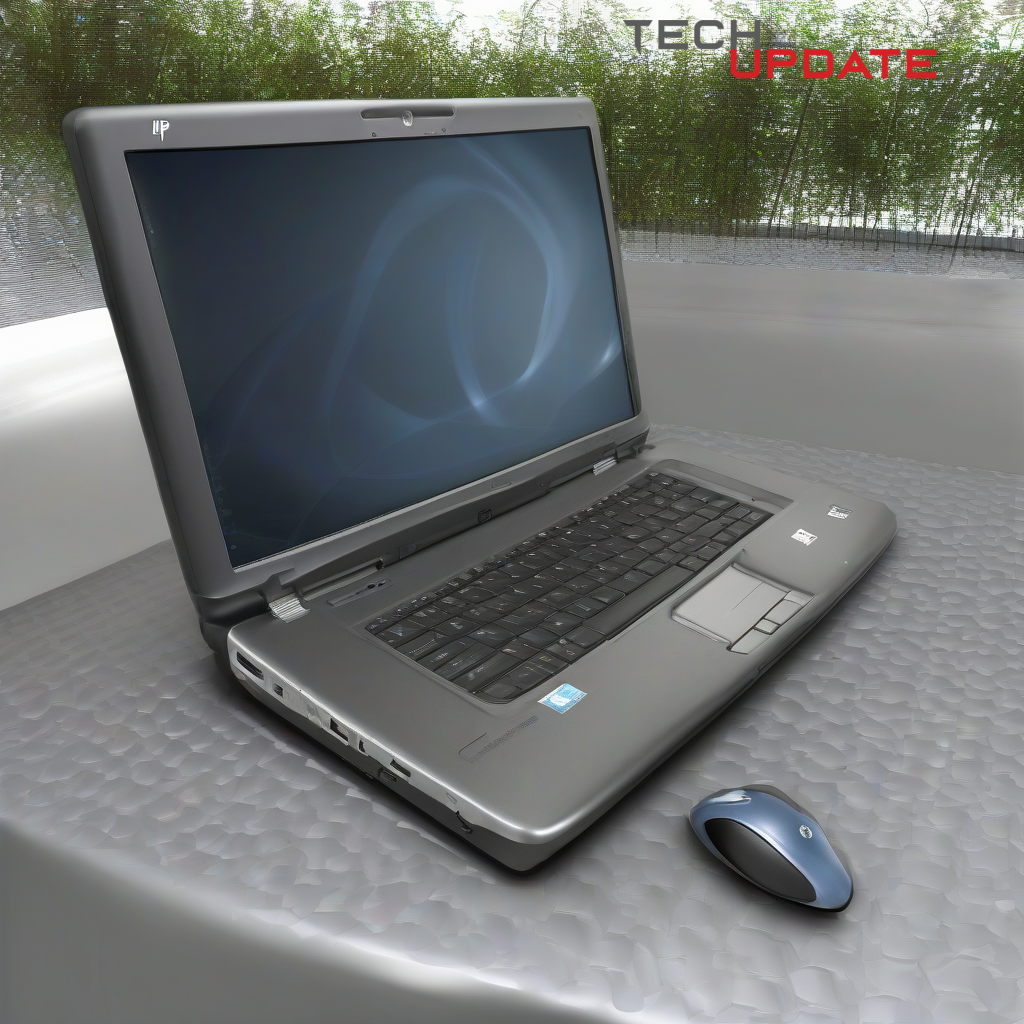
The New Front in the Laptop Wars: HP's OmniBook Ambition
The landscape of personal computing is undergoing a significant transformation, driven by the advent of AI-powered processors and a renewed focus on power efficiency. In this evolving arena, whispers of a "MacBook Neo" – representing Apple's next-generation or continually refined MacBooks – face a formidable and perhaps unexpected challenger: HP's OmniBook. Specifically, speculation points to an HP OmniBook 5 entering the market at an aggressive $700 price point, a strategic move that could redefine the battle for mainstream laptop supremacy.
Deconstructing the $700 OmniBook 5: A Strategic Play by HP
HP has recently revitalized its OmniBook brand, signaling a serious pivot towards AI-integrated PCs designed to leverage next-generation silicon. While the flagship HP OmniBook X, featuring Qualcomm's Snapdragon X Elite chip, currently starts at a higher premium, the strategic introduction of a $700 OmniBook 5 would mark a deliberate effort by HP to capture a broader segment of the market. To achieve this price point, the OmniBook 5 would likely feature a balanced configuration, potentially opting for a slightly less powerful Snapdragon X variant or optimizing other components while retaining core AI processing capabilities.
Such a device would need to offer compelling features: a robust yet lightweight design, a bright and crisp display, and crucially, an efficient NPU (Neural Processing Unit) to handle on-device AI tasks with ease. Its success would hinge on delivering a fluid Windows on ARM experience, extending battery life significantly, and providing a gateway for mainstream users to access AI features without a prohibitive cost barrier. This positions the OmniBook 5 not just as a budget option, but as a statement of intent from HP to democratize AI PCs.
The Shadow of the MacBook Neo: Apple's Enduring Influence
For years, Apple's MacBook Air series has been the gold standard for premium, thin, and light laptops, especially for users invested in the macOS ecosystem. The "MacBook Neo," as an interpretive placeholder for Apple's ongoing innovation, implies a continued evolution of these strengths, particularly with the prowess of its M-series chips. Even a base model MacBook Air, while typically starting above the $700 mark for new units, offers unparalleled efficiency, a meticulously integrated software experience, and robust build quality that often translates into a longer lifespan and higher resale value.
The challenge for HP's OmniBook 5 is not just to match specifications but to present an equally compelling ecosystem and user experience. Apple's control over both hardware and software provides a seamless integration that Windows-based machines, even with advanced ARM chips, strive to replicate. The MacBook Air's reputation for silent operation, exceptional battery life, and powerful performance for its form factor sets a high bar for any competitor aiming for its market share.
Performance, Ecosystem, and Value: The Battleground
The true competition between a $700 OmniBook 5 and an equivalent "MacBook Neo" (or a relevant MacBook Air model) will unfold across several key battlegrounds. Performance will be critical, especially concerning AI workloads, where Snapdragon X Elite chips are designed to directly challenge Apple Silicon. Battery life, a hallmark of both ARM-based Windows PCs and MacBooks, will be a deciding factor for mobile users. The design language and build quality, though subjective, play a significant role in perceived value.
Perhaps the most significant differentiator will be the ecosystem. Windows on ARM has made substantial strides, but the maturity of macOS and its app ecosystem, especially for creative professionals, remains a powerful draw. For a $700 OmniBook 5 to truly succeed, it must offer not just competitive hardware, but also a software environment that is both performant and reassuringly stable, bridging the gap between traditional Windows and the efficiency of ARM.
Summary
The potential arrival of an HP OmniBook 5 at an aggressive $700 price point signals a calculated challenge to Apple's established dominance in the portable computing sector. While the current flagship OmniBook X targets a higher premium segment, a more accessible OmniBook 5 could strategically undercut the effective cost of entry-level MacBooks, particularly the MacBook Air. This move would leverage the efficiencies of ARM architecture and the burgeoning capabilities of AI PCs, offering a compelling alternative for consumers seeking advanced features without the premium price tag. The success of such a device hinges on HP's ability to deliver a robust, performant, and ecosystem-supported experience that can genuinely compete with Apple's refined integration and strong brand loyalty.
Resources
Details
Author
Top articles




 }})
You can now watch HBO Max for $10
Latest articles



You can now watch HBO Max for $10
The New Front in the Laptop Wars: HP's OmniBook Ambition
The landscape of personal computing is undergoing a significant transformation, driven by the advent of AI-powered processors and a renewed focus on power efficiency. In this evolving arena, whispers of a "MacBook Neo" – representing Apple's next-generation or continually refined MacBooks – face a formidable and perhaps unexpected challenger: HP's OmniBook. Specifically, speculation points to an HP OmniBook 5 entering the market at an aggressive $700 price point, a strategic move that could redefine the battle for mainstream laptop supremacy.
Deconstructing the $700 OmniBook 5: A Strategic Play by HP
HP has recently revitalized its OmniBook brand, signaling a serious pivot towards AI-integrated PCs designed to leverage next-generation silicon. While the flagship HP OmniBook X, featuring Qualcomm's Snapdragon X Elite chip, currently starts at a higher premium, the strategic introduction of a $700 OmniBook 5 would mark a deliberate effort by HP to capture a broader segment of the market. To achieve this price point, the OmniBook 5 would likely feature a balanced configuration, potentially opting for a slightly less powerful Snapdragon X variant or optimizing other components while retaining core AI processing capabilities.
Such a device would need to offer compelling features: a robust yet lightweight design, a bright and crisp display, and crucially, an efficient NPU (Neural Processing Unit) to handle on-device AI tasks with ease. Its success would hinge on delivering a fluid Windows on ARM experience, extending battery life significantly, and providing a gateway for mainstream users to access AI features without a prohibitive cost barrier. This positions the OmniBook 5 not just as a budget option, but as a statement of intent from HP to democratize AI PCs.
The Shadow of the MacBook Neo: Apple's Enduring Influence
For years, Apple's MacBook Air series has been the gold standard for premium, thin, and light laptops, especially for users invested in the macOS ecosystem. The "MacBook Neo," as an interpretive placeholder for Apple's ongoing innovation, implies a continued evolution of these strengths, particularly with the prowess of its M-series chips. Even a base model MacBook Air, while typically starting above the $700 mark for new units, offers unparalleled efficiency, a meticulously integrated software experience, and robust build quality that often translates into a longer lifespan and higher resale value.
The challenge for HP's OmniBook 5 is not just to match specifications but to present an equally compelling ecosystem and user experience. Apple's control over both hardware and software provides a seamless integration that Windows-based machines, even with advanced ARM chips, strive to replicate. The MacBook Air's reputation for silent operation, exceptional battery life, and powerful performance for its form factor sets a high bar for any competitor aiming for its market share.
Performance, Ecosystem, and Value: The Battleground
The true competition between a $700 OmniBook 5 and an equivalent "MacBook Neo" (or a relevant MacBook Air model) will unfold across several key battlegrounds. Performance will be critical, especially concerning AI workloads, where Snapdragon X Elite chips are designed to directly challenge Apple Silicon. Battery life, a hallmark of both ARM-based Windows PCs and MacBooks, will be a deciding factor for mobile users. The design language and build quality, though subjective, play a significant role in perceived value.
Perhaps the most significant differentiator will be the ecosystem. Windows on ARM has made substantial strides, but the maturity of macOS and its app ecosystem, especially for creative professionals, remains a powerful draw. For a $700 OmniBook 5 to truly succeed, it must offer not just competitive hardware, but also a software environment that is both performant and reassuringly stable, bridging the gap between traditional Windows and the efficiency of ARM.
Summary
The potential arrival of an HP OmniBook 5 at an aggressive $700 price point signals a calculated challenge to Apple's established dominance in the portable computing sector. While the current flagship OmniBook X targets a higher premium segment, a more accessible OmniBook 5 could strategically undercut the effective cost of entry-level MacBooks, particularly the MacBook Air. This move would leverage the efficiencies of ARM architecture and the burgeoning capabilities of AI PCs, offering a compelling alternative for consumers seeking advanced features without the premium price tag. The success of such a device hinges on HP's ability to deliver a robust, performant, and ecosystem-supported experience that can genuinely compete with Apple's refined integration and strong brand loyalty.
Resources
Top articles
You can now watch HBO Max for $10
Latest articles
You can now watch HBO Max for $10
Similar posts

This is a page that only logged-in people can visit. Don't you feel special? Try clicking on a button below to do some things you can't do when you're logged out.
Example modal
At your leisure, please peruse this excerpt from a whale of a tale.
Chapter 1: Loomings.
Call me Ishmael. Some years ago—never mind how long precisely—having little or no money in my purse, and nothing particular to interest me on shore, I thought I would sail about a little and see the watery part of the world. It is a way I have of driving off the spleen and regulating the circulation. Whenever I find myself growing grim about the mouth; whenever it is a damp, drizzly November in my soul; whenever I find myself involuntarily pausing before coffin warehouses, and bringing up the rear of every funeral I meet; and especially whenever my hypos get such an upper hand of me, that it requires a strong moral principle to prevent me from deliberately stepping into the street, and methodically knocking people's hats off—then, I account it high time to get to sea as soon as I can. This is my substitute for pistol and ball. With a philosophical flourish Cato throws himself upon his sword; I quietly take to the ship. There is nothing surprising in this. If they but knew it, almost all men in their degree, some time or other, cherish very nearly the same feelings towards the ocean with me.
Comment