The Agentic Shift: How Google's AI Could Remake Search by I/O 2026
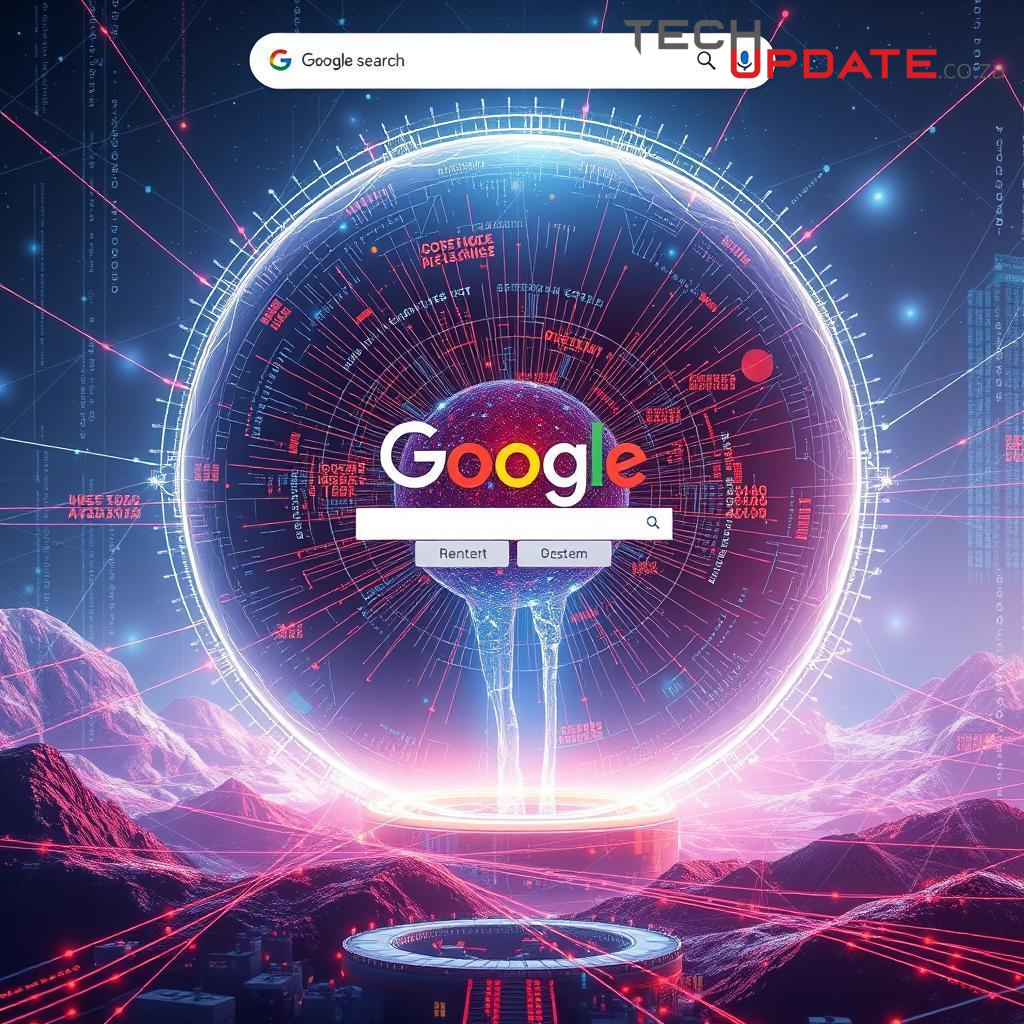
Buckle Up: Google's Agentic AI Set to Reshape Search by 2026
The digital landscape is poised for a seismic shift. As Google I/O 2026 draws closer, industry analysts and technology watchers anticipate a dramatic acceleration in Google’s AI search evolution, culminating in the widespread integration of "agentic AI." This transformative leap promises to move search beyond simple information retrieval, empowering it to proactively understand user intent, plan, and execute complex tasks with minimal human intervention.
From Links to Living Agents: The Evolution of Search
For decades, Google search has served as the internet's primary librarian, indexing billions of pages and delivering relevant links. The introduction of the Search Generative Experience (SGE) marked the initial foray into a more conversational, summarized answer format. However, the trajectory towards agentic AI suggests an even more profound paradigm shift. Agentic AI systems are designed not just to answer questions, but to take action. Imagine a search query that doesn't just provide links to travel agencies, but actively plans an itinerary, books flights, and reserves accommodations, all while considering your preferences and budget. This proactive capability is at the heart of the anticipated 2026 evolution.
The Mechanics of Agentic Intelligence
At its core, agentic AI leverages advanced large language models (LLMs) combined with sophisticated planning and reasoning frameworks. These systems are endowed with the ability to:
- Understand Complex Intents: Decipher nuanced, multi-step requests that go beyond simple keywords.
- Break Down Tasks: Deconstruct a large goal into smaller, manageable sub-tasks.
- Interact Autonomously: Engage with various online services, APIs, and databases to gather information and execute actions.
- Learn and Adapt: Improve performance over time through continuous interaction and feedback.
- Provide Transparency: Offer explanations for its actions and decisions, maintaining user trust and control.
Google’s ongoing advancements in contextual understanding, multimodal AI, and reinforcement learning are critical foundational elements paving the way for these agentic capabilities.
Implications for Users and Businesses
For the average user, an agentic Google search in 2026 could translate into unparalleled convenience and efficiency. Tasks that once required navigating multiple websites, comparing options, and manually inputting data could be streamlined into a single, intelligent interaction with the search engine. For businesses, this evolution presents both immense opportunities and significant challenges. Enhanced visibility within agentic workflows will become paramount, requiring new strategies for SEO (Search Engine Optimization) and AEO (Answer Engine Optimization) that focus on structured data, clear intent pathways, and robust API integrations. The local search landscape (GEO search) will also see profound changes, as agents proactively find and interact with local businesses based on sophisticated user needs.
Summary
The road to 2026 is set to redefine the very essence of online search. Google's strategic focus on integrating agentic AI into its core search product promises a future where the search engine is not merely a gateway to information, but an intelligent, autonomous assistant capable of executing complex tasks. This evolution, likely highlighted at I/O 2026, represents a monumental shift towards a more proactive, personalized, and profoundly capable digital experience, demanding adaptation from both users and businesses to fully harness its potential.
Resources
- Google AI Blog - For official announcements and insights into Google's AI research and development.
- TechCrunch - A leading online publisher of technology news and analysis, offering expert commentary on Google's strategic moves in AI.
- MIT Technology Review - Provides authoritative analysis on the impact of new technologies, including agentic AI and its broader implications.
Details
Author
Top articles




 }})
You can now watch HBO Max for $10
Latest articles





You can now watch HBO Max for $10
Buckle Up: Google's Agentic AI Set to Reshape Search by 2026
The digital landscape is poised for a seismic shift. As Google I/O 2026 draws closer, industry analysts and technology watchers anticipate a dramatic acceleration in Google’s AI search evolution, culminating in the widespread integration of "agentic AI." This transformative leap promises to move search beyond simple information retrieval, empowering it to proactively understand user intent, plan, and execute complex tasks with minimal human intervention.
From Links to Living Agents: The Evolution of Search
For decades, Google search has served as the internet's primary librarian, indexing billions of pages and delivering relevant links. The introduction of the Search Generative Experience (SGE) marked the initial foray into a more conversational, summarized answer format. However, the trajectory towards agentic AI suggests an even more profound paradigm shift. Agentic AI systems are designed not just to answer questions, but to take action. Imagine a search query that doesn't just provide links to travel agencies, but actively plans an itinerary, books flights, and reserves accommodations, all while considering your preferences and budget. This proactive capability is at the heart of the anticipated 2026 evolution.
The Mechanics of Agentic Intelligence
At its core, agentic AI leverages advanced large language models (LLMs) combined with sophisticated planning and reasoning frameworks. These systems are endowed with the ability to:
- Understand Complex Intents: Decipher nuanced, multi-step requests that go beyond simple keywords.
- Break Down Tasks: Deconstruct a large goal into smaller, manageable sub-tasks.
- Interact Autonomously: Engage with various online services, APIs, and databases to gather information and execute actions.
- Learn and Adapt: Improve performance over time through continuous interaction and feedback.
- Provide Transparency: Offer explanations for its actions and decisions, maintaining user trust and control.
Google’s ongoing advancements in contextual understanding, multimodal AI, and reinforcement learning are critical foundational elements paving the way for these agentic capabilities.
Implications for Users and Businesses
For the average user, an agentic Google search in 2026 could translate into unparalleled convenience and efficiency. Tasks that once required navigating multiple websites, comparing options, and manually inputting data could be streamlined into a single, intelligent interaction with the search engine. For businesses, this evolution presents both immense opportunities and significant challenges. Enhanced visibility within agentic workflows will become paramount, requiring new strategies for SEO (Search Engine Optimization) and AEO (Answer Engine Optimization) that focus on structured data, clear intent pathways, and robust API integrations. The local search landscape (GEO search) will also see profound changes, as agents proactively find and interact with local businesses based on sophisticated user needs.
Summary
The road to 2026 is set to redefine the very essence of online search. Google's strategic focus on integrating agentic AI into its core search product promises a future where the search engine is not merely a gateway to information, but an intelligent, autonomous assistant capable of executing complex tasks. This evolution, likely highlighted at I/O 2026, represents a monumental shift towards a more proactive, personalized, and profoundly capable digital experience, demanding adaptation from both users and businesses to fully harness its potential.
Resources
- Google AI Blog - For official announcements and insights into Google's AI research and development.
- TechCrunch - A leading online publisher of technology news and analysis, offering expert commentary on Google's strategic moves in AI.
- MIT Technology Review - Provides authoritative analysis on the impact of new technologies, including agentic AI and its broader implications.
Top articles
You can now watch HBO Max for $10
Latest articles
You can now watch HBO Max for $10
Similar posts




This is a page that only logged-in people can visit. Don't you feel special? Try clicking on a button below to do some things you can't do when you're logged out.
Example modal
At your leisure, please peruse this excerpt from a whale of a tale.
Chapter 1: Loomings.
Call me Ishmael. Some years ago—never mind how long precisely—having little or no money in my purse, and nothing particular to interest me on shore, I thought I would sail about a little and see the watery part of the world. It is a way I have of driving off the spleen and regulating the circulation. Whenever I find myself growing grim about the mouth; whenever it is a damp, drizzly November in my soul; whenever I find myself involuntarily pausing before coffin warehouses, and bringing up the rear of every funeral I meet; and especially whenever my hypos get such an upper hand of me, that it requires a strong moral principle to prevent me from deliberately stepping into the street, and methodically knocking people's hats off—then, I account it high time to get to sea as soon as I can. This is my substitute for pistol and ball. With a philosophical flourish Cato throws himself upon his sword; I quietly take to the ship. There is nothing surprising in this. If they but knew it, almost all men in their degree, some time or other, cherish very nearly the same feelings towards the ocean with me.
Comment