Storm Radar App: A Deep Dive into Hyper-Local Data and AI for the Discerning Weather Enthusiast
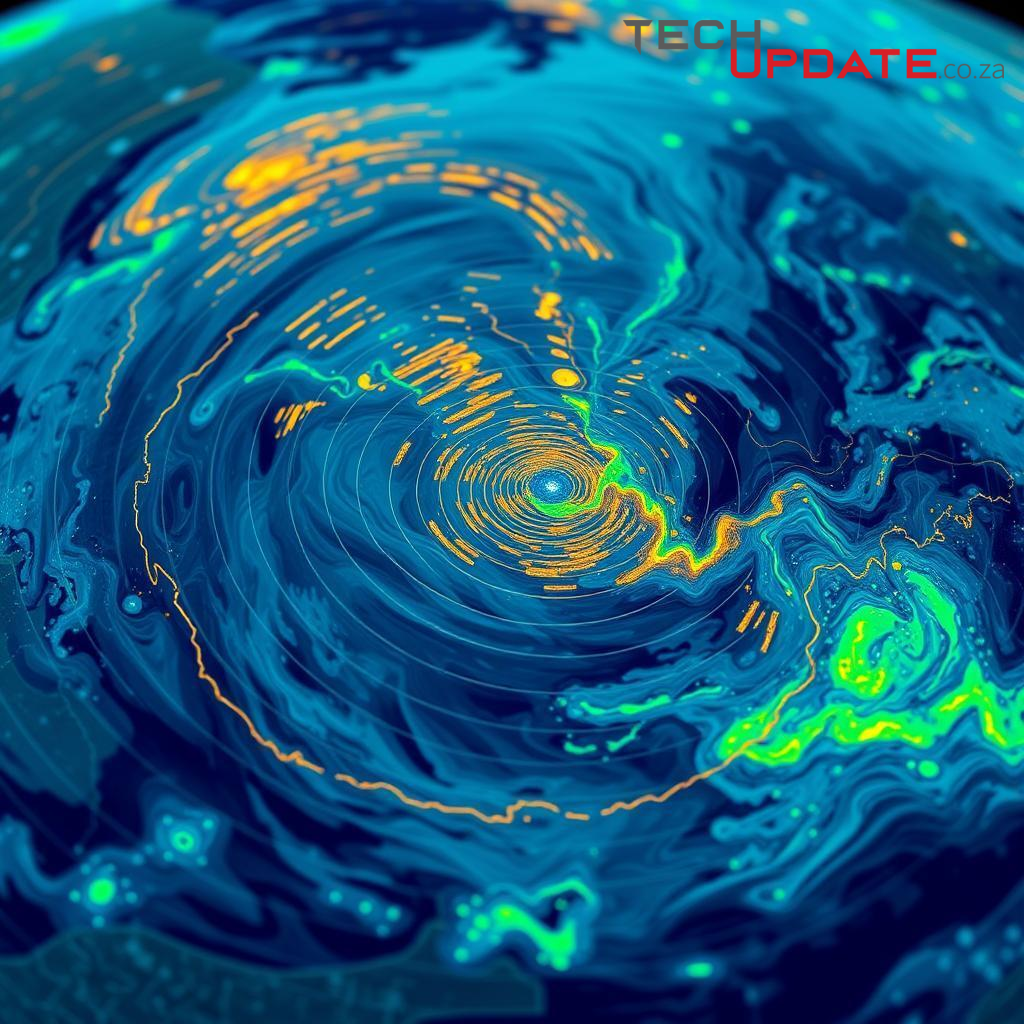
The New Storm Radar App: A Deep Dive for Data-Driven Weather Enthusiasts
As New England emerges from a particularly severe winter and faces the perennial threat of daily rain, the updated Storm Radar app from The Weather Company, a subsidiary of IBM and owners of the popular Weather Channel app, stands out. For those who meticulously track atmospheric conditions, this application offers a sophisticated suite of tools that elevate beyond standard weather reporting, carving a unique niche in the crowded meteorological app landscape.
Hyper-Local Detail Through Gridded Forecast On Demand
The primary interface of Storm Radar centers around an intuitive, interactive local radar display. A key feature is its ability to provide a hyper-local, detailed forecast for any precise point on the map. This granular data is powered by The Weather Company’s proprietary “gridded forecast on demand” (FOD) system. The FOD system synthesizes input from a multitude of sources, including advanced weather models, satellite imagery, ground-based observations, and the company's own extensive APIs, to deliver exceptionally accurate and localized predictions. Beyond the default precipitation view, users can overlay a rich array of data layers, encompassing temperature, cloud cover, real-time lightning strikes, wind patterns, and more. Furthermore, the app actively tracks storm cells, allowing users to tap for specifics such as direction, speed, and projected range, offering critical insights for situational awareness.
Unprecedented Granularity: High-Resolution Single Site Radar
A significant enhancement to Storm Radar is the introduction of high-resolution single-site radar. While the standard radar view benefits from the comprehensive FOD system, this new feature directly pulls raw data from individual weather stations. This provides a level of detail far exceeding typical radar maps. Crucially, it includes reflectivity data, a metric defined by the National Oceanic and Atmospheric Administration (NOAA) as the measure of energy returned to a radar receiver from precipitation. NOAA emphasizes that reflectivity is "the most frequently used product by forecasters to indicate where precipitation and severe weather is occurring." This direct access to raw, highly specific data offers weather enthusiasts an unparalleled view into atmospheric phenomena, moving beyond processed forecasts to the foundational data used by meteorologists themselves.
Intelligent Forecasting with AI Integration
In line with modern technological trends, the updated Storm Radar app incorporates artificial intelligence to enhance user interaction and forecasting. Initial testing reveals a responsive AI that can answer natural language queries, such as "what’s the best time to go for a run," providing contextual advice based on current and forecasted conditions. The Weather Company plans to roll out more advanced conversational AI elements in the near future, promising a more interactive and predictive experience that could further empower users to make informed decisions based on complex weather information.
Access and Premium Features
Storm Radar is accessible to all, with a free version offering core functionalities. However, its most advanced features, particularly the deep-dive data tools and comprehensive overlays, are reserved for premium subscribers. A standalone Storm Radar premium subscription costs $4 per month or $20 annually. Alternatively, users can opt for a Weather Channel Premium Pro subscription at $5 per month or $30 per year, which not only includes all Storm Radar features but also removes advertisements and provides expanded data access, such as eight-day hourly forecasts compared to the two days offered in the free tier. This pricing structure is competitive within the premium weather app market. Currently available on iOS, an Android version is slated for future release, broadening its reach to a wider audience.
Summary
The Storm Radar app represents a compelling evolution in personal weather forecasting, particularly for those with a keen interest in meteorological data. Its blend of the Gridded Forecast On Demand system, the hyper-detailed high-resolution single-site radar with reflectivity data, and integrating AI-driven insights positions it as a robust tool for navigating complex weather patterns. While a premium subscription unlocks its full potential, the depth of information and analysis it provides offers significant value for anyone seeking to move beyond basic forecasts.
Resources
- The Weather Company (An IBM Business) - Official documentation on Gridded Forecast On Demand and app technologies.
- National Oceanic and Atmospheric Administration (NOAA) - Information regarding weather radar technology and reflectivity data.
- Engadget - Original article reference detailing the app's features and updates.
Details
Author
Top articles




 }})
You can now watch HBO Max for $10
Latest articles





You can now watch HBO Max for $10
The New Storm Radar App: A Deep Dive for Data-Driven Weather Enthusiasts
As New England emerges from a particularly severe winter and faces the perennial threat of daily rain, the updated Storm Radar app from The Weather Company, a subsidiary of IBM and owners of the popular Weather Channel app, stands out. For those who meticulously track atmospheric conditions, this application offers a sophisticated suite of tools that elevate beyond standard weather reporting, carving a unique niche in the crowded meteorological app landscape.
Hyper-Local Detail Through Gridded Forecast On Demand
The primary interface of Storm Radar centers around an intuitive, interactive local radar display. A key feature is its ability to provide a hyper-local, detailed forecast for any precise point on the map. This granular data is powered by The Weather Company’s proprietary “gridded forecast on demand” (FOD) system. The FOD system synthesizes input from a multitude of sources, including advanced weather models, satellite imagery, ground-based observations, and the company's own extensive APIs, to deliver exceptionally accurate and localized predictions. Beyond the default precipitation view, users can overlay a rich array of data layers, encompassing temperature, cloud cover, real-time lightning strikes, wind patterns, and more. Furthermore, the app actively tracks storm cells, allowing users to tap for specifics such as direction, speed, and projected range, offering critical insights for situational awareness.
Unprecedented Granularity: High-Resolution Single Site Radar
A significant enhancement to Storm Radar is the introduction of high-resolution single-site radar. While the standard radar view benefits from the comprehensive FOD system, this new feature directly pulls raw data from individual weather stations. This provides a level of detail far exceeding typical radar maps. Crucially, it includes reflectivity data, a metric defined by the National Oceanic and Atmospheric Administration (NOAA) as the measure of energy returned to a radar receiver from precipitation. NOAA emphasizes that reflectivity is "the most frequently used product by forecasters to indicate where precipitation and severe weather is occurring." This direct access to raw, highly specific data offers weather enthusiasts an unparalleled view into atmospheric phenomena, moving beyond processed forecasts to the foundational data used by meteorologists themselves.
Intelligent Forecasting with AI Integration
In line with modern technological trends, the updated Storm Radar app incorporates artificial intelligence to enhance user interaction and forecasting. Initial testing reveals a responsive AI that can answer natural language queries, such as "what’s the best time to go for a run," providing contextual advice based on current and forecasted conditions. The Weather Company plans to roll out more advanced conversational AI elements in the near future, promising a more interactive and predictive experience that could further empower users to make informed decisions based on complex weather information.
Access and Premium Features
Storm Radar is accessible to all, with a free version offering core functionalities. However, its most advanced features, particularly the deep-dive data tools and comprehensive overlays, are reserved for premium subscribers. A standalone Storm Radar premium subscription costs $4 per month or $20 annually. Alternatively, users can opt for a Weather Channel Premium Pro subscription at $5 per month or $30 per year, which not only includes all Storm Radar features but also removes advertisements and provides expanded data access, such as eight-day hourly forecasts compared to the two days offered in the free tier. This pricing structure is competitive within the premium weather app market. Currently available on iOS, an Android version is slated for future release, broadening its reach to a wider audience.
Summary
The Storm Radar app represents a compelling evolution in personal weather forecasting, particularly for those with a keen interest in meteorological data. Its blend of the Gridded Forecast On Demand system, the hyper-detailed high-resolution single-site radar with reflectivity data, and integrating AI-driven insights positions it as a robust tool for navigating complex weather patterns. While a premium subscription unlocks its full potential, the depth of information and analysis it provides offers significant value for anyone seeking to move beyond basic forecasts.
Resources
- The Weather Company (An IBM Business) - Official documentation on Gridded Forecast On Demand and app technologies.
- National Oceanic and Atmospheric Administration (NOAA) - Information regarding weather radar technology and reflectivity data.
- Engadget - Original article reference detailing the app's features and updates.
Top articles
You can now watch HBO Max for $10
Latest articles
You can now watch HBO Max for $10
Similar posts



This is a page that only logged-in people can visit. Don't you feel special? Try clicking on a button below to do some things you can't do when you're logged out.
Example modal
At your leisure, please peruse this excerpt from a whale of a tale.
Chapter 1: Loomings.
Call me Ishmael. Some years ago—never mind how long precisely—having little or no money in my purse, and nothing particular to interest me on shore, I thought I would sail about a little and see the watery part of the world. It is a way I have of driving off the spleen and regulating the circulation. Whenever I find myself growing grim about the mouth; whenever it is a damp, drizzly November in my soul; whenever I find myself involuntarily pausing before coffin warehouses, and bringing up the rear of every funeral I meet; and especially whenever my hypos get such an upper hand of me, that it requires a strong moral principle to prevent me from deliberately stepping into the street, and methodically knocking people's hats off—then, I account it high time to get to sea as soon as I can. This is my substitute for pistol and ball. With a philosophical flourish Cato throws himself upon his sword; I quietly take to the ship. There is nothing surprising in this. If they but knew it, almost all men in their degree, some time or other, cherish very nearly the same feelings towards the ocean with me.
Comment