Google Maps Evolves: From Navigation to AI-Powered Personal Assistant for Real-World Tasks
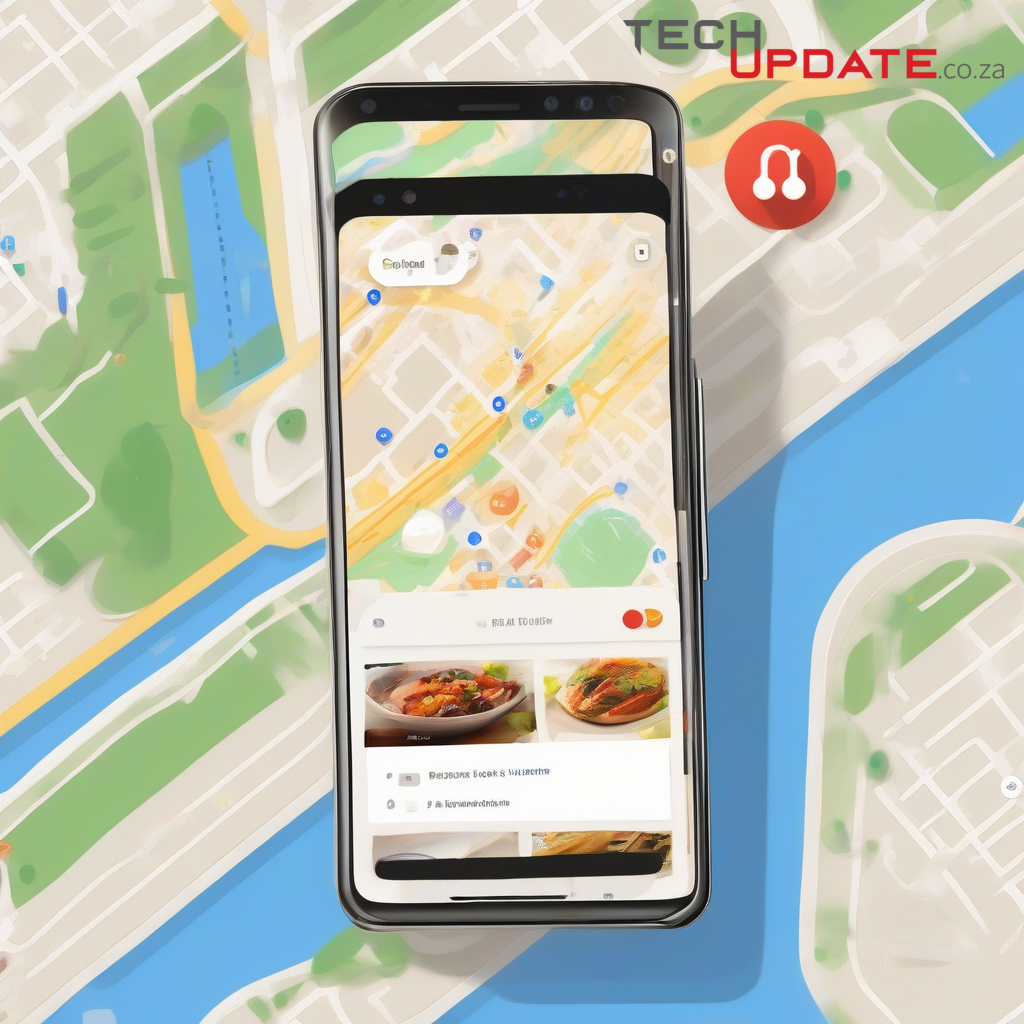
The Strategic Evolution of Google Maps
Google Maps, long established as the premier navigation and local discovery tool, is undergoing a profound transformation. Shifting from its foundational role, Google is strategically reimagining Maps as an indispensable personal assistant, capable of facilitating complex real-world tasks beyond simple directions. This evolution is powered by the extensive integration of advanced agentic features, fundamentally altering how users interact with their physical environment through a digital interface.
This strategic pivot reflects Google’s broader ambition to embed artificial intelligence more deeply into its core products, creating more intuitive and proactive user experiences. By leveraging sophisticated AI models, Google Maps is now equipped to not only guide users to destinations but also to empower them to complete actions such as food ordering and hotel bookings with unprecedented efficiency and personalization.
Enhanced Task Completion: Food Ordering and Hotel Bookings
The integration of agentic features into Google Maps elevates transactional capabilities, particularly for food services and accommodation. While the ability to discover restaurants and hotels has long been a staple, the new enhancements introduce a seamless, AI-driven workflow that anticipates user needs and streamlines the entire process.
- Food Ordering: Users can now move from discovering a local eatery to placing an order for delivery or pickup directly within the Maps interface. This capability leverages AI to understand dietary preferences, popular dishes, and even suggest optimal ordering times, integrating directly with various food service platforms. The friction points traditionally associated with switching between multiple applications are significantly reduced, centralizing the entire dining decision and transaction process.
- Hotel Bookings: Similarly, the platform’s capacity for hotel bookings has been refined. AI-powered recommendations consider not just location and price, but also amenities, user reviews, and individual travel histories to present highly relevant accommodation options. Once a selection is made, the booking process is initiated and often completed without ever leaving the Maps environment, turning a complex planning task into a straightforward, integrated action.
These features are designed to interpret user intent with greater accuracy, offering predictive suggestions and personalized pathways to task completion, thus transforming Maps into a truly responsive digital concierge.
Beyond Transactions: A Proactive Digital Companion
The vision for Google Maps extends beyond mere transactional facilitation; it aims to cultivate a proactive digital companion for daily life and travel planning. Through generative AI, Maps is becoming more adept at interpreting natural language queries, enabling users to pose complex questions like "Show me highly-rated vegan restaurants near me with outdoor seating available tonight" and receive curated, actionable results.
This shift empowers users with comprehensive insights drawn from vast datasets, allowing for more informed decisions and reducing the time spent on research and coordination. The platform anticipates needs, offers intelligent summarizations of places, and integrates various data points to construct a holistic view for planning. This proactive intelligence ensures that Google Maps is not just a tool for navigation, but a fundamental assistant in discovering, planning, and executing real-world activities efficiently.
Summary
The evolution of Google Maps into an agentic platform marks a significant milestone in digital utility. By embedding advanced AI capabilities, Google has transcended the application's traditional navigational role, transforming it into a sophisticated personal assistant for diverse real-world tasks. The seamless integration of features like food ordering and hotel bookings exemplifies a strategic move towards a more intuitive, predictive, and comprehensive user experience, firmly positioning Google Maps as an indispensable digital companion in a connected world.
Resources
Details
Author
Top articles




 }})
You can now watch HBO Max for $10
Latest articles





You can now watch HBO Max for $10
The Strategic Evolution of Google Maps
Google Maps, long established as the premier navigation and local discovery tool, is undergoing a profound transformation. Shifting from its foundational role, Google is strategically reimagining Maps as an indispensable personal assistant, capable of facilitating complex real-world tasks beyond simple directions. This evolution is powered by the extensive integration of advanced agentic features, fundamentally altering how users interact with their physical environment through a digital interface.
This strategic pivot reflects Google’s broader ambition to embed artificial intelligence more deeply into its core products, creating more intuitive and proactive user experiences. By leveraging sophisticated AI models, Google Maps is now equipped to not only guide users to destinations but also to empower them to complete actions such as food ordering and hotel bookings with unprecedented efficiency and personalization.
Enhanced Task Completion: Food Ordering and Hotel Bookings
The integration of agentic features into Google Maps elevates transactional capabilities, particularly for food services and accommodation. While the ability to discover restaurants and hotels has long been a staple, the new enhancements introduce a seamless, AI-driven workflow that anticipates user needs and streamlines the entire process.
- Food Ordering: Users can now move from discovering a local eatery to placing an order for delivery or pickup directly within the Maps interface. This capability leverages AI to understand dietary preferences, popular dishes, and even suggest optimal ordering times, integrating directly with various food service platforms. The friction points traditionally associated with switching between multiple applications are significantly reduced, centralizing the entire dining decision and transaction process.
- Hotel Bookings: Similarly, the platform’s capacity for hotel bookings has been refined. AI-powered recommendations consider not just location and price, but also amenities, user reviews, and individual travel histories to present highly relevant accommodation options. Once a selection is made, the booking process is initiated and often completed without ever leaving the Maps environment, turning a complex planning task into a straightforward, integrated action.
These features are designed to interpret user intent with greater accuracy, offering predictive suggestions and personalized pathways to task completion, thus transforming Maps into a truly responsive digital concierge.
Beyond Transactions: A Proactive Digital Companion
The vision for Google Maps extends beyond mere transactional facilitation; it aims to cultivate a proactive digital companion for daily life and travel planning. Through generative AI, Maps is becoming more adept at interpreting natural language queries, enabling users to pose complex questions like "Show me highly-rated vegan restaurants near me with outdoor seating available tonight" and receive curated, actionable results.
This shift empowers users with comprehensive insights drawn from vast datasets, allowing for more informed decisions and reducing the time spent on research and coordination. The platform anticipates needs, offers intelligent summarizations of places, and integrates various data points to construct a holistic view for planning. This proactive intelligence ensures that Google Maps is not just a tool for navigation, but a fundamental assistant in discovering, planning, and executing real-world activities efficiently.
Summary
The evolution of Google Maps into an agentic platform marks a significant milestone in digital utility. By embedding advanced AI capabilities, Google has transcended the application's traditional navigational role, transforming it into a sophisticated personal assistant for diverse real-world tasks. The seamless integration of features like food ordering and hotel bookings exemplifies a strategic move towards a more intuitive, predictive, and comprehensive user experience, firmly positioning Google Maps as an indispensable digital companion in a connected world.
Resources
Top articles
You can now watch HBO Max for $10
Latest articles
You can now watch HBO Max for $10
Similar posts



This is a page that only logged-in people can visit. Don't you feel special? Try clicking on a button below to do some things you can't do when you're logged out.
Example modal
At your leisure, please peruse this excerpt from a whale of a tale.
Chapter 1: Loomings.
Call me Ishmael. Some years ago—never mind how long precisely—having little or no money in my purse, and nothing particular to interest me on shore, I thought I would sail about a little and see the watery part of the world. It is a way I have of driving off the spleen and regulating the circulation. Whenever I find myself growing grim about the mouth; whenever it is a damp, drizzly November in my soul; whenever I find myself involuntarily pausing before coffin warehouses, and bringing up the rear of every funeral I meet; and especially whenever my hypos get such an upper hand of me, that it requires a strong moral principle to prevent me from deliberately stepping into the street, and methodically knocking people's hats off—then, I account it high time to get to sea as soon as I can. This is my substitute for pistol and ball. With a philosophical flourish Cato throws himself upon his sword; I quietly take to the ship. There is nothing surprising in this. If they but knew it, almost all men in their degree, some time or other, cherish very nearly the same feelings towards the ocean with me.
Comment