Anthropic CEO Stuns Davos, Critiquing US Chip Export Policies to China Amid Nvidia Partnership Scrutiny
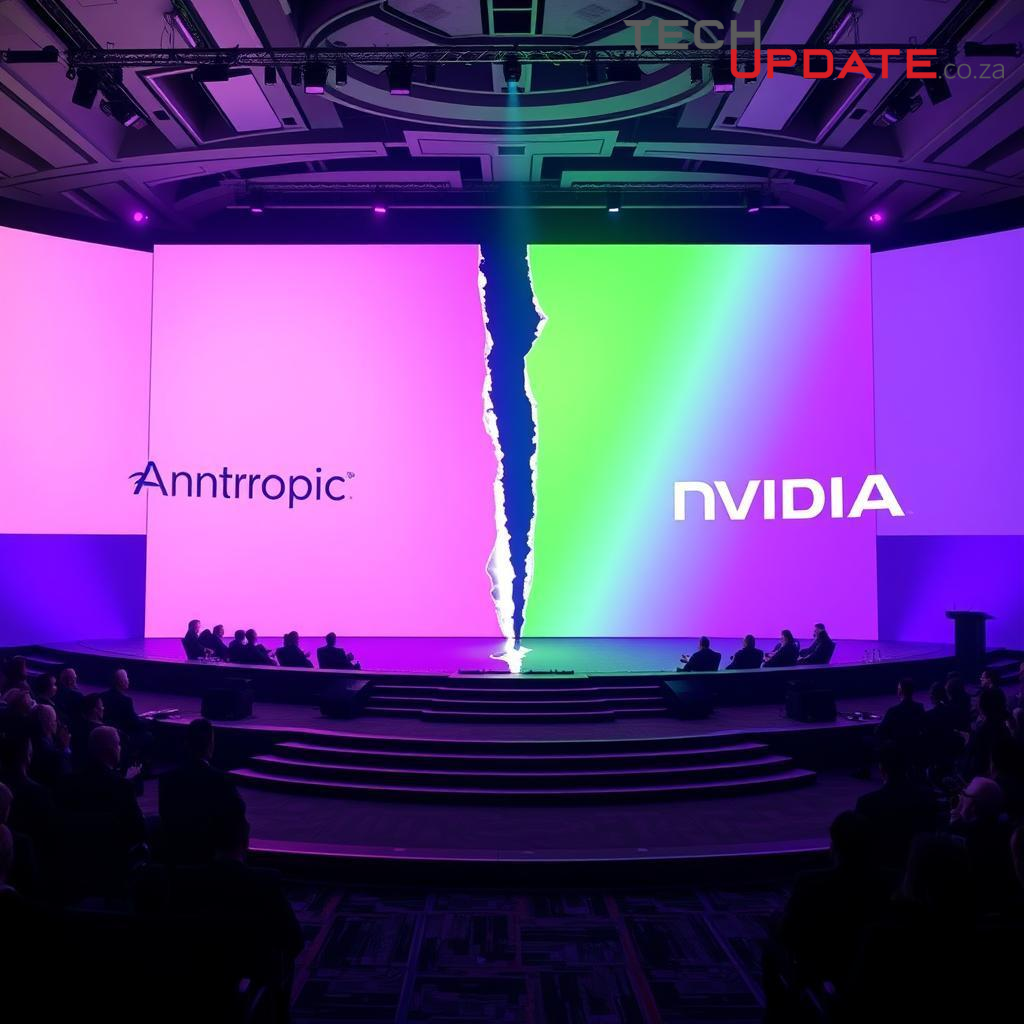
Anthropic CEO Challenges US Chip Export Policies to China
Dario Amodei, CEO of leading artificial intelligence firm Anthropic, made waves at the World Economic Forum in Davos with striking criticism directed at both the Biden administration and major U.S. chip manufacturers. His remarks specifically targeted the U.S. strategy concerning advanced chip sales to China, a stance particularly notable given Nvidia's significant investment in and partnership with Anthropic.
The Core of the Disagreement
Amodei articulated concerns that current U.S. export controls, designed to slow China's AI advancements, might inadvertently accelerate Beijing's indigenous chip development efforts. He suggested that such restrictive measures could ultimately disadvantage American innovation in the long term by fostering a self-sufficient Chinese AI ecosystem. This viewpoint challenges the efficacy of a policy cornerstone of the U.S. administration's tech competition strategy.
Nvidia's Complex Position
The outspoken criticism carries additional weight due to Nvidia's intricate relationship with Anthropic. As a prominent investor and a crucial supplier of the high-performance GPUs essential for AI development, Nvidia finds itself in a delicate position. Amodei's public comments underscore a potential divergence in strategic perspectives within the broader AI industry regarding geopolitical tech rivalries. This dynamic highlights the complex interplay between national security objectives, corporate interests, and the rapid pace of AI innovation.
Broader Industry Implications
Amodei's commentary reflects growing apprehension within segments of the technology sector about the unintended consequences of stringent export controls. While acknowledging the geopolitical imperatives, some industry leaders fear that overly restrictive policies could stifle global collaboration, limit market access for U.S. companies, and spur competitor nations to redouble their efforts in critical technological domains. The Davos platform amplified these concerns, bringing a nuanced perspective to a highly contentious issue.
Summary
Anthropic CEO Dario Amodei's forthright critique at Davos regarding U.S. chip export policies to China has ignited discussion, particularly given his company's ties to Nvidia. His argument posits that current restrictions may be counterproductive, potentially strengthening China's domestic AI capabilities and hindering American innovation. This public stance from a key AI industry figure underscores the complex economic and geopolitical dimensions of the ongoing tech rivalry.
Resources
- Reuters
- Bloomberg
- Financial Times
Details
Author
Top articles




 }})
You can now watch HBO Max for $10
Latest articles





You can now watch HBO Max for $10
Anthropic CEO Challenges US Chip Export Policies to China
Dario Amodei, CEO of leading artificial intelligence firm Anthropic, made waves at the World Economic Forum in Davos with striking criticism directed at both the Biden administration and major U.S. chip manufacturers. His remarks specifically targeted the U.S. strategy concerning advanced chip sales to China, a stance particularly notable given Nvidia's significant investment in and partnership with Anthropic.
The Core of the Disagreement
Amodei articulated concerns that current U.S. export controls, designed to slow China's AI advancements, might inadvertently accelerate Beijing's indigenous chip development efforts. He suggested that such restrictive measures could ultimately disadvantage American innovation in the long term by fostering a self-sufficient Chinese AI ecosystem. This viewpoint challenges the efficacy of a policy cornerstone of the U.S. administration's tech competition strategy.
Nvidia's Complex Position
The outspoken criticism carries additional weight due to Nvidia's intricate relationship with Anthropic. As a prominent investor and a crucial supplier of the high-performance GPUs essential for AI development, Nvidia finds itself in a delicate position. Amodei's public comments underscore a potential divergence in strategic perspectives within the broader AI industry regarding geopolitical tech rivalries. This dynamic highlights the complex interplay between national security objectives, corporate interests, and the rapid pace of AI innovation.
Broader Industry Implications
Amodei's commentary reflects growing apprehension within segments of the technology sector about the unintended consequences of stringent export controls. While acknowledging the geopolitical imperatives, some industry leaders fear that overly restrictive policies could stifle global collaboration, limit market access for U.S. companies, and spur competitor nations to redouble their efforts in critical technological domains. The Davos platform amplified these concerns, bringing a nuanced perspective to a highly contentious issue.
Summary
Anthropic CEO Dario Amodei's forthright critique at Davos regarding U.S. chip export policies to China has ignited discussion, particularly given his company's ties to Nvidia. His argument posits that current restrictions may be counterproductive, potentially strengthening China's domestic AI capabilities and hindering American innovation. This public stance from a key AI industry figure underscores the complex economic and geopolitical dimensions of the ongoing tech rivalry.
Resources
- Reuters
- Bloomberg
- Financial Times
Top articles
You can now watch HBO Max for $10
Latest articles
You can now watch HBO Max for $10
Similar posts


This is a page that only logged-in people can visit. Don't you feel special? Try clicking on a button below to do some things you can't do when you're logged out.
Example modal
At your leisure, please peruse this excerpt from a whale of a tale.
Chapter 1: Loomings.
Call me Ishmael. Some years ago—never mind how long precisely—having little or no money in my purse, and nothing particular to interest me on shore, I thought I would sail about a little and see the watery part of the world. It is a way I have of driving off the spleen and regulating the circulation. Whenever I find myself growing grim about the mouth; whenever it is a damp, drizzly November in my soul; whenever I find myself involuntarily pausing before coffin warehouses, and bringing up the rear of every funeral I meet; and especially whenever my hypos get such an upper hand of me, that it requires a strong moral principle to prevent me from deliberately stepping into the street, and methodically knocking people's hats off—then, I account it high time to get to sea as soon as I can. This is my substitute for pistol and ball. With a philosophical flourish Cato throws himself upon his sword; I quietly take to the ship. There is nothing surprising in this. If they but knew it, almost all men in their degree, some time or other, cherish very nearly the same feelings towards the ocean with me.
Comment