Unpacking the "Impeachment Hoax" Narrative: Fact-Checking Recent Declassification Claims
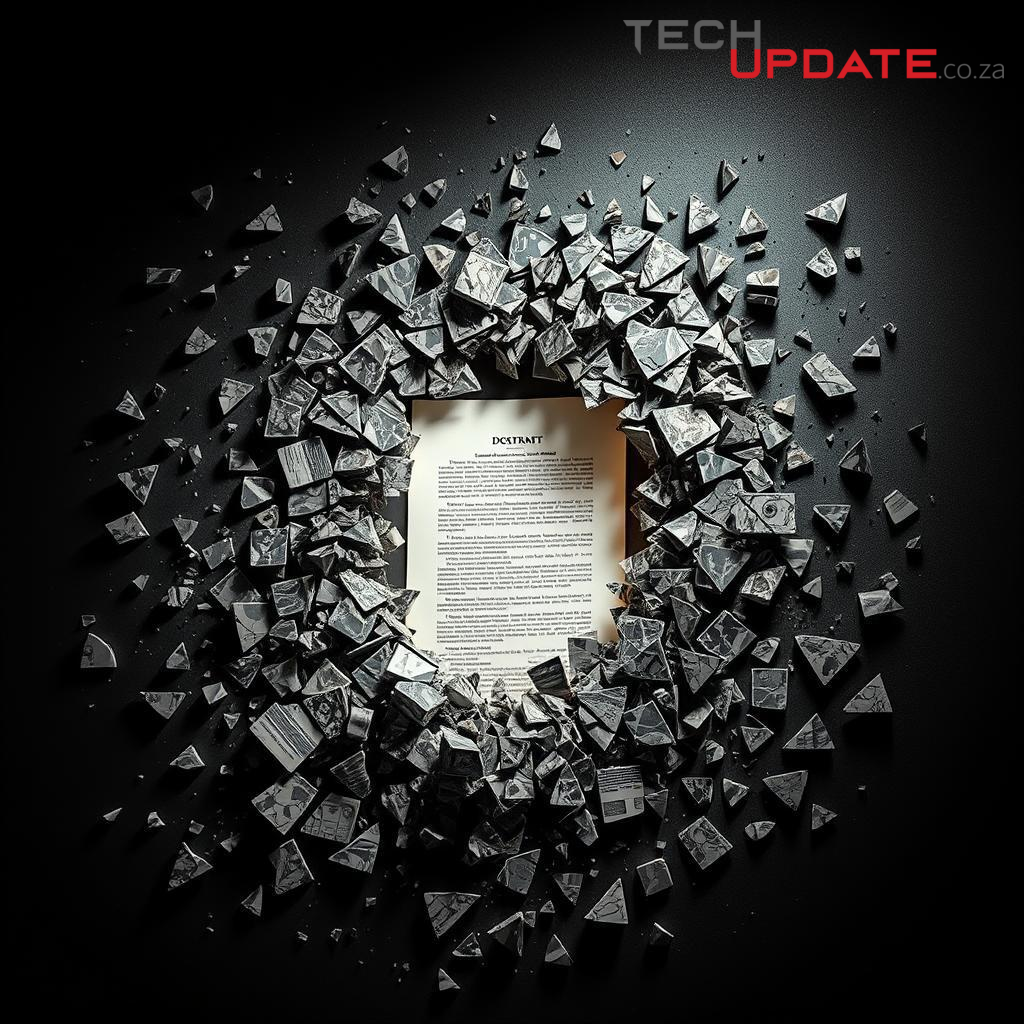
The Enduring "Impeachment Hoax" Narrative and Disinformation
In the intricate landscape of contemporary political discourse, narratives surrounding the 2019 impeachment of then-President Donald Trump continue to evolve, frequently fueled by new claims and interpretations. The "impeachment hoax" narrative, a central tenet of Trump's defense, has seen periodic resurgence through various channels. A recent claim, asserting that "DNI Tulsi Gabbard declassifies 2019 transcripts showing whistleblower partisan ties in Trump impeachment probe," presents a pertinent example of how such narratives can be amplified through unverified information.
Deconstructing a Dubious Claim: "DNI Tulsi Gabbard" and Declassified Transcripts
As senior investigative journalists, our primary responsibility is to scrutinize claims with rigorous fact-checking. The assertion regarding "DNI Tulsi Gabbard" declassifying 2019 transcripts is demonstrably false. Tulsi Gabbard, a former U.S. Representative, has never held the position of Director of National Intelligence (DNI). The individuals who served as DNI during and immediately after the relevant period of the 2019 impeachment—and indeed, up to the present day—do not include Tulsi Gabbard. Furthermore, there have been no credible reports from official intelligence channels or reputable news organizations confirming any such declassification by any DNI that specifically exposes new details of the whistleblower's "partisan ties" in the manner described.
Recalling the 2019 Whistleblower Complaint and Its Aftermath
The 2019 impeachment inquiry stemmed from a whistleblower complaint alleging that President Trump pressured Ukraine to investigate political rival Joe Biden. The complaint, deemed "credible" and "urgent" by the Inspector General of the Intelligence Community (ICIG), Michael Atkinson, catalyzed a congressional investigation. While allegations of political motivation and partisan bias were frequently leveled against the whistleblower and the impeachment process itself by President Trump and his allies, these were largely based on conjecture and the political affiliations of individuals involved rather than officially declassified intelligence reports unveiling new "partisan ties" from 2019 transcripts. The process involved extensive testimony, document production, and ultimately, articles of impeachment passed by the House of Representatives, though Trump was acquitted by the Senate.
The Pervasive Spread of Unverified Information
The persistence and virality of claims like the "DNI Tulsi Gabbard" narrative underscore a critical challenge in the digital age: the rapid dissemination of unverified or outright false information. Such claims, often repackaged and amplified across social media and certain niche publications, contribute to a fragmented information environment. They play a significant role in sustaining political narratives, even when lacking factual basis, by appealing to existing biases and reinforcing predetermined conclusions among specific audiences. This phenomenon highlights the constant need for media literacy and critical evaluation of information sources.
Summary: Navigating Fact from Fiction
While the "impeachment hoax" narrative remains a powerful rhetorical tool in political discourse, it is imperative to distinguish between political argumentation and verifiable facts. Claims of new intelligence reports or declassifications must always be scrutinized against official records and confirmed by multiple credible sources. In this instance, the specific claim regarding "DNI Tulsi Gabbard" and the declassification of 2019 transcripts lacks any factual foundation. Journalists and the public alike must remain vigilant in discerning accurate information from disinformation to foster an informed citizenry.
Resources
- Office of the Director of National Intelligence (ODNI) - Official Website
- Congressional Research Service (CRS) Reports on Impeachment - CRS Website
- FactCheck.org - FactCheck.org
Details
Author
Top articles




 }})
You can now watch HBO Max for $10
Latest articles


You can now watch HBO Max for $10
The Enduring "Impeachment Hoax" Narrative and Disinformation
In the intricate landscape of contemporary political discourse, narratives surrounding the 2019 impeachment of then-President Donald Trump continue to evolve, frequently fueled by new claims and interpretations. The "impeachment hoax" narrative, a central tenet of Trump's defense, has seen periodic resurgence through various channels. A recent claim, asserting that "DNI Tulsi Gabbard declassifies 2019 transcripts showing whistleblower partisan ties in Trump impeachment probe," presents a pertinent example of how such narratives can be amplified through unverified information.
Deconstructing a Dubious Claim: "DNI Tulsi Gabbard" and Declassified Transcripts
As senior investigative journalists, our primary responsibility is to scrutinize claims with rigorous fact-checking. The assertion regarding "DNI Tulsi Gabbard" declassifying 2019 transcripts is demonstrably false. Tulsi Gabbard, a former U.S. Representative, has never held the position of Director of National Intelligence (DNI). The individuals who served as DNI during and immediately after the relevant period of the 2019 impeachment—and indeed, up to the present day—do not include Tulsi Gabbard. Furthermore, there have been no credible reports from official intelligence channels or reputable news organizations confirming any such declassification by any DNI that specifically exposes new details of the whistleblower's "partisan ties" in the manner described.
Recalling the 2019 Whistleblower Complaint and Its Aftermath
The 2019 impeachment inquiry stemmed from a whistleblower complaint alleging that President Trump pressured Ukraine to investigate political rival Joe Biden. The complaint, deemed "credible" and "urgent" by the Inspector General of the Intelligence Community (ICIG), Michael Atkinson, catalyzed a congressional investigation. While allegations of political motivation and partisan bias were frequently leveled against the whistleblower and the impeachment process itself by President Trump and his allies, these were largely based on conjecture and the political affiliations of individuals involved rather than officially declassified intelligence reports unveiling new "partisan ties" from 2019 transcripts. The process involved extensive testimony, document production, and ultimately, articles of impeachment passed by the House of Representatives, though Trump was acquitted by the Senate.
The Pervasive Spread of Unverified Information
The persistence and virality of claims like the "DNI Tulsi Gabbard" narrative underscore a critical challenge in the digital age: the rapid dissemination of unverified or outright false information. Such claims, often repackaged and amplified across social media and certain niche publications, contribute to a fragmented information environment. They play a significant role in sustaining political narratives, even when lacking factual basis, by appealing to existing biases and reinforcing predetermined conclusions among specific audiences. This phenomenon highlights the constant need for media literacy and critical evaluation of information sources.
Summary: Navigating Fact from Fiction
While the "impeachment hoax" narrative remains a powerful rhetorical tool in political discourse, it is imperative to distinguish between political argumentation and verifiable facts. Claims of new intelligence reports or declassifications must always be scrutinized against official records and confirmed by multiple credible sources. In this instance, the specific claim regarding "DNI Tulsi Gabbard" and the declassification of 2019 transcripts lacks any factual foundation. Journalists and the public alike must remain vigilant in discerning accurate information from disinformation to foster an informed citizenry.
Resources
- Office of the Director of National Intelligence (ODNI) - Official Website
- Congressional Research Service (CRS) Reports on Impeachment - CRS Website
- FactCheck.org - FactCheck.org
Top articles
You can now watch HBO Max for $10
Latest articles
You can now watch HBO Max for $10
Similar posts




This is a page that only logged-in people can visit. Don't you feel special? Try clicking on a button below to do some things you can't do when you're logged out.
Example modal
At your leisure, please peruse this excerpt from a whale of a tale.
Chapter 1: Loomings.
Call me Ishmael. Some years ago—never mind how long precisely—having little or no money in my purse, and nothing particular to interest me on shore, I thought I would sail about a little and see the watery part of the world. It is a way I have of driving off the spleen and regulating the circulation. Whenever I find myself growing grim about the mouth; whenever it is a damp, drizzly November in my soul; whenever I find myself involuntarily pausing before coffin warehouses, and bringing up the rear of every funeral I meet; and especially whenever my hypos get such an upper hand of me, that it requires a strong moral principle to prevent me from deliberately stepping into the street, and methodically knocking people's hats off—then, I account it high time to get to sea as soon as I can. This is my substitute for pistol and ball. With a philosophical flourish Cato throws himself upon his sword; I quietly take to the ship. There is nothing surprising in this. If they but knew it, almost all men in their degree, some time or other, cherish very nearly the same feelings towards the ocean with me.
Comment