Chinese Rocket Breakup Near Starlink Raises Alarms Over Escalating Space Debris Threat
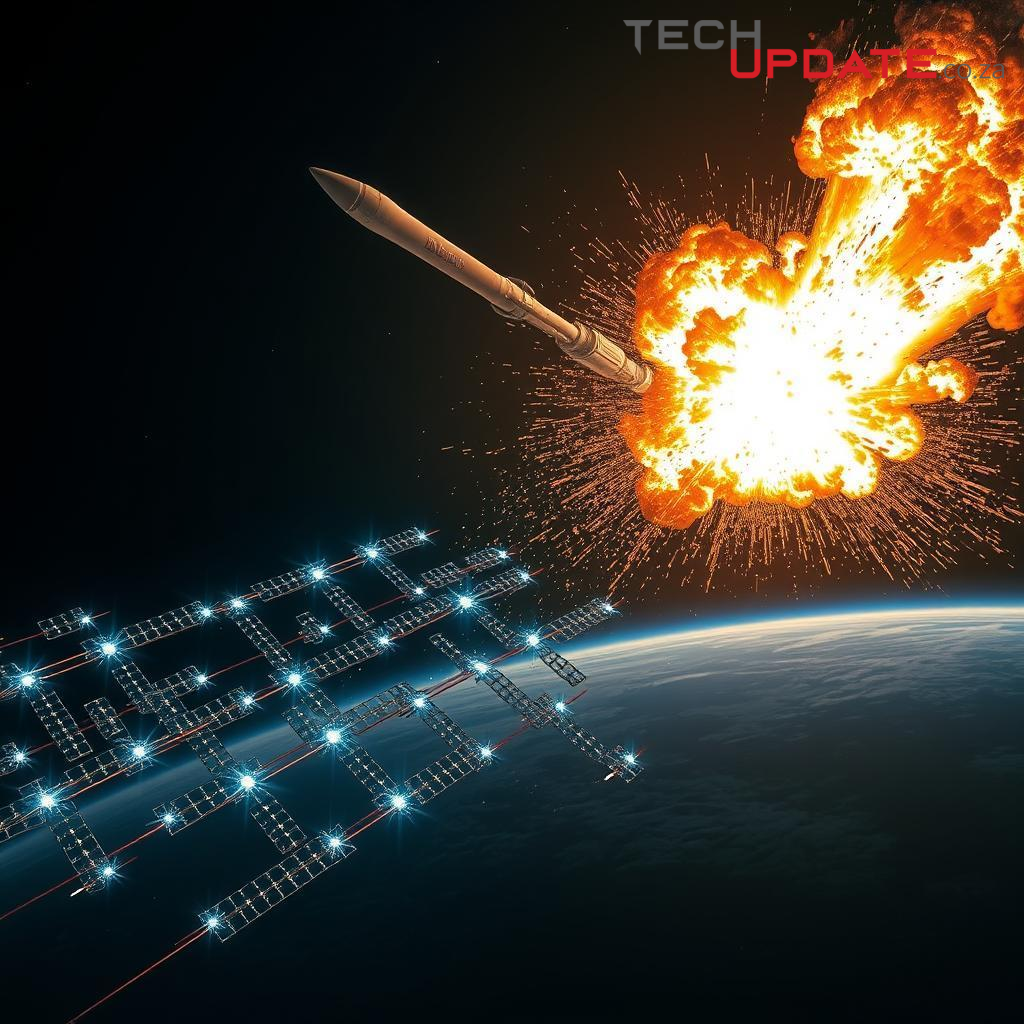
In a concerning incident highlighting the escalating threat of space debris, a discarded stage from a Chinese Long March 6A rocket recently fragmented in orbit, generating an estimated 100 to 150 new pieces of trackable space junk. This event occurred in an orbital region actively used by numerous operational satellites, including SpaceX's rapidly expanding Starlink constellation, prompting renewed calls for more stringent space traffic management and debris mitigation strategies.
The Incident: A New Cloud of Debris
The breakup of the Long March 6A rocket body (NORAD ID 59663) was first detected by space surveillance networks. While the exact cause of the fragmentation is still under investigation, such events are often attributed to residual fuel explosions or thermal stress. The resulting debris cloud poses a direct threat to the thousands of active satellites, particularly those in low Earth orbit (LEO).
Proximity to Starlink Constellation
The orbital parameters of the newly formed debris bring it into close proximity with the operational altitudes of the Starlink constellation. SpaceX's internet-beaming satellites are designed with autonomous collision avoidance capabilities, but the sheer volume of new, untracked, and potentially small debris fragments significantly complicates these efforts. Each piece of debris, even minuscule, carries enough kinetic energy to cause catastrophic damage to a spacecraft.
The Growing Space Debris Crisis
This incident serves as a stark reminder of the ever-worsening space debris crisis. Tens of thousands of objects—from spent rocket stages and defunct satellites to tiny paint flakes—are currently zipping around Earth at speeds up to 17,500 mph. These objects pose a significant risk of triggering a chain reaction known as the Kessler Syndrome, where collisions generate more debris, leading to further collisions, eventually rendering certain orbital bands unusable.
International Implications and Mitigation Efforts
The Long March 6A breakup underscores the urgent need for international cooperation in addressing space debris. While guidelines exist from organizations like the Inter-Agency Space Debris Coordination Committee (IADC) for minimizing new debris (e.g., deorbiting spent rocket stages within 25 years), adherence varies. The proliferation of mega-constellations like Starlink, while beneficial for global connectivity, also adds to the orbital density, increasing the statistical probability of collisions.
Summary
The recent fragmentation of a Chinese Long March 6A rocket body, adding over 100 new pieces of debris to an already congested low Earth orbit, represents a critical concern for the safety and sustainability of space operations. Its dangerous proximity to active constellations, including Starlink, highlights the immediate need for enhanced space situational awareness, stricter international adherence to debris mitigation guidelines, and the development of active debris removal technologies to safeguard humanity's access to space.
Resources
Details
Author
Top articles




 }})
You can now watch HBO Max for $10
Latest articles


You can now watch HBO Max for $10
In a concerning incident highlighting the escalating threat of space debris, a discarded stage from a Chinese Long March 6A rocket recently fragmented in orbit, generating an estimated 100 to 150 new pieces of trackable space junk. This event occurred in an orbital region actively used by numerous operational satellites, including SpaceX's rapidly expanding Starlink constellation, prompting renewed calls for more stringent space traffic management and debris mitigation strategies.
The Incident: A New Cloud of Debris
The breakup of the Long March 6A rocket body (NORAD ID 59663) was first detected by space surveillance networks. While the exact cause of the fragmentation is still under investigation, such events are often attributed to residual fuel explosions or thermal stress. The resulting debris cloud poses a direct threat to the thousands of active satellites, particularly those in low Earth orbit (LEO).
Proximity to Starlink Constellation
The orbital parameters of the newly formed debris bring it into close proximity with the operational altitudes of the Starlink constellation. SpaceX's internet-beaming satellites are designed with autonomous collision avoidance capabilities, but the sheer volume of new, untracked, and potentially small debris fragments significantly complicates these efforts. Each piece of debris, even minuscule, carries enough kinetic energy to cause catastrophic damage to a spacecraft.
The Growing Space Debris Crisis
This incident serves as a stark reminder of the ever-worsening space debris crisis. Tens of thousands of objects—from spent rocket stages and defunct satellites to tiny paint flakes—are currently zipping around Earth at speeds up to 17,500 mph. These objects pose a significant risk of triggering a chain reaction known as the Kessler Syndrome, where collisions generate more debris, leading to further collisions, eventually rendering certain orbital bands unusable.
International Implications and Mitigation Efforts
The Long March 6A breakup underscores the urgent need for international cooperation in addressing space debris. While guidelines exist from organizations like the Inter-Agency Space Debris Coordination Committee (IADC) for minimizing new debris (e.g., deorbiting spent rocket stages within 25 years), adherence varies. The proliferation of mega-constellations like Starlink, while beneficial for global connectivity, also adds to the orbital density, increasing the statistical probability of collisions.
Summary
The recent fragmentation of a Chinese Long March 6A rocket body, adding over 100 new pieces of debris to an already congested low Earth orbit, represents a critical concern for the safety and sustainability of space operations. Its dangerous proximity to active constellations, including Starlink, highlights the immediate need for enhanced space situational awareness, stricter international adherence to debris mitigation guidelines, and the development of active debris removal technologies to safeguard humanity's access to space.
Resources
Top articles
You can now watch HBO Max for $10
Latest articles
You can now watch HBO Max for $10
Similar posts




This is a page that only logged-in people can visit. Don't you feel special? Try clicking on a button below to do some things you can't do when you're logged out.
Example modal
At your leisure, please peruse this excerpt from a whale of a tale.
Chapter 1: Loomings.
Call me Ishmael. Some years ago—never mind how long precisely—having little or no money in my purse, and nothing particular to interest me on shore, I thought I would sail about a little and see the watery part of the world. It is a way I have of driving off the spleen and regulating the circulation. Whenever I find myself growing grim about the mouth; whenever it is a damp, drizzly November in my soul; whenever I find myself involuntarily pausing before coffin warehouses, and bringing up the rear of every funeral I meet; and especially whenever my hypos get such an upper hand of me, that it requires a strong moral principle to prevent me from deliberately stepping into the street, and methodically knocking people's hats off—then, I account it high time to get to sea as soon as I can. This is my substitute for pistol and ball. With a philosophical flourish Cato throws himself upon his sword; I quietly take to the ship. There is nothing surprising in this. If they but knew it, almost all men in their degree, some time or other, cherish very nearly the same feelings towards the ocean with me.
Comment