Uber Forges Ahead: Decoding Its AI-Driven Assetmaxxing Strategy in Modern Mobility
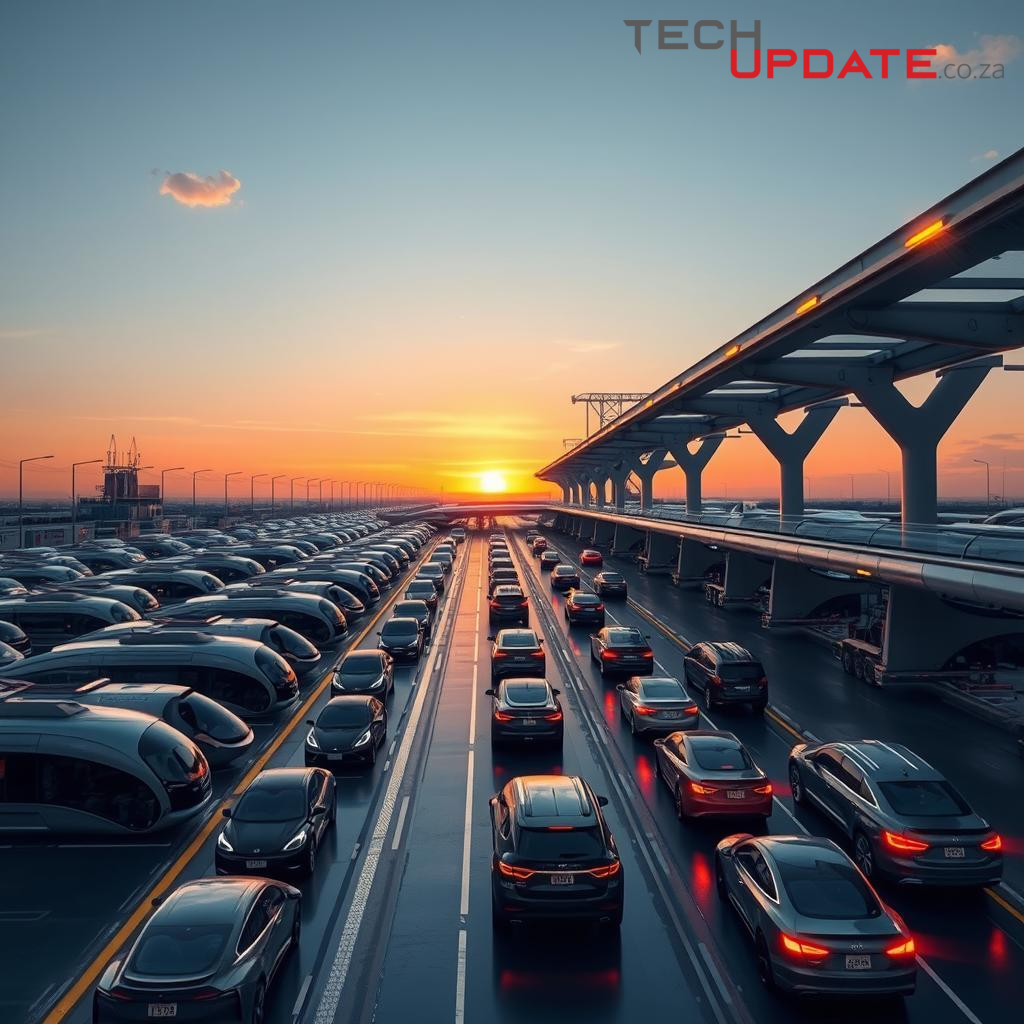
Welcome back to TechCrunch Mobility, your hub for the future of transportation and now, more than ever, how AI is playing a part. In the dynamic realm of global mobility, Uber, a company synonymous with ride-hailing, is undergoing a profound strategic evolution. Termed by some as its "assetmaxxing era," this shift signifies a calculated move towards maximizing the utility and efficiency of every resource within its expansive ecosystem – from vehicles and drivers to data and infrastructure. This era is not merely about optimizing existing operations; it's fundamentally powered by sophisticated artificial intelligence.
The Imperative of Assetmaxxing
Uber’s journey, which began with connecting riders and drivers, has matured into a complex logistical network encompassing food delivery (Uber Eats), freight (Uber Freight), and experimental ventures into autonomous driving and advanced air mobility. The concept of assetmaxxing, in this context, refers to the systematic process of extracting maximum value from these diverse assets. This means reducing idle time for vehicles and drivers, optimizing delivery routes to minimize fuel consumption and delivery times, and even dynamically pricing services to balance supply and demand more effectively. The sheer scale of Uber’s operations makes incremental improvements in asset utilization translate into significant gains in profitability and operational resilience.
AI as the Efficiency Engine
Central to Uber’s assetmaxxing strategy is the pervasive application of artificial intelligence. AI models are not just assisting; they are driving critical decisions across the platform:
- Dynamic Pricing and Matching: Sophisticated algorithms continuously analyze real-time demand and supply patterns, weather conditions, traffic, and historical data to set optimal prices and efficiently match riders with drivers, and customers with delivery personnel. This minimizes empty miles and wait times.
- Logistics Optimization: For Uber Eats and Uber Freight, AI-powered routing and scheduling systems are crucial. They optimize multi-stop deliveries, predict delivery times with increasing accuracy, and manage complex supply chains to ensure timely and cost-effective movement of goods.
- Predictive Maintenance and Fleet Management: While Uber primarily operates on an independent contractor model, its insights into vehicle performance and driver behavior can inform proactive maintenance recommendations, enhancing vehicle uptime and driver safety. For its own emerging fleets (e.g., autonomous vehicles), AI will be paramount in predictive maintenance.
- Fraud Detection and Safety: AI algorithms continuously monitor for suspicious activity, enhancing the security and reliability of the platform for all users.
Challenges and the Path Forward
Despite the immense potential, Uber’s assetmaxxing era is not without its hurdles. Regulatory environments vary wildly across jurisdictions, impacting everything from driver classification to pricing models. Competitive pressures remain intense, and the constant need to innovate while maintaining profitability is a delicate balance. Furthermore, integrating nascent technologies like fully autonomous vehicles into an assetmaxxing framework requires overcoming significant technological and public trust barriers.
Nevertheless, Uber’s investment in AI and its relentless pursuit of operational efficiencies underscore a clear vision: to become the foundational operating system for urban and inter-city mobility and logistics. As AI capabilities advance, expect Uber to further refine its predictive analytics, leverage generative AI for customer service, and potentially integrate more deeply with urban planning and smart city initiatives, all aimed at squeezing maximum value from every accessible asset.
Summary
Uber is strategically entering an "assetmaxxing era," leveraging advanced AI to optimize every facet of its extensive mobility and logistics network. This involves dynamic pricing, sophisticated route optimization, and predictive analytics to enhance efficiency, reduce costs, and maximize the utility of its global resources. While challenges persist, the integration of AI is positioning Uber to be a dominant force in the future of transportation, continually refining its operational blueprint for scalability and profitability.
Resources
Details
Author
Top articles




 }})
You can now watch HBO Max for $10
Latest articles




You can now watch HBO Max for $10
Welcome back to TechCrunch Mobility, your hub for the future of transportation and now, more than ever, how AI is playing a part. In the dynamic realm of global mobility, Uber, a company synonymous with ride-hailing, is undergoing a profound strategic evolution. Termed by some as its "assetmaxxing era," this shift signifies a calculated move towards maximizing the utility and efficiency of every resource within its expansive ecosystem – from vehicles and drivers to data and infrastructure. This era is not merely about optimizing existing operations; it's fundamentally powered by sophisticated artificial intelligence.
The Imperative of Assetmaxxing
Uber’s journey, which began with connecting riders and drivers, has matured into a complex logistical network encompassing food delivery (Uber Eats), freight (Uber Freight), and experimental ventures into autonomous driving and advanced air mobility. The concept of assetmaxxing, in this context, refers to the systematic process of extracting maximum value from these diverse assets. This means reducing idle time for vehicles and drivers, optimizing delivery routes to minimize fuel consumption and delivery times, and even dynamically pricing services to balance supply and demand more effectively. The sheer scale of Uber’s operations makes incremental improvements in asset utilization translate into significant gains in profitability and operational resilience.
AI as the Efficiency Engine
Central to Uber’s assetmaxxing strategy is the pervasive application of artificial intelligence. AI models are not just assisting; they are driving critical decisions across the platform:
- Dynamic Pricing and Matching: Sophisticated algorithms continuously analyze real-time demand and supply patterns, weather conditions, traffic, and historical data to set optimal prices and efficiently match riders with drivers, and customers with delivery personnel. This minimizes empty miles and wait times.
- Logistics Optimization: For Uber Eats and Uber Freight, AI-powered routing and scheduling systems are crucial. They optimize multi-stop deliveries, predict delivery times with increasing accuracy, and manage complex supply chains to ensure timely and cost-effective movement of goods.
- Predictive Maintenance and Fleet Management: While Uber primarily operates on an independent contractor model, its insights into vehicle performance and driver behavior can inform proactive maintenance recommendations, enhancing vehicle uptime and driver safety. For its own emerging fleets (e.g., autonomous vehicles), AI will be paramount in predictive maintenance.
- Fraud Detection and Safety: AI algorithms continuously monitor for suspicious activity, enhancing the security and reliability of the platform for all users.
Challenges and the Path Forward
Despite the immense potential, Uber’s assetmaxxing era is not without its hurdles. Regulatory environments vary wildly across jurisdictions, impacting everything from driver classification to pricing models. Competitive pressures remain intense, and the constant need to innovate while maintaining profitability is a delicate balance. Furthermore, integrating nascent technologies like fully autonomous vehicles into an assetmaxxing framework requires overcoming significant technological and public trust barriers.
Nevertheless, Uber’s investment in AI and its relentless pursuit of operational efficiencies underscore a clear vision: to become the foundational operating system for urban and inter-city mobility and logistics. As AI capabilities advance, expect Uber to further refine its predictive analytics, leverage generative AI for customer service, and potentially integrate more deeply with urban planning and smart city initiatives, all aimed at squeezing maximum value from every accessible asset.
Summary
Uber is strategically entering an "assetmaxxing era," leveraging advanced AI to optimize every facet of its extensive mobility and logistics network. This involves dynamic pricing, sophisticated route optimization, and predictive analytics to enhance efficiency, reduce costs, and maximize the utility of its global resources. While challenges persist, the integration of AI is positioning Uber to be a dominant force in the future of transportation, continually refining its operational blueprint for scalability and profitability.
Resources
Top articles
You can now watch HBO Max for $10
Latest articles
You can now watch HBO Max for $10
Similar posts




This is a page that only logged-in people can visit. Don't you feel special? Try clicking on a button below to do some things you can't do when you're logged out.
Example modal
At your leisure, please peruse this excerpt from a whale of a tale.
Chapter 1: Loomings.
Call me Ishmael. Some years ago—never mind how long precisely—having little or no money in my purse, and nothing particular to interest me on shore, I thought I would sail about a little and see the watery part of the world. It is a way I have of driving off the spleen and regulating the circulation. Whenever I find myself growing grim about the mouth; whenever it is a damp, drizzly November in my soul; whenever I find myself involuntarily pausing before coffin warehouses, and bringing up the rear of every funeral I meet; and especially whenever my hypos get such an upper hand of me, that it requires a strong moral principle to prevent me from deliberately stepping into the street, and methodically knocking people's hats off—then, I account it high time to get to sea as soon as I can. This is my substitute for pistol and ball. With a philosophical flourish Cato throws himself upon his sword; I quietly take to the ship. There is nothing surprising in this. If they but knew it, almost all men in their degree, some time or other, cherish very nearly the same feelings towards the ocean with me.
Comment