UAE Capital Markets Halt Trading Amid Escalating Iran Strikes on Regional Shipping and Ports
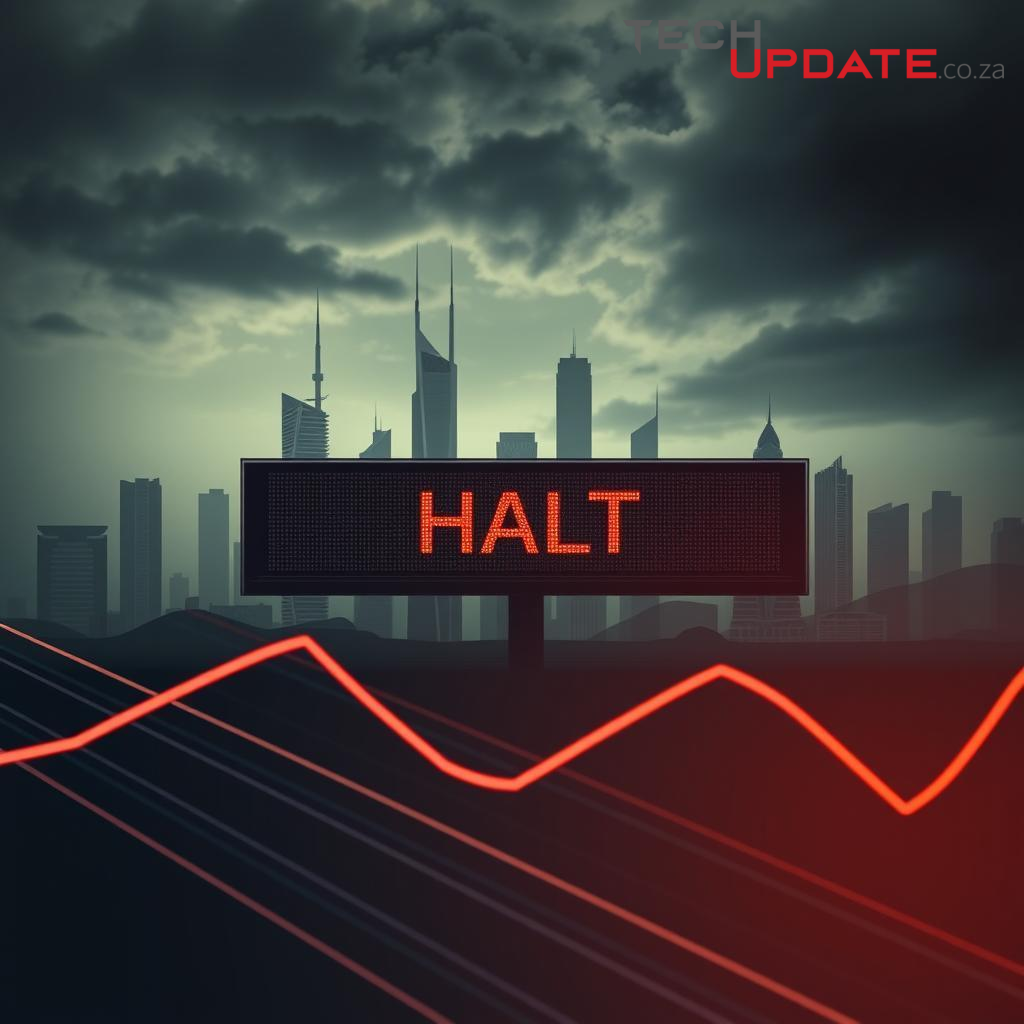
In a rare and significant move underscoring heightened geopolitical tensions, the United Arab Emirates’ Capital Markets Authority took the decisive step to suspend trading on both the Abu Dhabi Securities Exchange (ADX) and the Dubai Financial Market (DFM) for a two-day period, specifically March 2-3. This unprecedented closure followed reports of Iran launching strikes against major ports and oil tankers across the Middle East, sending shockwaves through regional and international financial circuits.
Unfolding Crisis: The March 2-3 Suspension
The decision to halt trading on the ADX and DFM, the two primary equities exchanges in the UAE and pivotal hubs for capital in the Gulf region, reflects the gravity of the reported Iranian actions. These exchanges serve as critical benchmarks for investor confidence and liquidity in one of the world's most vital economic corridors. The suspension was implemented to protect investors from extreme volatility and to allow time for a comprehensive assessment of the geopolitical landscape and its immediate economic ramifications.
Sources indicate that the strikes targeted key maritime infrastructure and oil transportation assets, sectors indispensable to global trade and energy supply. Such actions directly threaten the stability of the region, where the free flow of goods and crude oil is paramount to global economic health.
Geopolitical Volatility and Economic Repercussions
The Middle East remains a crucible of geopolitical activity, and any escalation involving Iran, particularly concerning critical infrastructure like ports and oil tankers, inevitably triggers widespread concern. Investor sentiment in the Gulf is acutely sensitive to security developments, and direct threats to shipping lanes and energy facilities have historically led to capital flight and market downturns. The UAE, a global trade and logistics powerhouse, is particularly vulnerable to disruptions affecting maritime routes, making the regulatory response understandable.
The incident highlights the precarious balance of power and the ever-present risk of regional conflicts impacting global supply chains and energy prices. Financial markets, by their nature, abhor uncertainty, and the reported strikes introduced a significant degree of it, necessitating a robust regulatory intervention.
Regulatory Response and Market Stability
The UAE’s Capital Markets Authority, tasked with overseeing the integrity and stability of the nation’s financial markets, acted swiftly. Such suspensions are not undertaken lightly and are typically reserved for extreme circumstances where orderly market function is compromised or potential for severe market dislocation is high. The aim is to prevent panic selling, allow for a cooling-off period, and enable market participants to absorb and react to new information in a more measured manner once trading resumes.
This proactive measure underscores the commitment of UAE authorities to maintain a stable and attractive investment environment, even in the face of significant external shocks. It also signals a firm stance against actions that could destabilize the region's economic backbone.
Summary
The two-day suspension of stock trading on the ADX and DFM in response to reported Iranian strikes on vital regional assets represents a critical juncture for the UAE's financial markets and the broader Middle East. It underscores the profound interconnectedness of geopolitics and economics, particularly in a region central to global energy and trade. While intended to safeguard market stability, such actions inevitably raise questions about long-term regional security and investor confidence, demanding sustained vigilance from policymakers and market participants alike.
Resources
- Reuters: Reporting on Middle East geopolitical tensions and market impact.
- Bloomberg: Analysis of Gulf economies and financial market responses.
- Financial Times: In-depth coverage of regional security and global energy markets.
Details
Author
Top articles




 }})
You can now watch HBO Max for $10
Latest articles





You can now watch HBO Max for $10
In a rare and significant move underscoring heightened geopolitical tensions, the United Arab Emirates’ Capital Markets Authority took the decisive step to suspend trading on both the Abu Dhabi Securities Exchange (ADX) and the Dubai Financial Market (DFM) for a two-day period, specifically March 2-3. This unprecedented closure followed reports of Iran launching strikes against major ports and oil tankers across the Middle East, sending shockwaves through regional and international financial circuits.
Unfolding Crisis: The March 2-3 Suspension
The decision to halt trading on the ADX and DFM, the two primary equities exchanges in the UAE and pivotal hubs for capital in the Gulf region, reflects the gravity of the reported Iranian actions. These exchanges serve as critical benchmarks for investor confidence and liquidity in one of the world's most vital economic corridors. The suspension was implemented to protect investors from extreme volatility and to allow time for a comprehensive assessment of the geopolitical landscape and its immediate economic ramifications.
Sources indicate that the strikes targeted key maritime infrastructure and oil transportation assets, sectors indispensable to global trade and energy supply. Such actions directly threaten the stability of the region, where the free flow of goods and crude oil is paramount to global economic health.
Geopolitical Volatility and Economic Repercussions
The Middle East remains a crucible of geopolitical activity, and any escalation involving Iran, particularly concerning critical infrastructure like ports and oil tankers, inevitably triggers widespread concern. Investor sentiment in the Gulf is acutely sensitive to security developments, and direct threats to shipping lanes and energy facilities have historically led to capital flight and market downturns. The UAE, a global trade and logistics powerhouse, is particularly vulnerable to disruptions affecting maritime routes, making the regulatory response understandable.
The incident highlights the precarious balance of power and the ever-present risk of regional conflicts impacting global supply chains and energy prices. Financial markets, by their nature, abhor uncertainty, and the reported strikes introduced a significant degree of it, necessitating a robust regulatory intervention.
Regulatory Response and Market Stability
The UAE’s Capital Markets Authority, tasked with overseeing the integrity and stability of the nation’s financial markets, acted swiftly. Such suspensions are not undertaken lightly and are typically reserved for extreme circumstances where orderly market function is compromised or potential for severe market dislocation is high. The aim is to prevent panic selling, allow for a cooling-off period, and enable market participants to absorb and react to new information in a more measured manner once trading resumes.
This proactive measure underscores the commitment of UAE authorities to maintain a stable and attractive investment environment, even in the face of significant external shocks. It also signals a firm stance against actions that could destabilize the region's economic backbone.
Summary
The two-day suspension of stock trading on the ADX and DFM in response to reported Iranian strikes on vital regional assets represents a critical juncture for the UAE's financial markets and the broader Middle East. It underscores the profound interconnectedness of geopolitics and economics, particularly in a region central to global energy and trade. While intended to safeguard market stability, such actions inevitably raise questions about long-term regional security and investor confidence, demanding sustained vigilance from policymakers and market participants alike.
Resources
- Reuters: Reporting on Middle East geopolitical tensions and market impact.
- Bloomberg: Analysis of Gulf economies and financial market responses.
- Financial Times: In-depth coverage of regional security and global energy markets.
Top articles
You can now watch HBO Max for $10
Latest articles
You can now watch HBO Max for $10
Similar posts



This is a page that only logged-in people can visit. Don't you feel special? Try clicking on a button below to do some things you can't do when you're logged out.
Example modal
At your leisure, please peruse this excerpt from a whale of a tale.
Chapter 1: Loomings.
Call me Ishmael. Some years ago—never mind how long precisely—having little or no money in my purse, and nothing particular to interest me on shore, I thought I would sail about a little and see the watery part of the world. It is a way I have of driving off the spleen and regulating the circulation. Whenever I find myself growing grim about the mouth; whenever it is a damp, drizzly November in my soul; whenever I find myself involuntarily pausing before coffin warehouses, and bringing up the rear of every funeral I meet; and especially whenever my hypos get such an upper hand of me, that it requires a strong moral principle to prevent me from deliberately stepping into the street, and methodically knocking people's hats off—then, I account it high time to get to sea as soon as I can. This is my substitute for pistol and ball. With a philosophical flourish Cato throws himself upon his sword; I quietly take to the ship. There is nothing surprising in this. If they but knew it, almost all men in their degree, some time or other, cherish very nearly the same feelings towards the ocean with me.
Comment