On-Chain Reckoning: $9.7B Fees Underscore Looming Bitcoin Drawdown's Test of True Crypto Costs
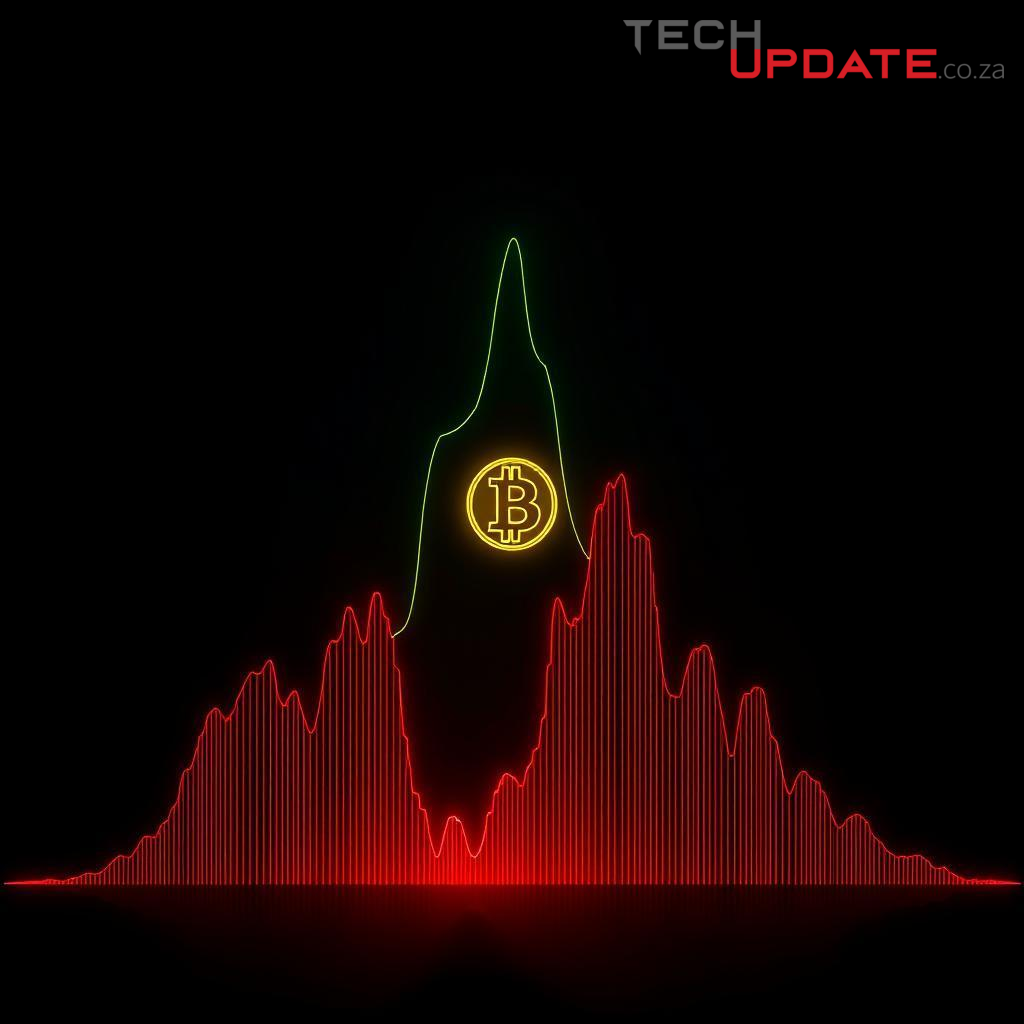
The Unseen Burden: How Billions in On-Chain Fees Shape the Crypto Landscape
The cryptocurrency market, often characterized by its rapid innovation and speculative fervor, has quietly seen an unprecedented surge in transaction costs. In the first half of 2025 alone, participants in various blockchain networks collectively spent an estimated $9.7 billion in on-chain fees. This remarkable figure represents a 41% increase year-over-year, marking the second-highest total ever recorded and signaling a significant expansion in network utility and demand.
Projections from prominent research firms, such as 1kx, anticipate this trend will accelerate, forecasting over $32 billion in on-chain fees for the entirety of 2026. This exponential growth is primarily attributed to the burgeoning ecosystem of decentralized applications (dApps) and the increasing complexity of on-chain activities. The sheer volume of economic activity across these networks has elevated the concept of "revenue" into virtually every crypto investor's pitch deck, shifting focus from mere speculation to the tangible value generated by network usage.
Dissecting Real vs. Speculative On-Chain Costs
The current environment of elevated fees raises a critical question: Which of these costs represent fundamental network value, and which are inflated by speculative market conditions? A looming Bitcoin drawdown is widely expected to provide a stark answer. During bullish cycles, competition for block space drives up transaction fees across networks like Bitcoin and Ethereum. Users, anticipating significant gains, are often willing to pay a premium to ensure their transactions are processed swiftly.
However, a market contraction tends to expose the genuine utility. "Real" on-chain costs are those essential for network security, transaction finality, and the execution of smart contracts fundamental to applications with actual user adoption. These include base transaction fees on Bitcoin, or gas fees on Ethereum required for essential functions such as transferring stablecoins, securing DeFi positions, or interacting with widely used dApps. Speculative costs, conversely, are often associated with high-frequency trading, arbitrage opportunities, or participation in nascent, unproven protocols where the underlying value proposition might be weak.
During a bear market, discretionary spending on network fees diminishes significantly. Projects and users with genuine demand for blockchain services will continue to transact, albeit more judiciously. This selective pressure will reveal which applications and protocols possess sustainable demand and which were merely artifacts of a frothy market. Networks offering efficient fee structures or innovative scaling solutions will likely gain a competitive advantage as users become more cost-conscious.
The Role of Application Growth and Future Outlook
The trajectory of on-chain fees is intrinsically linked to the expansion and maturation of the crypto application layer. As more sophisticated dApps emerge across sectors like decentralized finance (DeFi), non-fungible tokens (NFTs), and gaming, the demand for underlying blockchain resources intensifies. Each interaction, from a token swap to a digital asset mint, contributes to network congestion and, consequently, higher fees.
The projected $32 billion in fees for 2026 underscores a paradigm shift: blockchains are no longer just ledgers for value transfer but are evolving into robust computational platforms. This evolution, while driving significant "revenue" for protocol treasuries and validators, simultaneously places a burden on end-users. Future innovations in layer-2 scaling solutions, sharding, and alternative consensus mechanisms will be crucial in mitigating these costs and ensuring broader accessibility, especially as the industry prepares for inevitable market corrections.
Summary
The crypto ecosystem is experiencing unprecedented fee generation, reflecting increasing network utility driven by application growth. While this signals maturity, the upcoming market cycle, particularly a Bitcoin drawdown, will serve as a critical test. It will differentiate between essential, value-driven on-chain costs and those inflated by speculative enthusiasm, ultimately shaping a more resilient and efficient blockchain future.
Resources
- 1kx Research
- The Block Research
- CoinMetrics
Details
Author
Top articles




 }})
You can now watch HBO Max for $10
Latest articles



You can now watch HBO Max for $10
The Unseen Burden: How Billions in On-Chain Fees Shape the Crypto Landscape
The cryptocurrency market, often characterized by its rapid innovation and speculative fervor, has quietly seen an unprecedented surge in transaction costs. In the first half of 2025 alone, participants in various blockchain networks collectively spent an estimated $9.7 billion in on-chain fees. This remarkable figure represents a 41% increase year-over-year, marking the second-highest total ever recorded and signaling a significant expansion in network utility and demand.
Projections from prominent research firms, such as 1kx, anticipate this trend will accelerate, forecasting over $32 billion in on-chain fees for the entirety of 2026. This exponential growth is primarily attributed to the burgeoning ecosystem of decentralized applications (dApps) and the increasing complexity of on-chain activities. The sheer volume of economic activity across these networks has elevated the concept of "revenue" into virtually every crypto investor's pitch deck, shifting focus from mere speculation to the tangible value generated by network usage.
Dissecting Real vs. Speculative On-Chain Costs
The current environment of elevated fees raises a critical question: Which of these costs represent fundamental network value, and which are inflated by speculative market conditions? A looming Bitcoin drawdown is widely expected to provide a stark answer. During bullish cycles, competition for block space drives up transaction fees across networks like Bitcoin and Ethereum. Users, anticipating significant gains, are often willing to pay a premium to ensure their transactions are processed swiftly.
However, a market contraction tends to expose the genuine utility. "Real" on-chain costs are those essential for network security, transaction finality, and the execution of smart contracts fundamental to applications with actual user adoption. These include base transaction fees on Bitcoin, or gas fees on Ethereum required for essential functions such as transferring stablecoins, securing DeFi positions, or interacting with widely used dApps. Speculative costs, conversely, are often associated with high-frequency trading, arbitrage opportunities, or participation in nascent, unproven protocols where the underlying value proposition might be weak.
During a bear market, discretionary spending on network fees diminishes significantly. Projects and users with genuine demand for blockchain services will continue to transact, albeit more judiciously. This selective pressure will reveal which applications and protocols possess sustainable demand and which were merely artifacts of a frothy market. Networks offering efficient fee structures or innovative scaling solutions will likely gain a competitive advantage as users become more cost-conscious.
The Role of Application Growth and Future Outlook
The trajectory of on-chain fees is intrinsically linked to the expansion and maturation of the crypto application layer. As more sophisticated dApps emerge across sectors like decentralized finance (DeFi), non-fungible tokens (NFTs), and gaming, the demand for underlying blockchain resources intensifies. Each interaction, from a token swap to a digital asset mint, contributes to network congestion and, consequently, higher fees.
The projected $32 billion in fees for 2026 underscores a paradigm shift: blockchains are no longer just ledgers for value transfer but are evolving into robust computational platforms. This evolution, while driving significant "revenue" for protocol treasuries and validators, simultaneously places a burden on end-users. Future innovations in layer-2 scaling solutions, sharding, and alternative consensus mechanisms will be crucial in mitigating these costs and ensuring broader accessibility, especially as the industry prepares for inevitable market corrections.
Summary
The crypto ecosystem is experiencing unprecedented fee generation, reflecting increasing network utility driven by application growth. While this signals maturity, the upcoming market cycle, particularly a Bitcoin drawdown, will serve as a critical test. It will differentiate between essential, value-driven on-chain costs and those inflated by speculative enthusiasm, ultimately shaping a more resilient and efficient blockchain future.
Resources
- 1kx Research
- The Block Research
- CoinMetrics
Top articles
You can now watch HBO Max for $10
Latest articles
You can now watch HBO Max for $10
Similar posts


This is a page that only logged-in people can visit. Don't you feel special? Try clicking on a button below to do some things you can't do when you're logged out.
Example modal
At your leisure, please peruse this excerpt from a whale of a tale.
Chapter 1: Loomings.
Call me Ishmael. Some years ago—never mind how long precisely—having little or no money in my purse, and nothing particular to interest me on shore, I thought I would sail about a little and see the watery part of the world. It is a way I have of driving off the spleen and regulating the circulation. Whenever I find myself growing grim about the mouth; whenever it is a damp, drizzly November in my soul; whenever I find myself involuntarily pausing before coffin warehouses, and bringing up the rear of every funeral I meet; and especially whenever my hypos get such an upper hand of me, that it requires a strong moral principle to prevent me from deliberately stepping into the street, and methodically knocking people's hats off—then, I account it high time to get to sea as soon as I can. This is my substitute for pistol and ball. With a philosophical flourish Cato throws himself upon his sword; I quietly take to the ship. There is nothing surprising in this. If they but knew it, almost all men in their degree, some time or other, cherish very nearly the same feelings towards the ocean with me.
Comment