Subnautica 2 Forges Its Path Without Generative AI, Defying Krafton's "AI-First" Mandate
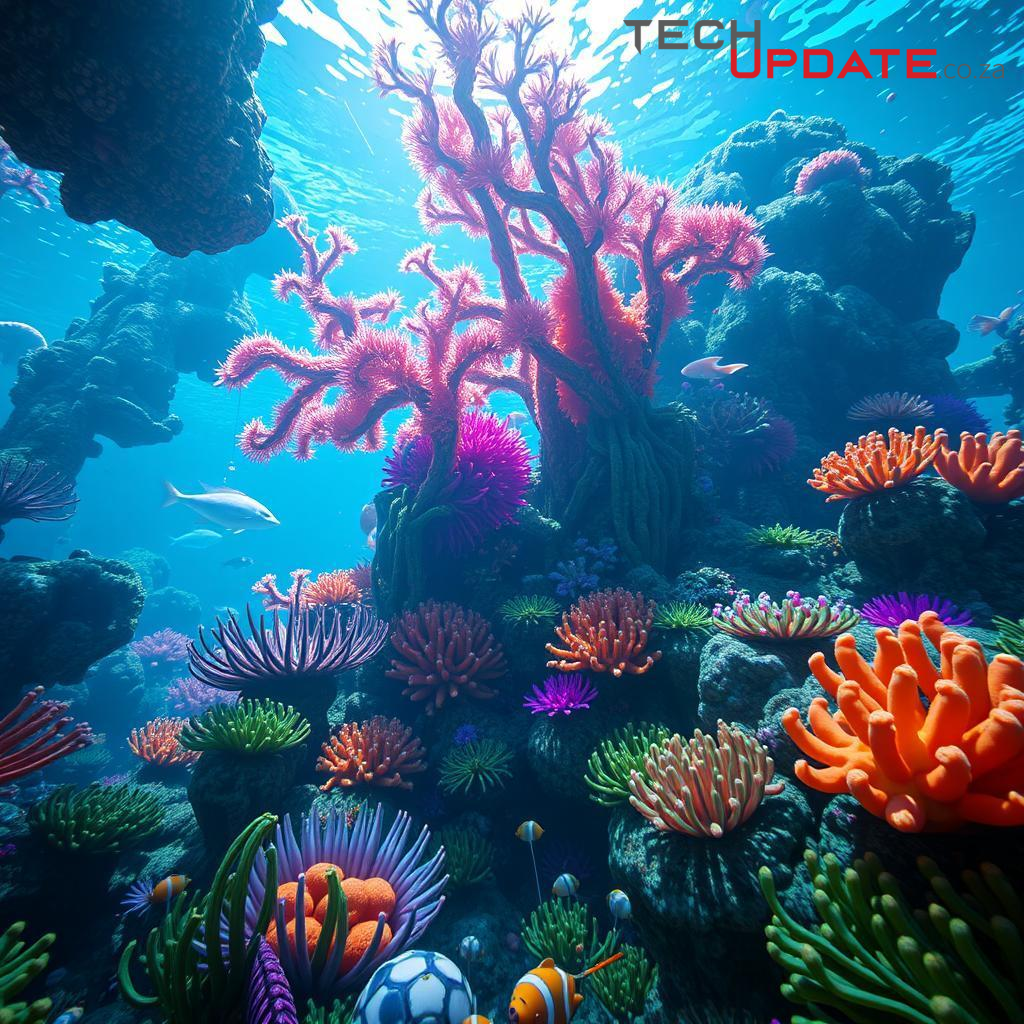
The Human Touch in Subnautica's Deep
In a notable divergence from its parent company's strategic direction, the highly anticipated oceanic survival title, Subnautica 2, is proceeding without the integration of generative artificial intelligence. This decision by developer Unknown Worlds Entertainment stands in contrast to publisher Krafton's publicly declared "AI-first" company vision, a stance that has aimed to embed AI technologies across its operational and creative spectrum.
Subnautica 2, the next installment in the critically acclaimed series known for its immersive underwater exploration and survival mechanics, is being developed with a firm commitment to traditional methods. Developers have explicitly stated that generative AI tools are "not something we're using at all," underscoring a preference for human-driven creativity and craftsmanship in the game's design and asset creation.
Krafton's AI Ambitions Meet Creative Autonomy
Krafton, the South Korean conglomerate behind global gaming phenomenon PUBG: Battlegrounds, has been vocal about its ambition to transform into an "AI-first" enterprise. This strategic pivot encompasses leveraging AI for various aspects, including game development, marketing, and operational efficiencies. The company has invested significantly in AI research and development, viewing it as a cornerstone for future innovation and competitive advantage within the rapidly evolving gaming landscape.
However, the case of Subnautica 2 illustrates a nuanced application of this corporate directive. While Krafton encourages AI adoption, it appears to grant its studios a degree of creative autonomy, allowing development teams to determine the most suitable tools and methodologies for their specific projects. Unknown Worlds Entertainment's decision highlights a current industry debate regarding the ethical and practical implications of generative AI in creative fields, particularly in highly artistic and narrative-driven games.
The Artistic Choice: Prioritizing Human Creativity
The developers at Unknown Worlds likely weigh the potential benefits of generative AI, such as accelerated asset production or procedural content generation, against concerns about maintaining artistic integrity, unique aesthetic consistency, and the nuanced hand-crafted feel that defines the Subnautica experience. For a game that relies heavily on bespoke environmental design, creature artistry, and a meticulously crafted sense of discovery, the perceived value of human-led creative processes may outweigh the efficiency gains offered by AI.
This stance also resonates with a segment of the gaming community and development sector that remains skeptical about the role of generative AI in fostering genuine innovation and originality. While AI can be a powerful tool for iteration and augmentation, many believe that the core imaginative spark and the subjective judgment required for compelling game design still firmly rest with human creators.
Conclusion
The development of Subnautica 2 without generative AI serves as a compelling case study within the broader discussion of artificial intelligence's role in the creative industries. Despite its publisher's ambitious "AI-first" mandate, Unknown Worlds Entertainment has opted for a human-centric approach, prioritizing artistic control and traditional development methodologies. This decision underscores the ongoing balance between technological advancement and the enduring value of human creativity in shaping interactive entertainment experiences.
Resources
Details
Author
Top articles




 }})
You can now watch HBO Max for $10
Latest articles





You can now watch HBO Max for $10
The Human Touch in Subnautica's Deep
In a notable divergence from its parent company's strategic direction, the highly anticipated oceanic survival title, Subnautica 2, is proceeding without the integration of generative artificial intelligence. This decision by developer Unknown Worlds Entertainment stands in contrast to publisher Krafton's publicly declared "AI-first" company vision, a stance that has aimed to embed AI technologies across its operational and creative spectrum.
Subnautica 2, the next installment in the critically acclaimed series known for its immersive underwater exploration and survival mechanics, is being developed with a firm commitment to traditional methods. Developers have explicitly stated that generative AI tools are "not something we're using at all," underscoring a preference for human-driven creativity and craftsmanship in the game's design and asset creation.
Krafton's AI Ambitions Meet Creative Autonomy
Krafton, the South Korean conglomerate behind global gaming phenomenon PUBG: Battlegrounds, has been vocal about its ambition to transform into an "AI-first" enterprise. This strategic pivot encompasses leveraging AI for various aspects, including game development, marketing, and operational efficiencies. The company has invested significantly in AI research and development, viewing it as a cornerstone for future innovation and competitive advantage within the rapidly evolving gaming landscape.
However, the case of Subnautica 2 illustrates a nuanced application of this corporate directive. While Krafton encourages AI adoption, it appears to grant its studios a degree of creative autonomy, allowing development teams to determine the most suitable tools and methodologies for their specific projects. Unknown Worlds Entertainment's decision highlights a current industry debate regarding the ethical and practical implications of generative AI in creative fields, particularly in highly artistic and narrative-driven games.
The Artistic Choice: Prioritizing Human Creativity
The developers at Unknown Worlds likely weigh the potential benefits of generative AI, such as accelerated asset production or procedural content generation, against concerns about maintaining artistic integrity, unique aesthetic consistency, and the nuanced hand-crafted feel that defines the Subnautica experience. For a game that relies heavily on bespoke environmental design, creature artistry, and a meticulously crafted sense of discovery, the perceived value of human-led creative processes may outweigh the efficiency gains offered by AI.
This stance also resonates with a segment of the gaming community and development sector that remains skeptical about the role of generative AI in fostering genuine innovation and originality. While AI can be a powerful tool for iteration and augmentation, many believe that the core imaginative spark and the subjective judgment required for compelling game design still firmly rest with human creators.
Conclusion
The development of Subnautica 2 without generative AI serves as a compelling case study within the broader discussion of artificial intelligence's role in the creative industries. Despite its publisher's ambitious "AI-first" mandate, Unknown Worlds Entertainment has opted for a human-centric approach, prioritizing artistic control and traditional development methodologies. This decision underscores the ongoing balance between technological advancement and the enduring value of human creativity in shaping interactive entertainment experiences.
Resources
Top articles
You can now watch HBO Max for $10
Latest articles
You can now watch HBO Max for $10
Similar posts



This is a page that only logged-in people can visit. Don't you feel special? Try clicking on a button below to do some things you can't do when you're logged out.
Example modal
At your leisure, please peruse this excerpt from a whale of a tale.
Chapter 1: Loomings.
Call me Ishmael. Some years ago—never mind how long precisely—having little or no money in my purse, and nothing particular to interest me on shore, I thought I would sail about a little and see the watery part of the world. It is a way I have of driving off the spleen and regulating the circulation. Whenever I find myself growing grim about the mouth; whenever it is a damp, drizzly November in my soul; whenever I find myself involuntarily pausing before coffin warehouses, and bringing up the rear of every funeral I meet; and especially whenever my hypos get such an upper hand of me, that it requires a strong moral principle to prevent me from deliberately stepping into the street, and methodically knocking people's hats off—then, I account it high time to get to sea as soon as I can. This is my substitute for pistol and ball. With a philosophical flourish Cato throws himself upon his sword; I quietly take to the ship. There is nothing surprising in this. If they but knew it, almost all men in their degree, some time or other, cherish very nearly the same feelings towards the ocean with me.
Comment