Zombie Card Attack: How Researchers Revive Expired Visa Cards for Contactless Purchases
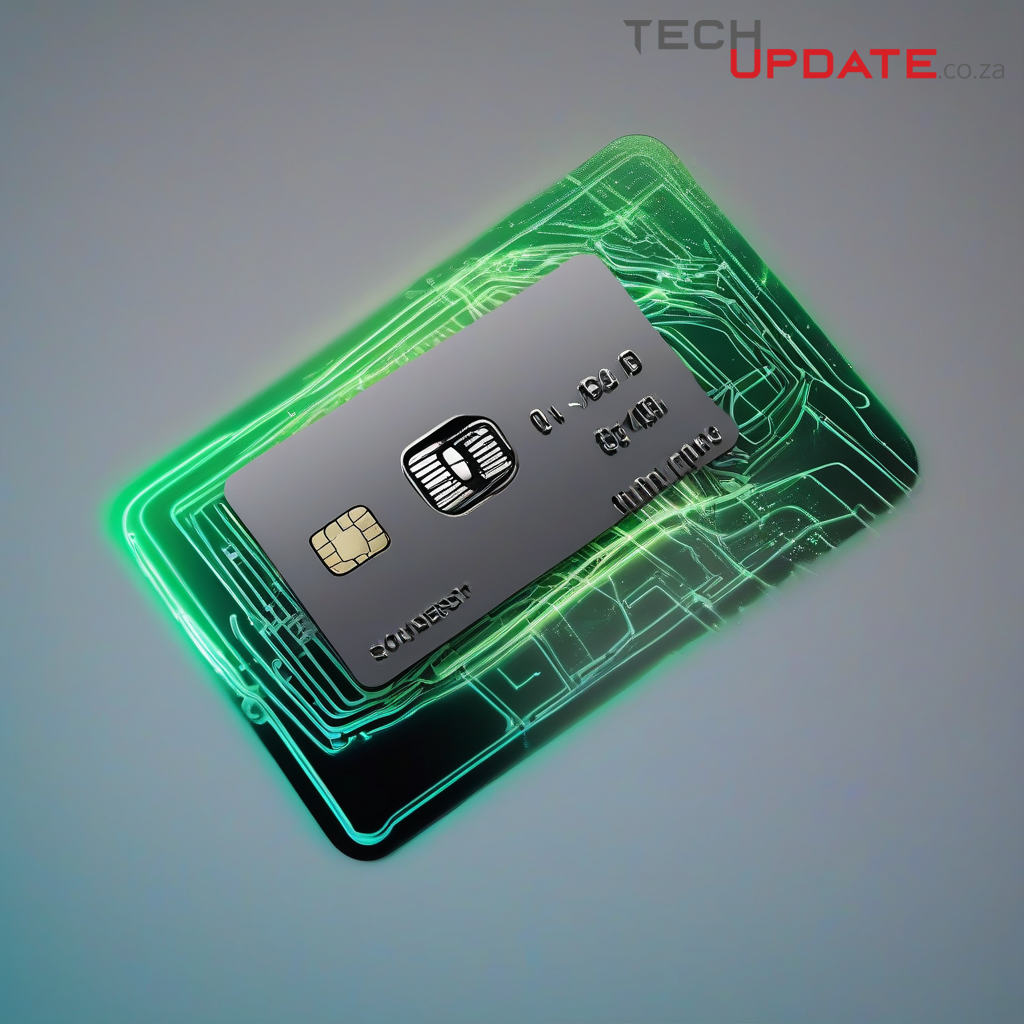
In a significant revelation for the financial technology sector, researchers at the University of Massachusetts Amherst have unveiled a novel attack dubbed "Zombie Card." This sophisticated method demonstrates the unsettling capability to reactivate expired Visa contactless credit cards, enabling them for legitimate in-store purchases. The findings expose a critical vulnerability in the ecosystem of Near-Field Communication (NFC) payments, raising pertinent questions about the robustness of current card security protocols.
The Resurrection of Expired Credit Cards
The essence of the Zombie Card attack lies in its elegant simplicity and the specific point of failure it exploits. Rather than attempting to break the complex cryptographic security embedded within EMV (Europay, MasterCard, and Visa) chips, the researchers focused on manipulating the data read by a Point-of-Sale (POS) terminal during a contactless transaction. By subtly altering the expiration date transmitted via NFC, an expired Visa card can be presented to the terminal as valid, successfully authorizing purchases.
Crucially, this exploit does not compromise the card's underlying cryptographic integrity. Instead, it circumvents the terminal's initial verification of the expiration date, allowing the transaction to proceed to the issuing bank for approval. Since the bank's systems might still authorize transactions from expired cards under certain conditions (e.g., grace periods, specific merchant agreements), the attack can be surprisingly effective. Physical possession of the expired card remains a prerequisite for executing this attack, limiting its scope to specific scenarios rather than broad remote exploitation.
Implications for Consumers and Financial Institutions
While the Zombie Card attack requires physical access to an expired card, its implications are far-reaching. For consumers, it underscores the importance of securely disposing of expired payment cards, as even seemingly defunct cards could be repurposed for fraudulent activity. The attack highlights a potential blind spot in the multi-layered security framework of contactless payments, where an overlooked detail—the expiration date validation at the terminal level—can be exploited.
For financial institutions and payment networks like Visa, the findings necessitate a re-evaluation of how expiration dates are handled during the initial contactless transaction handshake. Although the attack doesn't break cryptography, it exposes a gap in the front-end validation, which could lead to unauthorized transactions and potential financial losses, particularly if combined with other social engineering tactics or lax merchant policies.
Mitigation and Industry Response
Following the disclosure of this vulnerability, the payments industry, particularly Visa, has acknowledged the research. While specific technical remediations might involve updates to POS terminal software or changes in how card issuers process transactions from expired cards, the immediate emphasis is on enhancing the robustness of expiration date checks at various stages of the transaction flow. Consumers are advised to cut up expired cards, ensuring the chip and magnetic stripe are destroyed, to prevent any physical exploitation.
This research serves as a poignant reminder that even highly secure payment systems can harbor vulnerabilities at the interface between technology and real-world implementation. Continuous vigilance and proactive research are essential to maintaining the integrity and trust in global payment infrastructures.
Conclusion
The "Zombie Card" attack, orchestrated by researchers at the University of Massachusetts Amherst, represents a sophisticated method to bypass expiration date checks on Visa contactless cards, enabling them for real-world purchases without cryptographic compromise. This vulnerability necessitates heightened security awareness for consumers and a focused effort from the payments industry to reinforce terminal-level validation mechanisms. As digital payments evolve, so too must the strategies for identifying and mitigating emerging threats.
Resources
Details
Author
Top articles





 }})
You can now watch HBO Max for $10
Latest articles





You can now watch HBO Max for $10
In a significant revelation for the financial technology sector, researchers at the University of Massachusetts Amherst have unveiled a novel attack dubbed "Zombie Card." This sophisticated method demonstrates the unsettling capability to reactivate expired Visa contactless credit cards, enabling them for legitimate in-store purchases. The findings expose a critical vulnerability in the ecosystem of Near-Field Communication (NFC) payments, raising pertinent questions about the robustness of current card security protocols.
The Resurrection of Expired Credit Cards
The essence of the Zombie Card attack lies in its elegant simplicity and the specific point of failure it exploits. Rather than attempting to break the complex cryptographic security embedded within EMV (Europay, MasterCard, and Visa) chips, the researchers focused on manipulating the data read by a Point-of-Sale (POS) terminal during a contactless transaction. By subtly altering the expiration date transmitted via NFC, an expired Visa card can be presented to the terminal as valid, successfully authorizing purchases.
Crucially, this exploit does not compromise the card's underlying cryptographic integrity. Instead, it circumvents the terminal's initial verification of the expiration date, allowing the transaction to proceed to the issuing bank for approval. Since the bank's systems might still authorize transactions from expired cards under certain conditions (e.g., grace periods, specific merchant agreements), the attack can be surprisingly effective. Physical possession of the expired card remains a prerequisite for executing this attack, limiting its scope to specific scenarios rather than broad remote exploitation.
Implications for Consumers and Financial Institutions
While the Zombie Card attack requires physical access to an expired card, its implications are far-reaching. For consumers, it underscores the importance of securely disposing of expired payment cards, as even seemingly defunct cards could be repurposed for fraudulent activity. The attack highlights a potential blind spot in the multi-layered security framework of contactless payments, where an overlooked detail—the expiration date validation at the terminal level—can be exploited.
For financial institutions and payment networks like Visa, the findings necessitate a re-evaluation of how expiration dates are handled during the initial contactless transaction handshake. Although the attack doesn't break cryptography, it exposes a gap in the front-end validation, which could lead to unauthorized transactions and potential financial losses, particularly if combined with other social engineering tactics or lax merchant policies.
Mitigation and Industry Response
Following the disclosure of this vulnerability, the payments industry, particularly Visa, has acknowledged the research. While specific technical remediations might involve updates to POS terminal software or changes in how card issuers process transactions from expired cards, the immediate emphasis is on enhancing the robustness of expiration date checks at various stages of the transaction flow. Consumers are advised to cut up expired cards, ensuring the chip and magnetic stripe are destroyed, to prevent any physical exploitation.
This research serves as a poignant reminder that even highly secure payment systems can harbor vulnerabilities at the interface between technology and real-world implementation. Continuous vigilance and proactive research are essential to maintaining the integrity and trust in global payment infrastructures.
Conclusion
The "Zombie Card" attack, orchestrated by researchers at the University of Massachusetts Amherst, represents a sophisticated method to bypass expiration date checks on Visa contactless cards, enabling them for real-world purchases without cryptographic compromise. This vulnerability necessitates heightened security awareness for consumers and a focused effort from the payments industry to reinforce terminal-level validation mechanisms. As digital payments evolve, so too must the strategies for identifying and mitigating emerging threats.
Resources
Top articles
You can now watch HBO Max for $10
Latest articles
You can now watch HBO Max for $10
Similar posts




This is a page that only logged-in people can visit. Don't you feel special? Try clicking on a button below to do some things you can't do when you're logged out.
Example modal
At your leisure, please peruse this excerpt from a whale of a tale.
Chapter 1: Loomings.
Call me Ishmael. Some years ago—never mind how long precisely—having little or no money in my purse, and nothing particular to interest me on shore, I thought I would sail about a little and see the watery part of the world. It is a way I have of driving off the spleen and regulating the circulation. Whenever I find myself growing grim about the mouth; whenever it is a damp, drizzly November in my soul; whenever I find myself involuntarily pausing before coffin warehouses, and bringing up the rear of every funeral I meet; and especially whenever my hypos get such an upper hand of me, that it requires a strong moral principle to prevent me from deliberately stepping into the street, and methodically knocking people's hats off—then, I account it high time to get to sea as soon as I can. This is my substitute for pistol and ball. With a philosophical flourish Cato throws himself upon his sword; I quietly take to the ship. There is nothing surprising in this. If they but knew it, almost all men in their degree, some time or other, cherish very nearly the same feelings towards the ocean with me.
Comment