One Fallen Line: How Northern Virginia's AI Data Center Vulnerability Exposes a National Grid Crisis and Its Urgent Solutions
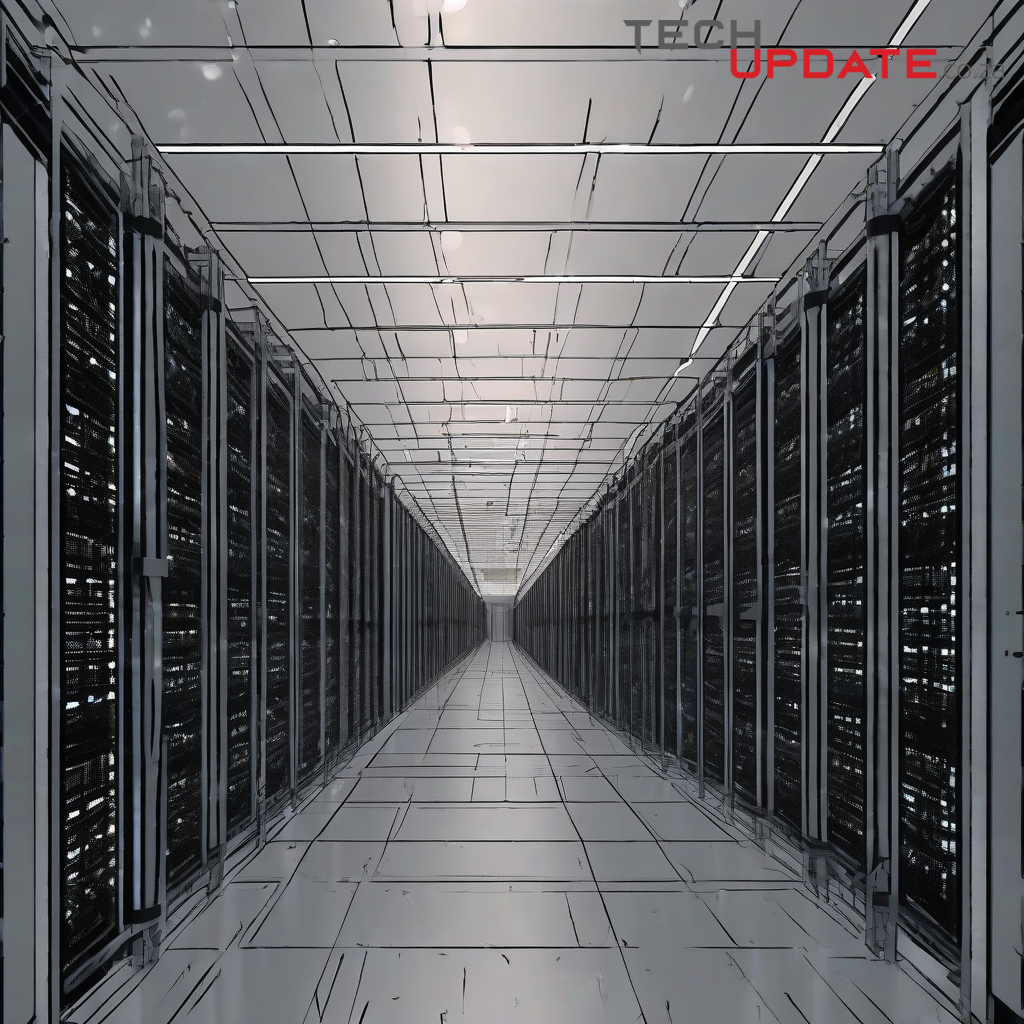
The Silent Hum Interrupted: A Wake-Up Call from Northern Virginia
In the bustling landscape of Northern Virginia, a single fallen power line recently did more than just interrupt local electricity—it illuminated a critical and growing vulnerability within the core infrastructure supporting the global surge in artificial intelligence. This close call in "Data Center Alley," a region synonymous with immense computing power, starkly exposed how poorly the current electrical grid, and by extension, the myriad data centers reliant upon it, are equipped to handle even minor disruptions, let alone the escalating demands of AI.
The Achilles' Heel of AI Infrastructure
Modern data centers, particularly those processing complex AI workloads, are ravenous consumers of electricity. They demand constant, uninterrupted power for their servers, cooling systems, and networking equipment. Unlike traditional computing, AI's intensive training and inference models require continuous, high-density operations, making them exceptionally sensitive to power fluctuations or outages. Even a momentary dip can corrupt ongoing processes, lead to significant data loss, or incur costly downtime measured in millions. While data centers employ an array of backup generators and battery arrays, these systems often face limitations in sustained operation, fuel logistics, and the sheer scale required to power thousands of servers.
The incident in Northern Virginia serves as a stark reminder: our increasingly digital world, powered by AI, is built upon an aging and often fragile power infrastructure. As AI continues its explosive growth, its energy footprint is set to expand dramatically, placing unprecedented strain on grids that were never designed for such concentrated, insatiable demand. This isn't merely an inconvenience; it's an existential threat to the continuity of AI-driven services, from critical financial transactions to essential healthcare applications.
Pathways to Power Resilience: Implementing Robust Solutions
Addressing this burgeoning crisis demands a multi-faceted approach, integrating technological innovation with strategic infrastructural upgrades. The solutions are complex but imperative:
Microgrids and Decentralized Power
- Self-Sufficiency: Data centers must increasingly explore the development of on-site microgrids, capable of operating independently from the main grid during outages. These localized power systems can integrate diverse energy sources, including solar, wind, and battery storage, providing a more robust and resilient power supply.
- Renewable Integration: Pairing data centers directly with large-scale renewable energy projects can reduce reliance on the centralized grid and lower carbon footprints, while also enhancing energy security.
Advanced Energy Storage
- Beyond Batteries: While lithium-ion batteries provide crucial short-term backup, innovation in energy storage solutions is vital. This includes exploring longer-duration storage technologies like flow batteries, hydrogen fuel cells, and even kinetic energy storage systems (flywheels) to bridge extended grid disruptions.
- Grid Services: Data centers equipped with substantial storage can also offer grid services, feeding power back into the main grid during peak demand, thereby stabilizing the overall system.
Smart Grid Modernization
- Proactive Management: National and regional power grids require significant investment in modernization. Implementing smart grid technologies—advanced sensors, automated controls, and predictive analytics—can help utilities anticipate and mitigate disruptions, reroute power efficiently, and integrate renewable energy more seamlessly.
- Hardening Infrastructure: Protecting critical power lines and substations from environmental hazards, through undergrounding or enhanced storm-proofing, is essential to reduce the frequency of outages.
Demand-Side Management and Geographic Diversification
- Optimized Consumption: Data centers can adopt sophisticated demand-side management strategies, dynamically adjusting power consumption based on grid conditions, shifting non-critical workloads to off-peak hours or less constrained regions.
- Distributed Architecture: Spreading data center infrastructure across geographically diverse locations can mitigate the impact of localized disasters, ensuring that a single event does not cripple an entire operation.
Summary: Powering the Future of AI, Resiliently
The incident in Northern Virginia serves as a potent harbinger of future challenges. As AI's computational appetite grows exponentially, so too does the imperative to ensure its foundational power infrastructure is robust, resilient, and sustainable. The era of assuming an ever-present, unwavering power supply is over. By investing in microgrids, advanced storage, smart grid technologies, and intelligent demand management, we can fortify our digital backbone, securing the uninterrupted operation of AI and ensuring its transformative potential is fully realized, even in the face of an increasingly unpredictable world.
Resources
Details
Author
Top articles




 }})
You can now watch HBO Max for $10
Latest articles





You can now watch HBO Max for $10
The Silent Hum Interrupted: A Wake-Up Call from Northern Virginia
In the bustling landscape of Northern Virginia, a single fallen power line recently did more than just interrupt local electricity—it illuminated a critical and growing vulnerability within the core infrastructure supporting the global surge in artificial intelligence. This close call in "Data Center Alley," a region synonymous with immense computing power, starkly exposed how poorly the current electrical grid, and by extension, the myriad data centers reliant upon it, are equipped to handle even minor disruptions, let alone the escalating demands of AI.
The Achilles' Heel of AI Infrastructure
Modern data centers, particularly those processing complex AI workloads, are ravenous consumers of electricity. They demand constant, uninterrupted power for their servers, cooling systems, and networking equipment. Unlike traditional computing, AI's intensive training and inference models require continuous, high-density operations, making them exceptionally sensitive to power fluctuations or outages. Even a momentary dip can corrupt ongoing processes, lead to significant data loss, or incur costly downtime measured in millions. While data centers employ an array of backup generators and battery arrays, these systems often face limitations in sustained operation, fuel logistics, and the sheer scale required to power thousands of servers.
The incident in Northern Virginia serves as a stark reminder: our increasingly digital world, powered by AI, is built upon an aging and often fragile power infrastructure. As AI continues its explosive growth, its energy footprint is set to expand dramatically, placing unprecedented strain on grids that were never designed for such concentrated, insatiable demand. This isn't merely an inconvenience; it's an existential threat to the continuity of AI-driven services, from critical financial transactions to essential healthcare applications.
Pathways to Power Resilience: Implementing Robust Solutions
Addressing this burgeoning crisis demands a multi-faceted approach, integrating technological innovation with strategic infrastructural upgrades. The solutions are complex but imperative:
Microgrids and Decentralized Power
- Self-Sufficiency: Data centers must increasingly explore the development of on-site microgrids, capable of operating independently from the main grid during outages. These localized power systems can integrate diverse energy sources, including solar, wind, and battery storage, providing a more robust and resilient power supply.
- Renewable Integration: Pairing data centers directly with large-scale renewable energy projects can reduce reliance on the centralized grid and lower carbon footprints, while also enhancing energy security.
Advanced Energy Storage
- Beyond Batteries: While lithium-ion batteries provide crucial short-term backup, innovation in energy storage solutions is vital. This includes exploring longer-duration storage technologies like flow batteries, hydrogen fuel cells, and even kinetic energy storage systems (flywheels) to bridge extended grid disruptions.
- Grid Services: Data centers equipped with substantial storage can also offer grid services, feeding power back into the main grid during peak demand, thereby stabilizing the overall system.
Smart Grid Modernization
- Proactive Management: National and regional power grids require significant investment in modernization. Implementing smart grid technologies—advanced sensors, automated controls, and predictive analytics—can help utilities anticipate and mitigate disruptions, reroute power efficiently, and integrate renewable energy more seamlessly.
- Hardening Infrastructure: Protecting critical power lines and substations from environmental hazards, through undergrounding or enhanced storm-proofing, is essential to reduce the frequency of outages.
Demand-Side Management and Geographic Diversification
- Optimized Consumption: Data centers can adopt sophisticated demand-side management strategies, dynamically adjusting power consumption based on grid conditions, shifting non-critical workloads to off-peak hours or less constrained regions.
- Distributed Architecture: Spreading data center infrastructure across geographically diverse locations can mitigate the impact of localized disasters, ensuring that a single event does not cripple an entire operation.
Summary: Powering the Future of AI, Resiliently
The incident in Northern Virginia serves as a potent harbinger of future challenges. As AI's computational appetite grows exponentially, so too does the imperative to ensure its foundational power infrastructure is robust, resilient, and sustainable. The era of assuming an ever-present, unwavering power supply is over. By investing in microgrids, advanced storage, smart grid technologies, and intelligent demand management, we can fortify our digital backbone, securing the uninterrupted operation of AI and ensuring its transformative potential is fully realized, even in the face of an increasingly unpredictable world.
Resources
Top articles
You can now watch HBO Max for $10
Latest articles
You can now watch HBO Max for $10
Similar posts



This is a page that only logged-in people can visit. Don't you feel special? Try clicking on a button below to do some things you can't do when you're logged out.
Example modal
At your leisure, please peruse this excerpt from a whale of a tale.
Chapter 1: Loomings.
Call me Ishmael. Some years ago—never mind how long precisely—having little or no money in my purse, and nothing particular to interest me on shore, I thought I would sail about a little and see the watery part of the world. It is a way I have of driving off the spleen and regulating the circulation. Whenever I find myself growing grim about the mouth; whenever it is a damp, drizzly November in my soul; whenever I find myself involuntarily pausing before coffin warehouses, and bringing up the rear of every funeral I meet; and especially whenever my hypos get such an upper hand of me, that it requires a strong moral principle to prevent me from deliberately stepping into the street, and methodically knocking people's hats off—then, I account it high time to get to sea as soon as I can. This is my substitute for pistol and ball. With a philosophical flourish Cato throws himself upon his sword; I quietly take to the ship. There is nothing surprising in this. If they but knew it, almost all men in their degree, some time or other, cherish very nearly the same feelings towards the ocean with me.
Comment