Suno Studio 2.0: The AI Music Platform Takes a Measured Stride Towards Professional DAW Functionality with MIDI Integration
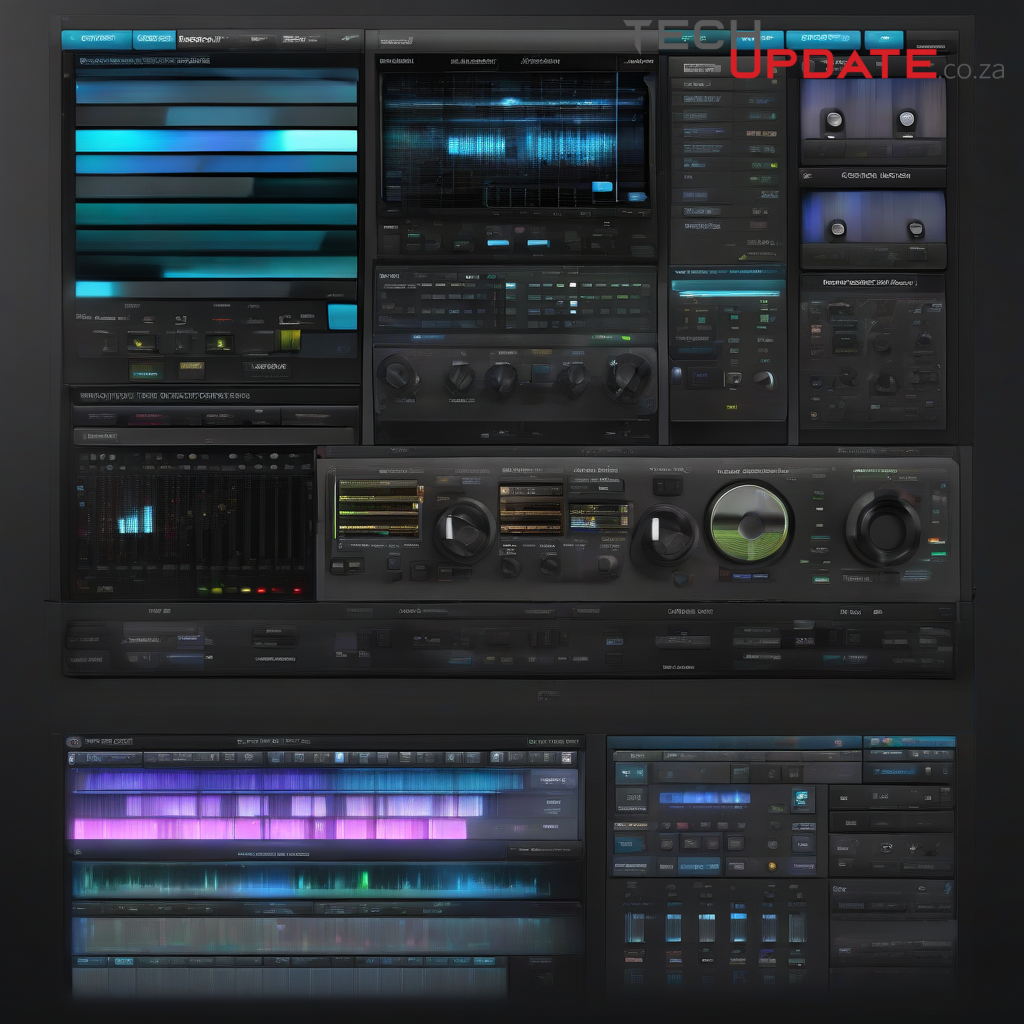
Suno Studio 2.0: A Pivotal Shift Towards Professional Music Production
Suno, a prominent player in the generative AI music landscape, has unveiled Studio 2.0, marking a significant evolution in its platform. This latest iteration introduces a suite of upgrades designed to bridge the gap between rudimentary AI audio generation and the more comprehensive capabilities expected of a Digital Audio Workstation (DAW). The overarching ambition appears to be a recalibration of Suno's identity, transitioning from a novel AI tool to a more robust instrument for creators.
The Long-Awaited Arrival of MIDI Support
Undoubtedly, the most impactful addition in Studio 2.0 is the integration of MIDI (Musical Instrument Digital Interface) support. A cornerstone of modern music production, MIDI enables precise control over musical notes, timing, and expression. Suno acknowledges that this was its most frequently requested feature, highlighting a clear demand from its user base for greater creative agency. The inclusion of MIDI is more than a mere feature; it represents a fundamental prerequisite for any software aspiring to be considered a serious music production environment. This allows users to import and export MIDI data, providing a level of granular control over melody, harmony, and rhythm previously unavailable within the platform.
Proprietary Synthesizer and Current Limitations
While the addition of MIDI is a monumental step, Suno Studio 2.0 maintains a degree of proprietary lock-in. Currently, the platform does not support third-party plugins or Virtual Studio Technology (VSTs), a standard in professional music production that offers an extensive ecosystem of instruments and effects. Consequently, users are restricted to Suno's proprietary built-in synthesizer. This synth is described as a fundamental two-oscillator wavetable plugin, equipped with three envelopes and four low-frequency oscillators (LFOs). While functional for basic sound design, its capabilities are a stark contrast to the diverse and sophisticated sound libraries available through VSTs. This limitation suggests Suno's current focus is on building a stable, integrated environment rather than an open, extensible one.
Implications for the AI Music Landscape
Suno Studio 2.0's strategic move towards DAW-like features, particularly MIDI, signifies a maturation in the generative AI music sector. It indicates a recognition that pure AI generation, while impressive, often requires human intervention and precise control to meet artistic standards. By providing tools that empower users to refine and manipulate AI-generated content with traditional production methods, Suno is not only enhancing its own platform but also influencing the broader direction of AI in creative industries. This evolution challenges the notion of AI as a fully autonomous creator, instead positioning it as a powerful co-pilot that augments human creativity.
Summary
Suno Studio 2.0 represents a critical juncture for the AI music platform. The integration of MIDI support addresses a fundamental need for greater creative control, propelling Suno closer to the functionality of conventional DAWs. While the absence of third-party VST support and reliance on a proprietary synth present current limitations, this update clearly signals Suno's ambition to evolve beyond a simple generative tool into a more comprehensive and versatile music production environment. This strategic enhancement is set to reshape how creators interact with AI in the realm of music composition and production, emphasizing a hybrid approach where artificial intelligence serves to augment human artistic intent.
Resources
Details
Author
Top articles




 }})
You can now watch HBO Max for $10
Latest articles




You can now watch HBO Max for $10
Suno Studio 2.0: A Pivotal Shift Towards Professional Music Production
Suno, a prominent player in the generative AI music landscape, has unveiled Studio 2.0, marking a significant evolution in its platform. This latest iteration introduces a suite of upgrades designed to bridge the gap between rudimentary AI audio generation and the more comprehensive capabilities expected of a Digital Audio Workstation (DAW). The overarching ambition appears to be a recalibration of Suno's identity, transitioning from a novel AI tool to a more robust instrument for creators.
The Long-Awaited Arrival of MIDI Support
Undoubtedly, the most impactful addition in Studio 2.0 is the integration of MIDI (Musical Instrument Digital Interface) support. A cornerstone of modern music production, MIDI enables precise control over musical notes, timing, and expression. Suno acknowledges that this was its most frequently requested feature, highlighting a clear demand from its user base for greater creative agency. The inclusion of MIDI is more than a mere feature; it represents a fundamental prerequisite for any software aspiring to be considered a serious music production environment. This allows users to import and export MIDI data, providing a level of granular control over melody, harmony, and rhythm previously unavailable within the platform.
Proprietary Synthesizer and Current Limitations
While the addition of MIDI is a monumental step, Suno Studio 2.0 maintains a degree of proprietary lock-in. Currently, the platform does not support third-party plugins or Virtual Studio Technology (VSTs), a standard in professional music production that offers an extensive ecosystem of instruments and effects. Consequently, users are restricted to Suno's proprietary built-in synthesizer. This synth is described as a fundamental two-oscillator wavetable plugin, equipped with three envelopes and four low-frequency oscillators (LFOs). While functional for basic sound design, its capabilities are a stark contrast to the diverse and sophisticated sound libraries available through VSTs. This limitation suggests Suno's current focus is on building a stable, integrated environment rather than an open, extensible one.
Implications for the AI Music Landscape
Suno Studio 2.0's strategic move towards DAW-like features, particularly MIDI, signifies a maturation in the generative AI music sector. It indicates a recognition that pure AI generation, while impressive, often requires human intervention and precise control to meet artistic standards. By providing tools that empower users to refine and manipulate AI-generated content with traditional production methods, Suno is not only enhancing its own platform but also influencing the broader direction of AI in creative industries. This evolution challenges the notion of AI as a fully autonomous creator, instead positioning it as a powerful co-pilot that augments human creativity.
Summary
Suno Studio 2.0 represents a critical juncture for the AI music platform. The integration of MIDI support addresses a fundamental need for greater creative control, propelling Suno closer to the functionality of conventional DAWs. While the absence of third-party VST support and reliance on a proprietary synth present current limitations, this update clearly signals Suno's ambition to evolve beyond a simple generative tool into a more comprehensive and versatile music production environment. This strategic enhancement is set to reshape how creators interact with AI in the realm of music composition and production, emphasizing a hybrid approach where artificial intelligence serves to augment human artistic intent.
Resources
Top articles
You can now watch HBO Max for $10
Latest articles
You can now watch HBO Max for $10
Similar posts




This is a page that only logged-in people can visit. Don't you feel special? Try clicking on a button below to do some things you can't do when you're logged out.
Example modal
At your leisure, please peruse this excerpt from a whale of a tale.
Chapter 1: Loomings.
Call me Ishmael. Some years ago—never mind how long precisely—having little or no money in my purse, and nothing particular to interest me on shore, I thought I would sail about a little and see the watery part of the world. It is a way I have of driving off the spleen and regulating the circulation. Whenever I find myself growing grim about the mouth; whenever it is a damp, drizzly November in my soul; whenever I find myself involuntarily pausing before coffin warehouses, and bringing up the rear of every funeral I meet; and especially whenever my hypos get such an upper hand of me, that it requires a strong moral principle to prevent me from deliberately stepping into the street, and methodically knocking people's hats off—then, I account it high time to get to sea as soon as I can. This is my substitute for pistol and ball. With a philosophical flourish Cato throws himself upon his sword; I quietly take to the ship. There is nothing surprising in this. If they but knew it, almost all men in their degree, some time or other, cherish very nearly the same feelings towards the ocean with me.
Comment