The Great Chip Pivot: Why OpenAI, SpaceX, and Tech Titans Are Undermining Nvidia's AI Reign

The Shifting Sands of Silicon: Why Tech Giants Are Ditching Nvidia for Custom Chips
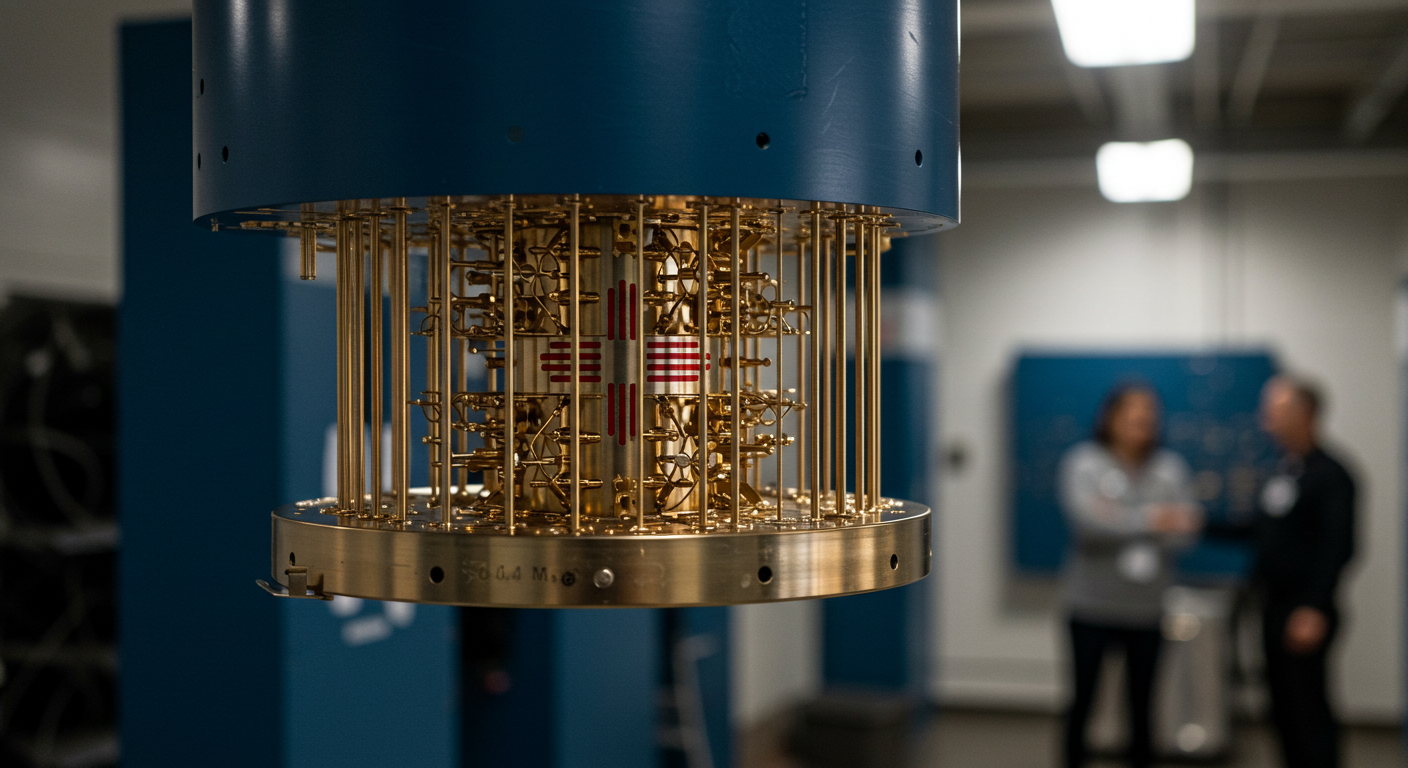
For years, Nvidia has been the undisputed king of artificial intelligence hardware, its powerful GPUs fueling the rapid advancements in machine learning. However, a seismic shift is underway. Major technology players, from OpenAI to SpaceX, are strategically investing in developing their own custom AI silicon, signaling a definitive move away from total dependence on a single supplier and intensifying competition in the semiconductor landscape.
The Strategic Imperative: Beyond Cost Savings
While the allure of cost reduction is undeniable when operating AI models at hyperscale, the motivations behind this custom chip revolution extend far deeper. Companies seek to achieve unparalleled performance-per-watt, optimize for specific AI workloads like inference, enhance supply chain resilience, and gain greater strategic control over their technological destinies. Off-the-shelf solutions, however potent, often present compromises in efficiency and specialization that bespoke designs can overcome. The drive is towards tailoring silicon precisely to the unique demands of their proprietary AI models and services.
OpenAI's "Jalapeño" and the Inference Challenge
OpenAI, a frontrunner in generative AI, has recently unveiled its ambitious plan to develop its own custom inference chip, reportedly codenamed "Jalapeño," in collaboration with Broadcom. This move is particularly significant. While Nvidia's GPUs excel at the computationally intensive task of AI model training, the sheer scale and cost of running these models in production (inference) demand a different breed of efficiency. OpenAI's foray into custom silicon is a direct response to the immense operational expenses associated with serving its large language models, aiming to achieve superior performance characteristics tailored specifically for inference workloads, thereby reducing its reliance on external hardware providers like Nvidia.
SpaceX, Google, Apple: A Growing Roster of Chip Innovators
The trend of custom silicon is not new, but its acceleration in the AI space is. Google has long been a pioneer with its Tensor Processing Units (TPUs), designed specifically for machine learning since 2016. These TPUs are integral to Google's AI infrastructure, powering everything from search to its cloud AI services, demonstrating the profound advantages of hardware-software co-design. Apple, similarly, has reaped tremendous benefits from its custom A-series and M-series chips, integrating CPU, GPU, and neural engines to deliver industry-leading performance and power efficiency across its product ecosystem. While SpaceX's custom chip initiatives are less publicized than those of its sister company Tesla (which develops its own FSD chips for autonomous driving), the ethos of vertical integration and engineering for specific, extreme performance needs is deeply ingrained across Elon Musk's ventures. These companies understand that controlling the silicon layer offers a decisive competitive edge in performance, cost, and innovation cycle.
The Implications for Nvidia and the Broader AI Landscape
Nvidia, with its dominant market share in AI GPUs, finds itself at a pivotal juncture. While the demand for its H100 and A100 chips remains robust for AI training, the proliferation of custom inference chips from major customers could gradually erode its market share in the high-volume inference segment. This shift could force Nvidia to innovate further, potentially diversifying its offerings or focusing more intensely on software and platform solutions. The broader AI landscape will likely see increased fragmentation in hardware, fostering innovation and competition. This evolution promises more efficient and specialized computing for AI, ultimately benefiting end-users with more powerful and accessible AI applications.
Summary
The era of singular dependence on Nvidia for AI hardware is nearing its end. Tech giants like OpenAI, Google, Apple, and SpaceX are strategically developing their own custom silicon, driven by the need for cost efficiency, specialized performance for AI inference, supply chain resilience, and greater strategic control. This concerted effort marks a significant pivot in the technology industry, promising to reshape the AI chip market, intensify competition, and accelerate innovation in artificial intelligence infrastructure. While Nvidia remains a powerful force, the rise of custom chips signifies a more diversified and vertically integrated future for AI computing.
Resources
Details
Author
Top articles




 }})
You can now watch HBO Max for $10
Latest articles





You can now watch HBO Max for $10
The Shifting Sands of Silicon: Why Tech Giants Are Ditching Nvidia for Custom Chips
For years, Nvidia has been the undisputed king of artificial intelligence hardware, its powerful GPUs fueling the rapid advancements in machine learning. However, a seismic shift is underway. Major technology players, from OpenAI to SpaceX, are strategically investing in developing their own custom AI silicon, signaling a definitive move away from total dependence on a single supplier and intensifying competition in the semiconductor landscape.
The Strategic Imperative: Beyond Cost Savings
While the allure of cost reduction is undeniable when operating AI models at hyperscale, the motivations behind this custom chip revolution extend far deeper. Companies seek to achieve unparalleled performance-per-watt, optimize for specific AI workloads like inference, enhance supply chain resilience, and gain greater strategic control over their technological destinies. Off-the-shelf solutions, however potent, often present compromises in efficiency and specialization that bespoke designs can overcome. The drive is towards tailoring silicon precisely to the unique demands of their proprietary AI models and services.
OpenAI's "Jalapeño" and the Inference Challenge
OpenAI, a frontrunner in generative AI, has recently unveiled its ambitious plan to develop its own custom inference chip, reportedly codenamed "Jalapeño," in collaboration with Broadcom. This move is particularly significant. While Nvidia's GPUs excel at the computationally intensive task of AI model training, the sheer scale and cost of running these models in production (inference) demand a different breed of efficiency. OpenAI's foray into custom silicon is a direct response to the immense operational expenses associated with serving its large language models, aiming to achieve superior performance characteristics tailored specifically for inference workloads, thereby reducing its reliance on external hardware providers like Nvidia.
SpaceX, Google, Apple: A Growing Roster of Chip Innovators
The trend of custom silicon is not new, but its acceleration in the AI space is. Google has long been a pioneer with its Tensor Processing Units (TPUs), designed specifically for machine learning since 2016. These TPUs are integral to Google's AI infrastructure, powering everything from search to its cloud AI services, demonstrating the profound advantages of hardware-software co-design. Apple, similarly, has reaped tremendous benefits from its custom A-series and M-series chips, integrating CPU, GPU, and neural engines to deliver industry-leading performance and power efficiency across its product ecosystem. While SpaceX's custom chip initiatives are less publicized than those of its sister company Tesla (which develops its own FSD chips for autonomous driving), the ethos of vertical integration and engineering for specific, extreme performance needs is deeply ingrained across Elon Musk's ventures. These companies understand that controlling the silicon layer offers a decisive competitive edge in performance, cost, and innovation cycle.
The Implications for Nvidia and the Broader AI Landscape
Nvidia, with its dominant market share in AI GPUs, finds itself at a pivotal juncture. While the demand for its H100 and A100 chips remains robust for AI training, the proliferation of custom inference chips from major customers could gradually erode its market share in the high-volume inference segment. This shift could force Nvidia to innovate further, potentially diversifying its offerings or focusing more intensely on software and platform solutions. The broader AI landscape will likely see increased fragmentation in hardware, fostering innovation and competition. This evolution promises more efficient and specialized computing for AI, ultimately benefiting end-users with more powerful and accessible AI applications.
Summary
The era of singular dependence on Nvidia for AI hardware is nearing its end. Tech giants like OpenAI, Google, Apple, and SpaceX are strategically developing their own custom silicon, driven by the need for cost efficiency, specialized performance for AI inference, supply chain resilience, and greater strategic control. This concerted effort marks a significant pivot in the technology industry, promising to reshape the AI chip market, intensify competition, and accelerate innovation in artificial intelligence infrastructure. While Nvidia remains a powerful force, the rise of custom chips signifies a more diversified and vertically integrated future for AI computing.
Resources
Top articles
You can now watch HBO Max for $10
Latest articles
You can now watch HBO Max for $10
Similar posts




This is a page that only logged-in people can visit. Don't you feel special? Try clicking on a button below to do some things you can't do when you're logged out.
Example modal
At your leisure, please peruse this excerpt from a whale of a tale.
Chapter 1: Loomings.
Call me Ishmael. Some years ago—never mind how long precisely—having little or no money in my purse, and nothing particular to interest me on shore, I thought I would sail about a little and see the watery part of the world. It is a way I have of driving off the spleen and regulating the circulation. Whenever I find myself growing grim about the mouth; whenever it is a damp, drizzly November in my soul; whenever I find myself involuntarily pausing before coffin warehouses, and bringing up the rear of every funeral I meet; and especially whenever my hypos get such an upper hand of me, that it requires a strong moral principle to prevent me from deliberately stepping into the street, and methodically knocking people's hats off—then, I account it high time to get to sea as soon as I can. This is my substitute for pistol and ball. With a philosophical flourish Cato throws himself upon his sword; I quietly take to the ship. There is nothing surprising in this. If they but knew it, almost all men in their degree, some time or other, cherish very nearly the same feelings towards the ocean with me.
Comment