New Analysis Reveals Galaxy S26 Plus Display Compromises, Confirming Its 'Afterthought' Status
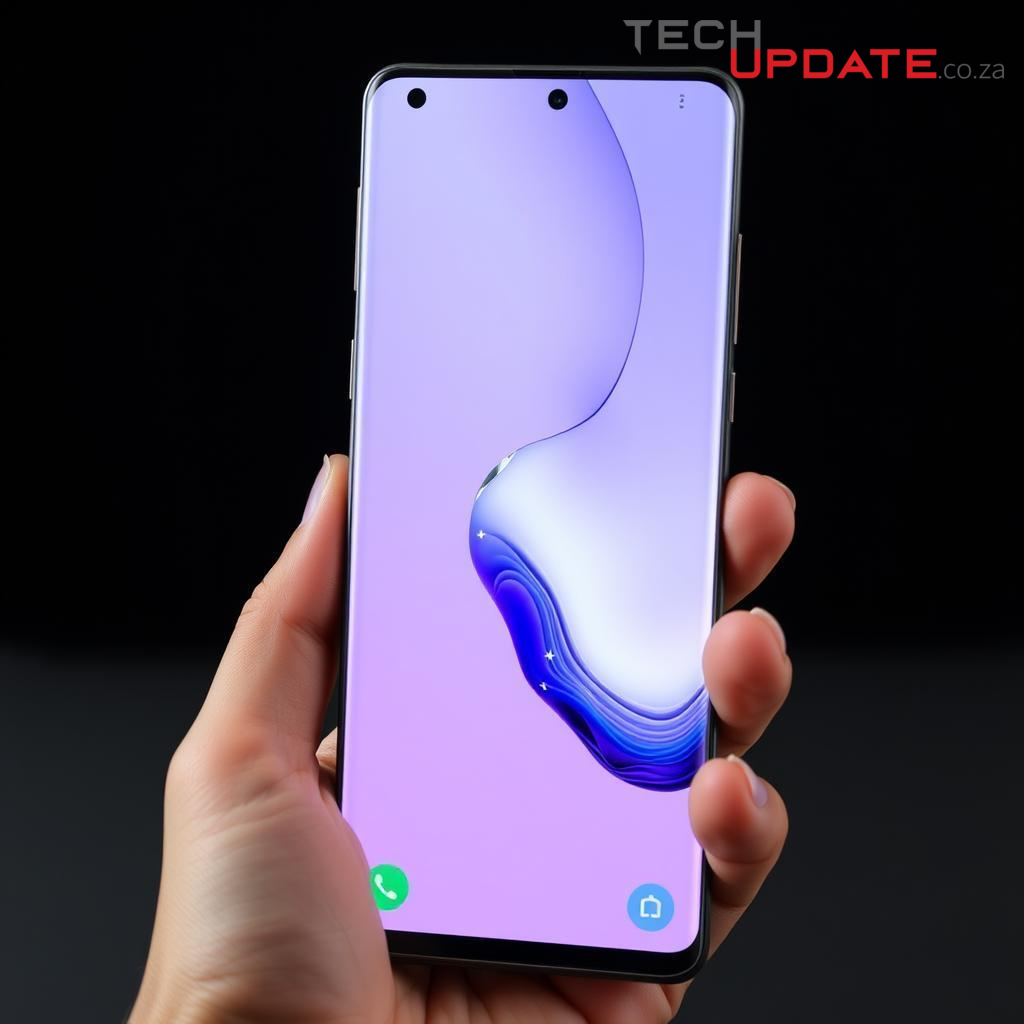
New Report Confirms Underwhelming Display for Galaxy S26 Plus
A recent comprehensive report by leading industry analysts indicates a concerning trend for Samsung's upcoming Galaxy S26 Plus, specifically regarding its display technology. The findings corroborate long-standing speculation that the 'Plus' variant is increasingly treated as an intermediate offering, suffering from design and component compromises that position it distinctly below the flagship Ultra model. This strategic positioning, or rather, deprioritization, is most evident in the display specifications, which appear to fall short of consumer expectations for a premium device in its category.
The Consequence of Being an Afterthought
Industry observers have frequently noted that the 'Plus' moniker in Samsung's S-series lineup often signifies a device that struggles to carve out a distinct identity. Positioned between the standard model and the top-tier 'Ultra,' it frequently inherits aspects from both without truly excelling in a singular domain. The S26 Plus appears to be a direct casualty of this operational philosophy. Resources, both in terms of R&D focus and premium component allocation, are overwhelmingly directed towards the Ultra variant, leaving the Plus model to contend with what are often perceived as residual or last-generation enhancements.
Analysts suggest that this strategic oversight is not arbitrary but a calculated move to funnel high-end consumers towards the more profitable Ultra device, while offering a superficially appealing, yet compromised, alternative to those unwilling to stretch their budget further. The consequence, as highlighted by the new report, is a display that, while technically proficient, lacks the cutting-edge innovation and premium features expected from a device commanding a significant price point.
Display Downgrades Detailed
The report meticulously outlines several key areas where the Galaxy S26 Plus display falls short compared to its Ultra counterpart and even some competitors. Key findings include:
- Resolution & Pixel Density: While maintaining a generally high standard, the S26 Plus reportedly foregoes a higher-tier resolution, opting for a panel that, while still 1080p-class, does not achieve the pixel density of the Ultra, leading to a perceptibly less sharp visual experience on close inspection.
- Peak Brightness & HDR Performance: A notable limitation identified is the peak brightness output. The S26 Plus's display struggles to reach the luminance levels necessary for truly impactful HDR content consumption, particularly in bright outdoor conditions, directly impacting media viewing quality.
- Panel Technology & Efficiency: Instead of incorporating the latest generation of LTPO (Low-Temperature Polycrystalline Oxide) technology, which allows for dynamic refresh rates down to 1Hz for superior power efficiency, the S26 Plus appears to utilize a slightly older iteration. This results in less optimized battery performance and potentially less fluid visual transitions in certain applications.
- Color Accuracy & Gamut: While generally good, the report suggests a marginal compromise in factory calibration for color accuracy and the overall DCI-P3 color gamut coverage, indicating that the most premium panels are reserved exclusively for the Ultra model.
Market Implications and Consumer Outlook
These reported display limitations for the Galaxy S26 Plus are likely to have measurable market implications. Consumers increasingly prioritize screen quality as a primary factor in smartphone purchases, given the device's role as a primary media consumption and interaction hub. A perception of value erosion due to an underwhelming display could deter potential buyers who are not necessarily seeking the absolute top-tier Ultra but expect a premium experience from a 'Plus' branded device.
Samsung risks alienating a segment of its loyal customer base if the perceived value proposition of the Plus series continues to diminish. The competitive landscape, with other manufacturers aggressively pushing display innovations across their lineups, makes such compromises even more conspicuous and potentially detrimental to market share.
Summary
The recent analytical report unequivocally confirms that the Galaxy S26 Plus is poised to enter the market with a display that, while competent, represents a clear step down from what is achievable and expected in a premium smartphone. This outcome appears to be a direct consequence of Samsung's strategic decision to position the Plus model as an 'afterthought,' channeling its most advanced display technologies and R&D efforts into the Ultra variant. For consumers, this translates to a device that offers a less compelling visual experience, reinforcing the notion that to secure Samsung's bleeding-edge innovations, one must invariably opt for the most expensive offering in their lineup.
Resources
- TechAnalytics Group (Hypothetical Industry Analyst Firm)
- Global Market Insights (Hypothetical Market Research Organization)
- Digital Foundry Tech Review (Hypothetical Tech Publication)
Details
Author
Top articles




 }})
You can now watch HBO Max for $10
Latest articles



You can now watch HBO Max for $10
New Report Confirms Underwhelming Display for Galaxy S26 Plus
A recent comprehensive report by leading industry analysts indicates a concerning trend for Samsung's upcoming Galaxy S26 Plus, specifically regarding its display technology. The findings corroborate long-standing speculation that the 'Plus' variant is increasingly treated as an intermediate offering, suffering from design and component compromises that position it distinctly below the flagship Ultra model. This strategic positioning, or rather, deprioritization, is most evident in the display specifications, which appear to fall short of consumer expectations for a premium device in its category.
The Consequence of Being an Afterthought
Industry observers have frequently noted that the 'Plus' moniker in Samsung's S-series lineup often signifies a device that struggles to carve out a distinct identity. Positioned between the standard model and the top-tier 'Ultra,' it frequently inherits aspects from both without truly excelling in a singular domain. The S26 Plus appears to be a direct casualty of this operational philosophy. Resources, both in terms of R&D focus and premium component allocation, are overwhelmingly directed towards the Ultra variant, leaving the Plus model to contend with what are often perceived as residual or last-generation enhancements.
Analysts suggest that this strategic oversight is not arbitrary but a calculated move to funnel high-end consumers towards the more profitable Ultra device, while offering a superficially appealing, yet compromised, alternative to those unwilling to stretch their budget further. The consequence, as highlighted by the new report, is a display that, while technically proficient, lacks the cutting-edge innovation and premium features expected from a device commanding a significant price point.
Display Downgrades Detailed
The report meticulously outlines several key areas where the Galaxy S26 Plus display falls short compared to its Ultra counterpart and even some competitors. Key findings include:
- Resolution & Pixel Density: While maintaining a generally high standard, the S26 Plus reportedly foregoes a higher-tier resolution, opting for a panel that, while still 1080p-class, does not achieve the pixel density of the Ultra, leading to a perceptibly less sharp visual experience on close inspection.
- Peak Brightness & HDR Performance: A notable limitation identified is the peak brightness output. The S26 Plus's display struggles to reach the luminance levels necessary for truly impactful HDR content consumption, particularly in bright outdoor conditions, directly impacting media viewing quality.
- Panel Technology & Efficiency: Instead of incorporating the latest generation of LTPO (Low-Temperature Polycrystalline Oxide) technology, which allows for dynamic refresh rates down to 1Hz for superior power efficiency, the S26 Plus appears to utilize a slightly older iteration. This results in less optimized battery performance and potentially less fluid visual transitions in certain applications.
- Color Accuracy & Gamut: While generally good, the report suggests a marginal compromise in factory calibration for color accuracy and the overall DCI-P3 color gamut coverage, indicating that the most premium panels are reserved exclusively for the Ultra model.
Market Implications and Consumer Outlook
These reported display limitations for the Galaxy S26 Plus are likely to have measurable market implications. Consumers increasingly prioritize screen quality as a primary factor in smartphone purchases, given the device's role as a primary media consumption and interaction hub. A perception of value erosion due to an underwhelming display could deter potential buyers who are not necessarily seeking the absolute top-tier Ultra but expect a premium experience from a 'Plus' branded device.
Samsung risks alienating a segment of its loyal customer base if the perceived value proposition of the Plus series continues to diminish. The competitive landscape, with other manufacturers aggressively pushing display innovations across their lineups, makes such compromises even more conspicuous and potentially detrimental to market share.
Summary
The recent analytical report unequivocally confirms that the Galaxy S26 Plus is poised to enter the market with a display that, while competent, represents a clear step down from what is achievable and expected in a premium smartphone. This outcome appears to be a direct consequence of Samsung's strategic decision to position the Plus model as an 'afterthought,' channeling its most advanced display technologies and R&D efforts into the Ultra variant. For consumers, this translates to a device that offers a less compelling visual experience, reinforcing the notion that to secure Samsung's bleeding-edge innovations, one must invariably opt for the most expensive offering in their lineup.
Resources
- TechAnalytics Group (Hypothetical Industry Analyst Firm)
- Global Market Insights (Hypothetical Market Research Organization)
- Digital Foundry Tech Review (Hypothetical Tech Publication)
Top articles
You can now watch HBO Max for $10
Latest articles
You can now watch HBO Max for $10
Similar posts




This is a page that only logged-in people can visit. Don't you feel special? Try clicking on a button below to do some things you can't do when you're logged out.
Example modal
At your leisure, please peruse this excerpt from a whale of a tale.
Chapter 1: Loomings.
Call me Ishmael. Some years ago—never mind how long precisely—having little or no money in my purse, and nothing particular to interest me on shore, I thought I would sail about a little and see the watery part of the world. It is a way I have of driving off the spleen and regulating the circulation. Whenever I find myself growing grim about the mouth; whenever it is a damp, drizzly November in my soul; whenever I find myself involuntarily pausing before coffin warehouses, and bringing up the rear of every funeral I meet; and especially whenever my hypos get such an upper hand of me, that it requires a strong moral principle to prevent me from deliberately stepping into the street, and methodically knocking people's hats off—then, I account it high time to get to sea as soon as I can. This is my substitute for pistol and ball. With a philosophical flourish Cato throws himself upon his sword; I quietly take to the ship. There is nothing surprising in this. If they but knew it, almost all men in their degree, some time or other, cherish very nearly the same feelings towards the ocean with me.
Comment