Microsoft's Hybrid AI Chip Strategy: Scaling with Proprietary Silicon While Deepening Ties with Nvidia and AMD
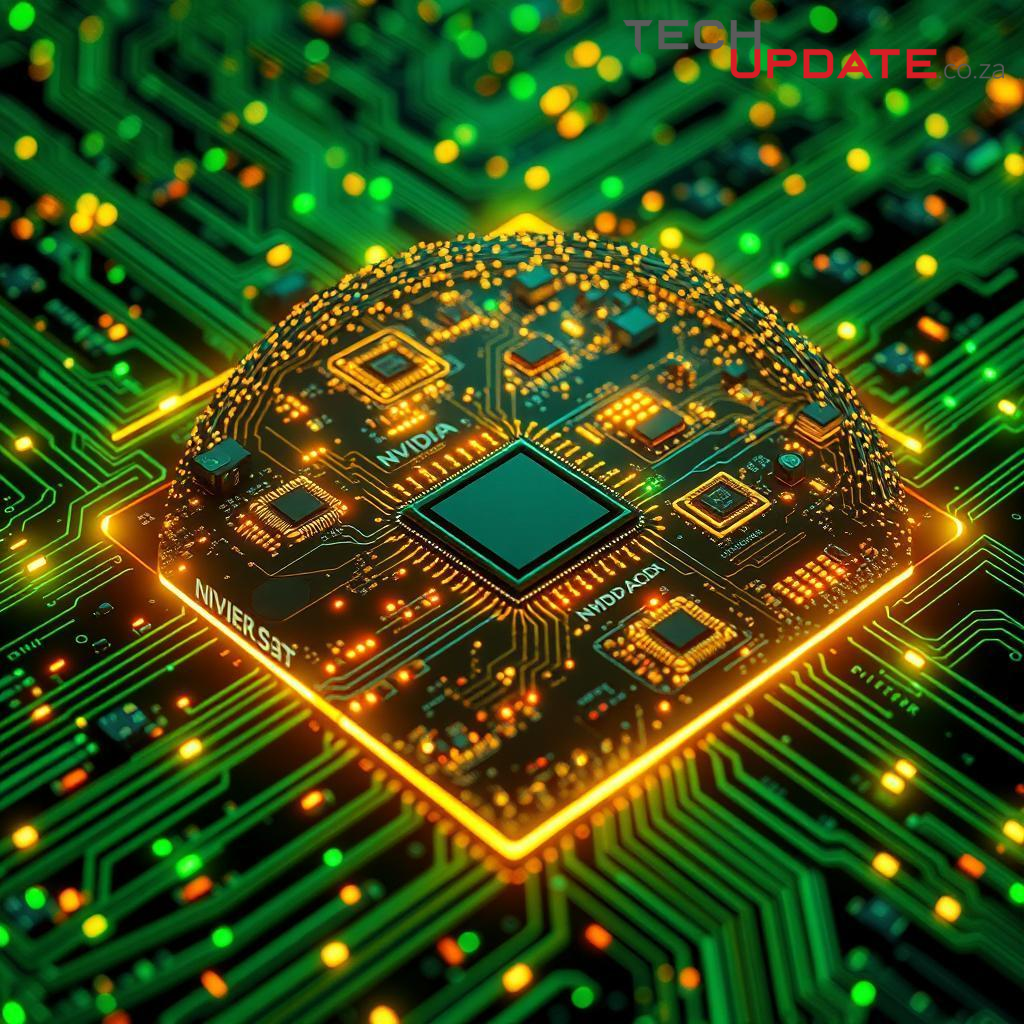
Microsoft's Dual-Pronged Approach to AI Silicon Dominance
In a strategic move underscoring the insatiable demand for artificial intelligence compute, Microsoft CEO Satya Nadella has affirmed the company's continued, substantial investment in AI chips from industry giants Nvidia and AMD, even as the tech behemoth rolls out its own advanced silicon. This dual-pronged approach highlights Microsoft's imperative to scale its AI infrastructure rapidly while simultaneously cultivating proprietary hardware tailored for its vast cloud ecosystem.
The Genesis of Microsoft's Silicon Ambition
Microsoft officially unveiled its custom-designed AI chips – the Maia 100 AI accelerator and the Cobalt 100 CPU – in November 2023. The Maia 100, specifically engineered for cloud AI workloads, is designed to power large language models (LLMs) and generative AI applications within Microsoft Azure data centers. Nadella himself lauded these chips, suggesting that Microsoft's custom silicon not only competes but "leapfrogs" offerings from other cloud providers like Amazon and Google, indicating a significant stride in the competitive cloud infrastructure landscape.
The development of these chips is a testament to Microsoft's long-term vision of optimizing performance and efficiency for its own unique software stack and services. By controlling the silicon layer, Microsoft aims to achieve superior integration, reduce costs, and enhance the capabilities of its AI services, offering a distinct advantage in a market hungry for specialized AI hardware.
Unwavering Demand and Strategic Partnerships
Despite the promise of its in-house innovations, the global surge in AI adoption necessitates an expansive and diverse supply chain. Nadella’s remarks underscore a critical reality: no single chip manufacturer, including Microsoft itself, can meet the burgeoning demand for AI compute on its own. The sheer scale required to support massive AI models and their inference, coupled with the rapid evolution of AI technologies, compels a multi-vendor strategy.
Nvidia, with its dominant Hopper and Blackwell architectures, remains the undisputed leader in AI accelerators, providing critical infrastructure for nearly every major AI player. AMD is also rapidly gaining traction with its Instinct MI300X series, offering a compelling alternative in the high-performance computing space. Microsoft's continued procurement from these firms ensures access to cutting-edge technology and diversification of its supply chain, mitigating risks and accelerating its AI initiatives without being solely reliant on its nascent proprietary chips.
Future Implications and Market Dynamics
Microsoft's strategy signals a mature approach to the AI hardware landscape. It recognizes that while custom silicon offers long-term strategic advantages in cost, performance, and differentiation, the immediate need for vast computational power necessitates leveraging the best available technology from established market leaders. This balancing act ensures Microsoft can maintain its aggressive pace in AI development and deployment within Azure, its Copilot offerings, and other AI-driven products.
This hybrid strategy is likely to become a blueprint for other tech giants. As AI workloads become more diverse and specialized, companies will increasingly develop bespoke hardware for specific tasks, while simultaneously relying on external vendors for general-purpose, high-volume compute. The market for AI chips is expanding at an unprecedented rate, creating ample opportunity for both established players and new entrants, including hyperscalers like Microsoft.
Summary
Microsoft is navigating the intense demands of the AI era with a sophisticated, hybrid chip strategy. While its custom Maia 100 and Cobalt 100 chips represent a significant step towards optimizing its cloud infrastructure and gaining a competitive edge, the company remains committed to substantial purchases from Nvidia and AMD. This ensures a robust, diversified supply chain capable of meeting the enormous and rapidly growing computational requirements for artificial intelligence, cementing Microsoft's position at the forefront of the AI revolution through both innovation and strategic partnership.
Resources
Details
Author
Top articles


 }})
You can now watch HBO Max for $10
Latest articles




You can now watch HBO Max for $10
Microsoft's Dual-Pronged Approach to AI Silicon Dominance
In a strategic move underscoring the insatiable demand for artificial intelligence compute, Microsoft CEO Satya Nadella has affirmed the company's continued, substantial investment in AI chips from industry giants Nvidia and AMD, even as the tech behemoth rolls out its own advanced silicon. This dual-pronged approach highlights Microsoft's imperative to scale its AI infrastructure rapidly while simultaneously cultivating proprietary hardware tailored for its vast cloud ecosystem.
The Genesis of Microsoft's Silicon Ambition
Microsoft officially unveiled its custom-designed AI chips – the Maia 100 AI accelerator and the Cobalt 100 CPU – in November 2023. The Maia 100, specifically engineered for cloud AI workloads, is designed to power large language models (LLMs) and generative AI applications within Microsoft Azure data centers. Nadella himself lauded these chips, suggesting that Microsoft's custom silicon not only competes but "leapfrogs" offerings from other cloud providers like Amazon and Google, indicating a significant stride in the competitive cloud infrastructure landscape.
The development of these chips is a testament to Microsoft's long-term vision of optimizing performance and efficiency for its own unique software stack and services. By controlling the silicon layer, Microsoft aims to achieve superior integration, reduce costs, and enhance the capabilities of its AI services, offering a distinct advantage in a market hungry for specialized AI hardware.
Unwavering Demand and Strategic Partnerships
Despite the promise of its in-house innovations, the global surge in AI adoption necessitates an expansive and diverse supply chain. Nadella’s remarks underscore a critical reality: no single chip manufacturer, including Microsoft itself, can meet the burgeoning demand for AI compute on its own. The sheer scale required to support massive AI models and their inference, coupled with the rapid evolution of AI technologies, compels a multi-vendor strategy.
Nvidia, with its dominant Hopper and Blackwell architectures, remains the undisputed leader in AI accelerators, providing critical infrastructure for nearly every major AI player. AMD is also rapidly gaining traction with its Instinct MI300X series, offering a compelling alternative in the high-performance computing space. Microsoft's continued procurement from these firms ensures access to cutting-edge technology and diversification of its supply chain, mitigating risks and accelerating its AI initiatives without being solely reliant on its nascent proprietary chips.
Future Implications and Market Dynamics
Microsoft's strategy signals a mature approach to the AI hardware landscape. It recognizes that while custom silicon offers long-term strategic advantages in cost, performance, and differentiation, the immediate need for vast computational power necessitates leveraging the best available technology from established market leaders. This balancing act ensures Microsoft can maintain its aggressive pace in AI development and deployment within Azure, its Copilot offerings, and other AI-driven products.
This hybrid strategy is likely to become a blueprint for other tech giants. As AI workloads become more diverse and specialized, companies will increasingly develop bespoke hardware for specific tasks, while simultaneously relying on external vendors for general-purpose, high-volume compute. The market for AI chips is expanding at an unprecedented rate, creating ample opportunity for both established players and new entrants, including hyperscalers like Microsoft.
Summary
Microsoft is navigating the intense demands of the AI era with a sophisticated, hybrid chip strategy. While its custom Maia 100 and Cobalt 100 chips represent a significant step towards optimizing its cloud infrastructure and gaining a competitive edge, the company remains committed to substantial purchases from Nvidia and AMD. This ensures a robust, diversified supply chain capable of meeting the enormous and rapidly growing computational requirements for artificial intelligence, cementing Microsoft's position at the forefront of the AI revolution through both innovation and strategic partnership.
Resources
Top articles
You can now watch HBO Max for $10
Latest articles
You can now watch HBO Max for $10
Similar posts



This is a page that only logged-in people can visit. Don't you feel special? Try clicking on a button below to do some things you can't do when you're logged out.
Example modal
At your leisure, please peruse this excerpt from a whale of a tale.
Chapter 1: Loomings.
Call me Ishmael. Some years ago—never mind how long precisely—having little or no money in my purse, and nothing particular to interest me on shore, I thought I would sail about a little and see the watery part of the world. It is a way I have of driving off the spleen and regulating the circulation. Whenever I find myself growing grim about the mouth; whenever it is a damp, drizzly November in my soul; whenever I find myself involuntarily pausing before coffin warehouses, and bringing up the rear of every funeral I meet; and especially whenever my hypos get such an upper hand of me, that it requires a strong moral principle to prevent me from deliberately stepping into the street, and methodically knocking people's hats off—then, I account it high time to get to sea as soon as I can. This is my substitute for pistol and ball. With a philosophical flourish Cato throws himself upon his sword; I quietly take to the ship. There is nothing surprising in this. If they but knew it, almost all men in their degree, some time or other, cherish very nearly the same feelings towards the ocean with me.
Comment