Google Chat Elevates Design Collaboration with Enhanced Figma Integration: Real-time Previews, Comment Management, and Smart Notifications
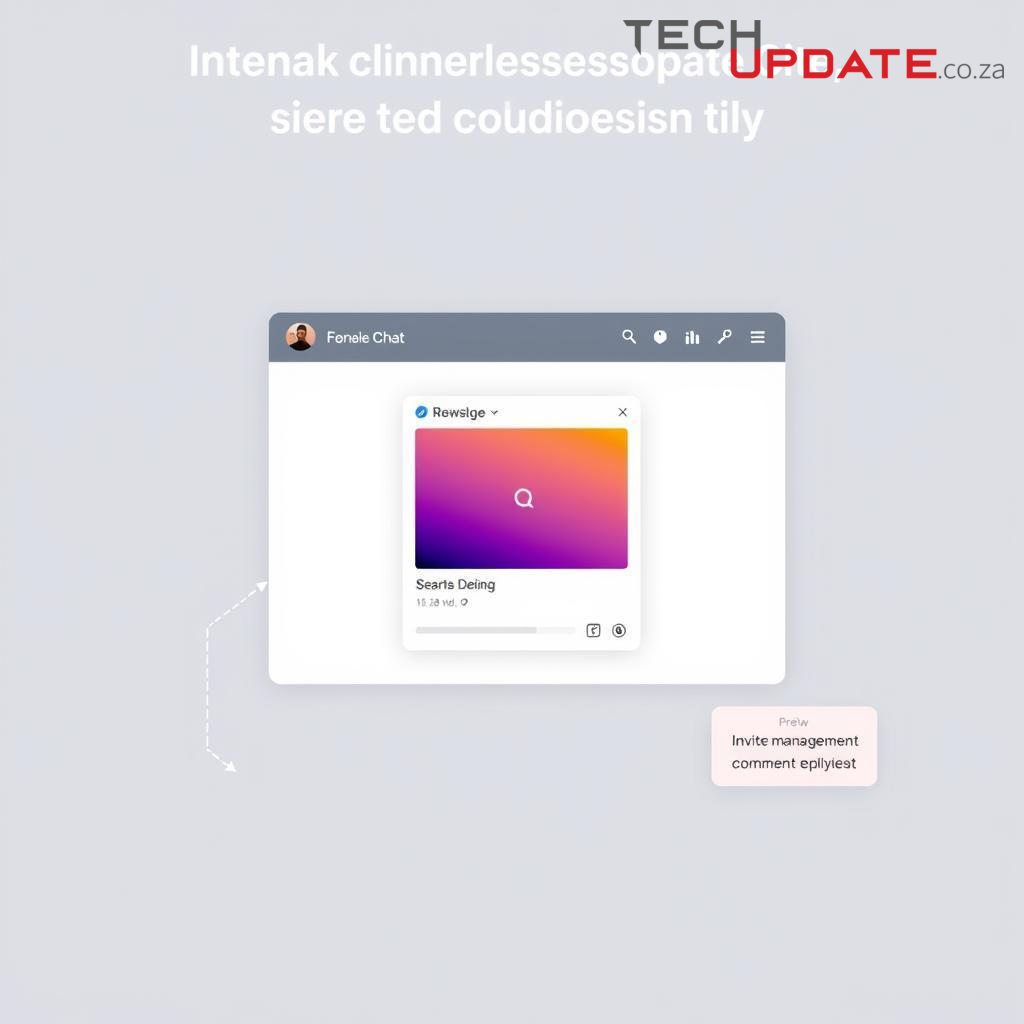
In a significant enhancement to its collaborative suite, Google Chat has rolled out a deeper integration with Figma, promising to transform how design and development teams interact and streamline their workflows. This update empowers Google Workspace users with the Figma add-on to engage with design projects more directly within their communication platform, minimizing context switching and accelerating project cycles.
A New Paradigm for Design Workflow
The core of this integration lies in its ability to bring critical design interactions directly into Google Chat. Users can now preview Figma files without needing to navigate away from their conversations, offering immediate visual context during discussions. This capability is crucial for quick feedback loops and ensures that all team members are referencing the latest design iterations.
Beyond passive viewing, the integration facilitates active participation. Team members can directly respond to comments left on Figma files from within the Chat interface. This eliminates the need to jump between applications to address feedback, fostering a more fluid and continuous conversation around design elements. Furthermore, the ability to manage file access requests and send invitations directly through Chat streamlines administrative tasks, ensuring that all relevant stakeholders have timely access to necessary design assets.
The Power of Proactive Notifications
Perhaps one of the most impactful features for Google Workspace users equipped with the Figma add-on is the introduction of automatic notifications. These intelligent alerts inform users directly in Chat about critical updates, such as new comments on a design, requests for file access, or significant changes to a project. This proactive notification system ensures that team members are always abreast of relevant activity, allowing for rapid responses and preventing communication bottlenecks that can often plague complex design projects.
This centralized notification hub reduces the cognitive load on designers and project managers, who previously had to monitor multiple platforms for updates. By channeling these alerts into a familiar communication stream, Google Chat is positioning itself as an indispensable nexus for design-centric collaboration.
Enhancing Cross-Functional Synergy
The strategic intertwining of Google Chat and Figma underscores a broader trend towards creating more interconnected digital workspaces. For cross-functional teams comprising designers, developers, product managers, and marketing specialists, this integration means a more unified environment for ideation, feedback, and execution. The ability to discuss, review, and act on design changes within a single platform fosters greater transparency and alignment across different departments, ultimately leading to more cohesive product development.
This move by Google not only enhances the utility of Google Chat but also solidifies Google Workspace's position as a robust platform for enterprise collaboration, particularly for organizations heavily reliant on creative and design-driven processes.
Summary
The latest Google Chat and Figma integration significantly elevates collaborative design workflows. By enabling in-chat file previews, comment replies, and streamlined invitation management, coupled with crucial automatic notifications for Workspace users, Google Chat transforms into a central hub for design-related communication. This enhancement promises to boost team productivity, reduce context switching, and foster more efficient cross-functional synergy in design and development projects.
Resources
Details
Author
Top articles




 }})
You can now watch HBO Max for $10
Latest articles




You can now watch HBO Max for $10
In a significant enhancement to its collaborative suite, Google Chat has rolled out a deeper integration with Figma, promising to transform how design and development teams interact and streamline their workflows. This update empowers Google Workspace users with the Figma add-on to engage with design projects more directly within their communication platform, minimizing context switching and accelerating project cycles.
A New Paradigm for Design Workflow
The core of this integration lies in its ability to bring critical design interactions directly into Google Chat. Users can now preview Figma files without needing to navigate away from their conversations, offering immediate visual context during discussions. This capability is crucial for quick feedback loops and ensures that all team members are referencing the latest design iterations.
Beyond passive viewing, the integration facilitates active participation. Team members can directly respond to comments left on Figma files from within the Chat interface. This eliminates the need to jump between applications to address feedback, fostering a more fluid and continuous conversation around design elements. Furthermore, the ability to manage file access requests and send invitations directly through Chat streamlines administrative tasks, ensuring that all relevant stakeholders have timely access to necessary design assets.
The Power of Proactive Notifications
Perhaps one of the most impactful features for Google Workspace users equipped with the Figma add-on is the introduction of automatic notifications. These intelligent alerts inform users directly in Chat about critical updates, such as new comments on a design, requests for file access, or significant changes to a project. This proactive notification system ensures that team members are always abreast of relevant activity, allowing for rapid responses and preventing communication bottlenecks that can often plague complex design projects.
This centralized notification hub reduces the cognitive load on designers and project managers, who previously had to monitor multiple platforms for updates. By channeling these alerts into a familiar communication stream, Google Chat is positioning itself as an indispensable nexus for design-centric collaboration.
Enhancing Cross-Functional Synergy
The strategic intertwining of Google Chat and Figma underscores a broader trend towards creating more interconnected digital workspaces. For cross-functional teams comprising designers, developers, product managers, and marketing specialists, this integration means a more unified environment for ideation, feedback, and execution. The ability to discuss, review, and act on design changes within a single platform fosters greater transparency and alignment across different departments, ultimately leading to more cohesive product development.
This move by Google not only enhances the utility of Google Chat but also solidifies Google Workspace's position as a robust platform for enterprise collaboration, particularly for organizations heavily reliant on creative and design-driven processes.
Summary
The latest Google Chat and Figma integration significantly elevates collaborative design workflows. By enabling in-chat file previews, comment replies, and streamlined invitation management, coupled with crucial automatic notifications for Workspace users, Google Chat transforms into a central hub for design-related communication. This enhancement promises to boost team productivity, reduce context switching, and foster more efficient cross-functional synergy in design and development projects.
Resources
Top articles
You can now watch HBO Max for $10
Latest articles
You can now watch HBO Max for $10
Similar posts




This is a page that only logged-in people can visit. Don't you feel special? Try clicking on a button below to do some things you can't do when you're logged out.
Example modal
At your leisure, please peruse this excerpt from a whale of a tale.
Chapter 1: Loomings.
Call me Ishmael. Some years ago—never mind how long precisely—having little or no money in my purse, and nothing particular to interest me on shore, I thought I would sail about a little and see the watery part of the world. It is a way I have of driving off the spleen and regulating the circulation. Whenever I find myself growing grim about the mouth; whenever it is a damp, drizzly November in my soul; whenever I find myself involuntarily pausing before coffin warehouses, and bringing up the rear of every funeral I meet; and especially whenever my hypos get such an upper hand of me, that it requires a strong moral principle to prevent me from deliberately stepping into the street, and methodically knocking people's hats off—then, I account it high time to get to sea as soon as I can. This is my substitute for pistol and ball. With a philosophical flourish Cato throws himself upon his sword; I quietly take to the ship. There is nothing surprising in this. If they but knew it, almost all men in their degree, some time or other, cherish very nearly the same feelings towards the ocean with me.
Comment