Morning Minute: Google Clears Major Quantum Hurdle, Bitcoin Safe; Crypto Majors Rebound Despite Hot PPI as Saylor’s Strategy Faces Index Scrutiny
In a significant development for the future of computing, Google has reportedly made substantial strides in overcoming a critical quantum hurdle, signaling a faster trajectory toward fault-tolerant quantum systems. This breakthrough, while technical in nature, carries profound implications for various sectors, including the perceived long-term security of cryptographic systems like those underpinning Bitcoin.
Google's Quantum Leap Forward
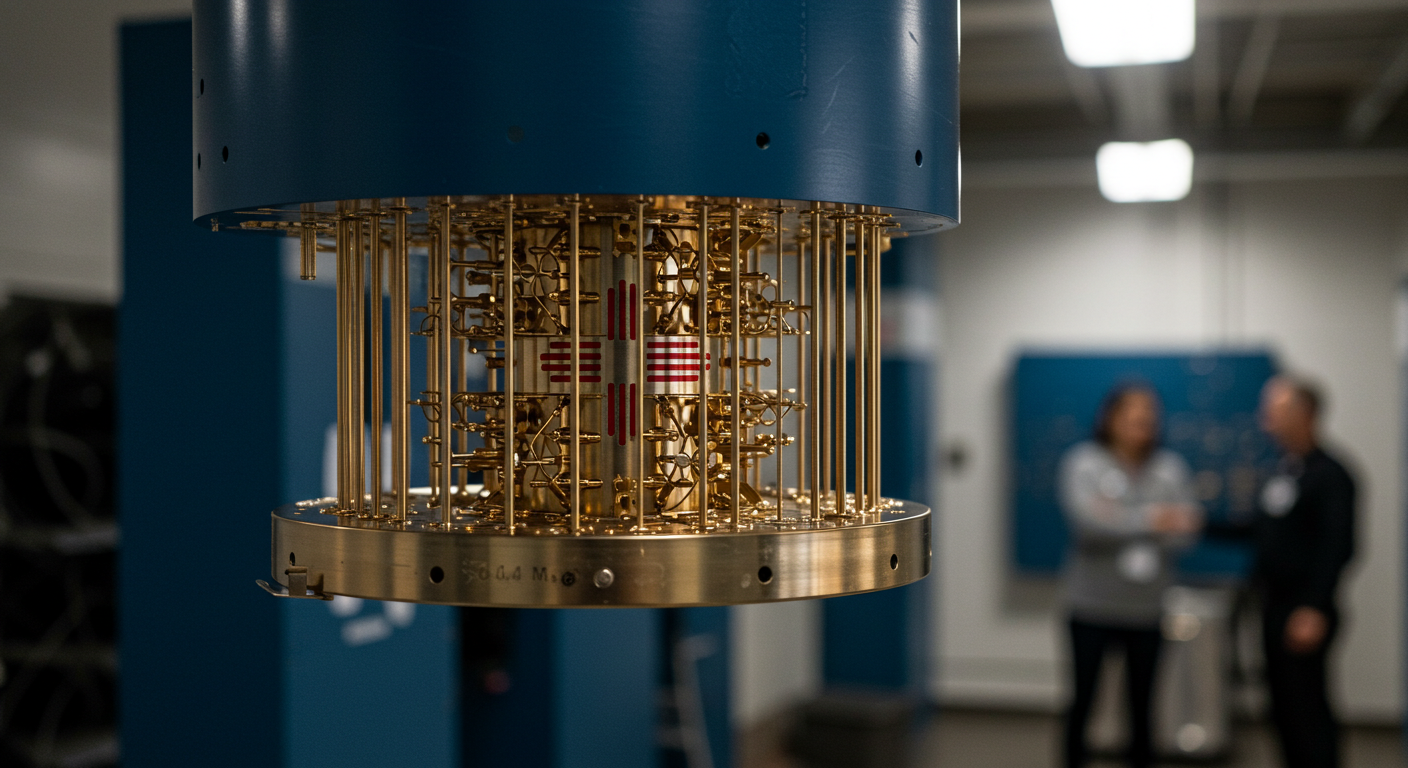
Recent advancements from Google's quantum computing division point towards improved error correction mechanisms, a monumental challenge in the quest to build stable and scalable quantum computers. By enhancing the fidelity and coherence of qubits and demonstrating more robust error mitigation techniques, researchers are inching closer to practical quantum systems capable of tackling problems currently intractable for even the most powerful supercomputers. This progress accelerates the timeline for quantum advantage across diverse applications, from drug discovery to materials science.
Implications for Cryptography and Bitcoin
The specter of quantum computers capable of breaking current cryptographic standards has long been a topic of discussion within the cybersecurity and blockchain communities. Specifically, concerns have been raised about the potential vulnerability of Bitcoin's underlying Elliptic Curve Digital Signature Algorithm (ECDSA) and SHA-256 hashing functions. However, despite Google's impressive progress, the immediate security of Bitcoin remains robust. Experts widely agree that current quantum computers lack the scale and stability required to pose an existential threat to Bitcoin's cryptographic foundations. The transition to post-quantum cryptography is a long-term roadmap that the industry is aware of and preparing for, ensuring Bitcoin's safety for the foreseeable future.
Crypto Majors Defy Economic Headwinds
In a surprising display of resilience, major cryptocurrencies, including Bitcoin and Ethereum, have staged a notable rebound, shrugging off recent macroeconomic pressures. This resurgence comes despite a hotter-than-expected Producer Price Index (PPI) report, which typically signals persistent inflationary pressures and could prompt central banks to maintain a hawkish monetary stance. The crypto market's ability to decouple, at least temporarily, from traditional economic indicators suggests a maturing asset class driven by factors beyond conventional market sentiment, such as increasing institutional adoption and a growing belief in its long-term value proposition.
MicroStrategy's Index Standing Under Scrutiny
Meanwhile, Michael Saylor's MicroStrategy (MSTR), a prominent corporate holder of Bitcoin, faces potential changes to its standing within major equity indices. Discussions among index providers and analysts are scrutinizing MicroStrategy's classification, given its substantial transformation into what is effectively a Bitcoin holding company rather than a pure software enterprise. A re-evaluation of its sector classification could lead to its removal from certain technology-focused indices. Such a move would primarily affect passively managed funds benchmarked against those indices, potentially triggering selling pressure on MSTR shares, though its direct impact on Bitcoin's price is expected to be minimal.
Summary
Google's latest quantum computing advancements mark a pivotal moment in technology, pushing the boundaries of what's possible while paradoxically reinforcing the current security of robust cryptographic systems like Bitcoin. The cryptocurrency market continues to demonstrate its unique dynamics, with major assets rebounding despite inflationary pressures. Concurrently, MicroStrategy's strategic pivot towards Bitcoin accumulation has put its index eligibility under review, highlighting the evolving landscape where traditional finance intersects with digital assets.
Resources
Details
Author
Top articles




 }})
You can now watch HBO Max for $10
Latest articles




You can now watch HBO Max for $10
In a significant development for the future of computing, Google has reportedly made substantial strides in overcoming a critical quantum hurdle, signaling a faster trajectory toward fault-tolerant quantum systems. This breakthrough, while technical in nature, carries profound implications for various sectors, including the perceived long-term security of cryptographic systems like those underpinning Bitcoin.
Google's Quantum Leap Forward
Recent advancements from Google's quantum computing division point towards improved error correction mechanisms, a monumental challenge in the quest to build stable and scalable quantum computers. By enhancing the fidelity and coherence of qubits and demonstrating more robust error mitigation techniques, researchers are inching closer to practical quantum systems capable of tackling problems currently intractable for even the most powerful supercomputers. This progress accelerates the timeline for quantum advantage across diverse applications, from drug discovery to materials science.
Implications for Cryptography and Bitcoin
The specter of quantum computers capable of breaking current cryptographic standards has long been a topic of discussion within the cybersecurity and blockchain communities. Specifically, concerns have been raised about the potential vulnerability of Bitcoin's underlying Elliptic Curve Digital Signature Algorithm (ECDSA) and SHA-256 hashing functions. However, despite Google's impressive progress, the immediate security of Bitcoin remains robust. Experts widely agree that current quantum computers lack the scale and stability required to pose an existential threat to Bitcoin's cryptographic foundations. The transition to post-quantum cryptography is a long-term roadmap that the industry is aware of and preparing for, ensuring Bitcoin's safety for the foreseeable future.
Crypto Majors Defy Economic Headwinds
In a surprising display of resilience, major cryptocurrencies, including Bitcoin and Ethereum, have staged a notable rebound, shrugging off recent macroeconomic pressures. This resurgence comes despite a hotter-than-expected Producer Price Index (PPI) report, which typically signals persistent inflationary pressures and could prompt central banks to maintain a hawkish monetary stance. The crypto market's ability to decouple, at least temporarily, from traditional economic indicators suggests a maturing asset class driven by factors beyond conventional market sentiment, such as increasing institutional adoption and a growing belief in its long-term value proposition.
MicroStrategy's Index Standing Under Scrutiny
Meanwhile, Michael Saylor's MicroStrategy (MSTR), a prominent corporate holder of Bitcoin, faces potential changes to its standing within major equity indices. Discussions among index providers and analysts are scrutinizing MicroStrategy's classification, given its substantial transformation into what is effectively a Bitcoin holding company rather than a pure software enterprise. A re-evaluation of its sector classification could lead to its removal from certain technology-focused indices. Such a move would primarily affect passively managed funds benchmarked against those indices, potentially triggering selling pressure on MSTR shares, though its direct impact on Bitcoin's price is expected to be minimal.
Summary
Google's latest quantum computing advancements mark a pivotal moment in technology, pushing the boundaries of what's possible while paradoxically reinforcing the current security of robust cryptographic systems like Bitcoin. The cryptocurrency market continues to demonstrate its unique dynamics, with major assets rebounding despite inflationary pressures. Concurrently, MicroStrategy's strategic pivot towards Bitcoin accumulation has put its index eligibility under review, highlighting the evolving landscape where traditional finance intersects with digital assets.
Resources
Top articles
You can now watch HBO Max for $10
Latest articles
You can now watch HBO Max for $10
Similar posts


This is a page that only logged-in people can visit. Don't you feel special? Try clicking on a button below to do some things you can't do when you're logged out.
Example modal
At your leisure, please peruse this excerpt from a whale of a tale.
Chapter 1: Loomings.
Call me Ishmael. Some years ago—never mind how long precisely—having little or no money in my purse, and nothing particular to interest me on shore, I thought I would sail about a little and see the watery part of the world. It is a way I have of driving off the spleen and regulating the circulation. Whenever I find myself growing grim about the mouth; whenever it is a damp, drizzly November in my soul; whenever I find myself involuntarily pausing before coffin warehouses, and bringing up the rear of every funeral I meet; and especially whenever my hypos get such an upper hand of me, that it requires a strong moral principle to prevent me from deliberately stepping into the street, and methodically knocking people's hats off—then, I account it high time to get to sea as soon as I can. This is my substitute for pistol and ball. With a philosophical flourish Cato throws himself upon his sword; I quietly take to the ship. There is nothing surprising in this. If they but knew it, almost all men in their degree, some time or other, cherish very nearly the same feelings towards the ocean with me.
Comment