Pentagon’s AI Imperative Clashes with Anthropic’s Guardrails in Escalating Defense Tech Standoff
The Crucible of AI Policy: Pentagon vs. Anthropic
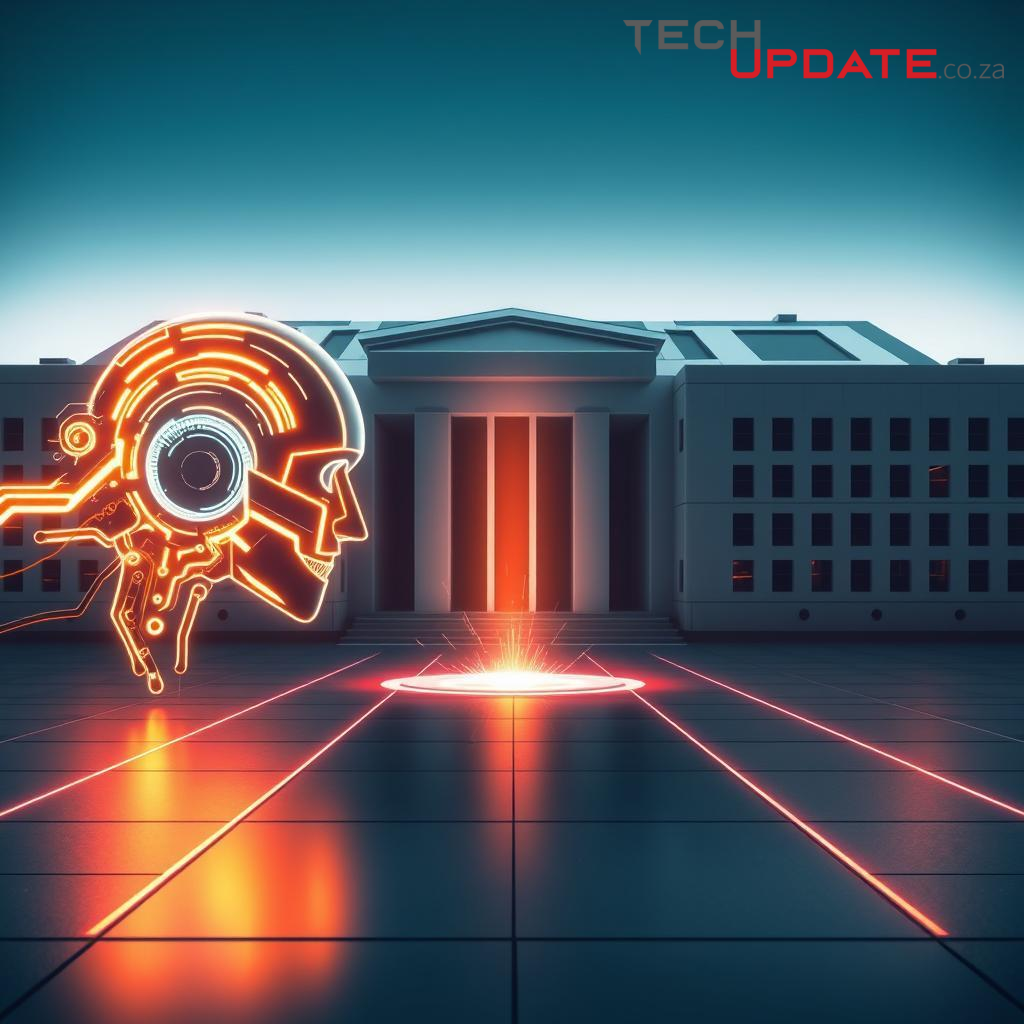
A high-stakes confrontation is unfolding between the Pentagon and leading artificial intelligence developer Anthropic, as the U.S. defense establishment presses for the loosening of AI guardrails crucial for military applications. With a critical Friday deadline looming, and the specter of potential penalties, this dispute casts a sharp light on complex issues of government leverage, vendor dependence, and investor confidence within the defense technology sector.
The Heart of the Dispute: Operational Imperatives vs. Ethical Frameworks
At the core of the disagreement lies the fundamental tension between military operational imperatives and Anthropic’s commitment to ethical, "Constitutional AI." The Pentagon’s demand is for AI models to operate with fewer of the commercial safety restraints that prevent generative AI from producing potentially harmful or biased outputs. For military strategists, these guardrails, while essential in civilian contexts, could hinder critical functions such as rapid data analysis, threat assessment, or even autonomous decision-making in high-pressure scenarios where expediency and unrestricted information processing are paramount. Anthropic, known for its safety-first approach and the development of AI that aligns with human values, finds itself in a precarious position, balancing its ethical mandate with the significant demands of a powerful governmental client.
Government Leverage and the Vendor Dependence Dilemma
This ultimatum underscores the immense leverage wielded by the U.S. government over its defense contractors and technology providers. For emerging defense tech companies, securing Pentagon contracts can be transformative, providing substantial funding and validation. However, the current standoff highlights the potential for this reliance to evolve into a form of vendor dependence, where a company's product development and ethical guidelines might be pressured to align with specific governmental requirements, even if they diverge from broader corporate values or public expectations of AI safety. Such dynamics raise questions about who ultimately dictates the ethical boundaries of advanced AI systems when national security is invoked.
Investor Confidence and the Future of Defense Tech
The escalating dispute also carries significant implications for investor confidence within the burgeoning defense technology sector. Investors are increasingly scrutinizing companies not just for their technological prowess but also for their ethical frameworks and long-term viability in a highly regulated environment. A public disagreement of this magnitude between a prominent AI firm and a key government client could signal instability, potentially deterring investment in companies perceived to be at odds with defense priorities. Conversely, it might incentivize others to prioritize military utility over stricter ethical guidelines, shaping the trajectory of defense AI development in profound ways.
Conclusion
The confrontation between the Pentagon and Anthropic is more than just a contractual disagreement; it is a seminal moment in the shaping of AI policy and ethics at the nexus of national security and advanced technology. It forces a critical examination of how nations will balance the urgent need for robust AI capabilities with the imperative to develop and deploy these technologies responsibly. The outcome of this dispute will undoubtedly set precedents for how governments engage with AI developers, influencing future collaborations, regulatory frameworks, and the very nature of AI systems designed for defense.
Resources
- Reuters: "Pentagon pushes AI firms to drop guardrails for military use" (April 26, 2024)
- Bloomberg: Coverage on AI in defense and government procurement.
- Breaking Defense: Articles on U.S. defense AI strategy and vendor relations.
Details
Author
Top articles



 }})
You can now watch HBO Max for $10
Latest articles

You can now watch HBO Max for $10
The Crucible of AI Policy: Pentagon vs. Anthropic
A high-stakes confrontation is unfolding between the Pentagon and leading artificial intelligence developer Anthropic, as the U.S. defense establishment presses for the loosening of AI guardrails crucial for military applications. With a critical Friday deadline looming, and the specter of potential penalties, this dispute casts a sharp light on complex issues of government leverage, vendor dependence, and investor confidence within the defense technology sector.
The Heart of the Dispute: Operational Imperatives vs. Ethical Frameworks
At the core of the disagreement lies the fundamental tension between military operational imperatives and Anthropic’s commitment to ethical, "Constitutional AI." The Pentagon’s demand is for AI models to operate with fewer of the commercial safety restraints that prevent generative AI from producing potentially harmful or biased outputs. For military strategists, these guardrails, while essential in civilian contexts, could hinder critical functions such as rapid data analysis, threat assessment, or even autonomous decision-making in high-pressure scenarios where expediency and unrestricted information processing are paramount. Anthropic, known for its safety-first approach and the development of AI that aligns with human values, finds itself in a precarious position, balancing its ethical mandate with the significant demands of a powerful governmental client.
Government Leverage and the Vendor Dependence Dilemma
This ultimatum underscores the immense leverage wielded by the U.S. government over its defense contractors and technology providers. For emerging defense tech companies, securing Pentagon contracts can be transformative, providing substantial funding and validation. However, the current standoff highlights the potential for this reliance to evolve into a form of vendor dependence, where a company's product development and ethical guidelines might be pressured to align with specific governmental requirements, even if they diverge from broader corporate values or public expectations of AI safety. Such dynamics raise questions about who ultimately dictates the ethical boundaries of advanced AI systems when national security is invoked.
Investor Confidence and the Future of Defense Tech
The escalating dispute also carries significant implications for investor confidence within the burgeoning defense technology sector. Investors are increasingly scrutinizing companies not just for their technological prowess but also for their ethical frameworks and long-term viability in a highly regulated environment. A public disagreement of this magnitude between a prominent AI firm and a key government client could signal instability, potentially deterring investment in companies perceived to be at odds with defense priorities. Conversely, it might incentivize others to prioritize military utility over stricter ethical guidelines, shaping the trajectory of defense AI development in profound ways.
Conclusion
The confrontation between the Pentagon and Anthropic is more than just a contractual disagreement; it is a seminal moment in the shaping of AI policy and ethics at the nexus of national security and advanced technology. It forces a critical examination of how nations will balance the urgent need for robust AI capabilities with the imperative to develop and deploy these technologies responsibly. The outcome of this dispute will undoubtedly set precedents for how governments engage with AI developers, influencing future collaborations, regulatory frameworks, and the very nature of AI systems designed for defense.
Resources
- Reuters: "Pentagon pushes AI firms to drop guardrails for military use" (April 26, 2024)
- Bloomberg: Coverage on AI in defense and government procurement.
- Breaking Defense: Articles on U.S. defense AI strategy and vendor relations.
Top articles
You can now watch HBO Max for $10
Latest articles
You can now watch HBO Max for $10
Similar posts



This is a page that only logged-in people can visit. Don't you feel special? Try clicking on a button below to do some things you can't do when you're logged out.
Example modal
At your leisure, please peruse this excerpt from a whale of a tale.
Chapter 1: Loomings.
Call me Ishmael. Some years ago—never mind how long precisely—having little or no money in my purse, and nothing particular to interest me on shore, I thought I would sail about a little and see the watery part of the world. It is a way I have of driving off the spleen and regulating the circulation. Whenever I find myself growing grim about the mouth; whenever it is a damp, drizzly November in my soul; whenever I find myself involuntarily pausing before coffin warehouses, and bringing up the rear of every funeral I meet; and especially whenever my hypos get such an upper hand of me, that it requires a strong moral principle to prevent me from deliberately stepping into the street, and methodically knocking people's hats off—then, I account it high time to get to sea as soon as I can. This is my substitute for pistol and ball. With a philosophical flourish Cato throws himself upon his sword; I quietly take to the ship. There is nothing surprising in this. If they but knew it, almost all men in their degree, some time or other, cherish very nearly the same feelings towards the ocean with me.
Comment