Prospective Showdown: Anticipating the Pixel 11 Pro vs. iPhone 17 Pro Camera Battle Across Delhi
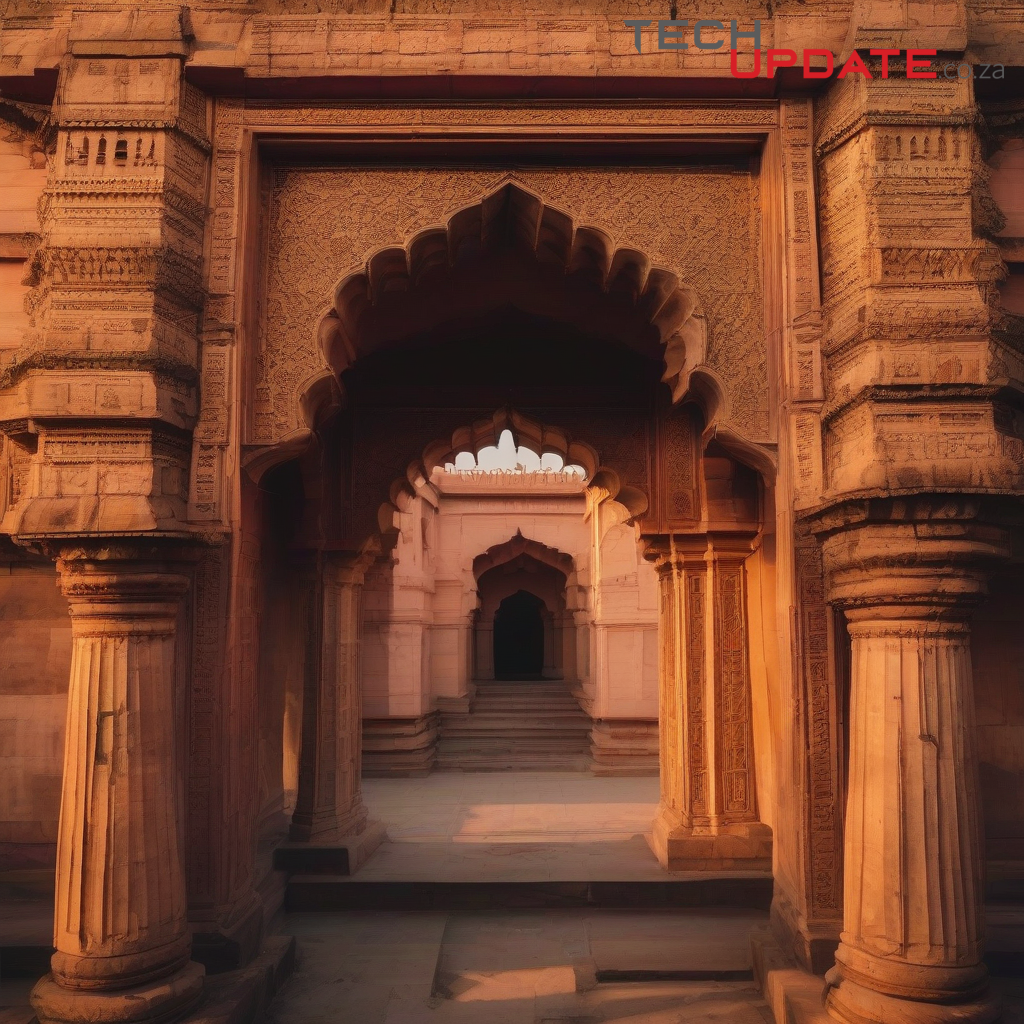
The Future Lens: Navigating Delhi with Hypothetical Flagships
As a senior investigative journalist with a keen eye on technological advancements, the prospect of taking unreleased devices like the Pixel 11 Pro and iPhone 17 Pro to the vibrant, chaotic, and utterly photogenic streets of Delhi presents a fascinating thought experiment. While these models reside in the future, we can extrapolate their potential performance based on the distinct photographic philosophies of Google and Apple, and how those would translate to real-world shooting conditions in India's capital.
Methodology: Projecting Performance in Delhi's Diverse Scenarios
My hypothetical journey through Delhi would encompass a range of photographic challenges designed to push the boundaries of any smartphone camera. From the intricate details of Old Delhi's markets and the grandeur of historical monuments like Humayun's Tomb and India Gate, to the bustling street life and the serene moments captured along the Yamuna river at dawn or dusk, each scenario demands specific camera strengths.
The "test" would assess:
- Dynamic Range: Crucial for capturing Delhi's extreme contrasts, from sun-drenched facades to shadowed alleyways.
- Color Accuracy and White Balance: Essential for rendering the authentic hues of Indian spices, textiles, and diverse skin tones.
- Low-Light Performance: Navigating dimly lit bazaars, nighttime street food stalls, and monument exteriors after sunset.
- Portraiture: Isolating subjects amidst crowded scenes while maintaining natural bokeh and skin tones.
- Video Capabilities: Recording the dynamic movement and sounds of Delhi, demanding superior stabilization, audio capture, and resolution.
- Zoom and Versatility: Capturing distant architectural details or wide-angle streetscapes.
Pixel 11 Pro: The Computational Photography Powerhouse
Drawing from Google's established trajectory, the Pixel 11 Pro is anticipated to double down on its computational photography prowess. Its strength would likely lie in intelligent scene recognition, advanced HDR processing, and unparalleled low-light photography facilitated by refined Night Sight algorithms. In Delhi, this would manifest as:
- Exceptional Detail in Challenging Light: Images from chaotic markets like Chandni Chowk, even under varied and harsh lighting, would likely exhibit remarkable clarity and balanced exposure, pulling details from both highlights and shadows with minimal noise.
- Vibrant Yet Natural Colors: Google's processing tends towards a slightly punchier, yet often true-to-life, color rendition, which would enhance the visual spectacle of Delhi's street art and vibrant clothing without appearing oversaturated.
- AI-Driven Portraiture: The Pixel's ability to segment subjects from backgrounds using software would likely be further refined, offering clean edges and natural-looking depth of field even in complex, busy environments, a boon for capturing candid moments.
iPhone 17 Pro: The Epitome of Cinematic Consistency
Apple's iPhone line has consistently prioritized user experience, video performance, and a balanced photographic output. The iPhone 17 Pro would undoubtedly build upon this foundation, offering a seamless shooting experience and robust video capabilities. Its advantages in Delhi would likely include:
- Industry-Leading Video: For documenting the ceaseless energy of Delhi, the iPhone 17 Pro would probably excel. Superior video stabilization, improved dynamic range in motion, and advanced cinematic modes would capture the city's narrative with unmatched fluidity and audio fidelity.
- Consistent Image Quality Across Lenses: Apple typically ensures a harmonious color science and exposure across its multiple lenses. This consistency would be invaluable when switching rapidly between ultra-wide shots of grand boulevards and telephoto captures of distant fortresses.
- Reliable & Intuitive User Interface: The iPhone's camera app is renowned for its simplicity and speed, allowing photographers to react instantly to fleeting moments, crucial in a fast-paced city like Delhi.
The Verdict: A Matter of Photographic Priorities
After this hypothetical photographic expedition through Delhi, my personal preference leans towards the Pixel 11 Pro for still photography, and the iPhone 17 Pro for video-centric storytelling. However, if forced to choose one, and considering my primary focus as an investigative journalist often relying on decisive stills to convey information and atmosphere, the Pixel 11 Pro, with its anticipated computational prowess, would likely edge out its competitor for its ability to extract stunning detail and accurate exposure from the most challenging, nuanced photographic scenarios Delhi presents.
The Pixel's aggressive approach to image processing often yields results that defy the limitations of its physical sensor, an advantage in high-contrast or low-light situations that are ubiquitous in a city like Delhi. For raw, unadulterated visual documentation in stills, its analytical strength would likely be unmatched.
Resources
- DXOMARK - Google Pixel 8 Pro Camera Test: Provides an in-depth analysis of Google's current flagship camera capabilities, informing projections for the Pixel 11 Pro.
- GSMArena - Apple iPhone 15 Pro Max Review: Offers a comprehensive review of the latest iPhone Pro Max, crucial for understanding Apple's current photographic and videographic strengths and anticipating future iterations.
- The Verge - The best camera phones you can buy: A general comparison of leading smartphone cameras, helping to contextualize the prevailing trends and competitive landscape that would influence future models.
Details
Author
Top articles




 }})
You can now watch HBO Max for $10
Latest articles





You can now watch HBO Max for $10
The Future Lens: Navigating Delhi with Hypothetical Flagships
As a senior investigative journalist with a keen eye on technological advancements, the prospect of taking unreleased devices like the Pixel 11 Pro and iPhone 17 Pro to the vibrant, chaotic, and utterly photogenic streets of Delhi presents a fascinating thought experiment. While these models reside in the future, we can extrapolate their potential performance based on the distinct photographic philosophies of Google and Apple, and how those would translate to real-world shooting conditions in India's capital.
Methodology: Projecting Performance in Delhi's Diverse Scenarios
My hypothetical journey through Delhi would encompass a range of photographic challenges designed to push the boundaries of any smartphone camera. From the intricate details of Old Delhi's markets and the grandeur of historical monuments like Humayun's Tomb and India Gate, to the bustling street life and the serene moments captured along the Yamuna river at dawn or dusk, each scenario demands specific camera strengths.
The "test" would assess:
- Dynamic Range: Crucial for capturing Delhi's extreme contrasts, from sun-drenched facades to shadowed alleyways.
- Color Accuracy and White Balance: Essential for rendering the authentic hues of Indian spices, textiles, and diverse skin tones.
- Low-Light Performance: Navigating dimly lit bazaars, nighttime street food stalls, and monument exteriors after sunset.
- Portraiture: Isolating subjects amidst crowded scenes while maintaining natural bokeh and skin tones.
- Video Capabilities: Recording the dynamic movement and sounds of Delhi, demanding superior stabilization, audio capture, and resolution.
- Zoom and Versatility: Capturing distant architectural details or wide-angle streetscapes.
Pixel 11 Pro: The Computational Photography Powerhouse
Drawing from Google's established trajectory, the Pixel 11 Pro is anticipated to double down on its computational photography prowess. Its strength would likely lie in intelligent scene recognition, advanced HDR processing, and unparalleled low-light photography facilitated by refined Night Sight algorithms. In Delhi, this would manifest as:
- Exceptional Detail in Challenging Light: Images from chaotic markets like Chandni Chowk, even under varied and harsh lighting, would likely exhibit remarkable clarity and balanced exposure, pulling details from both highlights and shadows with minimal noise.
- Vibrant Yet Natural Colors: Google's processing tends towards a slightly punchier, yet often true-to-life, color rendition, which would enhance the visual spectacle of Delhi's street art and vibrant clothing without appearing oversaturated.
- AI-Driven Portraiture: The Pixel's ability to segment subjects from backgrounds using software would likely be further refined, offering clean edges and natural-looking depth of field even in complex, busy environments, a boon for capturing candid moments.
iPhone 17 Pro: The Epitome of Cinematic Consistency
Apple's iPhone line has consistently prioritized user experience, video performance, and a balanced photographic output. The iPhone 17 Pro would undoubtedly build upon this foundation, offering a seamless shooting experience and robust video capabilities. Its advantages in Delhi would likely include:
- Industry-Leading Video: For documenting the ceaseless energy of Delhi, the iPhone 17 Pro would probably excel. Superior video stabilization, improved dynamic range in motion, and advanced cinematic modes would capture the city's narrative with unmatched fluidity and audio fidelity.
- Consistent Image Quality Across Lenses: Apple typically ensures a harmonious color science and exposure across its multiple lenses. This consistency would be invaluable when switching rapidly between ultra-wide shots of grand boulevards and telephoto captures of distant fortresses.
- Reliable & Intuitive User Interface: The iPhone's camera app is renowned for its simplicity and speed, allowing photographers to react instantly to fleeting moments, crucial in a fast-paced city like Delhi.
The Verdict: A Matter of Photographic Priorities
After this hypothetical photographic expedition through Delhi, my personal preference leans towards the Pixel 11 Pro for still photography, and the iPhone 17 Pro for video-centric storytelling. However, if forced to choose one, and considering my primary focus as an investigative journalist often relying on decisive stills to convey information and atmosphere, the Pixel 11 Pro, with its anticipated computational prowess, would likely edge out its competitor for its ability to extract stunning detail and accurate exposure from the most challenging, nuanced photographic scenarios Delhi presents.
The Pixel's aggressive approach to image processing often yields results that defy the limitations of its physical sensor, an advantage in high-contrast or low-light situations that are ubiquitous in a city like Delhi. For raw, unadulterated visual documentation in stills, its analytical strength would likely be unmatched.
Resources
- DXOMARK - Google Pixel 8 Pro Camera Test: Provides an in-depth analysis of Google's current flagship camera capabilities, informing projections for the Pixel 11 Pro.
- GSMArena - Apple iPhone 15 Pro Max Review: Offers a comprehensive review of the latest iPhone Pro Max, crucial for understanding Apple's current photographic and videographic strengths and anticipating future iterations.
- The Verge - The best camera phones you can buy: A general comparison of leading smartphone cameras, helping to contextualize the prevailing trends and competitive landscape that would influence future models.
Top articles
You can now watch HBO Max for $10
Latest articles
You can now watch HBO Max for $10
Similar posts




This is a page that only logged-in people can visit. Don't you feel special? Try clicking on a button below to do some things you can't do when you're logged out.
Example modal
At your leisure, please peruse this excerpt from a whale of a tale.
Chapter 1: Loomings.
Call me Ishmael. Some years ago—never mind how long precisely—having little or no money in my purse, and nothing particular to interest me on shore, I thought I would sail about a little and see the watery part of the world. It is a way I have of driving off the spleen and regulating the circulation. Whenever I find myself growing grim about the mouth; whenever it is a damp, drizzly November in my soul; whenever I find myself involuntarily pausing before coffin warehouses, and bringing up the rear of every funeral I meet; and especially whenever my hypos get such an upper hand of me, that it requires a strong moral principle to prevent me from deliberately stepping into the street, and methodically knocking people's hats off—then, I account it high time to get to sea as soon as I can. This is my substitute for pistol and ball. With a philosophical flourish Cato throws himself upon his sword; I quietly take to the ship. There is nothing surprising in this. If they but knew it, almost all men in their degree, some time or other, cherish very nearly the same feelings towards the ocean with me.
Comment