Creative Crossroads: How Generative AI Is Reshaping Art School Curricula and Stirring Discontent
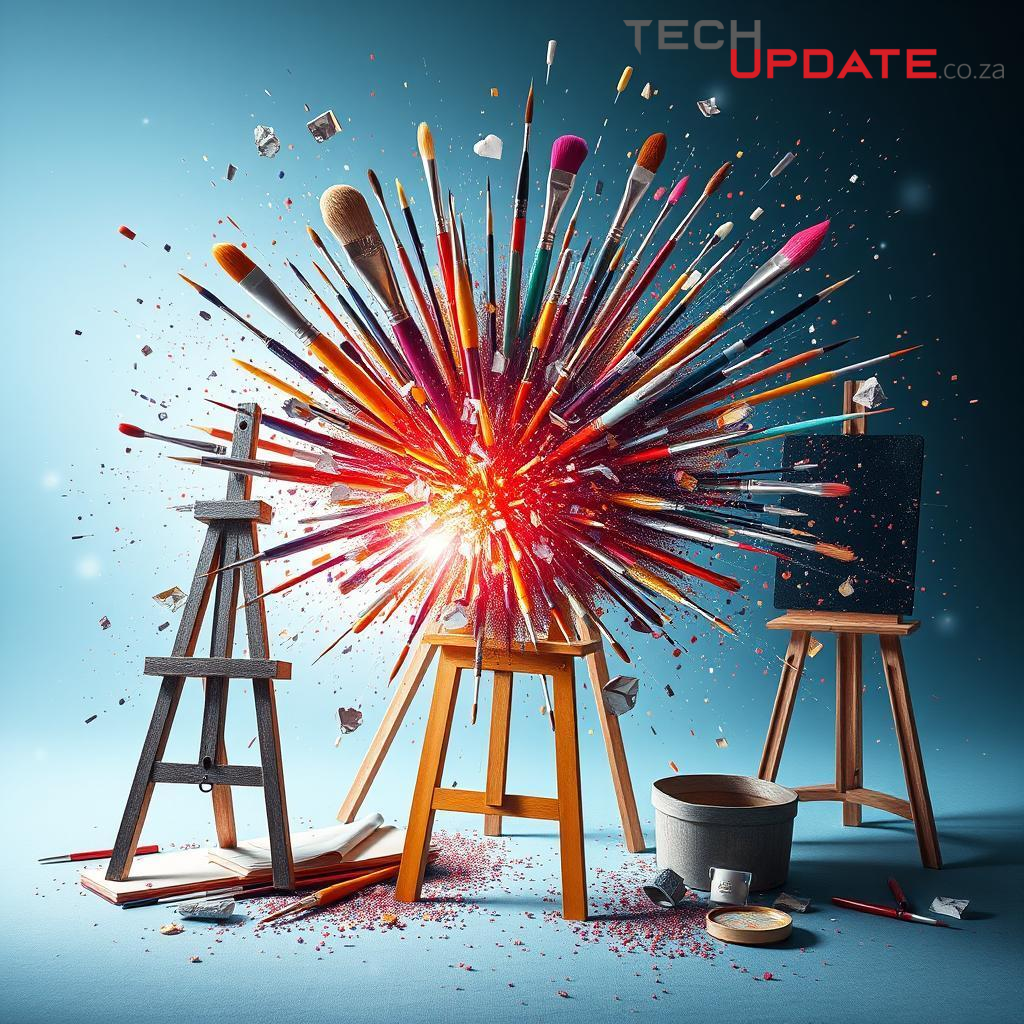
The Unsettling Dawn of AI in Creative Education
The landscape of creative education is undergoing a seismic shift, driven by the rapid proliferation of generative artificial intelligence tools. What was once the exclusive domain of human ingenuity—design, illustration, animation—is now increasingly augmented, if not challenged, by algorithms capable of producing sophisticated artistic outputs. This technological disruption is not merely an academic talking point; it's a lived reality for students and educators alike, creating a palpable tension within institutions traditionally dedicated to fostering human creativity.
For many aspiring artists and designers, the future feels increasingly precarious. The emergence of tools that can generate complex 3D models or entire animated sequences with minimal human input casts a long shadow over years of dedicated skill development. This sentiment resonates deeply, particularly among those who have chosen a path in fields like 3D modelling and animation, where the competition for postgraduate roles was already fierce even before AI became a significant factor.
Curriculum in Flux: Adapting to the Algorithmic Age
Art and design schools are finding themselves at a critical juncture, compelled to integrate generative AI into their curricula while simultaneously upholding the core tenets of artistic practice. This adaptation often means re-evaluating traditional teaching methods and introducing modules focused on AI ethics, prompt engineering, and the collaborative potential between human and machine. Some institutions view AI as an indispensable tool, arguing that fluency in these technologies will be crucial for future creative professionals.
However, this integration is far from universally accepted. Many students express profound concerns, fearing that an overreliance on AI tools could dilute fundamental artistic skills, devalue human effort, and ultimately lead to a less authentic creative output. There is a palpable anxiety that the focus might shift from mastery of craft to mere technical proficiency in operating AI interfaces.
Student Discontent and the Fight for Human Creativity
The anxieties surrounding AI's role in creative education have occasionally spilled over into overt expressions of discontent. Early in the year, a small protest at CalArts highlighted these tensions, where posters soliciting AI artists for a thesis project were reportedly altered, reflecting a broader student resistance to the perceived encroachment of artificial intelligence into their creative spaces. These actions underscore a deep-seated fear that the unique value of human artistic contribution is being eroded.
Students are not only worried about job prospects but also about the very definition of creativity itself. Questions are being raised about authorship, originality, and the ethical implications of using AI models trained on vast datasets of existing human-made art, often without explicit consent or compensation for the original creators. This raises complex debates about intellectual property and the future of artistic livelihoods.
Summary
The advent of generative AI presents both a formidable challenge and an undeniable opportunity for art schools. While integrating these powerful tools into the curriculum is increasingly seen as a necessity for preparing students for a rapidly evolving industry, it also ignites crucial discussions about the preservation of human skill, artistic integrity, and ethical responsibility. The path forward demands a delicate balance: embracing technological advancement without sacrificing the foundational principles of creative education and human expression. Institutions must actively engage with student concerns, fostering environments where critical thinking about AI's role in art is paramount, ensuring that future artists are not just users of technology, but its thoughtful masters.
Resources
- The Verge: "Art schools are being torn apart by AI"
- Artnet News: "Will AI Revolutionize or Ruin Art Education? We Asked the Experts"
- Hyperallergic: "Artists Weigh In on the Promises and Perils of AI Art"
Details
Author
Top articles

 }})
You can now watch HBO Max for $10
Latest articles
You can now watch HBO Max for $10
The Unsettling Dawn of AI in Creative Education
The landscape of creative education is undergoing a seismic shift, driven by the rapid proliferation of generative artificial intelligence tools. What was once the exclusive domain of human ingenuity—design, illustration, animation—is now increasingly augmented, if not challenged, by algorithms capable of producing sophisticated artistic outputs. This technological disruption is not merely an academic talking point; it's a lived reality for students and educators alike, creating a palpable tension within institutions traditionally dedicated to fostering human creativity.
For many aspiring artists and designers, the future feels increasingly precarious. The emergence of tools that can generate complex 3D models or entire animated sequences with minimal human input casts a long shadow over years of dedicated skill development. This sentiment resonates deeply, particularly among those who have chosen a path in fields like 3D modelling and animation, where the competition for postgraduate roles was already fierce even before AI became a significant factor.
Curriculum in Flux: Adapting to the Algorithmic Age
Art and design schools are finding themselves at a critical juncture, compelled to integrate generative AI into their curricula while simultaneously upholding the core tenets of artistic practice. This adaptation often means re-evaluating traditional teaching methods and introducing modules focused on AI ethics, prompt engineering, and the collaborative potential between human and machine. Some institutions view AI as an indispensable tool, arguing that fluency in these technologies will be crucial for future creative professionals.
However, this integration is far from universally accepted. Many students express profound concerns, fearing that an overreliance on AI tools could dilute fundamental artistic skills, devalue human effort, and ultimately lead to a less authentic creative output. There is a palpable anxiety that the focus might shift from mastery of craft to mere technical proficiency in operating AI interfaces.
Student Discontent and the Fight for Human Creativity
The anxieties surrounding AI's role in creative education have occasionally spilled over into overt expressions of discontent. Early in the year, a small protest at CalArts highlighted these tensions, where posters soliciting AI artists for a thesis project were reportedly altered, reflecting a broader student resistance to the perceived encroachment of artificial intelligence into their creative spaces. These actions underscore a deep-seated fear that the unique value of human artistic contribution is being eroded.
Students are not only worried about job prospects but also about the very definition of creativity itself. Questions are being raised about authorship, originality, and the ethical implications of using AI models trained on vast datasets of existing human-made art, often without explicit consent or compensation for the original creators. This raises complex debates about intellectual property and the future of artistic livelihoods.
Summary
The advent of generative AI presents both a formidable challenge and an undeniable opportunity for art schools. While integrating these powerful tools into the curriculum is increasingly seen as a necessity for preparing students for a rapidly evolving industry, it also ignites crucial discussions about the preservation of human skill, artistic integrity, and ethical responsibility. The path forward demands a delicate balance: embracing technological advancement without sacrificing the foundational principles of creative education and human expression. Institutions must actively engage with student concerns, fostering environments where critical thinking about AI's role in art is paramount, ensuring that future artists are not just users of technology, but its thoughtful masters.
Resources
- The Verge: "Art schools are being torn apart by AI"
- Artnet News: "Will AI Revolutionize or Ruin Art Education? We Asked the Experts"
- Hyperallergic: "Artists Weigh In on the Promises and Perils of AI Art"
Top articles
You can now watch HBO Max for $10
Latest articles
You can now watch HBO Max for $10
Similar posts


This is a page that only logged-in people can visit. Don't you feel special? Try clicking on a button below to do some things you can't do when you're logged out.
Example modal
At your leisure, please peruse this excerpt from a whale of a tale.
Chapter 1: Loomings.
Call me Ishmael. Some years ago—never mind how long precisely—having little or no money in my purse, and nothing particular to interest me on shore, I thought I would sail about a little and see the watery part of the world. It is a way I have of driving off the spleen and regulating the circulation. Whenever I find myself growing grim about the mouth; whenever it is a damp, drizzly November in my soul; whenever I find myself involuntarily pausing before coffin warehouses, and bringing up the rear of every funeral I meet; and especially whenever my hypos get such an upper hand of me, that it requires a strong moral principle to prevent me from deliberately stepping into the street, and methodically knocking people's hats off—then, I account it high time to get to sea as soon as I can. This is my substitute for pistol and ball. With a philosophical flourish Cato throws himself upon his sword; I quietly take to the ship. There is nothing surprising in this. If they but knew it, almost all men in their degree, some time or other, cherish very nearly the same feelings towards the ocean with me.
Comment