Ethereum Foundation Accelerates Quantum Defense as Threat Landscape Evolves
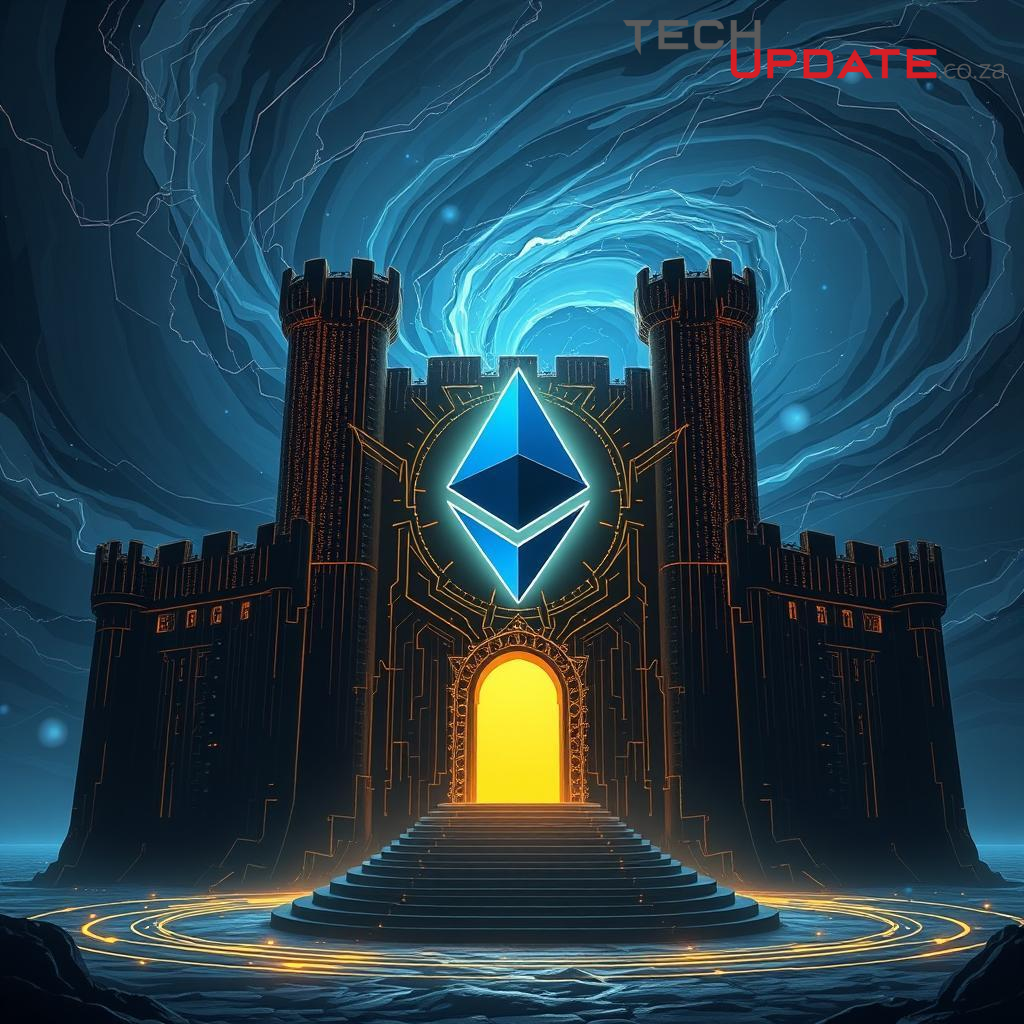
Ethereum Fortifies Against Quantum Threat
The Ethereum ecosystem is proactively addressing a looming cryptographic vulnerability posed by advancements in quantum computing. Ethereum researcher Justin Drake has highlighted a pivotal shift, stating that the project is moving beyond theoretical research into practical execution as the threat of quantum attacks draws closer. This strategic pivot underscores a growing recognition within the blockchain community of the imperative to secure digital assets and infrastructure against future computational capabilities.
Quantum computers, with their ability to solve complex mathematical problems far beyond the reach of classical supercomputers, present a fundamental challenge to the cryptographic underpinnings of current blockchain technology. Specifically, algorithms like Shor's algorithm could theoretically break the public-key cryptography (e.g., ECDSA) that secures Ethereum transactions and identities, while Grover's algorithm could significantly reduce the security of hash functions. Although fully fault-tolerant quantum computers capable of such attacks are not yet ubiquitous, the Ethereum Foundation's move signals a commitment to long-term resilience.
The Formation of a Dedicated Post-Quantum Team
In response to these escalating concerns, the Ethereum Foundation has initiated the formation of a dedicated post-quantum cryptography team. This specialized unit will focus on integrating quantum-resistant cryptographic primitives into the Ethereum protocol. The work involves not only selecting appropriate algorithms from a rapidly evolving field but also carefully planning their implementation to ensure compatibility, maintain decentralization, and avoid introducing new vulnerabilities during the transition.
Justin Drake's emphasis on moving from "research to execution" is a critical indicator of the urgency driving this initiative. The development timeline for quantum-resistant solutions is lengthy, requiring extensive peer review, standardization, and rigorous testing before deployment. By starting now, Ethereum aims to future-proof its network, protecting billions in digital assets and countless transactions from potential quantum decryption.
Strategic Implications and Industry Trend
Ethereum's proactive stance aligns with broader trends in critical infrastructure security, where governments and major technology firms are also investing heavily in post-quantum cryptography. The effort within Ethereum is not merely about patching a vulnerability but represents a fundamental upgrade to its security architecture, designed to withstand an entirely new paradigm of computational power. This involves exploring lattice-based cryptography, hash-based signatures, and other novel approaches that are believed to be resistant to quantum attacks.
The transition will be complex, potentially requiring changes to address generation, transaction signing, and smart contract execution. However, by engaging top researchers and committing resources to a dedicated team, the Ethereum Foundation is positioning itself as a leader in blockchain security innovation, ensuring the long-term viability and trustworthiness of its platform in an increasingly quantum-aware world.
Summary
The Ethereum Foundation is making significant strides in post-quantum security, shifting its focus from theoretical research to practical implementation. Driven by figures like Justin Drake, a dedicated team is now working to integrate quantum-resistant cryptography into the Ethereum protocol. This strategic move is a necessary response to the evolving threat of quantum computing, aiming to safeguard the network's integrity and user assets against future computational advancements. By proactively addressing these challenges, Ethereum seeks to secure its foundational technology for decades to come, setting a precedent for the broader blockchain industry.
Resources
- Ethereum Foundation Blog and Research Updates
- National Institute of Standards and Technology (NIST) Post-Quantum Cryptography Project
- Cointelegraph (for general crypto news and security analysis)
Details
Author
Top articles




 }})
You can now watch HBO Max for $10
Latest articles





You can now watch HBO Max for $10
Ethereum Fortifies Against Quantum Threat
The Ethereum ecosystem is proactively addressing a looming cryptographic vulnerability posed by advancements in quantum computing. Ethereum researcher Justin Drake has highlighted a pivotal shift, stating that the project is moving beyond theoretical research into practical execution as the threat of quantum attacks draws closer. This strategic pivot underscores a growing recognition within the blockchain community of the imperative to secure digital assets and infrastructure against future computational capabilities.
Quantum computers, with their ability to solve complex mathematical problems far beyond the reach of classical supercomputers, present a fundamental challenge to the cryptographic underpinnings of current blockchain technology. Specifically, algorithms like Shor's algorithm could theoretically break the public-key cryptography (e.g., ECDSA) that secures Ethereum transactions and identities, while Grover's algorithm could significantly reduce the security of hash functions. Although fully fault-tolerant quantum computers capable of such attacks are not yet ubiquitous, the Ethereum Foundation's move signals a commitment to long-term resilience.
The Formation of a Dedicated Post-Quantum Team
In response to these escalating concerns, the Ethereum Foundation has initiated the formation of a dedicated post-quantum cryptography team. This specialized unit will focus on integrating quantum-resistant cryptographic primitives into the Ethereum protocol. The work involves not only selecting appropriate algorithms from a rapidly evolving field but also carefully planning their implementation to ensure compatibility, maintain decentralization, and avoid introducing new vulnerabilities during the transition.
Justin Drake's emphasis on moving from "research to execution" is a critical indicator of the urgency driving this initiative. The development timeline for quantum-resistant solutions is lengthy, requiring extensive peer review, standardization, and rigorous testing before deployment. By starting now, Ethereum aims to future-proof its network, protecting billions in digital assets and countless transactions from potential quantum decryption.
Strategic Implications and Industry Trend
Ethereum's proactive stance aligns with broader trends in critical infrastructure security, where governments and major technology firms are also investing heavily in post-quantum cryptography. The effort within Ethereum is not merely about patching a vulnerability but represents a fundamental upgrade to its security architecture, designed to withstand an entirely new paradigm of computational power. This involves exploring lattice-based cryptography, hash-based signatures, and other novel approaches that are believed to be resistant to quantum attacks.
The transition will be complex, potentially requiring changes to address generation, transaction signing, and smart contract execution. However, by engaging top researchers and committing resources to a dedicated team, the Ethereum Foundation is positioning itself as a leader in blockchain security innovation, ensuring the long-term viability and trustworthiness of its platform in an increasingly quantum-aware world.
Summary
The Ethereum Foundation is making significant strides in post-quantum security, shifting its focus from theoretical research to practical implementation. Driven by figures like Justin Drake, a dedicated team is now working to integrate quantum-resistant cryptography into the Ethereum protocol. This strategic move is a necessary response to the evolving threat of quantum computing, aiming to safeguard the network's integrity and user assets against future computational advancements. By proactively addressing these challenges, Ethereum seeks to secure its foundational technology for decades to come, setting a precedent for the broader blockchain industry.
Resources
- Ethereum Foundation Blog and Research Updates
- National Institute of Standards and Technology (NIST) Post-Quantum Cryptography Project
- Cointelegraph (for general crypto news and security analysis)
Top articles
You can now watch HBO Max for $10
Latest articles
You can now watch HBO Max for $10
Similar posts




This is a page that only logged-in people can visit. Don't you feel special? Try clicking on a button below to do some things you can't do when you're logged out.
Example modal
At your leisure, please peruse this excerpt from a whale of a tale.
Chapter 1: Loomings.
Call me Ishmael. Some years ago—never mind how long precisely—having little or no money in my purse, and nothing particular to interest me on shore, I thought I would sail about a little and see the watery part of the world. It is a way I have of driving off the spleen and regulating the circulation. Whenever I find myself growing grim about the mouth; whenever it is a damp, drizzly November in my soul; whenever I find myself involuntarily pausing before coffin warehouses, and bringing up the rear of every funeral I meet; and especially whenever my hypos get such an upper hand of me, that it requires a strong moral principle to prevent me from deliberately stepping into the street, and methodically knocking people's hats off—then, I account it high time to get to sea as soon as I can. This is my substitute for pistol and ball. With a philosophical flourish Cato throws himself upon his sword; I quietly take to the ship. There is nothing surprising in this. If they but knew it, almost all men in their degree, some time or other, cherish very nearly the same feelings towards the ocean with me.
Comment