Beyond the Bench: The Surprising Case for AI Judges and a More Predictable Justice System

The Dawn of AI Justice: Beyond Memos to Decisions
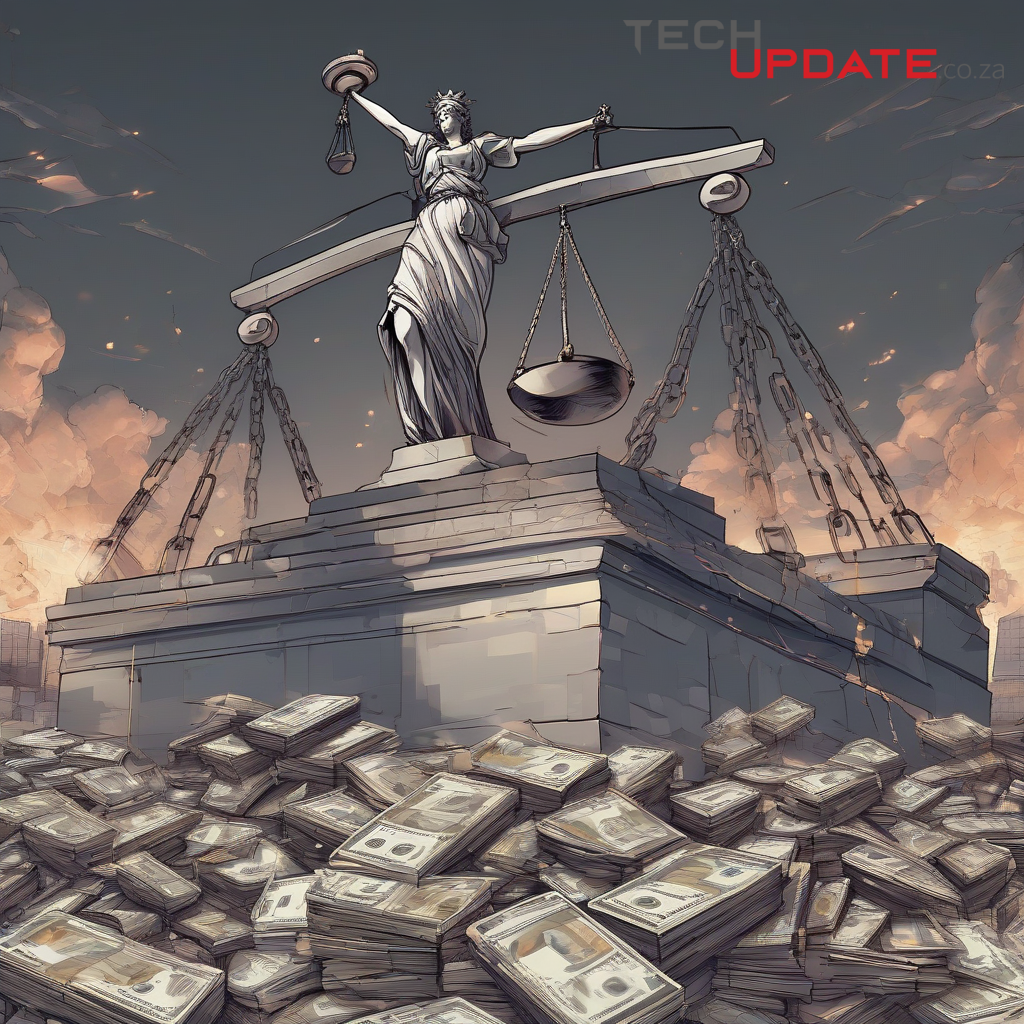
For decades, artificial intelligence in the legal field conjured images of advanced search engines and automated document review. The notion of AI actually *deciding* legal disputes, determining right from wrong, and assigning liability, seemed confined to science fiction. However, a surprising shift is underway, spearheaded by figures like Bridget McCormack, former Chief Justice for the Michigan Supreme Court and current President and CEO of the American Arbitration Association (AAA).
The AAA, a century-old non-profit leader in alternative dispute resolution, is now at the forefront of this evolution with its experimental AI Arbitrator platform. Currently deployed in a highly specific niche—documents-only construction disputes—the platform represents a bold step into a future where technology actively shapes justice outcomes. This initiative challenges our fundamental assumptions about fairness, efficiency, and the very nature of legal adjudication.
The Imperfections of Human-Led Justice
McCormack's journey from overseeing Michigan's vast and complex state court system to leading the AAA offers unique insight into the systemic challenges plaguing traditional justice. She contends that the legal system, largely run by humans, is inherently probabilistic rather than deterministic. This unpredictability, she argues, leads to inefficiency, increased disputes, and a significant erosion of public trust.
A staggering 92 percent of Americans, including many small and medium businesses, cannot afford legal representation. This access barrier, coupled with overburdened courts and archaic procedures, often means that individuals attempting to navigate the system without legal counsel face insurmountable obstacles. Appellate court reversal rates, while varying, highlight the frequency of errors made at lower levels. McCormack draws a stark parallel to wrongful convictions, citing data suggesting 3 to 5 percent error rates—unacceptable for a system tasked with safeguarding liberty and property.
The declining faith in legal institutions, paralleled by a pervasive distrust across American society, underscores the urgency for reform. While public courts struggle with funding, differing judicial resources across counties, and the challenge of managing a thousand separately elected judicial officers, private arbitration, particularly from a non-profit like the AAA, offers a different model. The core difference, as McCormack points out, is the ability to innovate and respond to user needs without the political and financial constraints of state legislatures.
The AI Promise: Efficiency, Predictability, and Feeling Heard
The case for AI judges primarily rests on their potential to inject much-needed efficiency, predictability, and a novel form of perceived fairness into dispute resolution. The AI Arbitrator is designed to be faster, cheaper, and more accessible than traditional litigation or even human-led arbitration.
A key advantage of AI, as McCormack highlights, is its ability to ensure parties "feel heard." The AI Arbitrator's process begins with agents meticulously parsing claims, evidence, and legal frameworks from written submissions. It then presents its understanding back to the parties, allowing them to correct any misunderstandings until they are satisfied their arguments have been fully captured. This iterative process, which would be impractical and prohibitively expensive for human judges in high-volume dockets, is a core feature of the AI system, fostering a sense of agency and understanding—even if the ultimate ruling goes against a party.
The AAA selected documents-only construction disputes for its pilot partly due to a strong industry relationship and the prevalence of such disputes, which often need quick resolution to avoid project delays. The AI system, grounded in a robust library of historical cases and operating on an AI-native case management system, employs a series of reasoning agents to draft awards. Crucially, a human arbitrator remains "in the loop" throughout the process, reviewing and ultimately issuing the final award to ensure accuracy and address any limitations of the AI.
McCormack also envisions AI tackling other documents-only disputes, such as supplier conflicts in various industries or complex payer-provider disputes between hospitals and insurers. The potential to resolve these quickly and transparently could drastically improve outcomes for individuals awaiting critical healthcare decisions, bypassing protracted human-led processes that breed frustration and distrust.
Navigating the Ethical Minefield: Hallucinations, Bias, and Accountability
Despite the promise, the integration of AI into judicial functions raises significant ethical and practical concerns. The inherent risks of AI systems—hallucinations, brittleness, and the potential for embedded biases—are amplified when applied to matters of justice.
McCormack acknowledges these dangers. The AAA's approach is characterized by extreme narrowness and caution, focusing on "governed, trained and grounded" agentic systems. A human arbitrator serves as the ultimate safeguard against AI hallucinations, ensuring that no award is issued without human review and approval. Furthermore, the AAA commits to transparency, providing audit trails and commissioning independent academic reviews to test the AI's performance against human baselines.
A critical point of contention, particularly in consumer law, is accountability. Unlike a human judge who has a public record, reputation, and eventually, leaves the system, an AI system running on unseen cloud services can feel opaque and unaccountable. McCormack argues that while criminal cases and disputes against the government must remain in public courtrooms, a vast majority of private disputes could benefit from more options. She emphasizes that AI could, in fact, "de-bias the data set a lot easier than you can de-bias a human," potentially offering a more consistent application of law.
The perceived power imbalance in consumer arbitration, where individuals sign numerous arbitration clauses without negotiation, is another challenge. McCormack highlights the AAA's due-process protocols, which require businesses to clear their clauses with the non-profit to ensure fairness. Her aspiration is to create AI-driven dispute resolution services so superior that parties actively *choose* them, rather than being compelled, fostering genuine trust through exceptional service and transparent fairness.
Summary
The surprising case for AI judges, as championed by Bridget McCormack and the American Arbitration Association, pivots on the urgent need for a more predictable, efficient, and accessible legal system. While the current AI Arbitrator is limited to documents-only construction disputes, its potential applications are vast, promising to alleviate the burdens of human-led justice and address the pervasive lack of trust in legal institutions. However, this transformative leap is not without its perils, demanding rigorous governance, transparent accountability, and continued human oversight to mitigate risks such as AI hallucinations and algorithmic bias. The journey towards a future where AI plays a significant role in adjudicating disputes will require careful navigation, balancing the undeniable efficiencies with the enduring human demand for fairness and genuine justice.
Resources
- The Verge: The surprising case for AI judges
- American Arbitration Association: AAA Develops AI Arbitrator for Documents-Only Construction Disputes
- TechCrunch: AI can now adjudicate legal disputes — but should it?
Details
Author
Top articles




 }})
You can now watch HBO Max for $10
Latest articles




You can now watch HBO Max for $10
The Dawn of AI Justice: Beyond Memos to Decisions
For decades, artificial intelligence in the legal field conjured images of advanced search engines and automated document review. The notion of AI actually *deciding* legal disputes, determining right from wrong, and assigning liability, seemed confined to science fiction. However, a surprising shift is underway, spearheaded by figures like Bridget McCormack, former Chief Justice for the Michigan Supreme Court and current President and CEO of the American Arbitration Association (AAA).
The AAA, a century-old non-profit leader in alternative dispute resolution, is now at the forefront of this evolution with its experimental AI Arbitrator platform. Currently deployed in a highly specific niche—documents-only construction disputes—the platform represents a bold step into a future where technology actively shapes justice outcomes. This initiative challenges our fundamental assumptions about fairness, efficiency, and the very nature of legal adjudication.
The Imperfections of Human-Led Justice
McCormack's journey from overseeing Michigan's vast and complex state court system to leading the AAA offers unique insight into the systemic challenges plaguing traditional justice. She contends that the legal system, largely run by humans, is inherently probabilistic rather than deterministic. This unpredictability, she argues, leads to inefficiency, increased disputes, and a significant erosion of public trust.
A staggering 92 percent of Americans, including many small and medium businesses, cannot afford legal representation. This access barrier, coupled with overburdened courts and archaic procedures, often means that individuals attempting to navigate the system without legal counsel face insurmountable obstacles. Appellate court reversal rates, while varying, highlight the frequency of errors made at lower levels. McCormack draws a stark parallel to wrongful convictions, citing data suggesting 3 to 5 percent error rates—unacceptable for a system tasked with safeguarding liberty and property.
The declining faith in legal institutions, paralleled by a pervasive distrust across American society, underscores the urgency for reform. While public courts struggle with funding, differing judicial resources across counties, and the challenge of managing a thousand separately elected judicial officers, private arbitration, particularly from a non-profit like the AAA, offers a different model. The core difference, as McCormack points out, is the ability to innovate and respond to user needs without the political and financial constraints of state legislatures.
The AI Promise: Efficiency, Predictability, and Feeling Heard
The case for AI judges primarily rests on their potential to inject much-needed efficiency, predictability, and a novel form of perceived fairness into dispute resolution. The AI Arbitrator is designed to be faster, cheaper, and more accessible than traditional litigation or even human-led arbitration.
A key advantage of AI, as McCormack highlights, is its ability to ensure parties "feel heard." The AI Arbitrator's process begins with agents meticulously parsing claims, evidence, and legal frameworks from written submissions. It then presents its understanding back to the parties, allowing them to correct any misunderstandings until they are satisfied their arguments have been fully captured. This iterative process, which would be impractical and prohibitively expensive for human judges in high-volume dockets, is a core feature of the AI system, fostering a sense of agency and understanding—even if the ultimate ruling goes against a party.
The AAA selected documents-only construction disputes for its pilot partly due to a strong industry relationship and the prevalence of such disputes, which often need quick resolution to avoid project delays. The AI system, grounded in a robust library of historical cases and operating on an AI-native case management system, employs a series of reasoning agents to draft awards. Crucially, a human arbitrator remains "in the loop" throughout the process, reviewing and ultimately issuing the final award to ensure accuracy and address any limitations of the AI.
McCormack also envisions AI tackling other documents-only disputes, such as supplier conflicts in various industries or complex payer-provider disputes between hospitals and insurers. The potential to resolve these quickly and transparently could drastically improve outcomes for individuals awaiting critical healthcare decisions, bypassing protracted human-led processes that breed frustration and distrust.
Navigating the Ethical Minefield: Hallucinations, Bias, and Accountability
Despite the promise, the integration of AI into judicial functions raises significant ethical and practical concerns. The inherent risks of AI systems—hallucinations, brittleness, and the potential for embedded biases—are amplified when applied to matters of justice.
McCormack acknowledges these dangers. The AAA's approach is characterized by extreme narrowness and caution, focusing on "governed, trained and grounded" agentic systems. A human arbitrator serves as the ultimate safeguard against AI hallucinations, ensuring that no award is issued without human review and approval. Furthermore, the AAA commits to transparency, providing audit trails and commissioning independent academic reviews to test the AI's performance against human baselines.
A critical point of contention, particularly in consumer law, is accountability. Unlike a human judge who has a public record, reputation, and eventually, leaves the system, an AI system running on unseen cloud services can feel opaque and unaccountable. McCormack argues that while criminal cases and disputes against the government must remain in public courtrooms, a vast majority of private disputes could benefit from more options. She emphasizes that AI could, in fact, "de-bias the data set a lot easier than you can de-bias a human," potentially offering a more consistent application of law.
The perceived power imbalance in consumer arbitration, where individuals sign numerous arbitration clauses without negotiation, is another challenge. McCormack highlights the AAA's due-process protocols, which require businesses to clear their clauses with the non-profit to ensure fairness. Her aspiration is to create AI-driven dispute resolution services so superior that parties actively *choose* them, rather than being compelled, fostering genuine trust through exceptional service and transparent fairness.
Summary
The surprising case for AI judges, as championed by Bridget McCormack and the American Arbitration Association, pivots on the urgent need for a more predictable, efficient, and accessible legal system. While the current AI Arbitrator is limited to documents-only construction disputes, its potential applications are vast, promising to alleviate the burdens of human-led justice and address the pervasive lack of trust in legal institutions. However, this transformative leap is not without its perils, demanding rigorous governance, transparent accountability, and continued human oversight to mitigate risks such as AI hallucinations and algorithmic bias. The journey towards a future where AI plays a significant role in adjudicating disputes will require careful navigation, balancing the undeniable efficiencies with the enduring human demand for fairness and genuine justice.
Resources
- The Verge: The surprising case for AI judges
- American Arbitration Association: AAA Develops AI Arbitrator for Documents-Only Construction Disputes
- TechCrunch: AI can now adjudicate legal disputes — but should it?
Top articles
You can now watch HBO Max for $10
Latest articles
You can now watch HBO Max for $10
Similar posts



This is a page that only logged-in people can visit. Don't you feel special? Try clicking on a button below to do some things you can't do when you're logged out.
Example modal
At your leisure, please peruse this excerpt from a whale of a tale.
Chapter 1: Loomings.
Call me Ishmael. Some years ago—never mind how long precisely—having little or no money in my purse, and nothing particular to interest me on shore, I thought I would sail about a little and see the watery part of the world. It is a way I have of driving off the spleen and regulating the circulation. Whenever I find myself growing grim about the mouth; whenever it is a damp, drizzly November in my soul; whenever I find myself involuntarily pausing before coffin warehouses, and bringing up the rear of every funeral I meet; and especially whenever my hypos get such an upper hand of me, that it requires a strong moral principle to prevent me from deliberately stepping into the street, and methodically knocking people's hats off—then, I account it high time to get to sea as soon as I can. This is my substitute for pistol and ball. With a philosophical flourish Cato throws himself upon his sword; I quietly take to the ship. There is nothing surprising in this. If they but knew it, almost all men in their degree, some time or other, cherish very nearly the same feelings towards the ocean with me.
Comment