Sony Patents Touchscreen PlayStation Controller with Dynamic Button Layouts, Revolutionizing Personalization
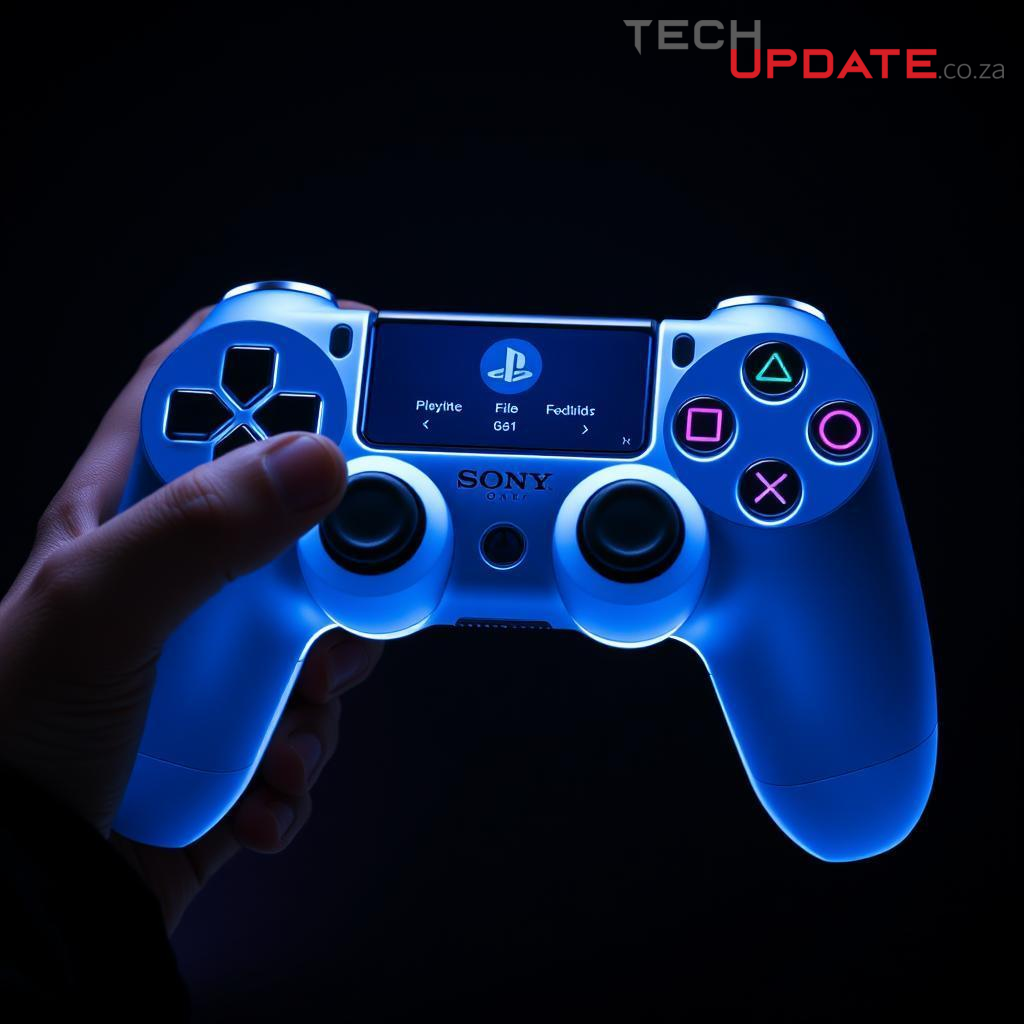
The Future of Gaming Interfaces: Sony's Dynamic Controller Patent
Sony Interactive Entertainment has secured a significant patent for an innovative PlayStation controller, signaling a potential shift in how players interact with their games. Filed in February 2023 and granted just last week, this U.S. patent outlines a game controller featuring a substantial touchscreen surface designed to replace traditional fixed button layouts, offering unprecedented customization capabilities.
Unveiling the Adaptive Design
The core concept behind Sony's patented design is to empower players with the ability to personalize their controller experience. The patent description details a controller where the typical D-Pad, analog sticks, and action buttons would manifest as virtual elements on a large touchscreen that spans most of the device's upper surface. This dynamic interface allows users to:
- Reposition Buttons: Players can freely choose the placement of control inputs, adapting to personal comfort, specific game requirements, or ergonomic needs.
- Resize Controls: Buttons and sticks are not fixed in size, enabling users to enlarge critical inputs or reduce less frequently used ones.
- Streamline Layouts: For simpler games, the controller could theoretically be stripped down to just a few large, essential buttons, such as a single "jump" button for a platformer, enhancing focus and ease of play.
- Address Accessibility: The flexibility to adjust button placement and size offers significant advantages for players with diverse accessibility requirements, moving beyond the limitations of one-size-fits-all hardware.
The patent explicitly addresses the inherent drawbacks of conventional controllers, which often adhere to a standard, fixed configuration. "One of the drawbacks of existing designs may be the fixed configuration. By way of example, a fixed layout may be too small, or too large, for a user. Similarly, a fixed layout may not be comfortable to a user," the patent states. This new approach seeks to overcome these limitations, providing a more inclusive and adaptable gaming experience.
Implications for Gaming and Beyond
Should this technology be integrated into future PlayStation consoles, the implications for the gaming industry could be profound. Developers might gain new avenues for interface design, tailoring controller layouts to specific in-game contexts or offering pre-set customizable profiles. Furthermore, the patent suggests a future where a single controller could dynamically adapt to a multitude of genres, from complex simulations requiring numerous inputs to casual mobile-style games that benefit from minimalist controls.
While patents do not always guarantee product development, Sony's continued investment in innovative hardware designs underscores a commitment to evolving the player experience. This touchscreen controller represents a bold step towards a more personalized, accessible, and adaptable gaming future, challenging the decades-old paradigm of static input devices.
Conclusion
Sony's patent for a touchscreen PlayStation controller with customizable button layouts signifies a potential paradigm shift in gaming hardware. By offering dynamic control placement, resizing options, and the ability to remove unnecessary inputs, this innovation promises to enhance personalization, improve accessibility, and cater to a broader spectrum of player preferences and game types. It envisions a future where the controller adapts to the player, rather than the other way around, setting a new benchmark for interactive gaming.
Resources
Details
Author
Top articles




 }})
You can now watch HBO Max for $10
Latest articles





You can now watch HBO Max for $10
The Future of Gaming Interfaces: Sony's Dynamic Controller Patent
Sony Interactive Entertainment has secured a significant patent for an innovative PlayStation controller, signaling a potential shift in how players interact with their games. Filed in February 2023 and granted just last week, this U.S. patent outlines a game controller featuring a substantial touchscreen surface designed to replace traditional fixed button layouts, offering unprecedented customization capabilities.
Unveiling the Adaptive Design
The core concept behind Sony's patented design is to empower players with the ability to personalize their controller experience. The patent description details a controller where the typical D-Pad, analog sticks, and action buttons would manifest as virtual elements on a large touchscreen that spans most of the device's upper surface. This dynamic interface allows users to:
- Reposition Buttons: Players can freely choose the placement of control inputs, adapting to personal comfort, specific game requirements, or ergonomic needs.
- Resize Controls: Buttons and sticks are not fixed in size, enabling users to enlarge critical inputs or reduce less frequently used ones.
- Streamline Layouts: For simpler games, the controller could theoretically be stripped down to just a few large, essential buttons, such as a single "jump" button for a platformer, enhancing focus and ease of play.
- Address Accessibility: The flexibility to adjust button placement and size offers significant advantages for players with diverse accessibility requirements, moving beyond the limitations of one-size-fits-all hardware.
The patent explicitly addresses the inherent drawbacks of conventional controllers, which often adhere to a standard, fixed configuration. "One of the drawbacks of existing designs may be the fixed configuration. By way of example, a fixed layout may be too small, or too large, for a user. Similarly, a fixed layout may not be comfortable to a user," the patent states. This new approach seeks to overcome these limitations, providing a more inclusive and adaptable gaming experience.
Implications for Gaming and Beyond
Should this technology be integrated into future PlayStation consoles, the implications for the gaming industry could be profound. Developers might gain new avenues for interface design, tailoring controller layouts to specific in-game contexts or offering pre-set customizable profiles. Furthermore, the patent suggests a future where a single controller could dynamically adapt to a multitude of genres, from complex simulations requiring numerous inputs to casual mobile-style games that benefit from minimalist controls.
While patents do not always guarantee product development, Sony's continued investment in innovative hardware designs underscores a commitment to evolving the player experience. This touchscreen controller represents a bold step towards a more personalized, accessible, and adaptable gaming future, challenging the decades-old paradigm of static input devices.
Conclusion
Sony's patent for a touchscreen PlayStation controller with customizable button layouts signifies a potential paradigm shift in gaming hardware. By offering dynamic control placement, resizing options, and the ability to remove unnecessary inputs, this innovation promises to enhance personalization, improve accessibility, and cater to a broader spectrum of player preferences and game types. It envisions a future where the controller adapts to the player, rather than the other way around, setting a new benchmark for interactive gaming.
Resources
Top articles
You can now watch HBO Max for $10
Latest articles
You can now watch HBO Max for $10
Similar posts



This is a page that only logged-in people can visit. Don't you feel special? Try clicking on a button below to do some things you can't do when you're logged out.
Example modal
At your leisure, please peruse this excerpt from a whale of a tale.
Chapter 1: Loomings.
Call me Ishmael. Some years ago—never mind how long precisely—having little or no money in my purse, and nothing particular to interest me on shore, I thought I would sail about a little and see the watery part of the world. It is a way I have of driving off the spleen and regulating the circulation. Whenever I find myself growing grim about the mouth; whenever it is a damp, drizzly November in my soul; whenever I find myself involuntarily pausing before coffin warehouses, and bringing up the rear of every funeral I meet; and especially whenever my hypos get such an upper hand of me, that it requires a strong moral principle to prevent me from deliberately stepping into the street, and methodically knocking people's hats off—then, I account it high time to get to sea as soon as I can. This is my substitute for pistol and ball. With a philosophical flourish Cato throws himself upon his sword; I quietly take to the ship. There is nothing surprising in this. If they but knew it, almost all men in their degree, some time or other, cherish very nearly the same feelings towards the ocean with me.
Comment