Arm’s Strategic Chip: CEO Haas Navigates Partner Relations Amidst New Silicon Venture
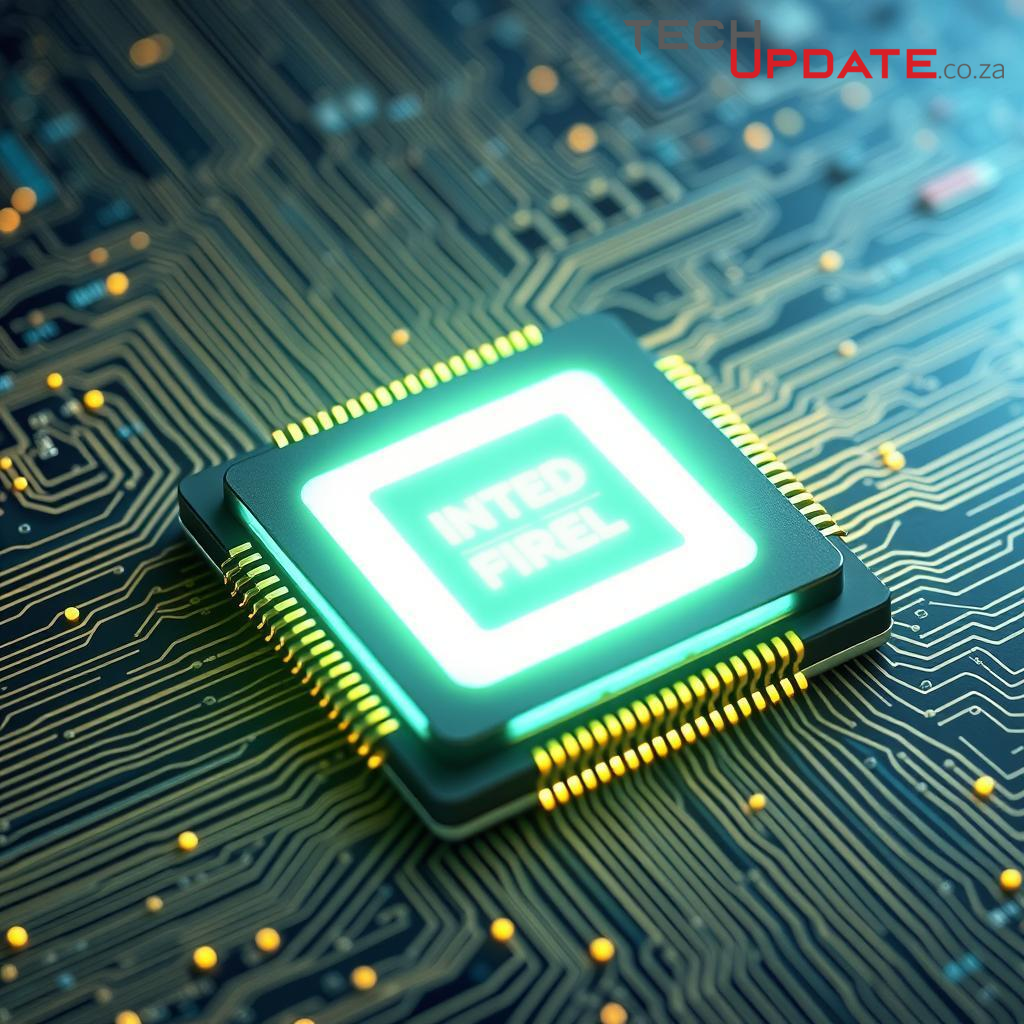
Arm Forges Its Own Silicon Path, CEO Haas Reassures Skeptics
In a significant development echoing through the semiconductor industry, Arm has confirmed persistent rumors: the intellectual property giant is developing its own custom system-on-a-chip (SoC). This move, a first for the company traditionally known for licensing its core designs rather than fabricating its own silicon for commercial sale, has sparked considerable discussion regarding its implications for Arm’s extensive network of chipmaking partners.
A Catalyst for Innovation, Not Competition
Arm CEO Rene Haas has been quick to address potential concerns, articulating a clear strategic rationale behind the initiative. Haas insists this venture is not intended to alienate the myriad companies that license Arm’s architecture; rather, it is designed to serve as a powerful enablement platform for the entire ecosystem. The aim is to create a tangible, high-performance reference design that fully showcases the capabilities of Arm’s latest intellectual property (IP).
By developing its own chip, Arm can:
- Demonstrate optimal integration of its CPU, GPU, and NPU cores, along with system-level IP.
- Accelerate the development cycle for partners by providing a proven, fully optimized blueprint.
- Experiment directly with cutting-edge architectures and features, pushing the boundaries of what’s possible with Arm-based designs.
- Provide a robust development platform for software and hardware integration, ultimately benefiting the entire ecosystem with faster time-to-market for new products.
Haas frames this as a proactive step to help partners navigate increasingly complex chip designs, especially in burgeoning fields like artificial intelligence, high-performance computing, and cloud infrastructure. The argument is that a direct demonstration of Arm's capabilities can de-risk design choices for licensees and foster innovation across the board.
Market Reactions and Future Outlook
While Arm’s messaging emphasizes collaboration and enablement, the decision to produce its own silicon introduces a nuanced dynamic into its relationships with partners. Historically, Arm has maintained a strictly neutral position as an IP provider, avoiding direct competition with its licensees. This new direction, even if positioned as a reference platform, naturally invites scrutiny.
Industry analysts suggest that the success of Arm's strategy will hinge on its ability to maintain transparency and clearly differentiate this effort from a commercial product line. If perceived as a genuine tool for ecosystem development rather than an encroaching competitor, the initiative could indeed bolster Arm’s influence and accelerate the adoption of its advanced architectures. However, any deviation from this stated purpose could risk unsettling the very partners vital to Arm’s business model.
Ultimately, Arm’s custom chip represents a bold strategic maneuver. It reflects a commitment to push the technological envelope and provide tangible value to its partners, even if it requires a delicate balancing act to assuage any concerns about competitive intent. The market will be watching closely to see if Haas’s vision for collaborative innovation holds true.
Summary
Arm’s decision to develop its own reference CPU marks a significant shift, aimed at showcasing its IP's full potential and accelerating ecosystem development rather than competing with its licensees. CEO Rene Haas asserts this move will benefit partners by providing optimized blueprints and fostering innovation in critical areas like AI and HPC. While the strategy presents a delicate balancing act regarding partner relations, Arm believes it will solidify its leadership in chip architecture by directly demonstrating superior integration and performance.
Resources
- Reuters
- Bloomberg Technology
- Arm Official Statements
Details
Author
Top articles




 }})
You can now watch HBO Max for $10
Latest articles




You can now watch HBO Max for $10
Arm Forges Its Own Silicon Path, CEO Haas Reassures Skeptics
In a significant development echoing through the semiconductor industry, Arm has confirmed persistent rumors: the intellectual property giant is developing its own custom system-on-a-chip (SoC). This move, a first for the company traditionally known for licensing its core designs rather than fabricating its own silicon for commercial sale, has sparked considerable discussion regarding its implications for Arm’s extensive network of chipmaking partners.
A Catalyst for Innovation, Not Competition
Arm CEO Rene Haas has been quick to address potential concerns, articulating a clear strategic rationale behind the initiative. Haas insists this venture is not intended to alienate the myriad companies that license Arm’s architecture; rather, it is designed to serve as a powerful enablement platform for the entire ecosystem. The aim is to create a tangible, high-performance reference design that fully showcases the capabilities of Arm’s latest intellectual property (IP).
By developing its own chip, Arm can:
- Demonstrate optimal integration of its CPU, GPU, and NPU cores, along with system-level IP.
- Accelerate the development cycle for partners by providing a proven, fully optimized blueprint.
- Experiment directly with cutting-edge architectures and features, pushing the boundaries of what’s possible with Arm-based designs.
- Provide a robust development platform for software and hardware integration, ultimately benefiting the entire ecosystem with faster time-to-market for new products.
Haas frames this as a proactive step to help partners navigate increasingly complex chip designs, especially in burgeoning fields like artificial intelligence, high-performance computing, and cloud infrastructure. The argument is that a direct demonstration of Arm's capabilities can de-risk design choices for licensees and foster innovation across the board.
Market Reactions and Future Outlook
While Arm’s messaging emphasizes collaboration and enablement, the decision to produce its own silicon introduces a nuanced dynamic into its relationships with partners. Historically, Arm has maintained a strictly neutral position as an IP provider, avoiding direct competition with its licensees. This new direction, even if positioned as a reference platform, naturally invites scrutiny.
Industry analysts suggest that the success of Arm's strategy will hinge on its ability to maintain transparency and clearly differentiate this effort from a commercial product line. If perceived as a genuine tool for ecosystem development rather than an encroaching competitor, the initiative could indeed bolster Arm’s influence and accelerate the adoption of its advanced architectures. However, any deviation from this stated purpose could risk unsettling the very partners vital to Arm’s business model.
Ultimately, Arm’s custom chip represents a bold strategic maneuver. It reflects a commitment to push the technological envelope and provide tangible value to its partners, even if it requires a delicate balancing act to assuage any concerns about competitive intent. The market will be watching closely to see if Haas’s vision for collaborative innovation holds true.
Summary
Arm’s decision to develop its own reference CPU marks a significant shift, aimed at showcasing its IP's full potential and accelerating ecosystem development rather than competing with its licensees. CEO Rene Haas asserts this move will benefit partners by providing optimized blueprints and fostering innovation in critical areas like AI and HPC. While the strategy presents a delicate balancing act regarding partner relations, Arm believes it will solidify its leadership in chip architecture by directly demonstrating superior integration and performance.
Resources
- Reuters
- Bloomberg Technology
- Arm Official Statements
Top articles
You can now watch HBO Max for $10
Latest articles
You can now watch HBO Max for $10
Similar posts

This is a page that only logged-in people can visit. Don't you feel special? Try clicking on a button below to do some things you can't do when you're logged out.
Example modal
At your leisure, please peruse this excerpt from a whale of a tale.
Chapter 1: Loomings.
Call me Ishmael. Some years ago—never mind how long precisely—having little or no money in my purse, and nothing particular to interest me on shore, I thought I would sail about a little and see the watery part of the world. It is a way I have of driving off the spleen and regulating the circulation. Whenever I find myself growing grim about the mouth; whenever it is a damp, drizzly November in my soul; whenever I find myself involuntarily pausing before coffin warehouses, and bringing up the rear of every funeral I meet; and especially whenever my hypos get such an upper hand of me, that it requires a strong moral principle to prevent me from deliberately stepping into the street, and methodically knocking people's hats off—then, I account it high time to get to sea as soon as I can. This is my substitute for pistol and ball. With a philosophical flourish Cato throws himself upon his sword; I quietly take to the ship. There is nothing surprising in this. If they but knew it, almost all men in their degree, some time or other, cherish very nearly the same feelings towards the ocean with me.
Comment