America's Power Grid Under Siege: AI Demands Drive 76% Price Surge, Watchdog Sounds Alarm on Looming Crisis
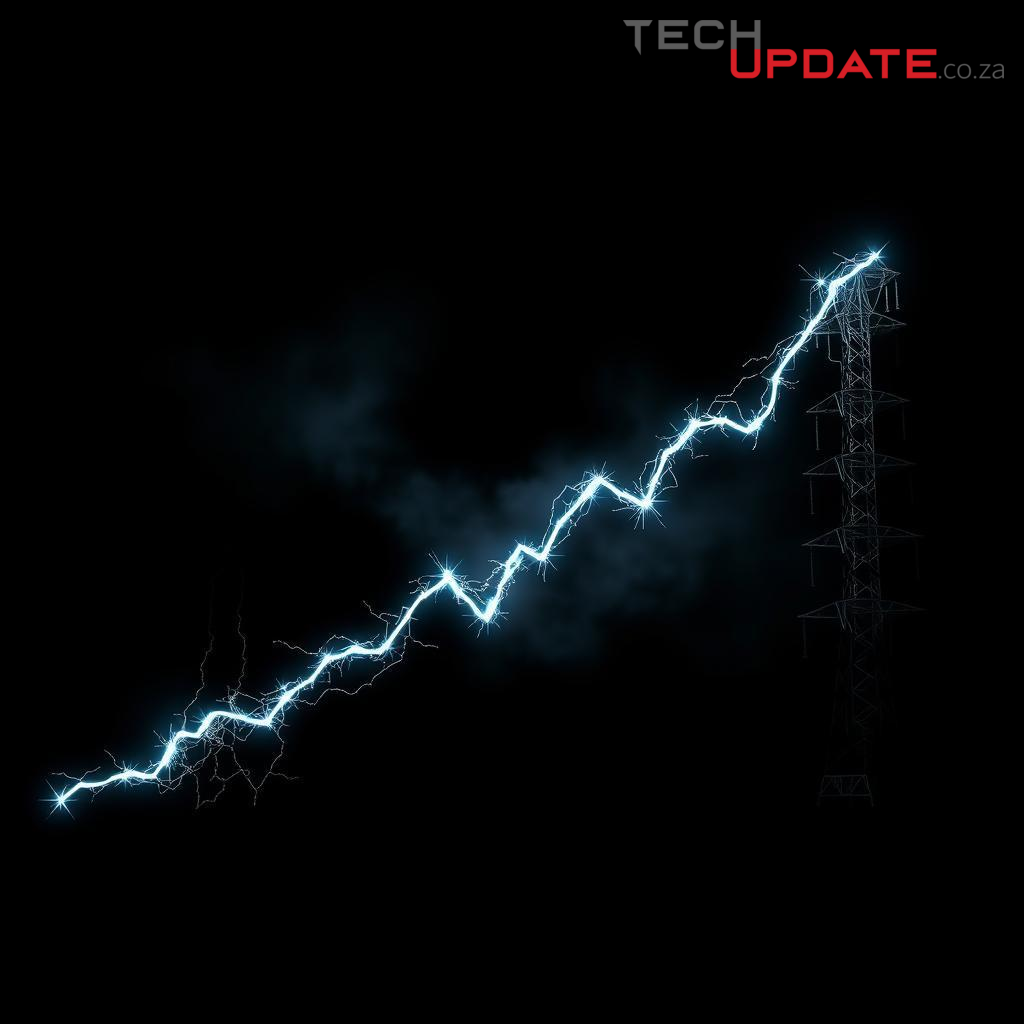
Across America's largest electricity market, the PJM Interconnection, consumers are facing a staggering reality: power prices have surged by as much as 76%. This precipitous rise is more than a fleeting market fluctuation; it is a stark indicator of a deeper, systemic vulnerability within the nation's energy infrastructure. As the U.S. economy rapidly pivots towards an AI-driven future, the foundational power grid, largely conceived in a pre-digital era, finds itself increasingly unable to meet the accelerating demands, creating a widening chasm between supply and unprecedented industry needs.
The Unsettling Surge on America’s Biggest Grid
The PJM Interconnection, responsible for delivering electricity to over 65 million people across 13 states and the District of Columbia, recently saw capacity prices in its forward auction for the 2025/2026 planning year skyrocket. In particular, certain zones experienced an alarming 76% increase, signaling significant strains on resource adequacy. This hike translates directly to higher costs for utilities, which are inevitably passed on to businesses and households.
Industry watchdogs, including consumer advocacy groups and organizations representing PJM states, have been quick to point fingers. Their concerns often center on the efficacy of market mechanisms, the speed of new generation development, and the retirement of existing power plants without sufficient replacements. They argue that the current market design may not adequately incentivize the necessary investments to bolster grid resilience and capacity, especially in the face of evolving demand profiles.
AI’s Insatiable Appetite: A New Era of Demand
At the heart of this escalating crisis is the unprecedented energy consumption driven by artificial intelligence. The rapid proliferation of AI models, large language models, and advanced computing requires an immense amount of processing power, which in turn necessitates massive, always-on data centers. These facilities, once significant energy users, are now becoming veritable power vacuums, consuming electricity at a scale previously unimaginable.
Estimates suggest that global data center electricity consumption could double, or even triple, in the coming years, primarily fueled by AI's relentless computational demands. A single advanced AI chip can draw as much power as an entire household, and data centers house thousands of them. This concentrated, high-density load is not only immense but also requires highly reliable, constant power, stressing grid components far beyond their original design parameters.
A Grid at Its Limits: Infrastructure Gaps and Regulatory Hurdles
America's power grid, a marvel of 20th-century engineering, is struggling to adapt to 21st-century demands. Decades of underinvestment, coupled with complex permitting processes and local opposition (NIMBYism), have slowed the development of crucial new transmission lines and power generation facilities. While renewable energy sources are growing, their intermittency requires robust backup and storage solutions, which are still scaling up.
The challenge isn't merely about generating more electricity; it's about delivering it efficiently and reliably to where it's most needed. Data centers often require connection points with substantial capacity, and upgrading local infrastructure to accommodate these "power hungry" facilities is a capital-intensive and time-consuming endeavor. Regulatory frameworks, designed for a slower-paced energy landscape, often impede the swift deployment of necessary upgrades, creating bottlenecks that jeopardize grid stability.
Consequences and the Path Forward
The implications of this widening gap are severe. Beyond the immediate financial burden on consumers and businesses, there is an increased risk of grid instability, brownouts, and even widespread blackouts, particularly during peak demand periods. Such disruptions could cripple economic activity, hinder technological advancement, and pose significant public safety concerns.
Addressing this challenge requires a multi-pronged approach: accelerated investment in grid modernization, including smart grid technologies and long-duration energy storage; streamlined permitting for new transmission and generation; and innovative market designs that better incentivize capacity and reliability. Furthermore, there is a pressing need for greater energy efficiency within data centers themselves and a re-evaluation of where these colossal energy consumers are sited.
Summary
The escalating power prices on America’s largest grid are a stark warning of a fundamental mismatch: an aging energy infrastructure confronted by the explosive demands of an AI-driven economy. While watchdogs highlight market deficiencies, the underlying issue points to an urgent need for comprehensive national strategy to modernize, expand, and fortify our power grid. Failure to act decisively risks not only higher costs for all but also jeopardizes the very foundation upon which future technological and economic growth is built.
Resources
Details
Author
Top articles




 }})
You can now watch HBO Max for $10
Latest articles



You can now watch HBO Max for $10
Across America's largest electricity market, the PJM Interconnection, consumers are facing a staggering reality: power prices have surged by as much as 76%. This precipitous rise is more than a fleeting market fluctuation; it is a stark indicator of a deeper, systemic vulnerability within the nation's energy infrastructure. As the U.S. economy rapidly pivots towards an AI-driven future, the foundational power grid, largely conceived in a pre-digital era, finds itself increasingly unable to meet the accelerating demands, creating a widening chasm between supply and unprecedented industry needs.
The Unsettling Surge on America’s Biggest Grid
The PJM Interconnection, responsible for delivering electricity to over 65 million people across 13 states and the District of Columbia, recently saw capacity prices in its forward auction for the 2025/2026 planning year skyrocket. In particular, certain zones experienced an alarming 76% increase, signaling significant strains on resource adequacy. This hike translates directly to higher costs for utilities, which are inevitably passed on to businesses and households.
Industry watchdogs, including consumer advocacy groups and organizations representing PJM states, have been quick to point fingers. Their concerns often center on the efficacy of market mechanisms, the speed of new generation development, and the retirement of existing power plants without sufficient replacements. They argue that the current market design may not adequately incentivize the necessary investments to bolster grid resilience and capacity, especially in the face of evolving demand profiles.
AI’s Insatiable Appetite: A New Era of Demand
At the heart of this escalating crisis is the unprecedented energy consumption driven by artificial intelligence. The rapid proliferation of AI models, large language models, and advanced computing requires an immense amount of processing power, which in turn necessitates massive, always-on data centers. These facilities, once significant energy users, are now becoming veritable power vacuums, consuming electricity at a scale previously unimaginable.
Estimates suggest that global data center electricity consumption could double, or even triple, in the coming years, primarily fueled by AI's relentless computational demands. A single advanced AI chip can draw as much power as an entire household, and data centers house thousands of them. This concentrated, high-density load is not only immense but also requires highly reliable, constant power, stressing grid components far beyond their original design parameters.
A Grid at Its Limits: Infrastructure Gaps and Regulatory Hurdles
America's power grid, a marvel of 20th-century engineering, is struggling to adapt to 21st-century demands. Decades of underinvestment, coupled with complex permitting processes and local opposition (NIMBYism), have slowed the development of crucial new transmission lines and power generation facilities. While renewable energy sources are growing, their intermittency requires robust backup and storage solutions, which are still scaling up.
The challenge isn't merely about generating more electricity; it's about delivering it efficiently and reliably to where it's most needed. Data centers often require connection points with substantial capacity, and upgrading local infrastructure to accommodate these "power hungry" facilities is a capital-intensive and time-consuming endeavor. Regulatory frameworks, designed for a slower-paced energy landscape, often impede the swift deployment of necessary upgrades, creating bottlenecks that jeopardize grid stability.
Consequences and the Path Forward
The implications of this widening gap are severe. Beyond the immediate financial burden on consumers and businesses, there is an increased risk of grid instability, brownouts, and even widespread blackouts, particularly during peak demand periods. Such disruptions could cripple economic activity, hinder technological advancement, and pose significant public safety concerns.
Addressing this challenge requires a multi-pronged approach: accelerated investment in grid modernization, including smart grid technologies and long-duration energy storage; streamlined permitting for new transmission and generation; and innovative market designs that better incentivize capacity and reliability. Furthermore, there is a pressing need for greater energy efficiency within data centers themselves and a re-evaluation of where these colossal energy consumers are sited.
Summary
The escalating power prices on America’s largest grid are a stark warning of a fundamental mismatch: an aging energy infrastructure confronted by the explosive demands of an AI-driven economy. While watchdogs highlight market deficiencies, the underlying issue points to an urgent need for comprehensive national strategy to modernize, expand, and fortify our power grid. Failure to act decisively risks not only higher costs for all but also jeopardizes the very foundation upon which future technological and economic growth is built.
Resources
Top articles
You can now watch HBO Max for $10
Latest articles
You can now watch HBO Max for $10
Similar posts




This is a page that only logged-in people can visit. Don't you feel special? Try clicking on a button below to do some things you can't do when you're logged out.
Example modal
At your leisure, please peruse this excerpt from a whale of a tale.
Chapter 1: Loomings.
Call me Ishmael. Some years ago—never mind how long precisely—having little or no money in my purse, and nothing particular to interest me on shore, I thought I would sail about a little and see the watery part of the world. It is a way I have of driving off the spleen and regulating the circulation. Whenever I find myself growing grim about the mouth; whenever it is a damp, drizzly November in my soul; whenever I find myself involuntarily pausing before coffin warehouses, and bringing up the rear of every funeral I meet; and especially whenever my hypos get such an upper hand of me, that it requires a strong moral principle to prevent me from deliberately stepping into the street, and methodically knocking people's hats off—then, I account it high time to get to sea as soon as I can. This is my substitute for pistol and ball. With a philosophical flourish Cato throws himself upon his sword; I quietly take to the ship. There is nothing surprising in this. If they but knew it, almost all men in their degree, some time or other, cherish very nearly the same feelings towards the ocean with me.
Comment