ClickFix Campaign Unleashes Sophisticated MIMICRAT Malware Via Compromised Websites

Investigating the ClickFix Campaign and the Emergence of MIMICRAT Malware
A sophisticated new cyber campaign, dubbed "ClickFix," has been uncovered, leveraging a vast network of compromised legitimate websites across various industries and geographical locations to deploy a previously undocumented remote access trojan (RAT) known as MIMICRAT, also referred to as AstarionRAT. This multi-stage operation demonstrates a heightened level of operational expertise by its perpetrators, posing a significant threat to digital security.
The ClickFix Modus Operandi
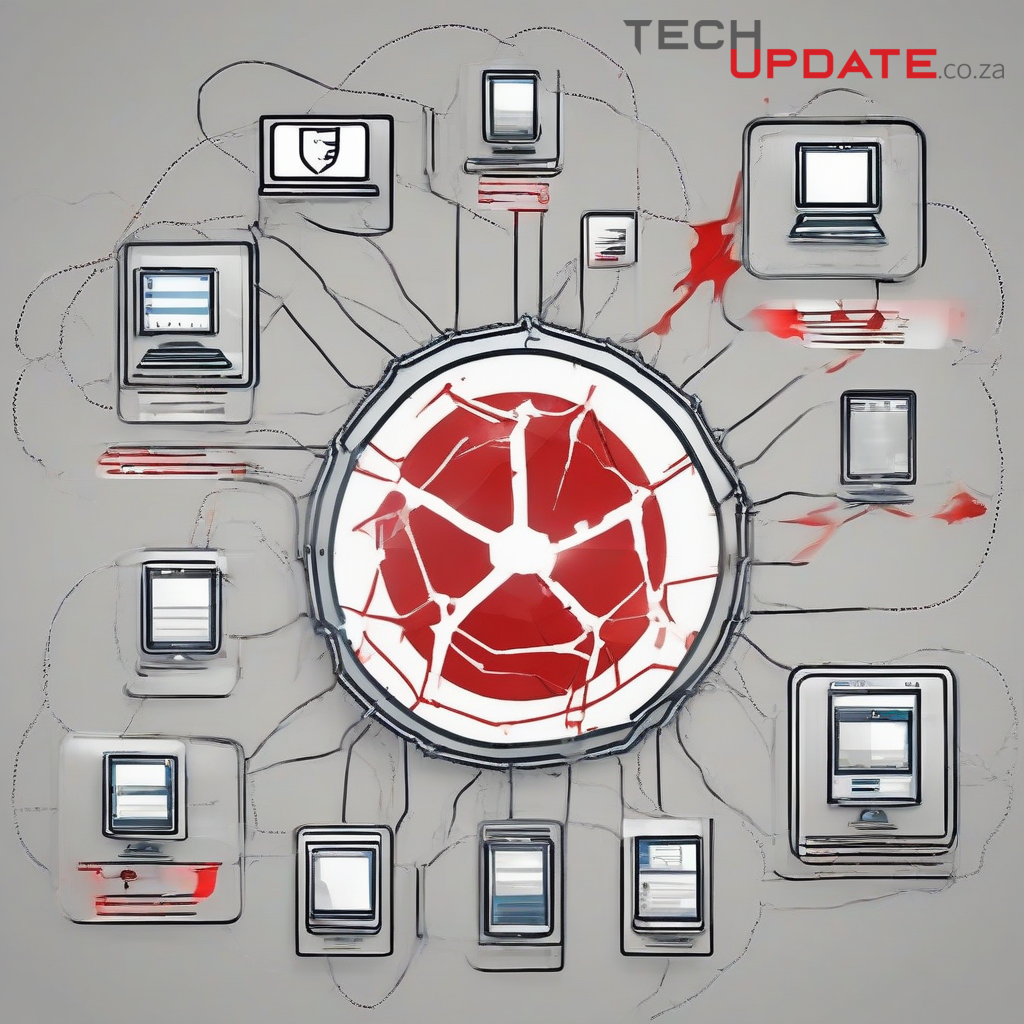
The ClickFix campaign is characterized by its intricate delivery infrastructure. Attackers are exploiting vulnerabilities in a wide array of legitimate websites, transforming them into unwitting platforms for malware distribution. These compromised sites act as initial infection vectors, redirecting unsuspecting users through a multi-stage chain designed to evade detection and ultimately deliver the MIMICRAT payload.
Unlike less sophisticated attacks, the ClickFix campaign meticulously selects its targets and employs techniques that suggest significant pre-planning and resource allocation. The abuse of legitimate infrastructure lends an air of legitimacy to the attacks, making them harder for both users and automated security systems to identify as malicious.
MIMICRAT (AstarionRAT): A New Threat on the Horizon
MIMICRAT, or AstarionRAT, is a potent new remote access trojan that grants attackers extensive control over infected systems. While specific details of its full capabilities are still being analyzed, early disclosures indicate that it enables adversaries to perform a range of malicious activities, including data exfiltration, surveillance, and potentially further payload deployment. The emergence of a new RAT in a well-orchestrated campaign highlights the continuous evolution of cyber threats.
The naming convention, "MIMICRAT," suggests capabilities for imitation or stealth, aligning with the campaign's use of legitimate sites for distribution. This combination of a novel malware variant within a highly organized distribution network underscores the advanced nature of the threat actors involved.
Operational Sophistication and Industry Impact
The breadth and depth of the ClickFix campaign's operational sophistication are particularly noteworthy. The sheer number and diversity of compromised sites, spanning multiple sectors from retail to government services, indicate a broad and indiscriminate approach to initial compromise, followed by a targeted and effective delivery of the MIMICRAT payload. This strategy maximizes the potential victim pool while maintaining a robust and resilient delivery mechanism.
Organizations are urged to heighten their vigilance, reinforcing their website security, patching known vulnerabilities, and implementing robust endpoint detection and response solutions to mitigate the risks posed by such advanced persistent threats.
Summary
The ClickFix campaign, leveraging compromised legitimate websites to deploy the new MIMICRAT (AstarionRAT) malware, represents a significant escalation in cyber threat sophistication. Its multi-stage delivery, widespread abuse of trusted digital infrastructure, and the introduction of a potent new RAT demand immediate attention from cybersecurity professionals and organizations globally. Proactive defense strategies are critical to counter these evolving and increasingly complex attack vectors.
Resources
Details
Author
Top articles




 }})
You can now watch HBO Max for $10
Latest articles



You can now watch HBO Max for $10
Investigating the ClickFix Campaign and the Emergence of MIMICRAT Malware
A sophisticated new cyber campaign, dubbed "ClickFix," has been uncovered, leveraging a vast network of compromised legitimate websites across various industries and geographical locations to deploy a previously undocumented remote access trojan (RAT) known as MIMICRAT, also referred to as AstarionRAT. This multi-stage operation demonstrates a heightened level of operational expertise by its perpetrators, posing a significant threat to digital security.
The ClickFix Modus Operandi
The ClickFix campaign is characterized by its intricate delivery infrastructure. Attackers are exploiting vulnerabilities in a wide array of legitimate websites, transforming them into unwitting platforms for malware distribution. These compromised sites act as initial infection vectors, redirecting unsuspecting users through a multi-stage chain designed to evade detection and ultimately deliver the MIMICRAT payload.
Unlike less sophisticated attacks, the ClickFix campaign meticulously selects its targets and employs techniques that suggest significant pre-planning and resource allocation. The abuse of legitimate infrastructure lends an air of legitimacy to the attacks, making them harder for both users and automated security systems to identify as malicious.
MIMICRAT (AstarionRAT): A New Threat on the Horizon
MIMICRAT, or AstarionRAT, is a potent new remote access trojan that grants attackers extensive control over infected systems. While specific details of its full capabilities are still being analyzed, early disclosures indicate that it enables adversaries to perform a range of malicious activities, including data exfiltration, surveillance, and potentially further payload deployment. The emergence of a new RAT in a well-orchestrated campaign highlights the continuous evolution of cyber threats.
The naming convention, "MIMICRAT," suggests capabilities for imitation or stealth, aligning with the campaign's use of legitimate sites for distribution. This combination of a novel malware variant within a highly organized distribution network underscores the advanced nature of the threat actors involved.
Operational Sophistication and Industry Impact
The breadth and depth of the ClickFix campaign's operational sophistication are particularly noteworthy. The sheer number and diversity of compromised sites, spanning multiple sectors from retail to government services, indicate a broad and indiscriminate approach to initial compromise, followed by a targeted and effective delivery of the MIMICRAT payload. This strategy maximizes the potential victim pool while maintaining a robust and resilient delivery mechanism.
Organizations are urged to heighten their vigilance, reinforcing their website security, patching known vulnerabilities, and implementing robust endpoint detection and response solutions to mitigate the risks posed by such advanced persistent threats.
Summary
The ClickFix campaign, leveraging compromised legitimate websites to deploy the new MIMICRAT (AstarionRAT) malware, represents a significant escalation in cyber threat sophistication. Its multi-stage delivery, widespread abuse of trusted digital infrastructure, and the introduction of a potent new RAT demand immediate attention from cybersecurity professionals and organizations globally. Proactive defense strategies are critical to counter these evolving and increasingly complex attack vectors.
Resources
Top articles
You can now watch HBO Max for $10
Latest articles
You can now watch HBO Max for $10
Similar posts




This is a page that only logged-in people can visit. Don't you feel special? Try clicking on a button below to do some things you can't do when you're logged out.
Example modal
At your leisure, please peruse this excerpt from a whale of a tale.
Chapter 1: Loomings.
Call me Ishmael. Some years ago—never mind how long precisely—having little or no money in my purse, and nothing particular to interest me on shore, I thought I would sail about a little and see the watery part of the world. It is a way I have of driving off the spleen and regulating the circulation. Whenever I find myself growing grim about the mouth; whenever it is a damp, drizzly November in my soul; whenever I find myself involuntarily pausing before coffin warehouses, and bringing up the rear of every funeral I meet; and especially whenever my hypos get such an upper hand of me, that it requires a strong moral principle to prevent me from deliberately stepping into the street, and methodically knocking people's hats off—then, I account it high time to get to sea as soon as I can. This is my substitute for pistol and ball. With a philosophical flourish Cato throws himself upon his sword; I quietly take to the ship. There is nothing surprising in this. If they but knew it, almost all men in their degree, some time or other, cherish very nearly the same feelings towards the ocean with me.
Comment