Nintendo Challenges Trump-Era Tariffs in Court, Demands Refund Following Supreme Court Ruling
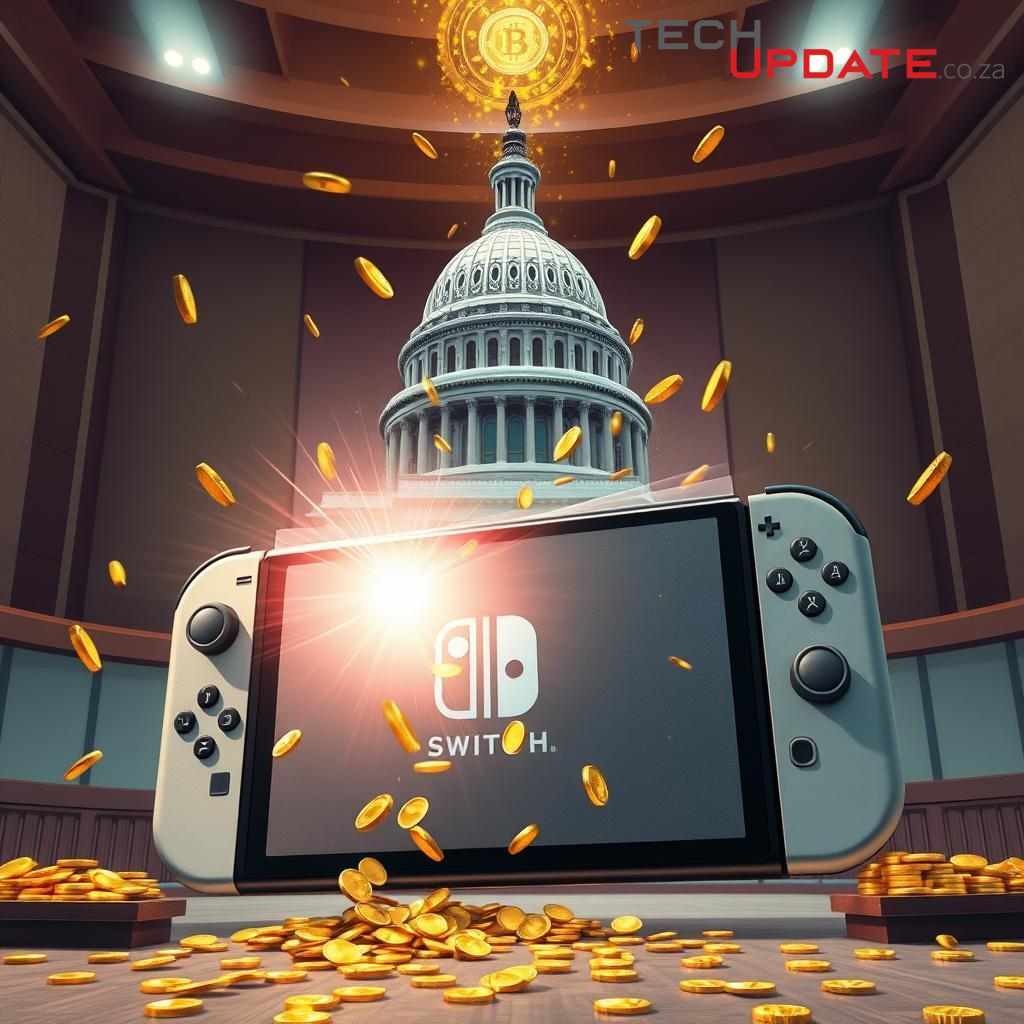
In a significant legal challenge that could reverberate across industries, Nintendo of America has initiated proceedings against the United States government, seeking a full refund, with interest, for duties paid under the Trump administration's tariffs. The complaint, filed in the US Court of International Trade, follows a landmark Supreme Court ruling that deemed President Trump's application of "reciprocal" tariffs under the International Emergency Economic Powers Act (IEEPA) illegal.
The Genesis of the Dispute
The lawsuit by the gaming behemoth, first reported by outlets like Aftermath and The Verge, targets the substantial financial burden placed on importers during a period of heightened trade tensions between the US and China. Many companies, including those in the consumer electronics sector, faced increased operational costs due to these tariffs, which were often justified on various grounds, including national security concerns or as measures to address perceived unfair trade practices by China.
Supreme Court's Pivotal Ruling
The legal landscape shifted dramatically last month when the Supreme Court issued a ruling that undercut the legality of certain tariff implementations. While the high court found Trump's specific use of the IEEPA for levying these reciprocal tariffs unlawful, its decision conspicuously omitted details on how, or if, refunds for previously paid duties should be managed. This legal ambiguity has opened the door for companies like Nintendo to pursue their claims individually in lower courts.
Nintendo's Stance and Broader Implications
Nintendo of America's demand for a "prompt refund" underscores a direct challenge to the financial ramifications of policies now deemed illegal. The success or failure of Nintendo's suit could establish a crucial precedent for numerous other corporations that that bore the brunt of similar tariffs. Billions of dollars in tariffs were collected during this period, and a favorable outcome for Nintendo could encourage a wave of similar lawsuits, potentially leading to significant liabilities for the US Treasury.
Intriguingly, the filing of Nintendo's lawsuit draws a parallel with a notable timing coincidence. The gaming giant had announced launch details for its highly anticipated Switch 2 console, including a planned preorder date of April 9th, on the very same day President Trump publicly revealed intentions to implement broad tariffs on imports from China. While perhaps not directly related to the legal merits of the case, this timing highlights the pervasive impact of trade policy on even unrelated corporate announcements and strategies.
Summary
Nintendo's lawsuit against the US government represents a critical test of legal redress for businesses impacted by government policies later found to be unlawful. Leveraging a Supreme Court decision, the company seeks to reclaim substantial tariff payments, setting a potential precedent for a multitude of other affected importers. The case in the US Court of International Trade will be closely watched for its implications on corporate finance and future trade policy enforcement.
Resources
- The Verge
- Reuters
- US Court of International Trade Records
Details
Author
Top articles




 }})
You can now watch HBO Max for $10
Latest articles





You can now watch HBO Max for $10
In a significant legal challenge that could reverberate across industries, Nintendo of America has initiated proceedings against the United States government, seeking a full refund, with interest, for duties paid under the Trump administration's tariffs. The complaint, filed in the US Court of International Trade, follows a landmark Supreme Court ruling that deemed President Trump's application of "reciprocal" tariffs under the International Emergency Economic Powers Act (IEEPA) illegal.
The Genesis of the Dispute
The lawsuit by the gaming behemoth, first reported by outlets like Aftermath and The Verge, targets the substantial financial burden placed on importers during a period of heightened trade tensions between the US and China. Many companies, including those in the consumer electronics sector, faced increased operational costs due to these tariffs, which were often justified on various grounds, including national security concerns or as measures to address perceived unfair trade practices by China.
Supreme Court's Pivotal Ruling
The legal landscape shifted dramatically last month when the Supreme Court issued a ruling that undercut the legality of certain tariff implementations. While the high court found Trump's specific use of the IEEPA for levying these reciprocal tariffs unlawful, its decision conspicuously omitted details on how, or if, refunds for previously paid duties should be managed. This legal ambiguity has opened the door for companies like Nintendo to pursue their claims individually in lower courts.
Nintendo's Stance and Broader Implications
Nintendo of America's demand for a "prompt refund" underscores a direct challenge to the financial ramifications of policies now deemed illegal. The success or failure of Nintendo's suit could establish a crucial precedent for numerous other corporations that that bore the brunt of similar tariffs. Billions of dollars in tariffs were collected during this period, and a favorable outcome for Nintendo could encourage a wave of similar lawsuits, potentially leading to significant liabilities for the US Treasury.
Intriguingly, the filing of Nintendo's lawsuit draws a parallel with a notable timing coincidence. The gaming giant had announced launch details for its highly anticipated Switch 2 console, including a planned preorder date of April 9th, on the very same day President Trump publicly revealed intentions to implement broad tariffs on imports from China. While perhaps not directly related to the legal merits of the case, this timing highlights the pervasive impact of trade policy on even unrelated corporate announcements and strategies.
Summary
Nintendo's lawsuit against the US government represents a critical test of legal redress for businesses impacted by government policies later found to be unlawful. Leveraging a Supreme Court decision, the company seeks to reclaim substantial tariff payments, setting a potential precedent for a multitude of other affected importers. The case in the US Court of International Trade will be closely watched for its implications on corporate finance and future trade policy enforcement.
Resources
- The Verge
- Reuters
- US Court of International Trade Records
Top articles
You can now watch HBO Max for $10
Latest articles
You can now watch HBO Max for $10
Similar posts


This is a page that only logged-in people can visit. Don't you feel special? Try clicking on a button below to do some things you can't do when you're logged out.
Example modal
At your leisure, please peruse this excerpt from a whale of a tale.
Chapter 1: Loomings.
Call me Ishmael. Some years ago—never mind how long precisely—having little or no money in my purse, and nothing particular to interest me on shore, I thought I would sail about a little and see the watery part of the world. It is a way I have of driving off the spleen and regulating the circulation. Whenever I find myself growing grim about the mouth; whenever it is a damp, drizzly November in my soul; whenever I find myself involuntarily pausing before coffin warehouses, and bringing up the rear of every funeral I meet; and especially whenever my hypos get such an upper hand of me, that it requires a strong moral principle to prevent me from deliberately stepping into the street, and methodically knocking people's hats off—then, I account it high time to get to sea as soon as I can. This is my substitute for pistol and ball. With a philosophical flourish Cato throws himself upon his sword; I quietly take to the ship. There is nothing surprising in this. If they but knew it, almost all men in their degree, some time or other, cherish very nearly the same feelings towards the ocean with me.
Comment