The AI PC Era: Is Big Tech's Vision for On-Device Intelligence What Users Truly Desire?
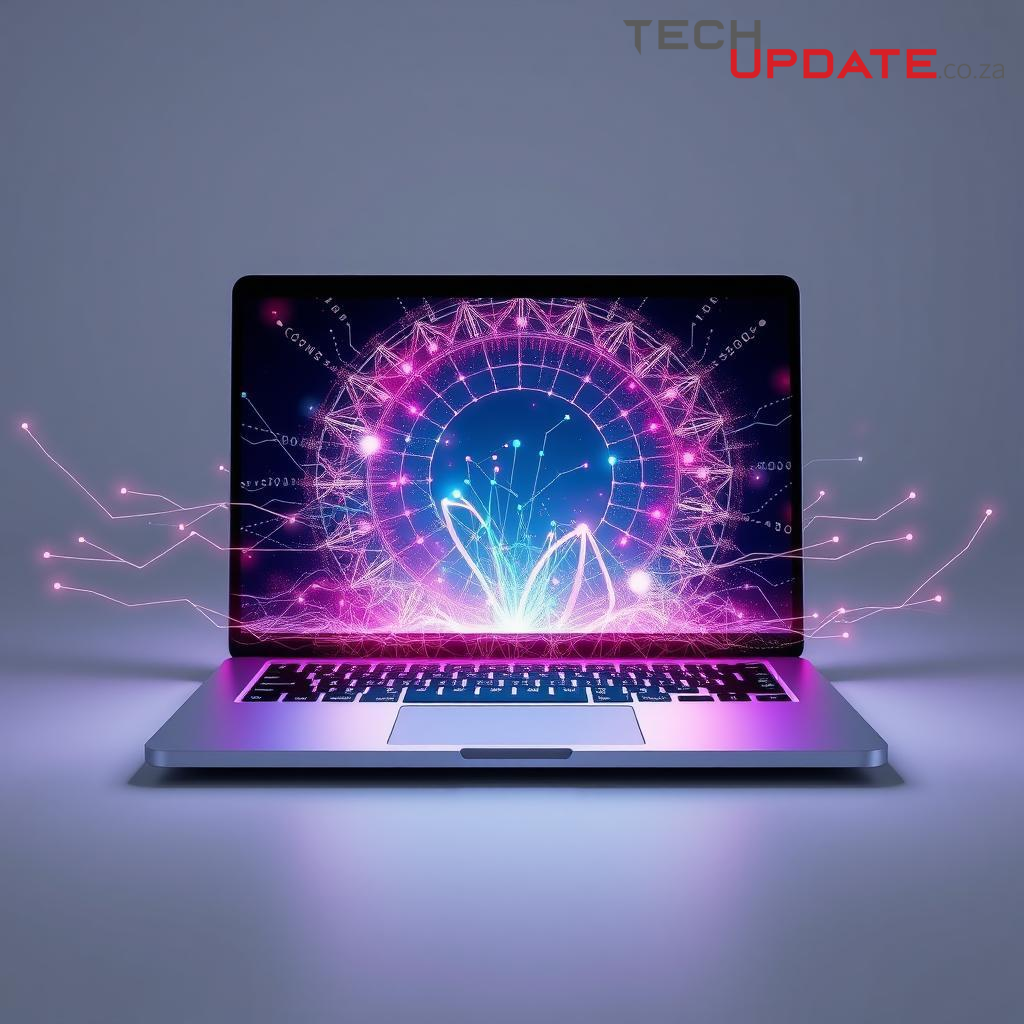
The developer conference season recently concluded, leaving a clear message from the titans of technology: Artificial Intelligence is poised to fundamentally transform our interaction with computing devices. This ambitious pronouncement was perhaps most emphatically articulated by Nvidia CEO Jensen Huang, who outlined a radical departure from conventional laptop usage, envisioning an entirely new class of machines built specifically for on-device AI. While intriguing, this raises a familiar and critical question that dogs many burgeoning AI products: Does this paradigm shift align with genuine user needs and desires?
The Dawn of the AI PC: A Hardware Revolution
The concept of the "AI PC" is rapidly evolving from a theoretical construct to a tangible product category. At the core of this transformation is the integration of Neural Processing Units (NPUs) directly into laptop silicon. These dedicated accelerators are designed to handle AI workloads with unparalleled efficiency, promising a future where advanced AI capabilities are not solely reliant on cloud infrastructure.
Nvidia's Vision and the NPU Imperative
Jensen Huang's commentary underscored a future where laptops are not merely terminals for accessing cloud AI but powerful, autonomous AI agents. While Nvidia's strength traditionally lies in high-performance GPUs, the broader industry push involves a concerted effort to embed AI inferencing capabilities directly onto the client device. This move is driven by the potential for enhanced privacy, reduced latency, and the ability to run sophisticated AI models without a constant internet connection.
Microsoft's Copilot+ PCs: Redefining Windows
Microsoft Build offered the most comprehensive glimpse into this new era with the introduction of "Copilot+ PCs." These machines, initially powered by Qualcomm's Snapdragon X Elite and Plus processors, boast NPUs capable of exceeding 40 Trillion Operations Per Second (TOPS). They come equipped with a suite of AI-powered features, including the controversial "Recall" (a feature designed to allow users to search through their past PC activities), "Cocreator" for generative image and text creation, and advanced real-time language translation. These capabilities aim to integrate AI seamlessly into the Windows experience, promising a more intuitive and productive interaction.
Google's AI Ecosystem: Gemini Everywhere
Google I/O echoed a similar sentiment, albeit with a slightly different approach. Google's strategy revolves around pervasive integration of its Gemini AI model across its vast ecosystem. While less focused on a distinct "AI PC" hardware category, Google's efforts extend Gemini's capabilities to Android and Chrome OS devices, enhancing productivity and user assistance through on-device processing where feasible. The emphasis is on intelligent assistance, contextual understanding, and a fluid AI experience across all Google-powered platforms.
The Unanswered Question: Does Anyone Want This?
Despite the technological marvels, the enthusiasm from Big Tech often outpaces public demand. The central question remains whether these AI-centric features offer compelling enough value to warrant a wholesale upgrade for the average consumer. Early reactions to functionalities like Microsoft's "Recall" have highlighted significant privacy concerns, overshadowing some of the proposed benefits. The practical utility of many on-device AI features for day-to-day computing beyond niche creative or development tasks is still under scrutiny. The industry is effectively building a solution, but the problem it solves for a broad user base is not yet universally apparent.
Privacy, Utility, and the User Experience
The success of the AI PC paradigm will hinge on its ability to deliver tangible, desirable benefits that outweigh potential drawbacks. Privacy implications of features that record user activity must be meticulously addressed. Furthermore, the average user requires a clear, compelling reason to invest in new hardware, beyond the allure of cutting-edge technology. The "killer app" for the AI PC, one that genuinely enhances the computing experience in a way that cloud-based AI cannot, is yet to fully materialize in the consumer psyche.
Conclusion: Charting the Course for AI on Your Laptop
The industry is at an inflection point, with major players betting heavily on the AI PC as the future of personal computing. While the technological foundations are being laid with impressive new hardware and software integrations, the ultimate success of this vision rests on its ability to resonate with end-users. As investigative journalists and data analysts, we observe a clear supply-side push for AI on devices. The coming months will reveal whether consumer demand rises to meet this technological wave, or if the "AI PC" remains a niche offering for early adopters.
Resources
Details
Author
Top articles




 }})
You can now watch HBO Max for $10
Latest articles




You can now watch HBO Max for $10
The developer conference season recently concluded, leaving a clear message from the titans of technology: Artificial Intelligence is poised to fundamentally transform our interaction with computing devices. This ambitious pronouncement was perhaps most emphatically articulated by Nvidia CEO Jensen Huang, who outlined a radical departure from conventional laptop usage, envisioning an entirely new class of machines built specifically for on-device AI. While intriguing, this raises a familiar and critical question that dogs many burgeoning AI products: Does this paradigm shift align with genuine user needs and desires?
The Dawn of the AI PC: A Hardware Revolution
The concept of the "AI PC" is rapidly evolving from a theoretical construct to a tangible product category. At the core of this transformation is the integration of Neural Processing Units (NPUs) directly into laptop silicon. These dedicated accelerators are designed to handle AI workloads with unparalleled efficiency, promising a future where advanced AI capabilities are not solely reliant on cloud infrastructure.
Nvidia's Vision and the NPU Imperative
Jensen Huang's commentary underscored a future where laptops are not merely terminals for accessing cloud AI but powerful, autonomous AI agents. While Nvidia's strength traditionally lies in high-performance GPUs, the broader industry push involves a concerted effort to embed AI inferencing capabilities directly onto the client device. This move is driven by the potential for enhanced privacy, reduced latency, and the ability to run sophisticated AI models without a constant internet connection.
Microsoft's Copilot+ PCs: Redefining Windows
Microsoft Build offered the most comprehensive glimpse into this new era with the introduction of "Copilot+ PCs." These machines, initially powered by Qualcomm's Snapdragon X Elite and Plus processors, boast NPUs capable of exceeding 40 Trillion Operations Per Second (TOPS). They come equipped with a suite of AI-powered features, including the controversial "Recall" (a feature designed to allow users to search through their past PC activities), "Cocreator" for generative image and text creation, and advanced real-time language translation. These capabilities aim to integrate AI seamlessly into the Windows experience, promising a more intuitive and productive interaction.
Google's AI Ecosystem: Gemini Everywhere
Google I/O echoed a similar sentiment, albeit with a slightly different approach. Google's strategy revolves around pervasive integration of its Gemini AI model across its vast ecosystem. While less focused on a distinct "AI PC" hardware category, Google's efforts extend Gemini's capabilities to Android and Chrome OS devices, enhancing productivity and user assistance through on-device processing where feasible. The emphasis is on intelligent assistance, contextual understanding, and a fluid AI experience across all Google-powered platforms.
The Unanswered Question: Does Anyone Want This?
Despite the technological marvels, the enthusiasm from Big Tech often outpaces public demand. The central question remains whether these AI-centric features offer compelling enough value to warrant a wholesale upgrade for the average consumer. Early reactions to functionalities like Microsoft's "Recall" have highlighted significant privacy concerns, overshadowing some of the proposed benefits. The practical utility of many on-device AI features for day-to-day computing beyond niche creative or development tasks is still under scrutiny. The industry is effectively building a solution, but the problem it solves for a broad user base is not yet universally apparent.
Privacy, Utility, and the User Experience
The success of the AI PC paradigm will hinge on its ability to deliver tangible, desirable benefits that outweigh potential drawbacks. Privacy implications of features that record user activity must be meticulously addressed. Furthermore, the average user requires a clear, compelling reason to invest in new hardware, beyond the allure of cutting-edge technology. The "killer app" for the AI PC, one that genuinely enhances the computing experience in a way that cloud-based AI cannot, is yet to fully materialize in the consumer psyche.
Conclusion: Charting the Course for AI on Your Laptop
The industry is at an inflection point, with major players betting heavily on the AI PC as the future of personal computing. While the technological foundations are being laid with impressive new hardware and software integrations, the ultimate success of this vision rests on its ability to resonate with end-users. As investigative journalists and data analysts, we observe a clear supply-side push for AI on devices. The coming months will reveal whether consumer demand rises to meet this technological wave, or if the "AI PC" remains a niche offering for early adopters.
Resources
Top articles
You can now watch HBO Max for $10
Latest articles
You can now watch HBO Max for $10
Similar posts




This is a page that only logged-in people can visit. Don't you feel special? Try clicking on a button below to do some things you can't do when you're logged out.
Example modal
At your leisure, please peruse this excerpt from a whale of a tale.
Chapter 1: Loomings.
Call me Ishmael. Some years ago—never mind how long precisely—having little or no money in my purse, and nothing particular to interest me on shore, I thought I would sail about a little and see the watery part of the world. It is a way I have of driving off the spleen and regulating the circulation. Whenever I find myself growing grim about the mouth; whenever it is a damp, drizzly November in my soul; whenever I find myself involuntarily pausing before coffin warehouses, and bringing up the rear of every funeral I meet; and especially whenever my hypos get such an upper hand of me, that it requires a strong moral principle to prevent me from deliberately stepping into the street, and methodically knocking people's hats off—then, I account it high time to get to sea as soon as I can. This is my substitute for pistol and ball. With a philosophical flourish Cato throws himself upon his sword; I quietly take to the ship. There is nothing surprising in this. If they but knew it, almost all men in their degree, some time or other, cherish very nearly the same feelings towards the ocean with me.
Comment