Sony Intensifies PS5 Push Amidst Industry Headwinds as PS6 Looms Beyond 2028
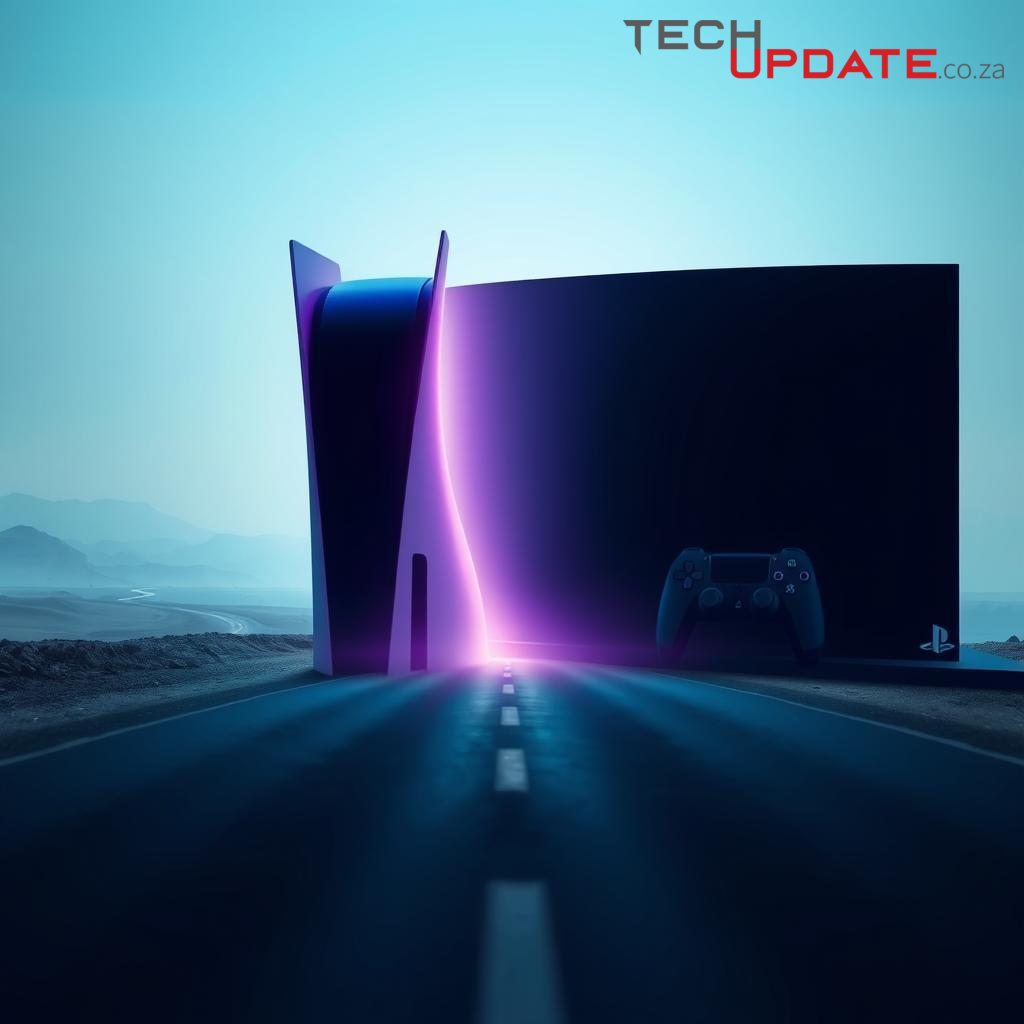
The Shifting Sands of Console Generations
The video game industry finds itself at a unique juncture, navigating a complex interplay of technological advancements, economic pressures, and evolving consumer behaviors. As the current console generation, spearheaded by Sony's PlayStation 5 and Microsoft's Xbox Series X/S, solidifies its market presence, a strategic recalibration is underway. Sony, in particular, is actively working to transition its substantial PlayStation 4 user base to the PS5, a move that aligns with broader industry trends and analyst predictions for an extended console cycle, potentially pushing the PlayStation 6's arrival well past 2028.
Sony's Strategic PS5 Migration
For years, the PlayStation 4 remained a dominant force, creating an installed base numbering in the hundreds of millions. This legacy, while impressive, now presents a unique challenge and opportunity for Sony. The company has been employing various strategies to encourage PS4 owners to upgrade, ranging from exclusive PS5 titles and enhanced performance for cross-gen games to strategic marketing campaigns highlighting the benefits of the newer hardware. This push is not merely about sales; it's about consolidating the PlayStation ecosystem on its most advanced platform, streamlining development, and leveraging the full capabilities of its current-generation technology.
This strategic migration is vital for several reasons. Firstly, it allows developers to fully harness the PS5's power, leading to more innovative and graphically intensive gaming experiences. Secondly, it prepares the market for the eventual deprecation of older hardware, a natural cycle in the technology sector. Finally, it optimizes Sony's resource allocation, enabling a sharper focus on next-gen content and services.
The PS6 Outlook: A Post-2028 Horizon
Industry analysts have increasingly pointed towards a longer lifespan for the current console generation than historically observed. Prominent figures within the financial and tech analysis sectors, such as those at Kantan Games, have suggested that the PlayStation 6 may not debut until after 2028. This extended timeline is a direct consequence of several macro and microeconomic factors currently impacting the technology and gaming landscapes.
The most significant driver behind this projected delay is the soaring cost of critical hardware components. The intense demand for semiconductors and specialized chips, heavily influenced by the exponential growth of Artificial Intelligence (AI) and the expansion of data centers, has driven manufacturing costs upwards. This inflationary pressure on components directly impacts the profitability and pricing strategies for new console hardware. Companies like Sony and Microsoft are thus incentivized to maximize the lifecycle and profitability of their existing, established consoles while waiting for market conditions and supply chain economics to stabilize.
Furthermore, an extended console generation allows for greater market saturation of the current hardware, ensuring a larger addressable market for game developers and publishers. It also provides more time for technological advancements to mature, potentially allowing the PS6 to feature genuinely revolutionary leaps rather than incremental upgrades, justifying its eventual premium price point.
Summary
Sony's concerted efforts to transition its user base from PS4 to PS5 are a calculated response to the current dynamics of the technology and gaming sectors. With rising hardware costs and AI-driven demand pushing component prices higher, extending the lifecycle of the PlayStation 5 and Xbox Series X/S becomes a pragmatic business strategy. Analyst predictions for a PS6 launch beyond 2028 underscore a broader industry trend towards longer console generations, designed to maximize existing investments and navigate a volatile economic landscape. This extended cycle ultimately aims to ensure that when the next generation arrives, it does so with significant technological advancements and a robust market prepared for its embrace.
Resources
- GamesIndustry.biz (Reports on industry trends, analyst commentary)
- Ampere Analysis (Market research and forecasting for the entertainment industry)
- Financial Times (Coverage of global economic trends and technology sector analysis)
Details
Author
Top articles




 }})
You can now watch HBO Max for $10
Latest articles



You can now watch HBO Max for $10
The Shifting Sands of Console Generations
The video game industry finds itself at a unique juncture, navigating a complex interplay of technological advancements, economic pressures, and evolving consumer behaviors. As the current console generation, spearheaded by Sony's PlayStation 5 and Microsoft's Xbox Series X/S, solidifies its market presence, a strategic recalibration is underway. Sony, in particular, is actively working to transition its substantial PlayStation 4 user base to the PS5, a move that aligns with broader industry trends and analyst predictions for an extended console cycle, potentially pushing the PlayStation 6's arrival well past 2028.
Sony's Strategic PS5 Migration
For years, the PlayStation 4 remained a dominant force, creating an installed base numbering in the hundreds of millions. This legacy, while impressive, now presents a unique challenge and opportunity for Sony. The company has been employing various strategies to encourage PS4 owners to upgrade, ranging from exclusive PS5 titles and enhanced performance for cross-gen games to strategic marketing campaigns highlighting the benefits of the newer hardware. This push is not merely about sales; it's about consolidating the PlayStation ecosystem on its most advanced platform, streamlining development, and leveraging the full capabilities of its current-generation technology.
This strategic migration is vital for several reasons. Firstly, it allows developers to fully harness the PS5's power, leading to more innovative and graphically intensive gaming experiences. Secondly, it prepares the market for the eventual deprecation of older hardware, a natural cycle in the technology sector. Finally, it optimizes Sony's resource allocation, enabling a sharper focus on next-gen content and services.
The PS6 Outlook: A Post-2028 Horizon
Industry analysts have increasingly pointed towards a longer lifespan for the current console generation than historically observed. Prominent figures within the financial and tech analysis sectors, such as those at Kantan Games, have suggested that the PlayStation 6 may not debut until after 2028. This extended timeline is a direct consequence of several macro and microeconomic factors currently impacting the technology and gaming landscapes.
The most significant driver behind this projected delay is the soaring cost of critical hardware components. The intense demand for semiconductors and specialized chips, heavily influenced by the exponential growth of Artificial Intelligence (AI) and the expansion of data centers, has driven manufacturing costs upwards. This inflationary pressure on components directly impacts the profitability and pricing strategies for new console hardware. Companies like Sony and Microsoft are thus incentivized to maximize the lifecycle and profitability of their existing, established consoles while waiting for market conditions and supply chain economics to stabilize.
Furthermore, an extended console generation allows for greater market saturation of the current hardware, ensuring a larger addressable market for game developers and publishers. It also provides more time for technological advancements to mature, potentially allowing the PS6 to feature genuinely revolutionary leaps rather than incremental upgrades, justifying its eventual premium price point.
Summary
Sony's concerted efforts to transition its user base from PS4 to PS5 are a calculated response to the current dynamics of the technology and gaming sectors. With rising hardware costs and AI-driven demand pushing component prices higher, extending the lifecycle of the PlayStation 5 and Xbox Series X/S becomes a pragmatic business strategy. Analyst predictions for a PS6 launch beyond 2028 underscore a broader industry trend towards longer console generations, designed to maximize existing investments and navigate a volatile economic landscape. This extended cycle ultimately aims to ensure that when the next generation arrives, it does so with significant technological advancements and a robust market prepared for its embrace.
Resources
- GamesIndustry.biz (Reports on industry trends, analyst commentary)
- Ampere Analysis (Market research and forecasting for the entertainment industry)
- Financial Times (Coverage of global economic trends and technology sector analysis)
Top articles
You can now watch HBO Max for $10
Latest articles
You can now watch HBO Max for $10
Similar posts

This is a page that only logged-in people can visit. Don't you feel special? Try clicking on a button below to do some things you can't do when you're logged out.
Example modal
At your leisure, please peruse this excerpt from a whale of a tale.
Chapter 1: Loomings.
Call me Ishmael. Some years ago—never mind how long precisely—having little or no money in my purse, and nothing particular to interest me on shore, I thought I would sail about a little and see the watery part of the world. It is a way I have of driving off the spleen and regulating the circulation. Whenever I find myself growing grim about the mouth; whenever it is a damp, drizzly November in my soul; whenever I find myself involuntarily pausing before coffin warehouses, and bringing up the rear of every funeral I meet; and especially whenever my hypos get such an upper hand of me, that it requires a strong moral principle to prevent me from deliberately stepping into the street, and methodically knocking people's hats off—then, I account it high time to get to sea as soon as I can. This is my substitute for pistol and ball. With a philosophical flourish Cato throws himself upon his sword; I quietly take to the ship. There is nothing surprising in this. If they but knew it, almost all men in their degree, some time or other, cherish very nearly the same feelings towards the ocean with me.
Comment