Gizmo: Pioneering a New Frontier in Vibe-Coded, Interactive Mini-Apps
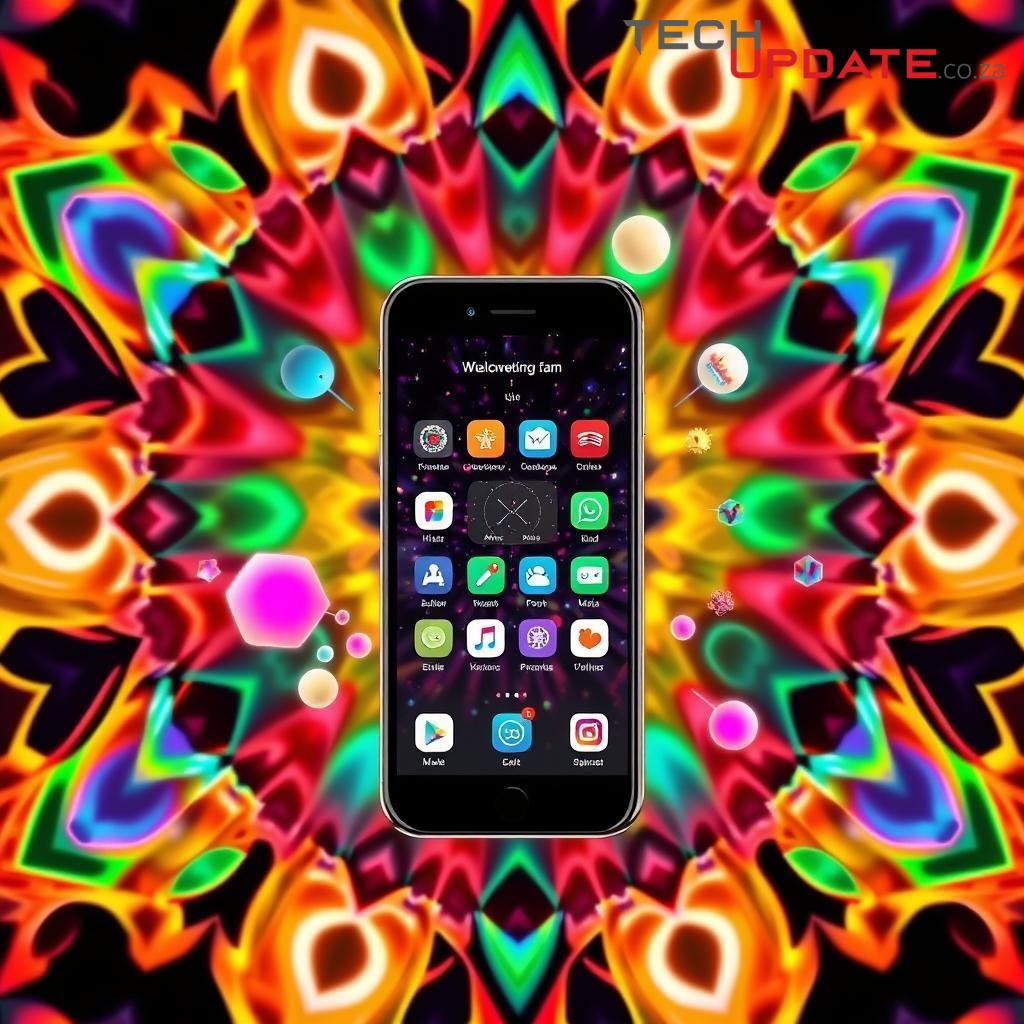
The digital landscape is in constant flux, with new platforms emerging to redefine how individuals engage with content and applications. A compelling concept gaining traction is Gizmo, an innovative platform envisioned as a "TikTok for interactive, vibe-coded mini-apps." This novel approach aims to fuse the addictive, ephemeral nature of short-form content with highly personalized, interactive micro-experiences, creating a dynamic ecosystem tailored to individual user moods and preferences.
The Essence of Vibe-Coded Interaction
At the core of Gizmo's proposition lies the concept of "vibe-coded" content. Unlike traditional platforms that rely solely on explicit user inputs or broad category selections, Gizmo’s underlying algorithms are designed to interpret and respond to a user's implicit emotional state or desired mood – their "vibe." This could manifest through subtle cues, engagement patterns, or direct, yet intuitive, preference settings. For instance, a user seeking inspiration might be presented with short, uplifting coding challenges or creative prompts, while someone looking to unwind might encounter calming ambient soundscapes integrated with simple, meditative mini-games.
This nuanced approach allows for a highly adaptive content feed, ensuring that the mini-apps presented resonate deeply with the user's current psychological disposition, making interactions feel more organic and less like algorithmically imposed suggestions. The goal is to move beyond mere content recommendation to a state of emotional and experiential congruence.
Beyond Passive Consumption: The Mini-App Revolution
Drawing parallels to the success of TikTok, Gizmo capitalizes on the brevity and rapid-fire delivery of content. However, it elevates this model by embedding interactivity directly into these short-form experiences. Instead of passively scrolling through videos, users actively engage with "mini-apps" – lightweight, purpose-built applications that load instantly and serve a singular, focused function. These could range from quick-fire quizzes and collaborative art tools to personalized productivity hacks or bite-sized learning modules.
This structure reflects the broader "super-app" trend observed in markets like Asia, where platforms such as WeChat integrate a multitude of services within a single ecosystem. Gizmo, however, distills this concept, focusing on entertainment and utility delivered through highly contextualized, vibe-coded mini-apps. This model fosters creativity not only among users but also among developers, who are encouraged to build and deploy innovative micro-experiences that align with diverse "vibes."
Algorithmic Alchemy and Personalization
The engine driving Gizmo's personalized experience is its sophisticated recommendation algorithm. Far surpassing basic content matching, this system processes user engagement with mini-apps, dwell times, and inferred emotional responses to refine future suggestions. The "vibe-coding" aspect is continuously optimized, learning from user interactions to predict and offer experiences that align with evolving moods throughout the day. This creates a self-reinforcing loop of discovery and enjoyment, where each interaction enhances the platform's ability to deliver genuinely resonant content.
Challenges and the Path Forward
While the concept of Gizmo presents a compelling vision for the future of digital interaction, its realization entails significant challenges. Building a robust developer ecosystem for mini-apps, ensuring stringent content moderation for a diverse range of interactive experiences, and scaling the sophisticated vibe-coding algorithms will be paramount. User adoption will depend heavily on the seamlessness of the experience and the consistent delivery of high-quality, relevant mini-apps. Nevertheless, Gizmo's potential to merge entertainment, utility, and deep personalization marks it as a significant direction in the ongoing evolution of digital platforms.
Summary
Gizmo stands as a conceptual blueprint for the next generation of digital engagement, transforming the short-form content paradigm into an interactive, highly personalized ecosystem. By leveraging "vibe-coded" mini-apps, it promises a dynamic and emotionally resonant user experience, pushing the boundaries of what platforms can offer beyond passive consumption. Its success would herald a new era where digital interactions are not just algorithmically curated, but intimately aligned with individual human sentiments.
Resources
- TechCrunch - Insights into the super-app phenomenon and mini-program ecosystems.
- Pew Research Center - Data on evolving social media consumption habits and user engagement.
- Wired - Analysis on the impact of personalization algorithms in digital content delivery.
- Various industry reports on interactive content trends and gamification in applications.
Details
Author
Top articles




 }})
You can now watch HBO Max for $10
Latest articles



You can now watch HBO Max for $10
The digital landscape is in constant flux, with new platforms emerging to redefine how individuals engage with content and applications. A compelling concept gaining traction is Gizmo, an innovative platform envisioned as a "TikTok for interactive, vibe-coded mini-apps." This novel approach aims to fuse the addictive, ephemeral nature of short-form content with highly personalized, interactive micro-experiences, creating a dynamic ecosystem tailored to individual user moods and preferences.
The Essence of Vibe-Coded Interaction
At the core of Gizmo's proposition lies the concept of "vibe-coded" content. Unlike traditional platforms that rely solely on explicit user inputs or broad category selections, Gizmo’s underlying algorithms are designed to interpret and respond to a user's implicit emotional state or desired mood – their "vibe." This could manifest through subtle cues, engagement patterns, or direct, yet intuitive, preference settings. For instance, a user seeking inspiration might be presented with short, uplifting coding challenges or creative prompts, while someone looking to unwind might encounter calming ambient soundscapes integrated with simple, meditative mini-games.
This nuanced approach allows for a highly adaptive content feed, ensuring that the mini-apps presented resonate deeply with the user's current psychological disposition, making interactions feel more organic and less like algorithmically imposed suggestions. The goal is to move beyond mere content recommendation to a state of emotional and experiential congruence.
Beyond Passive Consumption: The Mini-App Revolution
Drawing parallels to the success of TikTok, Gizmo capitalizes on the brevity and rapid-fire delivery of content. However, it elevates this model by embedding interactivity directly into these short-form experiences. Instead of passively scrolling through videos, users actively engage with "mini-apps" – lightweight, purpose-built applications that load instantly and serve a singular, focused function. These could range from quick-fire quizzes and collaborative art tools to personalized productivity hacks or bite-sized learning modules.
This structure reflects the broader "super-app" trend observed in markets like Asia, where platforms such as WeChat integrate a multitude of services within a single ecosystem. Gizmo, however, distills this concept, focusing on entertainment and utility delivered through highly contextualized, vibe-coded mini-apps. This model fosters creativity not only among users but also among developers, who are encouraged to build and deploy innovative micro-experiences that align with diverse "vibes."
Algorithmic Alchemy and Personalization
The engine driving Gizmo's personalized experience is its sophisticated recommendation algorithm. Far surpassing basic content matching, this system processes user engagement with mini-apps, dwell times, and inferred emotional responses to refine future suggestions. The "vibe-coding" aspect is continuously optimized, learning from user interactions to predict and offer experiences that align with evolving moods throughout the day. This creates a self-reinforcing loop of discovery and enjoyment, where each interaction enhances the platform's ability to deliver genuinely resonant content.
Challenges and the Path Forward
While the concept of Gizmo presents a compelling vision for the future of digital interaction, its realization entails significant challenges. Building a robust developer ecosystem for mini-apps, ensuring stringent content moderation for a diverse range of interactive experiences, and scaling the sophisticated vibe-coding algorithms will be paramount. User adoption will depend heavily on the seamlessness of the experience and the consistent delivery of high-quality, relevant mini-apps. Nevertheless, Gizmo's potential to merge entertainment, utility, and deep personalization marks it as a significant direction in the ongoing evolution of digital platforms.
Summary
Gizmo stands as a conceptual blueprint for the next generation of digital engagement, transforming the short-form content paradigm into an interactive, highly personalized ecosystem. By leveraging "vibe-coded" mini-apps, it promises a dynamic and emotionally resonant user experience, pushing the boundaries of what platforms can offer beyond passive consumption. Its success would herald a new era where digital interactions are not just algorithmically curated, but intimately aligned with individual human sentiments.
Resources
- TechCrunch - Insights into the super-app phenomenon and mini-program ecosystems.
- Pew Research Center - Data on evolving social media consumption habits and user engagement.
- Wired - Analysis on the impact of personalization algorithms in digital content delivery.
- Various industry reports on interactive content trends and gamification in applications.
Top articles
You can now watch HBO Max for $10
Latest articles
You can now watch HBO Max for $10
Similar posts



This is a page that only logged-in people can visit. Don't you feel special? Try clicking on a button below to do some things you can't do when you're logged out.
Example modal
At your leisure, please peruse this excerpt from a whale of a tale.
Chapter 1: Loomings.
Call me Ishmael. Some years ago—never mind how long precisely—having little or no money in my purse, and nothing particular to interest me on shore, I thought I would sail about a little and see the watery part of the world. It is a way I have of driving off the spleen and regulating the circulation. Whenever I find myself growing grim about the mouth; whenever it is a damp, drizzly November in my soul; whenever I find myself involuntarily pausing before coffin warehouses, and bringing up the rear of every funeral I meet; and especially whenever my hypos get such an upper hand of me, that it requires a strong moral principle to prevent me from deliberately stepping into the street, and methodically knocking people's hats off—then, I account it high time to get to sea as soon as I can. This is my substitute for pistol and ball. With a philosophical flourish Cato throws himself upon his sword; I quietly take to the ship. There is nothing surprising in this. If they but knew it, almost all men in their degree, some time or other, cherish very nearly the same feelings towards the ocean with me.
Comment