Can Cursor Maintain Multi-AI Model Support Under SpaceX Ownership?
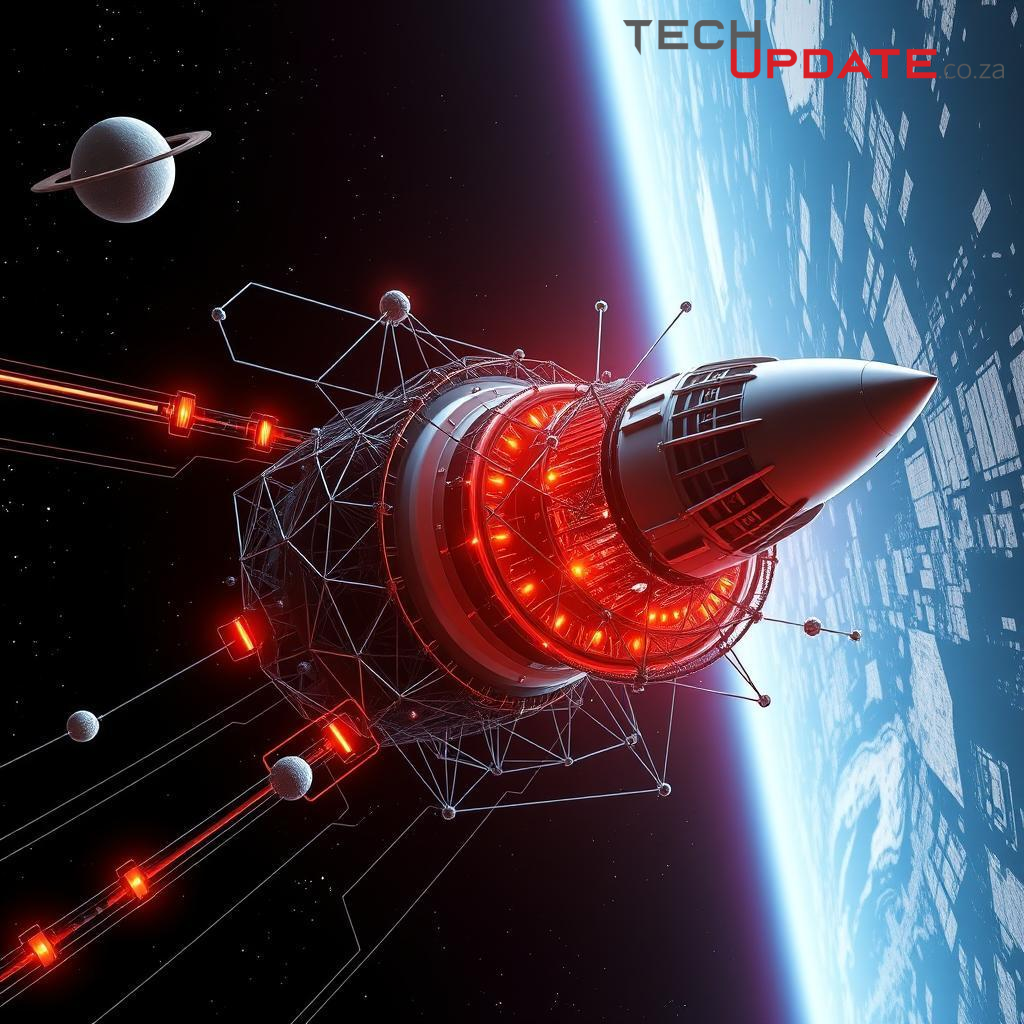
The recent acquisition of Cursor, a prominent AI-native code editor, by aerospace giant SpaceX, introduces a complex dynamic concerning the platform's continued support for third-party AI models from industry leaders like OpenAI and Anthropic. Cursor's value proposition has long rested on its flexibility, allowing developers to leverage diverse frontier AI models for code generation and analysis. This integration strategy now faces scrutiny under the umbrella of a company deeply involved in national security and sensitive technological advancements.
The Core Conflict: Open AI Integration vs. SpaceX's Security Imperatives
Cursor's appeal to its user base stems from its ability to act as a universal interface for advanced AI coding assistants, offering access to models such as OpenAI's GPT series and Anthropic's Claude. This multi-model approach grants developers significant choice and access to cutting-edge capabilities. However, integrating these external, proprietary models within SpaceX, a company with significant defense contracts and highly sensitive intellectual property, presents inherent challenges.
Data Sovereignty and Terms of Service
Frontier AI labs like OpenAI and Anthropic typically impose stringent terms of service, often prohibiting the use of their models for military, defense, or critical infrastructure applications without explicit waivers or specialized agreements. The concern centers on data sovereignty: how user code and interactions within Cursor—when leveraging these third-party models—are handled, processed, and secured. SpaceX would likely demand robust guarantees against data exfiltration or unintended use, which might conflict with the standard operational procedures of these AI providers.
Navigating the Path Forward: Potential Scenarios
Several scenarios could unfold as Cursor integrates into SpaceX. One possibility is a highly controlled environment where Cursor's third-party model access is restricted to non-sensitive projects or entirely deprecated in favor of internal, SpaceX-developed AI solutions. This would ensure maximum data security and align with SpaceX's strategic autonomy but would fundamentally alter Cursor's product offering.
Alternatively, SpaceX and the AI labs could negotiate bespoke agreements. Such agreements would need to address specific security protocols, data handling, and usage limitations, potentially requiring dedicated, isolated instances of the AI models. This path is complex, time-consuming, and would test the commercial and ethical boundaries between the frontier AI providers and a major defense contractor.
Maintaining the Status Quo: A Difficult Proposition
Allowing Cursor to maintain its current, unfettered access to OpenAI and Anthropic models within SpaceX's operational framework seems the least likely outcome. The potential risks associated with intellectual property, national security implications, and the inherent tension with the AI labs' usage policies would likely be too significant for SpaceX to overlook.
Summary
The acquisition of Cursor by SpaceX highlights a growing tension at the intersection of open AI access and corporate-national security imperatives. While Cursor's multi-model strategy has been a cornerstone of its success, its future under SpaceX will undoubtedly involve a re-evaluation of its third-party AI integrations. The outcome will likely shape how other sensitive organizations approach the adoption of external AI tools, balancing innovation with stringent security and compliance requirements. Ultimately, the future of Cursor's multi-AI model support within SpaceX will depend on complex negotiations, technological adaptations, and a redefinition of its operational scope.
Resources
- TechCrunch - For breaking news and analysis on tech acquisitions.
- The Information - For in-depth investigative reports on the tech industry.
- OpenAI Usage Policies - For official guidelines on model usage.
- Anthropic Acceptable Use Policy - For official guidelines on model usage.
Details
Author
Top articles



 }})
You can now watch HBO Max for $10
Latest articles





You can now watch HBO Max for $10
The recent acquisition of Cursor, a prominent AI-native code editor, by aerospace giant SpaceX, introduces a complex dynamic concerning the platform's continued support for third-party AI models from industry leaders like OpenAI and Anthropic. Cursor's value proposition has long rested on its flexibility, allowing developers to leverage diverse frontier AI models for code generation and analysis. This integration strategy now faces scrutiny under the umbrella of a company deeply involved in national security and sensitive technological advancements.
The Core Conflict: Open AI Integration vs. SpaceX's Security Imperatives
Cursor's appeal to its user base stems from its ability to act as a universal interface for advanced AI coding assistants, offering access to models such as OpenAI's GPT series and Anthropic's Claude. This multi-model approach grants developers significant choice and access to cutting-edge capabilities. However, integrating these external, proprietary models within SpaceX, a company with significant defense contracts and highly sensitive intellectual property, presents inherent challenges.
Data Sovereignty and Terms of Service
Frontier AI labs like OpenAI and Anthropic typically impose stringent terms of service, often prohibiting the use of their models for military, defense, or critical infrastructure applications without explicit waivers or specialized agreements. The concern centers on data sovereignty: how user code and interactions within Cursor—when leveraging these third-party models—are handled, processed, and secured. SpaceX would likely demand robust guarantees against data exfiltration or unintended use, which might conflict with the standard operational procedures of these AI providers.
Navigating the Path Forward: Potential Scenarios
Several scenarios could unfold as Cursor integrates into SpaceX. One possibility is a highly controlled environment where Cursor's third-party model access is restricted to non-sensitive projects or entirely deprecated in favor of internal, SpaceX-developed AI solutions. This would ensure maximum data security and align with SpaceX's strategic autonomy but would fundamentally alter Cursor's product offering.
Alternatively, SpaceX and the AI labs could negotiate bespoke agreements. Such agreements would need to address specific security protocols, data handling, and usage limitations, potentially requiring dedicated, isolated instances of the AI models. This path is complex, time-consuming, and would test the commercial and ethical boundaries between the frontier AI providers and a major defense contractor.
Maintaining the Status Quo: A Difficult Proposition
Allowing Cursor to maintain its current, unfettered access to OpenAI and Anthropic models within SpaceX's operational framework seems the least likely outcome. The potential risks associated with intellectual property, national security implications, and the inherent tension with the AI labs' usage policies would likely be too significant for SpaceX to overlook.
Summary
The acquisition of Cursor by SpaceX highlights a growing tension at the intersection of open AI access and corporate-national security imperatives. While Cursor's multi-model strategy has been a cornerstone of its success, its future under SpaceX will undoubtedly involve a re-evaluation of its third-party AI integrations. The outcome will likely shape how other sensitive organizations approach the adoption of external AI tools, balancing innovation with stringent security and compliance requirements. Ultimately, the future of Cursor's multi-AI model support within SpaceX will depend on complex negotiations, technological adaptations, and a redefinition of its operational scope.
Resources
- TechCrunch - For breaking news and analysis on tech acquisitions.
- The Information - For in-depth investigative reports on the tech industry.
- OpenAI Usage Policies - For official guidelines on model usage.
- Anthropic Acceptable Use Policy - For official guidelines on model usage.
Top articles
You can now watch HBO Max for $10
Latest articles
You can now watch HBO Max for $10
Similar posts


This is a page that only logged-in people can visit. Don't you feel special? Try clicking on a button below to do some things you can't do when you're logged out.
Example modal
At your leisure, please peruse this excerpt from a whale of a tale.
Chapter 1: Loomings.
Call me Ishmael. Some years ago—never mind how long precisely—having little or no money in my purse, and nothing particular to interest me on shore, I thought I would sail about a little and see the watery part of the world. It is a way I have of driving off the spleen and regulating the circulation. Whenever I find myself growing grim about the mouth; whenever it is a damp, drizzly November in my soul; whenever I find myself involuntarily pausing before coffin warehouses, and bringing up the rear of every funeral I meet; and especially whenever my hypos get such an upper hand of me, that it requires a strong moral principle to prevent me from deliberately stepping into the street, and methodically knocking people's hats off—then, I account it high time to get to sea as soon as I can. This is my substitute for pistol and ball. With a philosophical flourish Cato throws himself upon his sword; I quietly take to the ship. There is nothing surprising in this. If they but knew it, almost all men in their degree, some time or other, cherish very nearly the same feelings towards the ocean with me.
Comment