Cosmic Computation: How AI Galaxy Hunters Intensify the Global GPU Crunch
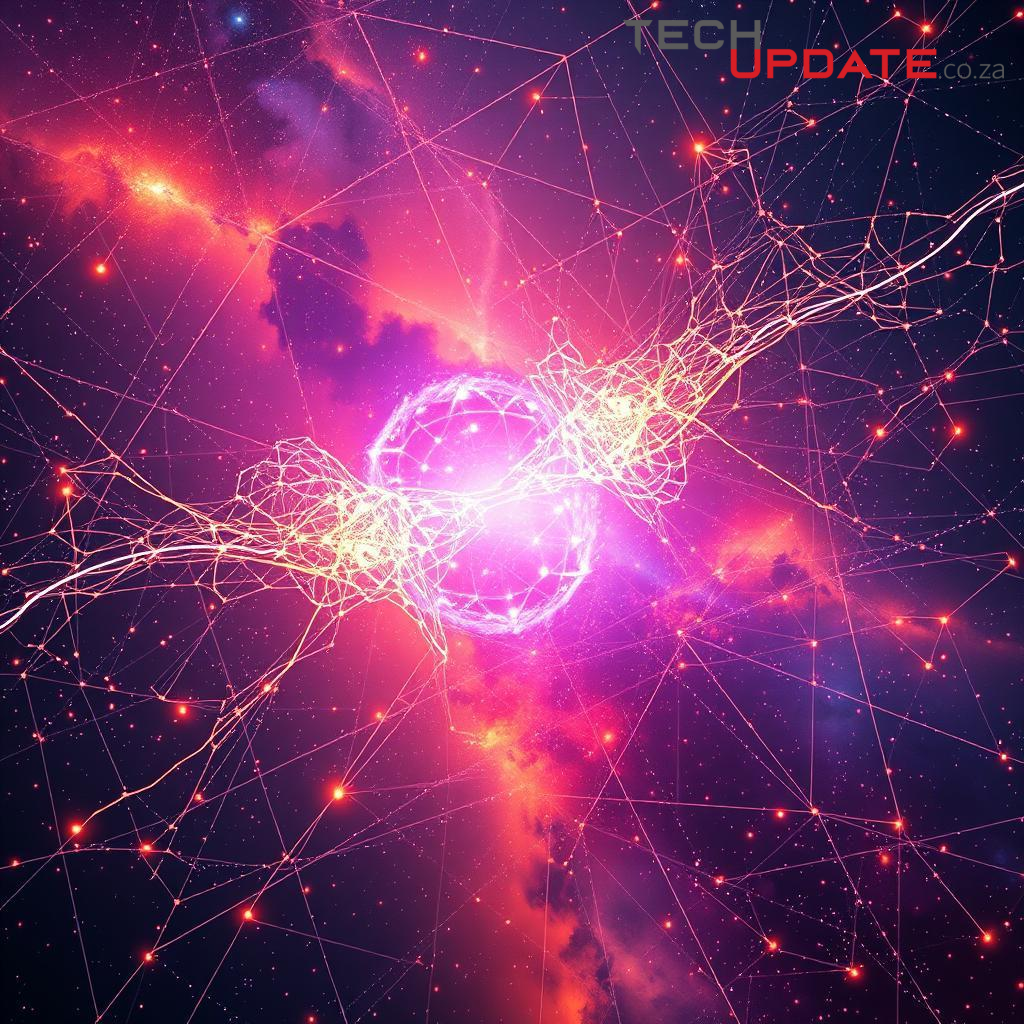
The universe, a tapestry of billions of galaxies, presents an unparalleled challenge for astronomers. Identifying and classifying these celestial bodies, often described as finding needles in a cosmic haystack, has traditionally been a painstaking manual process. However, the advent of Artificial Intelligence (AI) and Machine Learning (ML) is revolutionizing this endeavor, allowing scientists to process vast swathes of astronomical data with unprecedented speed and accuracy. This transformative shift, while accelerating our understanding of the cosmos, inadvertently contributes to an already strained global supply chain: the market for Graphics Processing Units (GPUs).
AI's Role in Unveiling the Universe
Modern telescopes, such as the Hubble Space Telescope and the upcoming Vera C. Rubin Observatory, generate petabytes of data annually. Manually sifting through images containing millions of galaxies to identify their morphology, redshift, or peculiar features is simply unfeasible. AI algorithms, particularly deep learning neural networks, excel at pattern recognition and classification tasks. Researchers are training these models on existing datasets of classified galaxies, enabling them to autonomously categorize newly observed galaxies, detect anomalies, and even predict properties that are difficult to measure directly. This automation is a game-changer for large-scale sky surveys, accelerating the pace of discovery.
GPUs: The Engine of Cosmic Discovery
The computational demands of training and running sophisticated AI models are immense. GPUs, originally designed for rendering complex graphics in video games, have found a crucial second life as the workhorse for AI and ML computations. Their parallel processing architecture makes them exceptionally efficient at handling the matrix multiplications and other operations fundamental to neural networks. A single deep learning model for galaxy classification might require weeks of training on multiple high-end GPUs. As more astronomical projects adopt AI for data analysis, the collective demand for these powerful processors escalates significantly.
Exacerbating the Global Shortage
The global GPU market has been under immense pressure for several years, driven by factors including cryptocurrency mining, the gaming industry, and a surge in demand from enterprise AI applications across various sectors. The growing reliance of astrophysics on GPU-intensive AI models adds another layer of demand to this already tight market. While the astronomical community's overall share of GPU consumption might be smaller than that of tech giants or cryptocurrency farms, its specialized requirements—often for the highest-tier, most powerful cards—contribute to the scarcity and rising costs, impacting availability for other scientific and commercial users. This competition for high-performance computing resources underscores a broader societal challenge in resource allocation for technological advancement.
Summary
The synergy between AI and astronomy is propelling humanity's understanding of the universe forward at an unprecedented rate. By automating the arduous task of galaxy classification, AI tools empower astronomers to tackle datasets of unimaginable scale. However, this progress is heavily reliant on the parallel processing capabilities of GPUs, intensifying an existing global shortage driven by diverse technological demands. As cosmic exploration becomes increasingly compute-intensive, addressing the sustainable provision of these critical hardware resources will be paramount for continued scientific advancement.
Resources
Details
Author
Top articles




 }})
You can now watch HBO Max for $10
Latest articles



You can now watch HBO Max for $10
The universe, a tapestry of billions of galaxies, presents an unparalleled challenge for astronomers. Identifying and classifying these celestial bodies, often described as finding needles in a cosmic haystack, has traditionally been a painstaking manual process. However, the advent of Artificial Intelligence (AI) and Machine Learning (ML) is revolutionizing this endeavor, allowing scientists to process vast swathes of astronomical data with unprecedented speed and accuracy. This transformative shift, while accelerating our understanding of the cosmos, inadvertently contributes to an already strained global supply chain: the market for Graphics Processing Units (GPUs).
AI's Role in Unveiling the Universe
Modern telescopes, such as the Hubble Space Telescope and the upcoming Vera C. Rubin Observatory, generate petabytes of data annually. Manually sifting through images containing millions of galaxies to identify their morphology, redshift, or peculiar features is simply unfeasible. AI algorithms, particularly deep learning neural networks, excel at pattern recognition and classification tasks. Researchers are training these models on existing datasets of classified galaxies, enabling them to autonomously categorize newly observed galaxies, detect anomalies, and even predict properties that are difficult to measure directly. This automation is a game-changer for large-scale sky surveys, accelerating the pace of discovery.
GPUs: The Engine of Cosmic Discovery
The computational demands of training and running sophisticated AI models are immense. GPUs, originally designed for rendering complex graphics in video games, have found a crucial second life as the workhorse for AI and ML computations. Their parallel processing architecture makes them exceptionally efficient at handling the matrix multiplications and other operations fundamental to neural networks. A single deep learning model for galaxy classification might require weeks of training on multiple high-end GPUs. As more astronomical projects adopt AI for data analysis, the collective demand for these powerful processors escalates significantly.
Exacerbating the Global Shortage
The global GPU market has been under immense pressure for several years, driven by factors including cryptocurrency mining, the gaming industry, and a surge in demand from enterprise AI applications across various sectors. The growing reliance of astrophysics on GPU-intensive AI models adds another layer of demand to this already tight market. While the astronomical community's overall share of GPU consumption might be smaller than that of tech giants or cryptocurrency farms, its specialized requirements—often for the highest-tier, most powerful cards—contribute to the scarcity and rising costs, impacting availability for other scientific and commercial users. This competition for high-performance computing resources underscores a broader societal challenge in resource allocation for technological advancement.
Summary
The synergy between AI and astronomy is propelling humanity's understanding of the universe forward at an unprecedented rate. By automating the arduous task of galaxy classification, AI tools empower astronomers to tackle datasets of unimaginable scale. However, this progress is heavily reliant on the parallel processing capabilities of GPUs, intensifying an existing global shortage driven by diverse technological demands. As cosmic exploration becomes increasingly compute-intensive, addressing the sustainable provision of these critical hardware resources will be paramount for continued scientific advancement.
Resources
Top articles
You can now watch HBO Max for $10
Latest articles
You can now watch HBO Max for $10
Similar posts




This is a page that only logged-in people can visit. Don't you feel special? Try clicking on a button below to do some things you can't do when you're logged out.
Example modal
At your leisure, please peruse this excerpt from a whale of a tale.
Chapter 1: Loomings.
Call me Ishmael. Some years ago—never mind how long precisely—having little or no money in my purse, and nothing particular to interest me on shore, I thought I would sail about a little and see the watery part of the world. It is a way I have of driving off the spleen and regulating the circulation. Whenever I find myself growing grim about the mouth; whenever it is a damp, drizzly November in my soul; whenever I find myself involuntarily pausing before coffin warehouses, and bringing up the rear of every funeral I meet; and especially whenever my hypos get such an upper hand of me, that it requires a strong moral principle to prevent me from deliberately stepping into the street, and methodically knocking people's hats off—then, I account it high time to get to sea as soon as I can. This is my substitute for pistol and ball. With a philosophical flourish Cato throws himself upon his sword; I quietly take to the ship. There is nothing surprising in this. If they but knew it, almost all men in their degree, some time or other, cherish very nearly the same feelings towards the ocean with me.
Comment