Honda's EV Strategy in Retreat: A Future Imperiled by Disengagement
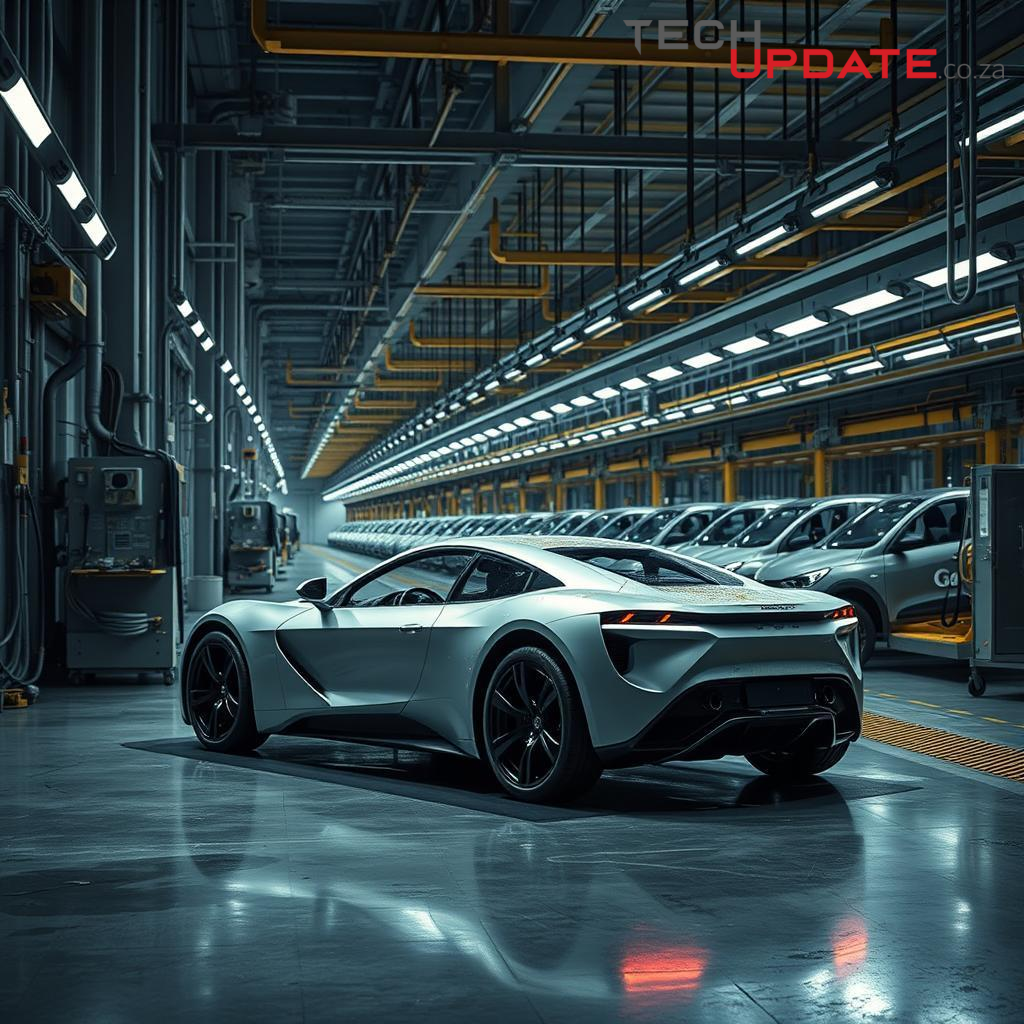
Honda’s recent decision to abruptly terminate its joint venture with General Motors for the development of affordable electric vehicles has sent ripples through the automotive industry. This strategic reversal, coming just over a year after the ambitious partnership was announced, raises serious questions about Honda’s long-term competitive viability in the rapidly evolving global EV landscape, with repercussions poised to extend far beyond North America.
The Partnership Unraveled
In 2022, Honda and GM unveiled plans to collaborate on a series of affordable electric vehicles, targeting production in 2027. The alliance was touted as a crucial step for both automakers to leverage economies of scale and accelerate their EV transitions, particularly in the high-volume, cost-sensitive segments. For Honda, it represented an opportunity to quickly bolster its EV portfolio in the U.S. market, where it has lagged behind many competitors.
However, in October 2023, the companies announced the cancellation of this collaborative effort. Honda cited a "change in the business environment" as the primary reason, choosing instead to focus on an independent EV development path. While current GM-platform based models like the Honda Prologue and Acura ZDX are still proceeding to market, the broader strategy to jointly develop a new generation of more accessible EVs has been abandoned.
Repercussions on the Horizon
This strategic retreat leaves Honda in a challenging position. The global automotive sector is undergoing a profound transformation, with electrification at its core. Competitors across all segments are rapidly investing in dedicated EV architectures, expanding production capacities, and forming strategic alliances to mitigate the immense costs and complexities involved. By disengaging from the GM partnership for affordable EVs, Honda now faces the daunting task of developing its own comprehensive lineup across various price points, largely in isolation.
Industry analysts have expressed concerns that this move could significantly delay Honda’s ability to offer competitive and mass-market electric vehicles, particularly as consumer demand for more affordable options grows. The initial reliance on GM's Ultium platform for its first wave of U.S. EVs was a pragmatic stop-gap. Without the planned joint affordable models, Honda’s path to achieving its ambitious target of 2 million global EV sales annually by 2030, and 100% EV/FCV sales in North America by 2040, appears considerably steeper.
A Solo Path Forward?
Honda’s revised strategy emphasizes its proprietary "e:Architecture" and a long-term focus on solid-state battery technology, with initial models expected from 2026. While an independent approach can offer greater control over product development and brand identity, it often comes at a higher cost and slower pace, especially for a company that has been relatively cautious in its EV rollout compared to rivals. The sheer scale required for component sourcing, software development, and manufacturing efficiency for a full EV portfolio is immense, making partnerships a common strategy in the industry.
The decision also underscores the immense pressure on legacy automakers to quickly adapt. The "change in the business environment" cited by Honda could reflect a reassessment of market conditions, escalating costs, or a desire for greater autonomy. Regardless of the internal rationale, the external perception is one of hesitation in a race that demands decisive action.
Summary
Honda's choice to sever its affordable EV development ties with General Motors marks a significant pivot that carries substantial risks. While the company intends to forge its own path with proprietary technology, the immediate consequence is a potential widening of the gap between Honda and its more aggressive EV competitors. The long-term implications for its market share, profitability, and indeed, its very relevance in the electrified future of transportation, will be closely watched by industry observers worldwide.
Resources
- Reuters
- Automotive News
- Bloomberg
Details
Author
Top articles




 }})
You can now watch HBO Max for $10
Latest articles





You can now watch HBO Max for $10
Honda’s recent decision to abruptly terminate its joint venture with General Motors for the development of affordable electric vehicles has sent ripples through the automotive industry. This strategic reversal, coming just over a year after the ambitious partnership was announced, raises serious questions about Honda’s long-term competitive viability in the rapidly evolving global EV landscape, with repercussions poised to extend far beyond North America.
The Partnership Unraveled
In 2022, Honda and GM unveiled plans to collaborate on a series of affordable electric vehicles, targeting production in 2027. The alliance was touted as a crucial step for both automakers to leverage economies of scale and accelerate their EV transitions, particularly in the high-volume, cost-sensitive segments. For Honda, it represented an opportunity to quickly bolster its EV portfolio in the U.S. market, where it has lagged behind many competitors.
However, in October 2023, the companies announced the cancellation of this collaborative effort. Honda cited a "change in the business environment" as the primary reason, choosing instead to focus on an independent EV development path. While current GM-platform based models like the Honda Prologue and Acura ZDX are still proceeding to market, the broader strategy to jointly develop a new generation of more accessible EVs has been abandoned.
Repercussions on the Horizon
This strategic retreat leaves Honda in a challenging position. The global automotive sector is undergoing a profound transformation, with electrification at its core. Competitors across all segments are rapidly investing in dedicated EV architectures, expanding production capacities, and forming strategic alliances to mitigate the immense costs and complexities involved. By disengaging from the GM partnership for affordable EVs, Honda now faces the daunting task of developing its own comprehensive lineup across various price points, largely in isolation.
Industry analysts have expressed concerns that this move could significantly delay Honda’s ability to offer competitive and mass-market electric vehicles, particularly as consumer demand for more affordable options grows. The initial reliance on GM's Ultium platform for its first wave of U.S. EVs was a pragmatic stop-gap. Without the planned joint affordable models, Honda’s path to achieving its ambitious target of 2 million global EV sales annually by 2030, and 100% EV/FCV sales in North America by 2040, appears considerably steeper.
A Solo Path Forward?
Honda’s revised strategy emphasizes its proprietary "e:Architecture" and a long-term focus on solid-state battery technology, with initial models expected from 2026. While an independent approach can offer greater control over product development and brand identity, it often comes at a higher cost and slower pace, especially for a company that has been relatively cautious in its EV rollout compared to rivals. The sheer scale required for component sourcing, software development, and manufacturing efficiency for a full EV portfolio is immense, making partnerships a common strategy in the industry.
The decision also underscores the immense pressure on legacy automakers to quickly adapt. The "change in the business environment" cited by Honda could reflect a reassessment of market conditions, escalating costs, or a desire for greater autonomy. Regardless of the internal rationale, the external perception is one of hesitation in a race that demands decisive action.
Summary
Honda's choice to sever its affordable EV development ties with General Motors marks a significant pivot that carries substantial risks. While the company intends to forge its own path with proprietary technology, the immediate consequence is a potential widening of the gap between Honda and its more aggressive EV competitors. The long-term implications for its market share, profitability, and indeed, its very relevance in the electrified future of transportation, will be closely watched by industry observers worldwide.
Resources
- Reuters
- Automotive News
- Bloomberg
Top articles
You can now watch HBO Max for $10
Latest articles
You can now watch HBO Max for $10
Similar posts



This is a page that only logged-in people can visit. Don't you feel special? Try clicking on a button below to do some things you can't do when you're logged out.
Example modal
At your leisure, please peruse this excerpt from a whale of a tale.
Chapter 1: Loomings.
Call me Ishmael. Some years ago—never mind how long precisely—having little or no money in my purse, and nothing particular to interest me on shore, I thought I would sail about a little and see the watery part of the world. It is a way I have of driving off the spleen and regulating the circulation. Whenever I find myself growing grim about the mouth; whenever it is a damp, drizzly November in my soul; whenever I find myself involuntarily pausing before coffin warehouses, and bringing up the rear of every funeral I meet; and especially whenever my hypos get such an upper hand of me, that it requires a strong moral principle to prevent me from deliberately stepping into the street, and methodically knocking people's hats off—then, I account it high time to get to sea as soon as I can. This is my substitute for pistol and ball. With a philosophical flourish Cato throws himself upon his sword; I quietly take to the ship. There is nothing surprising in this. If they but knew it, almost all men in their degree, some time or other, cherish very nearly the same feelings towards the ocean with me.
Comment