Musk's Bold Terafab Vision: A High-Stakes Bet on In-House Chip Production in Texas
Introduction: A Grand Announcement
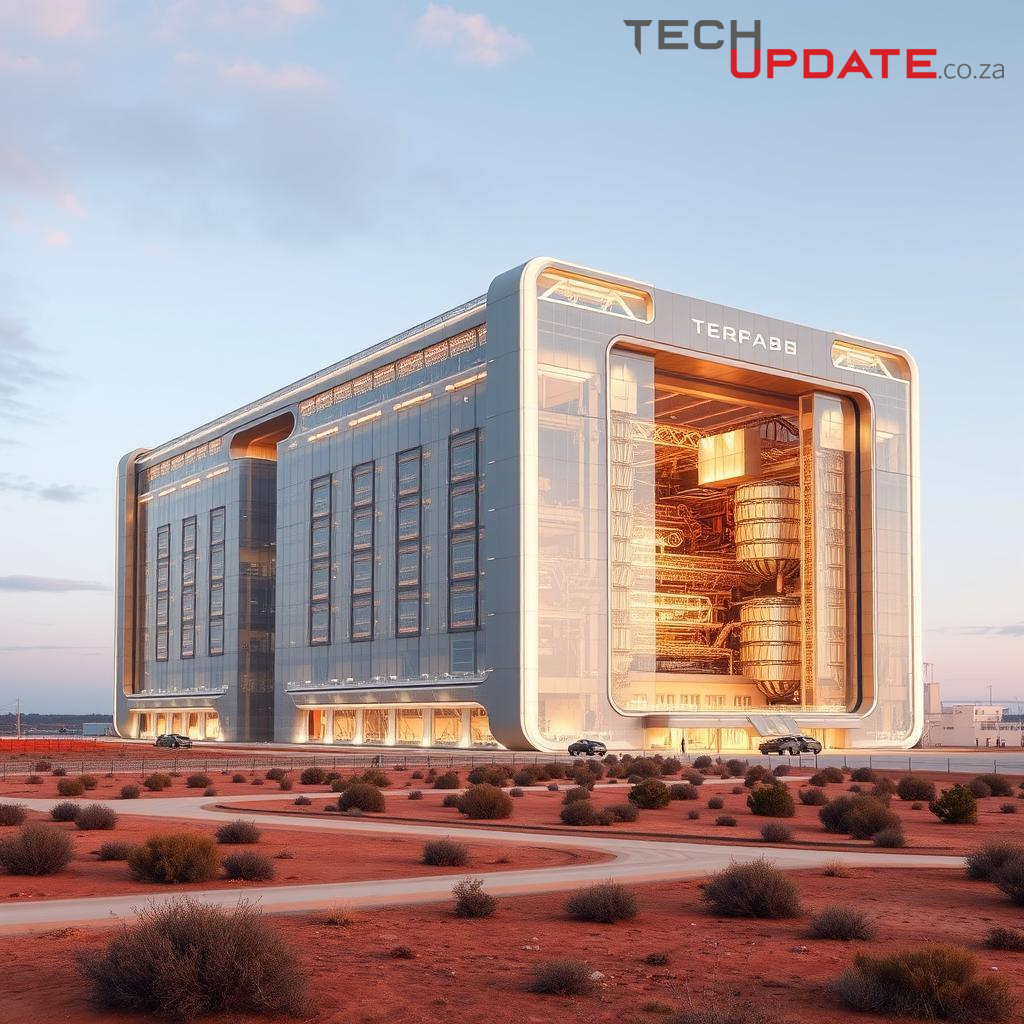
Elon Musk has unveiled ambitious plans to construct a "Terafab" chip manufacturing plant in Austin, Texas. This colossal undertaking, slated to be a joint venture between Tesla and SpaceX, aims to address the escalating demand for advanced semiconductors critical to Musk's diverse technological ecosystem, encompassing robotics, artificial intelligence, and space-based data centers. The announcement comes amidst widespread industry concern regarding the chip supply chain's capacity to keep pace with the exponential growth of AI technologies.
The Strategic Imperative: Fueling Future Tech
The motivation behind the Terafab initiative is clear: secure a dedicated, high-volume supply of custom-designed chips. As Tesla expands its humanoid robot project, Optimus, and SpaceX envisions expansive satellite constellations requiring robust on-board processing, the need for specialized silicon becomes paramount. Relying solely on external foundries presents potential bottlenecks, intellectual property concerns, and supply chain vulnerabilities. An in-house Terafab theoretically offers greater control over design, production, and cost, allowing for rapid iteration and optimization tailored to the specific demands of Musk's ventures.
Navigating Formidable Hurdles
Building a state-of-the-art semiconductor fabrication plant, or "fab," is an endeavor of immense complexity and cost. Industry analysts highlight several significant challenges:
- Capital Intensity: A single modern fab can cost tens of billions of dollars, requiring colossal upfront investment and sustained operational funding.
- Technical Expertise: Semiconductor manufacturing is an ultra-specialized field, demanding decades of accumulated knowledge in materials science, physics, and precision engineering. Musk, despite his impressive track record in other sectors, lacks direct experience in this domain.
- Time-to-Market: From groundbreaking to mass production, establishing a new fab typically takes many years, often exceeding five to seven years. This extended timeline could clash with the rapid development cycles of AI and robotics.
- Specialized Equipment: The machinery required, such as extreme ultraviolet (EUV) lithography tools, are incredibly expensive and produced by only a handful of highly specialized global suppliers, leading to long lead times.
Musk's Track Record and Industry Scrutiny
Musk is renowned for setting audacious goals and often pushing boundaries beyond conventional expectations. However, he also has a history of ambitious timelines that prove challenging to meet, particularly in nascent industries. The semiconductor world, with its exacting standards and unforgiving physics, offers little room for error. Industry veterans, as reported by outlets like Bloomberg, approach such announcements with a degree of skepticism, questioning the feasibility given the immense technical and financial hurdles and the absence of a proven leadership team with deep semiconductor experience.
Impact and Future Outlook
Should the Terafab project succeed, it would represent a significant vertical integration for Tesla and SpaceX, potentially granting them a strategic advantage in controlling key components for their future products. It could also alleviate some pressure on the broader semiconductor supply chain for their specific chip needs. However, the path to success is fraught with risks. The project will likely require attracting top-tier talent from existing chip giants and forging strategic partnerships with equipment suppliers. Its long-term viability will hinge on effective execution, robust funding, and the ability to overcome the highly intricate technical challenges inherent in chip fabrication.
Summary
Elon Musk's Terafab plant in Austin signifies a bold move to secure in-house chip production for his expanding empire. While the strategic advantages are clear, the undertaking faces colossal financial, technical, and human capital challenges. The semiconductor industry demands unparalleled precision and expertise, making this one of Musk's most ambitious and scrutinized ventures to date.
Resources
Details
Author
Top articles




 }})
You can now watch HBO Max for $10
Latest articles




You can now watch HBO Max for $10
Introduction: A Grand Announcement
Elon Musk has unveiled ambitious plans to construct a "Terafab" chip manufacturing plant in Austin, Texas. This colossal undertaking, slated to be a joint venture between Tesla and SpaceX, aims to address the escalating demand for advanced semiconductors critical to Musk's diverse technological ecosystem, encompassing robotics, artificial intelligence, and space-based data centers. The announcement comes amidst widespread industry concern regarding the chip supply chain's capacity to keep pace with the exponential growth of AI technologies.
The Strategic Imperative: Fueling Future Tech
The motivation behind the Terafab initiative is clear: secure a dedicated, high-volume supply of custom-designed chips. As Tesla expands its humanoid robot project, Optimus, and SpaceX envisions expansive satellite constellations requiring robust on-board processing, the need for specialized silicon becomes paramount. Relying solely on external foundries presents potential bottlenecks, intellectual property concerns, and supply chain vulnerabilities. An in-house Terafab theoretically offers greater control over design, production, and cost, allowing for rapid iteration and optimization tailored to the specific demands of Musk's ventures.
Navigating Formidable Hurdles
Building a state-of-the-art semiconductor fabrication plant, or "fab," is an endeavor of immense complexity and cost. Industry analysts highlight several significant challenges:
- Capital Intensity: A single modern fab can cost tens of billions of dollars, requiring colossal upfront investment and sustained operational funding.
- Technical Expertise: Semiconductor manufacturing is an ultra-specialized field, demanding decades of accumulated knowledge in materials science, physics, and precision engineering. Musk, despite his impressive track record in other sectors, lacks direct experience in this domain.
- Time-to-Market: From groundbreaking to mass production, establishing a new fab typically takes many years, often exceeding five to seven years. This extended timeline could clash with the rapid development cycles of AI and robotics.
- Specialized Equipment: The machinery required, such as extreme ultraviolet (EUV) lithography tools, are incredibly expensive and produced by only a handful of highly specialized global suppliers, leading to long lead times.
Musk's Track Record and Industry Scrutiny
Musk is renowned for setting audacious goals and often pushing boundaries beyond conventional expectations. However, he also has a history of ambitious timelines that prove challenging to meet, particularly in nascent industries. The semiconductor world, with its exacting standards and unforgiving physics, offers little room for error. Industry veterans, as reported by outlets like Bloomberg, approach such announcements with a degree of skepticism, questioning the feasibility given the immense technical and financial hurdles and the absence of a proven leadership team with deep semiconductor experience.
Impact and Future Outlook
Should the Terafab project succeed, it would represent a significant vertical integration for Tesla and SpaceX, potentially granting them a strategic advantage in controlling key components for their future products. It could also alleviate some pressure on the broader semiconductor supply chain for their specific chip needs. However, the path to success is fraught with risks. The project will likely require attracting top-tier talent from existing chip giants and forging strategic partnerships with equipment suppliers. Its long-term viability will hinge on effective execution, robust funding, and the ability to overcome the highly intricate technical challenges inherent in chip fabrication.
Summary
Elon Musk's Terafab plant in Austin signifies a bold move to secure in-house chip production for his expanding empire. While the strategic advantages are clear, the undertaking faces colossal financial, technical, and human capital challenges. The semiconductor industry demands unparalleled precision and expertise, making this one of Musk's most ambitious and scrutinized ventures to date.
Resources
Top articles
You can now watch HBO Max for $10
Latest articles
You can now watch HBO Max for $10
Similar posts



This is a page that only logged-in people can visit. Don't you feel special? Try clicking on a button below to do some things you can't do when you're logged out.
Example modal
At your leisure, please peruse this excerpt from a whale of a tale.
Chapter 1: Loomings.
Call me Ishmael. Some years ago—never mind how long precisely—having little or no money in my purse, and nothing particular to interest me on shore, I thought I would sail about a little and see the watery part of the world. It is a way I have of driving off the spleen and regulating the circulation. Whenever I find myself growing grim about the mouth; whenever it is a damp, drizzly November in my soul; whenever I find myself involuntarily pausing before coffin warehouses, and bringing up the rear of every funeral I meet; and especially whenever my hypos get such an upper hand of me, that it requires a strong moral principle to prevent me from deliberately stepping into the street, and methodically knocking people's hats off—then, I account it high time to get to sea as soon as I can. This is my substitute for pistol and ball. With a philosophical flourish Cato throws himself upon his sword; I quietly take to the ship. There is nothing surprising in this. If they but knew it, almost all men in their degree, some time or other, cherish very nearly the same feelings towards the ocean with me.
Comment