Nioh 3 on PS5 & PS5 Pro: Deciphering the Optimal Graphics Mode for Unyielding Samurais – FPS or Visual Fidelity?
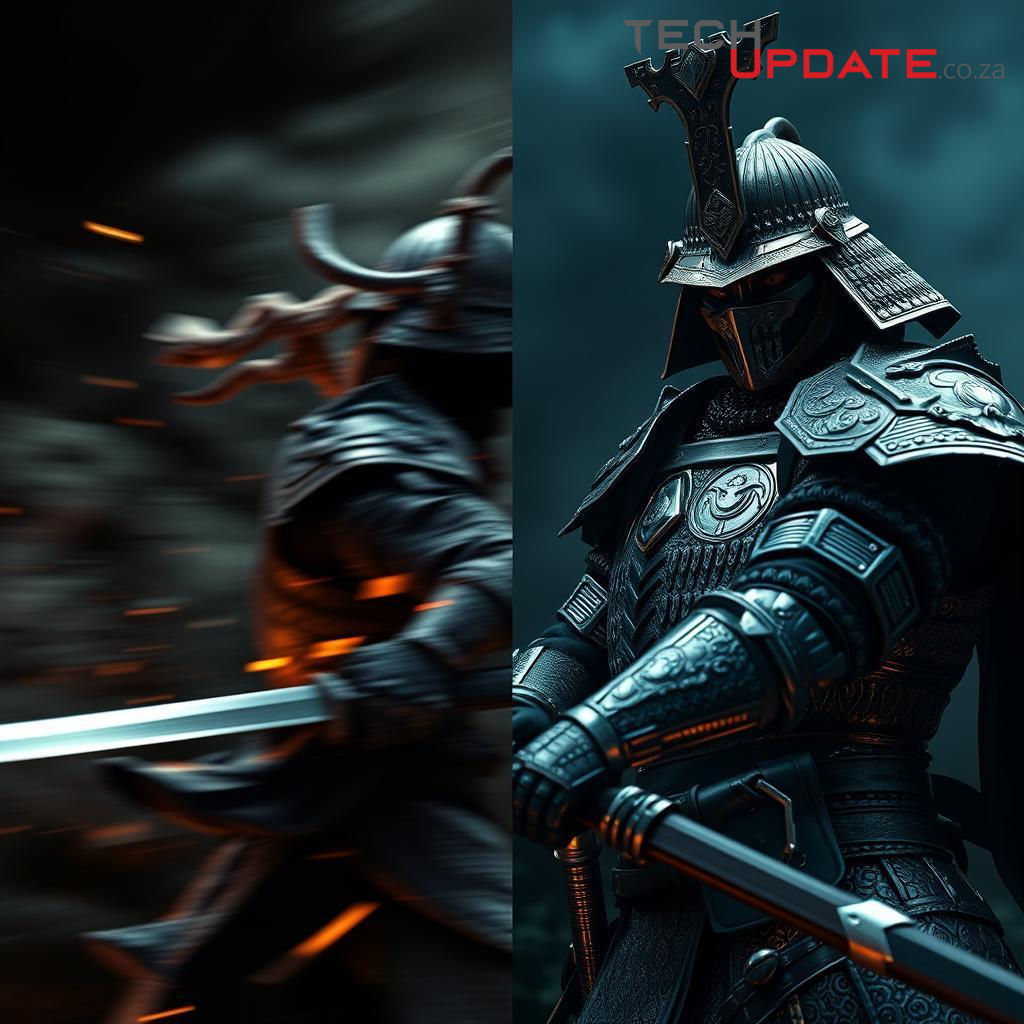
Introduction: Navigating the Sengoku Spectacle
As the gaming landscape evolves, particularly with the introduction of mid-generation console refreshes like the PlayStation 5 Pro, players are increasingly faced with a critical choice: prioritize fluid frame rates for competitive advantage or indulge in the highest possible visual fidelity. This journalistic analysis delves into the anticipated graphics modes for the hypothetical Nioh 3 on both the standard PlayStation 5 and the more powerful PS5 Pro, guiding discerning players toward an informed decision that best suits their playstyle and aesthetic preferences.
The Core Conundrum: Performance Versus Fidelity
Modern console gaming often presents titles with multiple graphics options, a design philosophy that empowers players to tailor their experience. These modes typically revolve around a fundamental trade-off:
- Performance Mode: Aims for the highest possible frame rate, often targeting 60 frames per second (FPS) or even 120 FPS where supported, typically at a dynamically scaled or lower native resolution. Visual effects may be pared back to maintain stability.
- Quality/Resolution Mode: Prioritizes visual richness, often rendering at or near native 4K resolution, enhancing graphical details, draw distances, and potentially incorporating advanced rendering techniques like ray tracing. Frame rates in this mode are commonly capped at 30 FPS, though some titles achieve a stable 60 FPS on powerful hardware.
Understanding Graphics Modes on PS5
The original PlayStation 5 has established a clear pattern for action-oriented titles. Games like Nioh 2 Remastered offer robust performance modes, delivering a consistent 60 FPS at scaled resolutions, crucial for the game's demanding combat. Quality modes, while visually impressive, often present a 30 FPS experience, which can feel less responsive to players accustomed to higher frame rates, especially in a fast-paced action RPG.
The PS5 Pro Advantage: Anticipated Enhancements
Should Nioh 3 materialise, the PS5 Pro's enhanced computational power, including its more potent GPU and improved CPU, is anticipated to offer several key advantages:
- Higher Stable Frame Rates in Quality Mode: The Pro could potentially achieve a locked 60 FPS in a "Quality" mode that targets a higher resolution, possibly with fewer compromises than on the base PS5.
- Enhanced Visuals in Performance Mode: While still prioritizing FPS, the Pro might render performance modes at a higher base resolution or incorporate more visual effects, bridging the gap between modes.
- Ray Tracing Integration: The increased horsepower makes sophisticated lighting techniques like ray tracing more viable, potentially enhancing reflections, shadows, and global illumination within Nioh 3's quality settings without devastating frame rates.
- Superior Upscaling: Technologies like PlayStation Spectral Super Resolution (PSSR) on the Pro could deliver near-native 4K visuals from lower internal render resolutions with remarkable clarity, benefiting both performance and quality modes.
Nioh 3's Demands: Why Every Frame Matters
The Nioh series is renowned for its challenging combat, intricate enemy patterns, and precise timing requirements. In such titles, input lag and frame rate consistency are paramount. A fluctuating or low frame rate can directly impact a player's ability to react, parry, or dodge, fundamentally altering the gameplay experience. For this reason, a stable 60 FPS has historically been the preferred standard for many Nioh enthusiasts.
Tailoring Your Experience: Recommendations for PS5 Players
For players on the standard PS5, the choice remains a personal one, but with a strong lean towards performance:
- Prioritize FPS (Performance Mode): For the purest combat experience, competitive play, and reduced input lag, the performance mode is almost certainly the optimal choice. The slight reduction in visual fidelity is a worthwhile trade-off for the fluidity and responsiveness crucial to Nioh's gameplay.
- Prioritize Resolution (Quality Mode): If visual spectacle trumps all else, and you are comfortable with a 30 FPS experience, the quality mode will offer a richer, more detailed world to explore. This might appeal more to those who engage with the game at a slower pace, focusing on exploration and appreciating environmental artistry.
Unleashing the Pro: Optimizing Nioh 3 on PS5 Pro
The PS5 Pro presents a tantalizing possibility: a "best of both worlds" scenario. It is anticipated that the Pro could allow players to:
- Achieve 60 FPS with Enhanced Fidelity: The ideal scenario for Nioh 3 on PS5 Pro would be a performance mode that not only maintains a rock-solid 60 FPS but also features higher resolutions and more graphical enhancements than its PS5 counterpart. A "Quality" mode on Pro might even target a stable 60 FPS at a highly upscaled 4K with ray tracing, if the developers optimize effectively.
- Consider Hybrid Modes: Developers might introduce intermediate modes, balancing higher frame rates with selective visual upgrades, allowing for even finer-tuned player choice.
Ultimately, for Nioh 3 on the PS5 Pro, the recommendation will likely shift towards prioritizing a mode that delivers a consistent 60 FPS while pushing visual boundaries as much as the hardware allows, potentially making the traditional "Quality" mode a more viable option for performance-sensitive players.
Summary: Forging Your Path to Perfection
While specific details for Nioh 3 remain speculative, historical trends and console hardware capabilities provide a clear roadmap for optimal gameplay. On the standard PS5, prioritizing a stable 60 FPS 'Performance Mode' will likely offer the most authentic and responsive Nioh experience. For the PS5 Pro, the increased power could allow for a significantly enhanced 60 FPS mode that combines high fidelity with critical fluidity, potentially redefining the "Quality" versus "Performance" debate for this demanding franchise. Players should consider their personal tolerance for frame rate fluctuations against their desire for visual grandeur, with fluidity often being the decisive factor in such precise action RPGs.
Resources
- Digital Foundry (Industry Analysis & Technical Breakdowns)
- Eurogamer (Gaming News & Hardware Reviews)
- Team Ninja Official Channels (Developer Insights - for similar titles)
Details
Author
Top articles




 }})
You can now watch HBO Max for $10
Latest articles





You can now watch HBO Max for $10
Introduction: Navigating the Sengoku Spectacle
As the gaming landscape evolves, particularly with the introduction of mid-generation console refreshes like the PlayStation 5 Pro, players are increasingly faced with a critical choice: prioritize fluid frame rates for competitive advantage or indulge in the highest possible visual fidelity. This journalistic analysis delves into the anticipated graphics modes for the hypothetical Nioh 3 on both the standard PlayStation 5 and the more powerful PS5 Pro, guiding discerning players toward an informed decision that best suits their playstyle and aesthetic preferences.
The Core Conundrum: Performance Versus Fidelity
Modern console gaming often presents titles with multiple graphics options, a design philosophy that empowers players to tailor their experience. These modes typically revolve around a fundamental trade-off:
- Performance Mode: Aims for the highest possible frame rate, often targeting 60 frames per second (FPS) or even 120 FPS where supported, typically at a dynamically scaled or lower native resolution. Visual effects may be pared back to maintain stability.
- Quality/Resolution Mode: Prioritizes visual richness, often rendering at or near native 4K resolution, enhancing graphical details, draw distances, and potentially incorporating advanced rendering techniques like ray tracing. Frame rates in this mode are commonly capped at 30 FPS, though some titles achieve a stable 60 FPS on powerful hardware.
Understanding Graphics Modes on PS5
The original PlayStation 5 has established a clear pattern for action-oriented titles. Games like Nioh 2 Remastered offer robust performance modes, delivering a consistent 60 FPS at scaled resolutions, crucial for the game's demanding combat. Quality modes, while visually impressive, often present a 30 FPS experience, which can feel less responsive to players accustomed to higher frame rates, especially in a fast-paced action RPG.
The PS5 Pro Advantage: Anticipated Enhancements
Should Nioh 3 materialise, the PS5 Pro's enhanced computational power, including its more potent GPU and improved CPU, is anticipated to offer several key advantages:
- Higher Stable Frame Rates in Quality Mode: The Pro could potentially achieve a locked 60 FPS in a "Quality" mode that targets a higher resolution, possibly with fewer compromises than on the base PS5.
- Enhanced Visuals in Performance Mode: While still prioritizing FPS, the Pro might render performance modes at a higher base resolution or incorporate more visual effects, bridging the gap between modes.
- Ray Tracing Integration: The increased horsepower makes sophisticated lighting techniques like ray tracing more viable, potentially enhancing reflections, shadows, and global illumination within Nioh 3's quality settings without devastating frame rates.
- Superior Upscaling: Technologies like PlayStation Spectral Super Resolution (PSSR) on the Pro could deliver near-native 4K visuals from lower internal render resolutions with remarkable clarity, benefiting both performance and quality modes.
Nioh 3's Demands: Why Every Frame Matters
The Nioh series is renowned for its challenging combat, intricate enemy patterns, and precise timing requirements. In such titles, input lag and frame rate consistency are paramount. A fluctuating or low frame rate can directly impact a player's ability to react, parry, or dodge, fundamentally altering the gameplay experience. For this reason, a stable 60 FPS has historically been the preferred standard for many Nioh enthusiasts.
Tailoring Your Experience: Recommendations for PS5 Players
For players on the standard PS5, the choice remains a personal one, but with a strong lean towards performance:
- Prioritize FPS (Performance Mode): For the purest combat experience, competitive play, and reduced input lag, the performance mode is almost certainly the optimal choice. The slight reduction in visual fidelity is a worthwhile trade-off for the fluidity and responsiveness crucial to Nioh's gameplay.
- Prioritize Resolution (Quality Mode): If visual spectacle trumps all else, and you are comfortable with a 30 FPS experience, the quality mode will offer a richer, more detailed world to explore. This might appeal more to those who engage with the game at a slower pace, focusing on exploration and appreciating environmental artistry.
Unleashing the Pro: Optimizing Nioh 3 on PS5 Pro
The PS5 Pro presents a tantalizing possibility: a "best of both worlds" scenario. It is anticipated that the Pro could allow players to:
- Achieve 60 FPS with Enhanced Fidelity: The ideal scenario for Nioh 3 on PS5 Pro would be a performance mode that not only maintains a rock-solid 60 FPS but also features higher resolutions and more graphical enhancements than its PS5 counterpart. A "Quality" mode on Pro might even target a stable 60 FPS at a highly upscaled 4K with ray tracing, if the developers optimize effectively.
- Consider Hybrid Modes: Developers might introduce intermediate modes, balancing higher frame rates with selective visual upgrades, allowing for even finer-tuned player choice.
Ultimately, for Nioh 3 on the PS5 Pro, the recommendation will likely shift towards prioritizing a mode that delivers a consistent 60 FPS while pushing visual boundaries as much as the hardware allows, potentially making the traditional "Quality" mode a more viable option for performance-sensitive players.
Summary: Forging Your Path to Perfection
While specific details for Nioh 3 remain speculative, historical trends and console hardware capabilities provide a clear roadmap for optimal gameplay. On the standard PS5, prioritizing a stable 60 FPS 'Performance Mode' will likely offer the most authentic and responsive Nioh experience. For the PS5 Pro, the increased power could allow for a significantly enhanced 60 FPS mode that combines high fidelity with critical fluidity, potentially redefining the "Quality" versus "Performance" debate for this demanding franchise. Players should consider their personal tolerance for frame rate fluctuations against their desire for visual grandeur, with fluidity often being the decisive factor in such precise action RPGs.
Resources
- Digital Foundry (Industry Analysis & Technical Breakdowns)
- Eurogamer (Gaming News & Hardware Reviews)
- Team Ninja Official Channels (Developer Insights - for similar titles)
Top articles
You can now watch HBO Max for $10
Latest articles
You can now watch HBO Max for $10
Similar posts



This is a page that only logged-in people can visit. Don't you feel special? Try clicking on a button below to do some things you can't do when you're logged out.
Example modal
At your leisure, please peruse this excerpt from a whale of a tale.
Chapter 1: Loomings.
Call me Ishmael. Some years ago—never mind how long precisely—having little or no money in my purse, and nothing particular to interest me on shore, I thought I would sail about a little and see the watery part of the world. It is a way I have of driving off the spleen and regulating the circulation. Whenever I find myself growing grim about the mouth; whenever it is a damp, drizzly November in my soul; whenever I find myself involuntarily pausing before coffin warehouses, and bringing up the rear of every funeral I meet; and especially whenever my hypos get such an upper hand of me, that it requires a strong moral principle to prevent me from deliberately stepping into the street, and methodically knocking people's hats off—then, I account it high time to get to sea as soon as I can. This is my substitute for pistol and ball. With a philosophical flourish Cato throws himself upon his sword; I quietly take to the ship. There is nothing surprising in this. If they but knew it, almost all men in their degree, some time or other, cherish very nearly the same feelings towards the ocean with me.
Comment